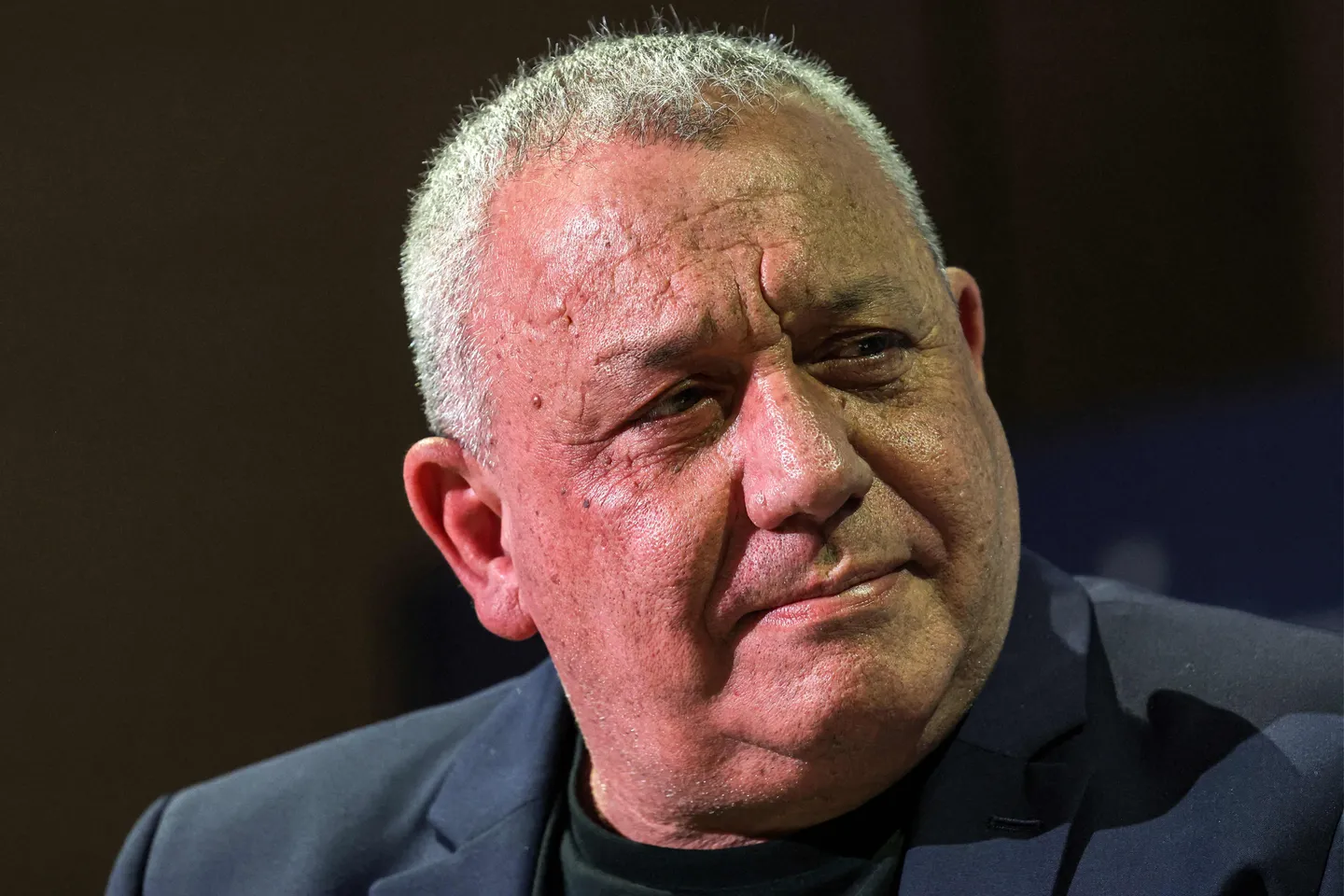
Gadi Eisenkot, the former Israeli military chief of staff, is now polling ahead of Benjamin Netanyahu.
A Channel 12 survey in July put his new party, Yashar, at 23 seats to Likud's 22 in the 120-member Knesset, and named him the more suitable prime minister by 43 percent to 34.
Eisenkot's pitch rests on accusing Netanyahu of failing the hostages of October 7, 2023. He has said Netanyahu approved and then sabotaged an early deal with Hamas, and that forty-six captives who should have come home did not, some of whom could have been brought back.
Beyond that, Yashar promises to restore what Eisenkot calls Israel's security, unity and democratic institutions, prioritise the conscription of ultra-Orthodox men into military or national service, and repeal legislation he says has let Netanyahu's government exempt them.
None of it touches the terms Israel offers Palestinians. His record does that instead, starting with the Dahiya Doctrine, the military blueprint he wrote for using massive, disproportionate force against civilian areas.
As head of the Israeli military's Northern Command, Eisenkot formulated the doctrine and laid it out himself in 2008: villages that fire on Israel become military targets regardless of who lives there, and the response will be disproportionate by design.
It takes its name from the Beirut suburb that the Israeli military flattened during the 2006 war on Lebanon, a campaign that killed nearly 1,000 civilians, a third of them children, and gutted the country's power plants, sewage systems, bridges and ports.
"We will apply disproportionate force on it (village) and cause great damage and destruction there. From our standpoint, these are not civilian villages, they are military bases," Eisenkot was quoted as saying by the Yedioth Ahronoth newspaper.
"This is not a recommendation. This is a plan. And it has been approved," he added.
Since then, Israel has repeatedly applied the doctrine in Gaza, Lebanon and elsewhere.
In the assault on Gaza that began in December 2008, about 1,400 Palestinians were killed. A UN inquiry concluded that the offensive was deliberately disproportionate and intended to punish, humiliate and terrorise the civilian population.
In 2014, another Israeli assault on Gaza killed more than 1,500 civilians over 50 days and flattened residential buildings.
Since October 2023, Israel has again employed overwhelming force in Gaza, in a genocide campaign that has killed at least 73,000 people, and wounded tens of thousands of others.
Eisenkot later became Israel's chief of the general staff before retiring in 2019. As recently as March, he called for the Dahiya Doctrine to be applied again in Lebanon, saying it had "never been more relevant."
His four years as chief of staff, from 2015 to 2019, span the Great March of Return, when Israeli snipers killed at least 189 unarmed Palestinian protesters, among them 35 children, three paramedics and two journalists, and wounded more than 6,000 others, per UN figures.
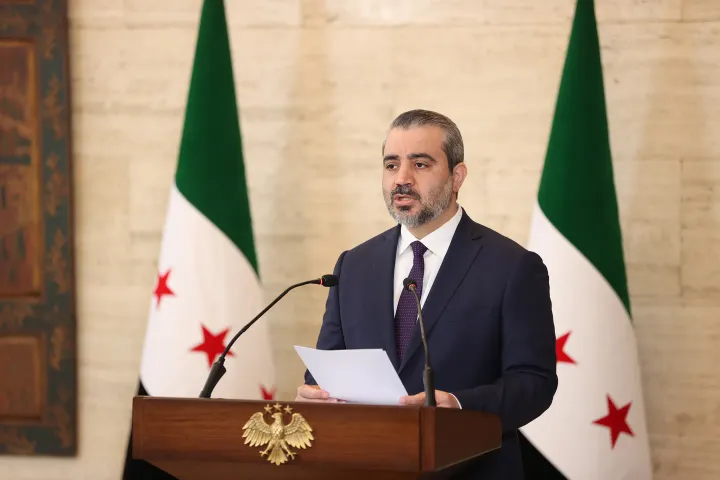






A UN commission of inquiry found reasonable grounds that Israeli soldiers committed acts amounting to war crimes or crimes against humanity.
Eisenkot also spent eight months as a minister without portfolio in Netanyahu's war cabinet from October 2023, during the Gaza genocide and campaign of ethnic cleansing, which saw mass killings, the forced displacement of nearly the entire population, and the deliberate collapse of the health system.
His party quit the coalition in mid-2024 over strategy disagreements, and not over any of that.

Rejecting the Palestinian state
Eisenkot has never pretended otherwise on politics, as he rejects a Palestinian state outright, dismissing the two-state framework as a misreading of the conflict.
“I have never said two states for two peoples… anyone who talks about ‘peace now’ and two states doesn’t understand the conflict,” he had said once.
He also backs continued settlement building in the occupied West Bank and describes his belief in it as strong, while opposing formal annexation only because he fears it would dilute the Jewish majority he wants to preserve.
“A reality in which we annex the Palestinians to Israel would be a severe threat to the Zionist project," Eisenkot said, calling Smotrich's annexation plan "foolish" and "a completely insane thing".
In practice, the policy keeps Israel in control of Palestinian land and lives without formally annexing the territory; sustaining apartheid.
On Gaza, Eisenkot wants Hamas eliminated and replaced by what he calls an upgraded, deradicalised Palestinian Authority.
Taken together, whoever wins in October, Palestinians are being offered a different man delivering the same terms.