 Ahmed Najar
History is rarely kind to peace agreements between Israelis and Palestinians.
Over the past three decades, agreements have been signed with great optimism, hailed as diplomatic breakthroughs and celebrated as turning points, only to collapse before their most consequential commitments were fulfilled.
Permanent status negotiations stalled after Oslo. Redeployments promised under later agreements were delayed or abandoned.
Ceasefires repeatedly unravelled before they reached the political endgame they were meant to deliver.
That history is precisely why the latest agreement between Hamas and the Gaza Board of Peace should be approached with cautious realism rather than celebration.
Hamas has, at least in principle, agreed to one of Israel's longstanding demands: to relinquish its weapons as part of a broader political settlement.
In return, the proposed agreement envisages a complete Israeli withdrawal from Gaza, the establishment of a new Palestinian governing authority and the beginning of reconstruction after nearly three years of a war that many international legal experts, human rights organisations and an increasing number of governments have described as genocide.
For much of this period, Israeli officials and many Western governments insisted that peace was impossible as long as Hamas remained armed and in power.
Hamas' willingness to relinquish both governing authority and, ultimately, its weapons fundamentally changes the political equation.
Whether one believes Hamas will ultimately follow through is almost beside the point. Politically, the movement has crossed a threshold that few expected it would.
Will Israel ever change?
The question now is no longer what Hamas is prepared to concede. It is whether Israel is prepared to honour its own side of the bargain.
History offers compelling reasons for caution. The Oslo Accords, signed in 1993, envisaged a phased process leading to a permanent settlement within five years.
More than thirty years later, that settlement has never materialised. Israeli settlements in the occupied West Bank expanded significantly during and after the Oslo process, while successive negotiations failed to resolve the core issues of borders, sovereignty and Palestinian statehood.
The Wye River Memorandum, negotiated during Benjamin Netanyahu's first premiership, also suffered from incomplete implementation after domestic political opposition within his own coalition slowed agreed Israeli redeployments.
Subsequent initiatives, including the internationally-backed Road Map for Peace, similarly failed to produce the political outcomes they promised.
Violence and political fragmentation undoubtedly complicated successive peace efforts.
But they should not obscure the central reality of the conflict: this has never been a negotiation between equals.
Israel, as the occupying power, has exercised overwhelming military superiority and political and economic control over the territory and therefore possessed far greater ability to determine whether agreements moved from paper to reality.
If there had been genuine political commitment to ending the occupation and establishing a Palestinian state, Israel had the means to make that outcome possible.
Instead, commitments to withdrawal, Palestinian sovereignty and a final political settlement were repeatedly delayed, qualified or abandoned, while the occupation became ever more entrenched.
It is this history—not rhetoric—that makes scepticism about today's agreement entirely understandable.
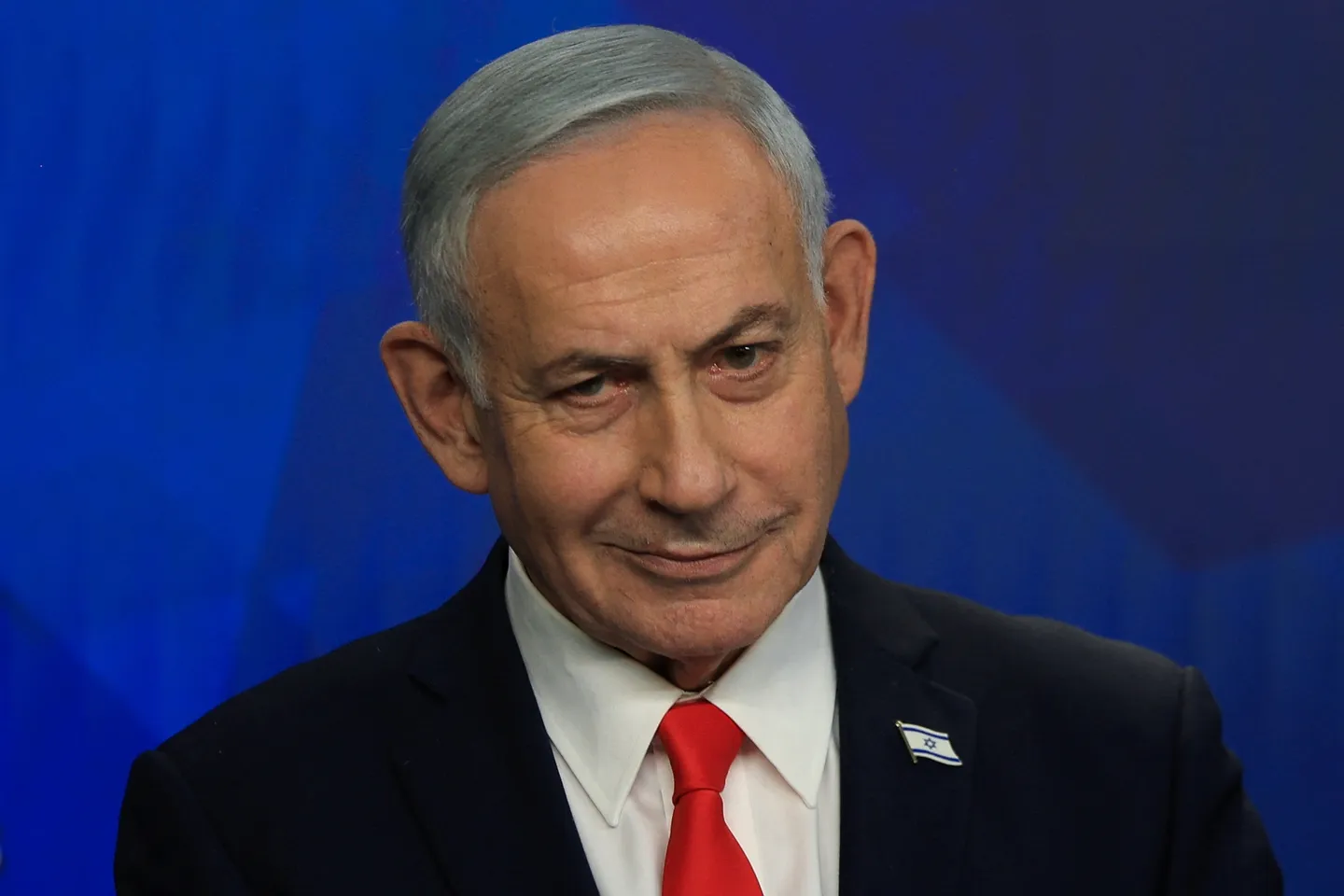
Those questions become even sharper when viewed through the political record of Benjamin Netanyahu himself.
Throughout much of his career, Netanyahu has consistently opposed the creation of a fully sovereign Palestinian state.
He has overseen significant settlement expansion in the occupied West Bank, repeatedly argued that Israel must retain overriding security control west of the Jordan River and, throughout the war on Gaza, has insisted that Israel must preserve indefinite security freedom inside the Palestinian enclave.
These positions sit uneasily alongside an agreement that requires a complete Israeli military withdrawal.
Yet reducing the issue to Netanyahu alone risks overlooking a much deeper political reality.
The current governing coalition is undoubtedly the most hardline in Israel's history, with several ministers openly advocating the permanent reoccupation of Gaza and the re-establishment of Israeli settlements there.

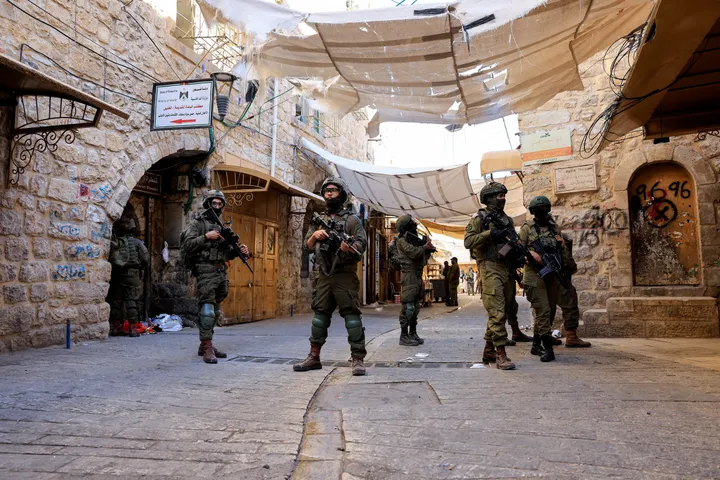




But these positions did not begin with this government. Long before October 7, 2023, successive Israeli governments had insisted on retaining overriding security control over Palestinians, even while participating in peace negotiations.
Settlement expansion continued under governments of different political colours, while proposals for Palestinian sovereignty were consistently accompanied by demands that Israel retain ultimate control over borders, airspace and security.
The attacks of October 7 did not create these positions; they reinforced and politically legitimised ideas that had long existed within much of Israel's political establishment.
The question, therefore, extends beyond Benjamin Netanyahu. It is whether Israel itself is prepared to relinquish a level of control that has, for decades, been central to its approach to the Palestinian question.
This is precisely why the latest proposal represents such a significant test.
For nearly three years, the international conversation has revolved around a series of conditions presented as prerequisites for ending the war.
Hamas had to release hostages. Hamas had to relinquish governance. Hamas had to disarm. Whether those demands were realistic or fair is a separate debate.
RELATEDTRT World - Netanyahu is trying to get ahead of history before history gets ahead of him
The world needs to act now
What matters today is that Hamas has now indicated its willingness to accept the most politically sensitive of those conditions within the framework of a comprehensive settlement.
If that is no longer enough to secure a complete Israeli withdrawal, then an uncomfortable question inevitably follows: were those conditions ever the true obstacle to peace?
That question does not concern Israel alone. It also concerns the governments that have consistently defended Israel's military campaign while insisting that Hamas first meet certain conditions before meaningful diplomacy could begin.
If Hamas has now accepted those conditions, at least in principle, the burden shifts.
The credibility of the agreement will depend not only on Israel's willingness to implement its commitments but also on whether the US, UK and European governments are prepared to insist that it does.
That has rarely happened in previous negotiations.
International pressure has often focused overwhelmingly on securing Palestinian compliance, while Israeli obligations have frequently been treated as matters for future discussion or domestic political convenience.
The result has been a succession of agreements that generated diplomatic headlines without fundamentally altering the realities on the ground.
If the same pattern is repeated again, this latest initiative is unlikely to succeed where so many others have failed.
Peace agreements do not survive on trust alone. They endure because all parties understand that commitments carry consequences and that failure to implement them comes at a political cost.
If Israel concludes that it can indefinitely postpone, reinterpret or simply ignore its obligations without meaningful international consequences, this agreement risks joining the long catalogue of missed opportunities that have defined the Israeli-Palestinian peace process.
The title of this article asks whether Benjamin Netanyahu can be trusted to honour the agreement.
It is an important question, but perhaps not the most important one. Netanyahu's record certainly invites scepticism.
Yet he is also a product of a broader political consensus that has, for decades, prioritised Israeli control over Palestinian sovereignty. Even if his premiership were to end tomorrow, the structural questions would remain.
The real test, therefore, is not simply whether one man will keep his word.
It is whether Israel is prepared to accept the political price of ending its military presence in Gaza after nearly three years of catastrophic destruction. Hamas has now made a move that many believed impossible. The next move belongs to Israel.
If Israel chooses not to honour its side of the agreement despite obtaining one of its principal demands, the world will have to confront a difficult conclusion.
The obstacle to peace was never solely Hamas' refusal to change. It was Israel's unwillingness to relinquish control over Gaza and allow Palestinians genuine political self-determination—and the persistent failure of its allies to ensure that Israel's commitments carried the same weight as everyone else's.
Whether this agreement succeeds will therefore depend not simply on Hamas' willingness to disarm or Netanyahu's willingness to sign, but on whether Israel, and those with influence over it, are finally prepared to match promises with action.