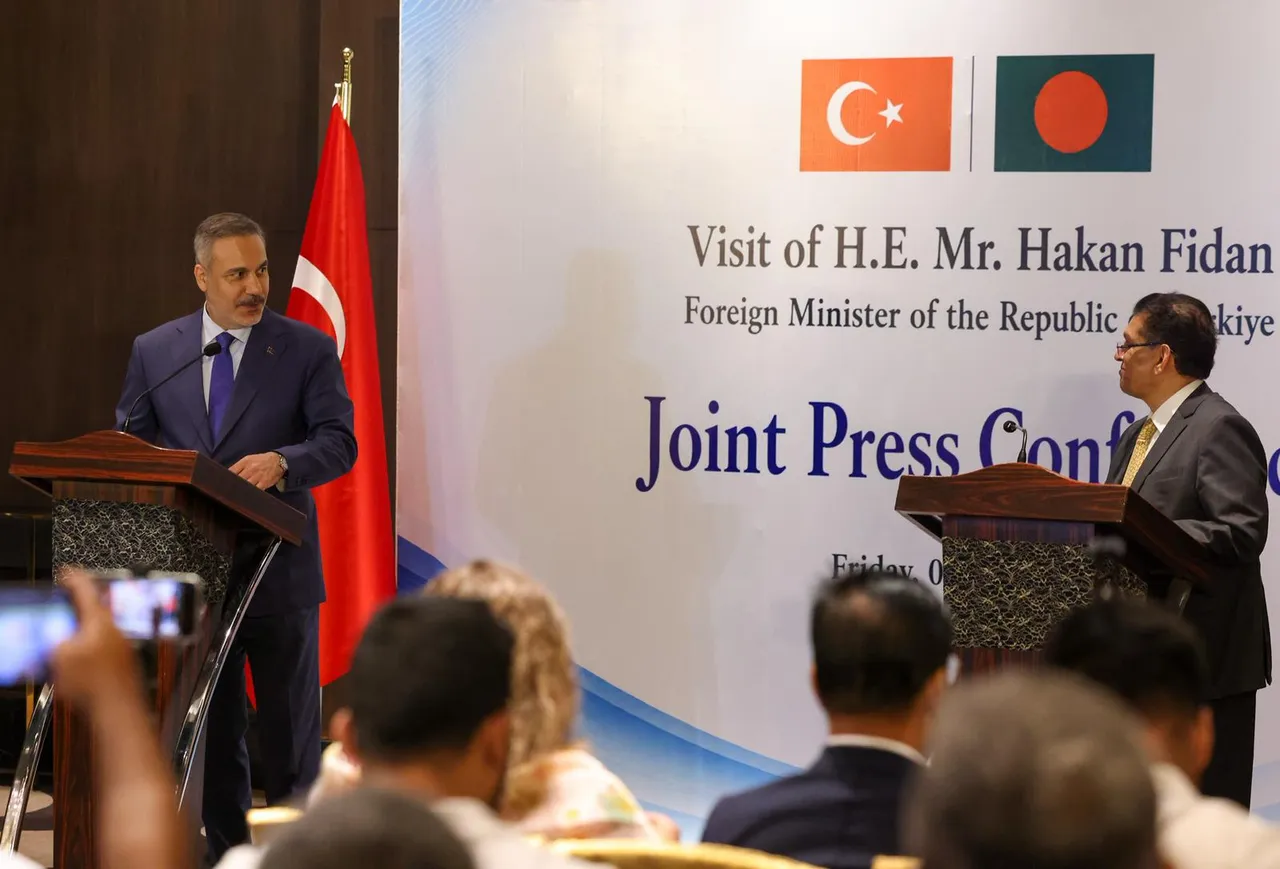
Türkiye is working in coordination with neighbouring countries and international organisations to achieve a permanent and just solution to the Rohingya crisis while striving to keep the issue on the international agenda, said Turkish Foreign Minister Hakan Fidan on Friday.
“We are acting in solidarity and coordination with relevant neighbouring countries and organisations to achieve a permanent and just solution to the Rohingya issue. Türkiye is also making intensive efforts to keep this crisis on the agenda of the international community,” Fidan said, speaking at a joint press conference with Bangladeshi Foreign Minister Khalilur Rahman in Dhaka following bilateral talks.
Fidan also praised Bangladesh for hosting more than one million of the persecuted refugees, describing the country’s role as a historic humanitarian sacrifice.
“The tragedy endured by the Rohingya Muslims, unfortunately, continues. I would like to once again stress that Bangladesh, which has hosted more than one million Rohingya for years, has demonstrated a historic sacrifice on behalf of all humanity,” he said.
Fidan said he would visit refugee camps in Cox’s Bazar and review humanitarian activities carried out by Turkish institutions, including the Turkish Cooperation and Coordination Agency (TIKA), Disaster and Emergency Management Presidency (AFAD), Turkish Red Crescent, and Turkish Diyanet Foundation, affiliated with the country’s Religious Affairs Directorate.
He also said he plans to visit a Turkish field hospital in the region.
“We will continue our humanitarian assistance aimed at improving the conditions of the Rohingya while also supporting their safe, dignified, and voluntary return to their homeland,” he said, referring to Myanmar’s Rakhine state, where they fled persecution and violence starting in 2017.
Protection of humanity’s shared heritage
Fidan congratulated Rahman on his election as president of the 81st session of the UN General Assembly.
He described Rahman’s election and Bangladesh’s victory at the UN as a reflection of the country’s growing international standing, saying the outcome demonstrated the respect Bangladesh enjoys within the international community.
With its Feb. 12 elections and referendum, Bangladesh entered a new era, said Fidan, adding that Türkiye was a strong supporter of the process.
He said the intensive diplomatic engagement between the two countries is deepening bilateral relations and helping identify new areas of cooperation.
“We continue our efforts to deepen our longstanding partnership across a broad spectrum and elevate it to a much stronger and more visionary level on solid foundations,” Fidan said.
The foreign ministers also discussed boosting bilateral trade from $1.3 billion to $2 billion. Fidan added that he signed a memorandum of understanding on cooperation to protect cultural assets with Nitai Roy Chowdhury, Bangladesh’s cultural affairs minister.
“I hope this document, which reflects our determination to protect humanity’s shared heritage, will be beneficial for our countries,” he said.
Regional stability and Mideast tensions
Fidan said ensuring stability, security, peace, and prosperity in the region remains one of the fundamental priorities of Turkish foreign policy, warning that regional conflicts are increasingly shaping global dynamics.
Addressing tensions involving Iran, he said the US-Israeli attacks on Iran had affected not only the region but the wider world.



“We welcome the progress achieved in the talks between Iran and the US. We hope these talks will yield concrete results and lay the groundwork for lasting peace and stability,” he said.
Fidan stressed that restoring freedom of navigation in the Strait of Hormuz and returning conditions to their pre-war state are essential for the global economy, energy security, and international stability.
He also praised Pakistan’s mediation efforts to make the ceasefire permanent and said Türkiye would continue supporting those initiatives.
While noting progress in diplomatic contacts, Fidan expressed concern over occasional ceasefire violations.
“The parties should refrain from steps that could jeopardise the diplomatic process. The international community must also demonstrate a common will to end the war. In particular, attempts by Israel to sabotage the ceasefire must be prevented,” he said.
Fidan accused the government of Israeli Prime Minister Benjamin Netanyahu of obstructing a two-state solution in Palestine and escalating conflicts across the region.
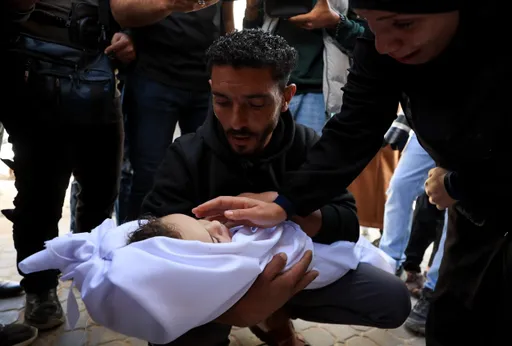
“Israel continues its genocide in Gaza, which has left deep wounds on the conscience of the international community, and adds new unlawful measures every day in the West Bank targeting the two-state solution. The priority for the international community should be stopping Israel’s aggression and eliminating the state of war in the region,” he said.
He also called for an end to Israel’s occupation and attacks in Lebanon and stressed the importance of restoring calm.
Fidan concluded by stressing that Türkiye and Bangladesh will continue taking concrete steps to strengthen bilateral relations through new projects and will reinforce stability, peace, and prosperity in South Asia.
Bangladesh praises Türkiye’s support, seeks deeper cooperation
Rahman described Türkiye as a key partner for Bangladesh, thanking Ankara for its support of the country's successful bid for the UN General Assembly presidency and saying Dhaka would not forget that backing.
Rahman said his talks with Fidan reflected the longstanding friendship between the two countries and came at an important moment in bilateral relations.
He noted that both sides aim to further expand cooperation and partnership across multiple sectors and encouraged Turkish investors to take advantage of opportunities available in Bangladesh's special economic zones.
Stressing the importance of multilateral cooperation in addressing global challenges, Rahman also thanked Türkiye for sending election observers to Bangladesh's parliamentary polls.
On the Rohingya crisis, Rahman described the issue as one of Bangladesh's most significant humanitarian and diplomatic challenges. He said he had highlighted the plight of the Rohingya in his acceptance speech after being elected UN General Assembly president and stressed the need to keep the issue on the international radar.
Rahman praised Türkiye's longstanding role in responding to the crisis, noting that Ankara has supported Bangladesh through humanitarian assistance and diplomatic engagement since the beginning of the displacement emergency.
He also highlighted the contribution of the Turkish-run hospital in the Rohingya camps and welcomed Türkiye's continued involvement in regional and international efforts aimed at finding a solution to the crisis.