 Yahya Habil
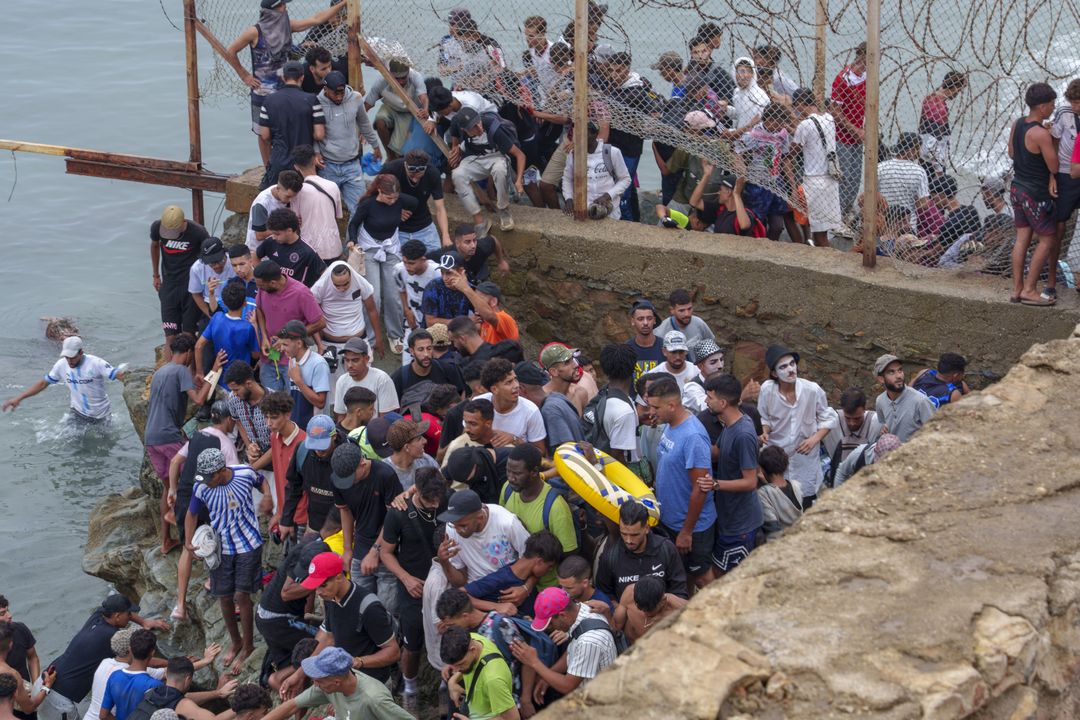
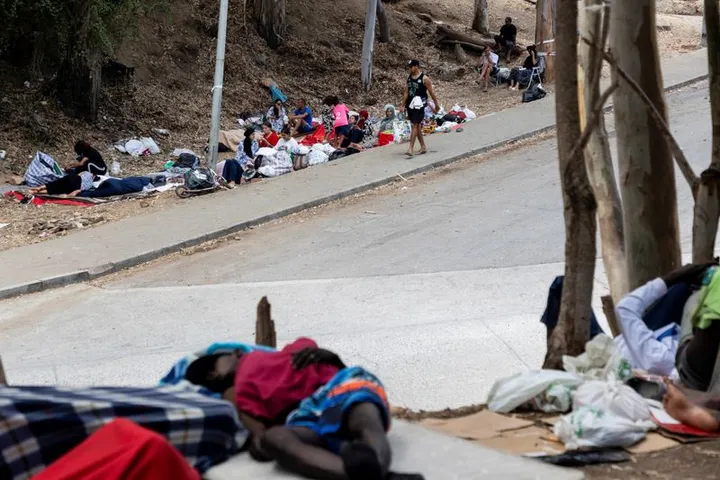
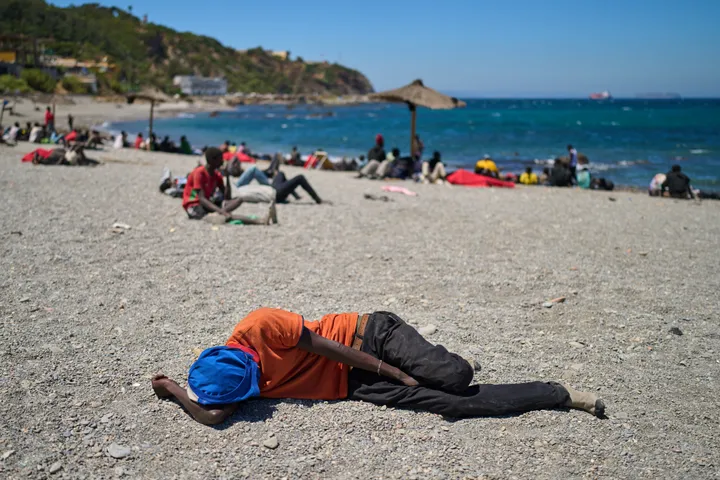
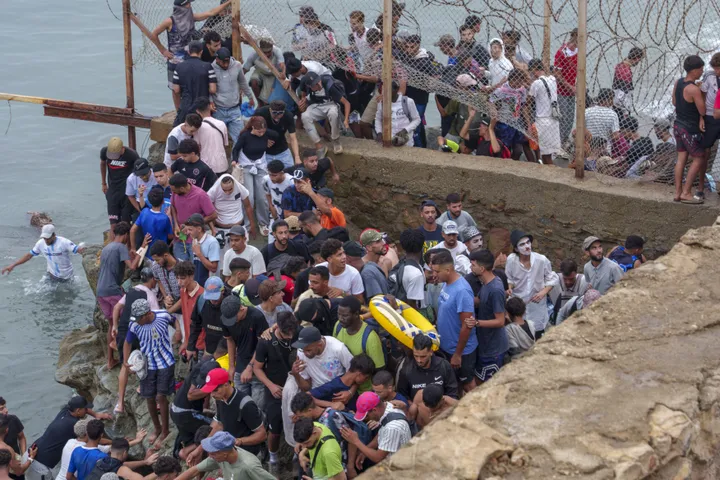
The recent, sudden influx of tens of thousands of Moroccans into Spanish territory has put the spotlight back on irregular migration to Europe, a contentious issue that has roiled the continent in recent times.
However, a broader look at the migrant crisis tells a more complex, multi-dimensional story, one in which history, foreign relations, and global geopolitics intertwine.
In other words, this was not a mere passing of migrants; it was an event that should be viewed through a wider, global lens.
What makes this incident unique when compared with other, usual incidents of migrant passing from Africa to Europe is the fact that it took place on the African mainland – at Ceuta and Melilla, two Spanish-held enclaves in the Moroccan heartland.
Ceuta bore the brunt of the influx, with 50,000 to 60,000 migrants entering the enclave, according to the Reuters news agency. Melilla, though, saw only sporadic clashes between migrants and security personnel.

Spanish takeover
Ceuta and Melilla have long been Spanish-held territories. Unlike other parts of northern Morocco, the two enclaves were claimed by the Spanish crown long before Spain’s land grab of northern Moroccan cities in the late 19th century and early 20th century.
Ceuta, which was initially captured by Portugal in 1415, passed into the Spanish realm as a result of the Iberian Union (1580-1640), when the two then-kingdoms were joined under a Spanish monarch.
The 1668 Treaty of Lisbon reconfirmed Spanish ownership of Ceuta.
Melilla, on the other hand, was conquered by the Spanish as far back as 1497, right after the fall of Granada in 1492 and the completion of the Spanish Reconquista.
Although Spanish administration over the enclaves is recognised by most major global players, a recent change in the US Congress’ legislative phrasing regarding Madrid’s administration of the enclaves points to a wider context that could be tied to the migrant incident.
The US now refers to the enclaves as “Spanish-administered cities located in Moroccan territory”, as opposed to previous documentation referring to the twin cities as Spanish territory.
This shift comes as no surprise, as the US has been no fan of the current Spanish government over the past few years.
In fact, President Trump has been very critical of the Spanish government and Prime Minister over many issues, especially Madrid’s support for the Palestinian cause.
This tumultuous relationship between the two states is what led many to cast doubts over the simplicity of the Ceuta migrant crisis.
Strained relations




The US has time and time again criticised Spain for its stances on migration and its passivity in the Iran war.
The US President dubbed the migrant incident an “invasion”, implying that it is a result of the Spanish government’s lenient migration policies.
As for Spain’s wartime “passivity” that Trump frowned on, it was actually a form of activism that was detrimental to US goals.
Since the beginning of the war on Iran, Spain refused to allow the US to use its military bases.
Spain has repeatedly blocked Israel-bound arms shipments in 2024 and 2025, followed by the passing of a parliamentary arms embargo in October 2025.
The past instances have led many to speculate that they tie into Spain’s foreign relations and foreign policy choices.
Led by a left-leaning government, Spain has adopted a lenient border policy, as evidenced by a recent Supreme Court ruling on migrants arriving by sea. This ruling apparently played a role in igniting the Ceuta and Melilla crisis.
However, many also speculate that the US and its allies might have played on this leniency to manipulate the narrative and trigger the sudden influx, hoping that it would exert pressure on the Spanish government by Spain’s active, anti-migration right-wing lobby.
Some have gone even further to claim that this was not only done to weaken the Spanish government’s position domestically, but also to weaken its grip on the enclaves and the Spanish-Moroccan Mediterranean shores, which begin westwardly at the Strait of Gibraltar.
Weakening Spain’s grip and influence on this area automatically translates to Morocco gaining the edge, a more favourable condition in the eyes of the US and its allies.
After all, it was Morocco that allowed the arms shipments which Spain blocked. And with the Iran conflict still on, the US and Israel cannot afford to have their supply lines bogged down at the Strait of Gibraltar when both the Strait of Hormuz and the Bab-al-Mandeb Strait are no longer reliable.
As of today, the Spanish government has already dealt with the incident, as the vast majority of the migrants who broke in have already gone back.
Examined through a bigger global lens, the incident serves as a reminder of the current geopolitical dynamics, and perhaps even a signal of what the future might hold for Spain-US relations.
For now, the only thing that can be said is that, if the speculations on the involvement of the US and its allies were to be true, then the US President’s comments on the incident are to be deemed as audacious as Spain’s claims to the enclaves are.
(This article was first published on TRT Afrika)