 Murat Sofuoglu
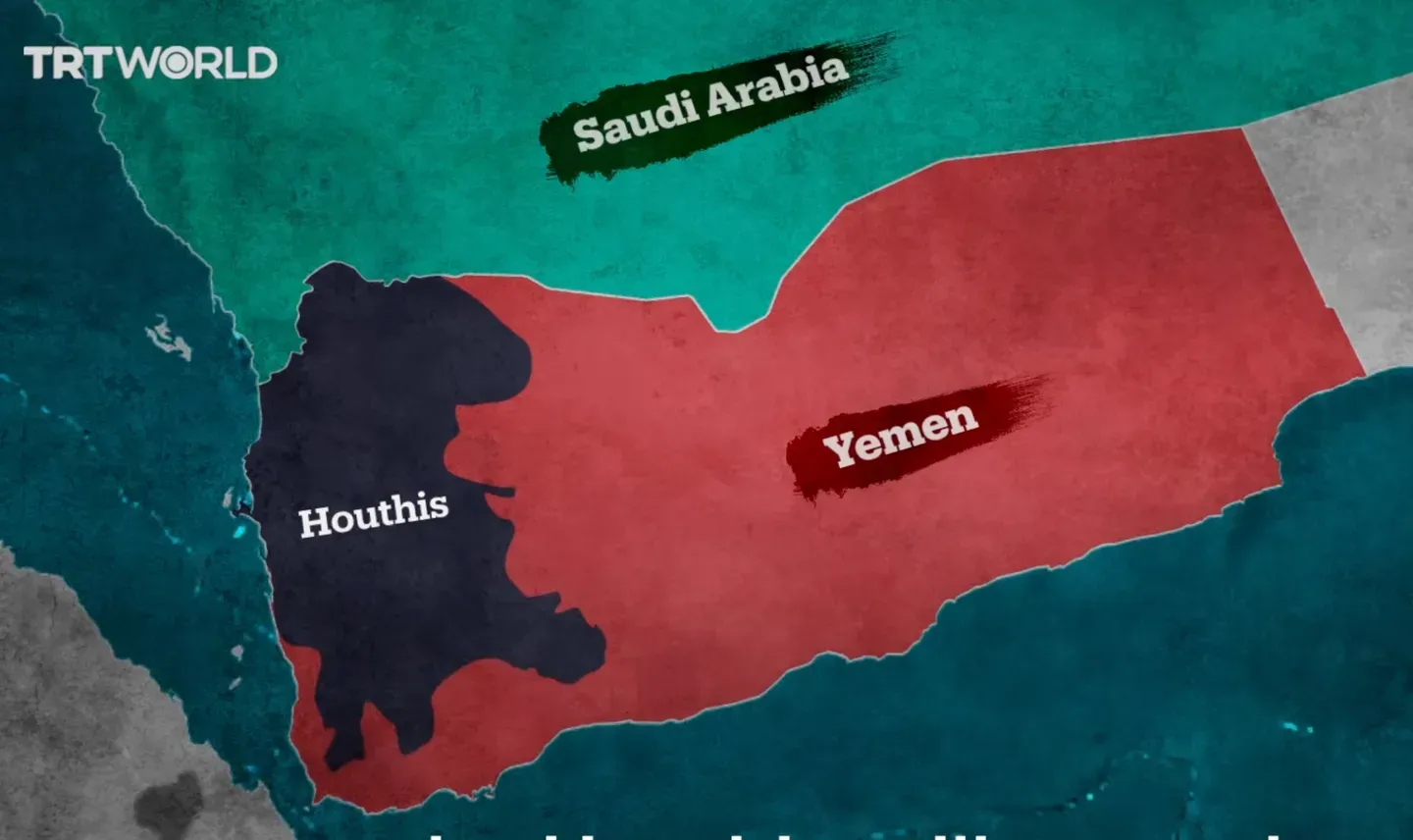
The Houthis, an Iran-backed Shia group, have recently captured Mocha, a Red Sea port near the Bab al Mandab Strait, as well as key islands adjacent to the critical waterway, expanding their control across southwestern Yemen against Saudi-backed forces.
On Wednesday, Houthi accounts published a video showing the debris of an apparently Saudi F-15 fighter jet shot down by the group, which has controlled Yemen’s capital, Sanaa, and other areas in the country’s west with large Shia populations since 2014.
The Houthi expansion along Yemen’s Red Sea coast has alarmed the internationally recognised government, which fought the Iran-backed group during the civil war, and its Saudi backers, already pressured by Iran’s Strait of Hormuz blockade.
Hostilities between the Houthis and Saudi-backed forces had largely subsided since a UN-brokered truce in 2022.
The following year, Tehran and Riyadh agreed to restore diplomatic relations in a China-brokered deal. While the US-Iran war has heightened tensions, the Houthis have largely stayed away from the confrontation in the Gulf.
So why are the Houthis escalating against their enemies now?
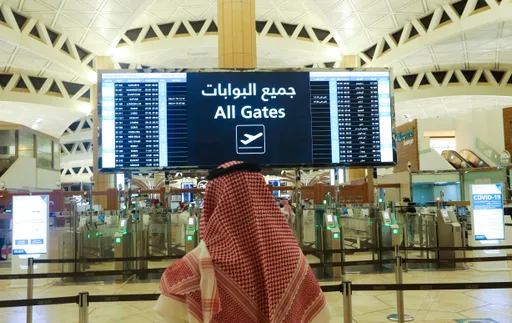
Tensions between the two sides began escalating in July after Iran resumed direct flights to Houthi-controlled Sanaa for the first time in about a decade.
An Iranian aircraft initially flew a Houthi delegation to Tehran, but when a Mahan Air flight later sought to return the delegation, Saudi-backed forces struck Sanaa airport to prevent it from landing.
The aircraft was eventually diverted to Houthi-controlled Hudaida.
The dispute went beyond a single flight. Riyadh viewed direct flights between Tehran and Sanaa as a challenge to arrangements governing the airport that had accompanied the 2022 truce, while the Houthis framed the issue as a question of Yemen's sovereignty over its airspace.
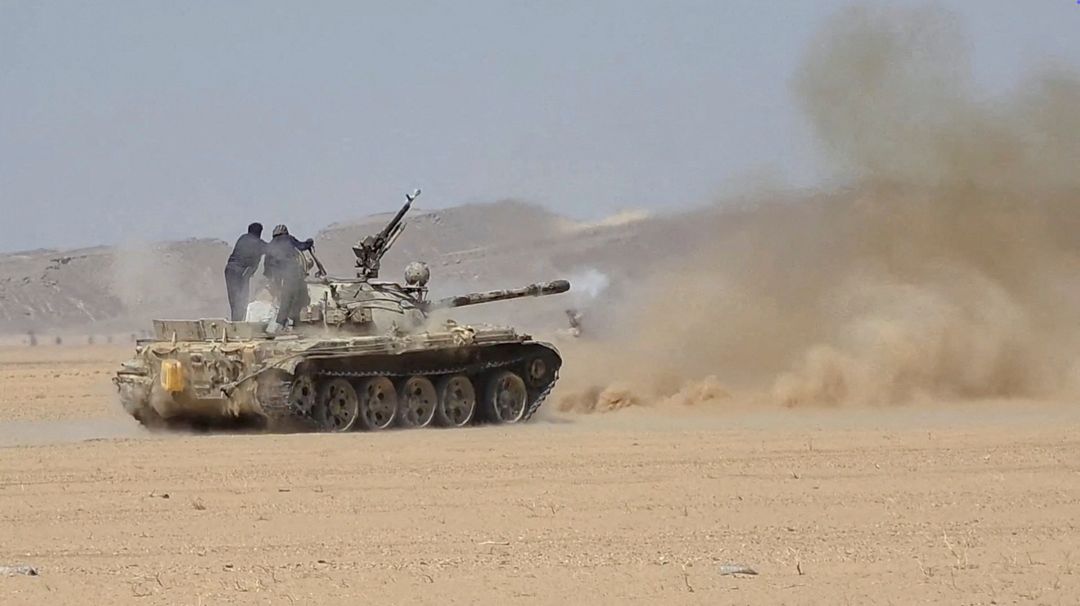
Earlier this month, the Houthis launched a lightning offensive against Saudi-backed forces.
Domestic and regional factors
Behind the ongoing Houthi offensive, experts see a combination of domestic and regional factors emboldening the Yemeni group, which appears to have used the truce period to strengthen its military capabilities more effectively than its Saudi-backed rivals.
Esam Alahmadi, a Yemeni political analyst and sociology PhD researcher at Selcuk University, sees three interrelated motives behind the Houthis’ current escalation in Yemen.
First of all, the Houthis want “to convert territorial control along Yemen’s western coast into broader political and military gains,” Alahmadi tells TRT World.
With its ongoing offensive, the group has gained territory around the Bab al Mandab Strait, giving it greater leverage over a chokepoint that handles about 12 percent of global shipping.
The Iran-backed group also wants to take advantage of the current regional conflict, in which Tehran backs the Houthis, “in an effort to establish themselves as an actor that cannot be ignored,” Alahmadi says.
Finally, the Houthi advance around Bab al Mandab strengthens the group’s “domestic mobilisation narrative by portraying itself as a force confronting regional and international adversaries, rather than merely a party to an internal Yemeni conflict,” he adds.
The sophistication of recent Houthi attacks also suggests that the group used the truce period to enhance its missile and drone capabilities, bring in Iranian experts and Hezbollah operatives, and take control of military infrastructure previously established by government forces on islands and coastal areas overlooking Bab al Mandab, according to Alahmadi.
In recent years, conflicts across the Middle East have seen regional actors, including Israel and Iran, seek to extend their influence beyond their borders through alliances with armed groups and other regional partners, particularly in areas surrounding strategic waterways
This regional environment has also encouraged groups such as the Houthis to seek regional and international leverage to promote their interests.
“The Houthis increasingly feel they are in a stronger position after demonstrating their ability to project power beyond Yemen through their Red Sea campaign. This has encouraged them to raise their demands and increase pressure on Saudi Arabia and the Yemeni government,” Ahmed Nagi, a senior analyst for Yemen at International Crisis Group, tells TRT World.
While Tehran helped restrain the Houthis following the 2022 truce amid the China-brokered Saudi-Iran rapprochement, that calculation has changed following the US-Israel strikes on Iran, with Tehran now having “less incentive” to hold the Houthis back, Nagi says.
With Iran's blockade of the Strait of Hormuz already disrupting global oil shipping, Tehran would also benefit from further disruption around Bab al Mandab under Houthi pressure, particularly if it drives energy prices higher, he adds.
The Houthi offensive has also unfolded amid shifting regional alignments. Iran and the UAE, despite being on opposing sides of several regional conflicts, have agreed to strengthen ties and expand cooperation.
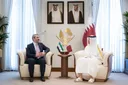
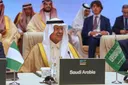

Saudi Arabia and the UAE, meanwhile, have pursued competing agendas in Yemen.
The UAE backed the Southern Transitional Council, while tensions with Riyadh became particularly apparent in January when Saudi forces struck UAE-backed forces during a weapons shipment.
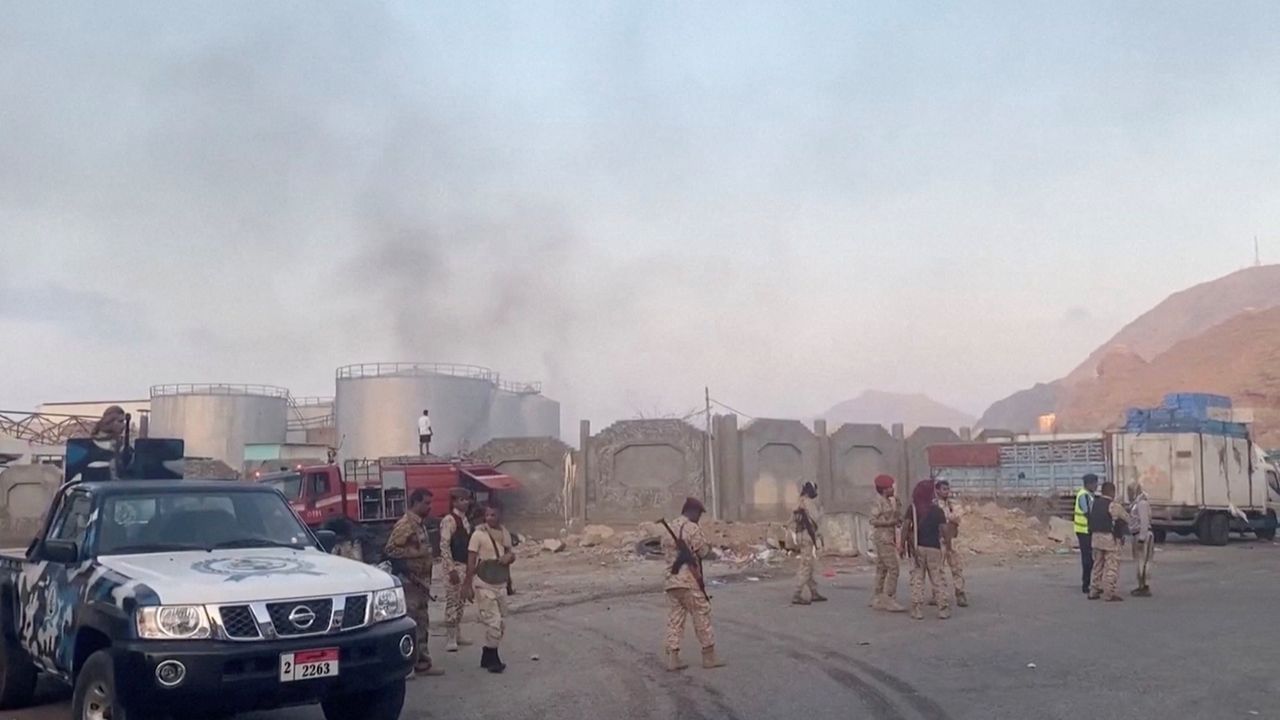
Both the Iran-UAE rapprochement and Tehran’s “attempt to alleviate pressure on itself in the Strait of Hormuz by shifting the theatre of conflict to the Bab al Mandab Strait” played a role in the emergence of the current Houthi offensive, Adel al-Shuja'a, a former spokesman for late Yemeni president Ali Abdullah Saleh, tells TRT World.
Saleh was killed by the Houthis in 2017.
The Houthi offensive has also altered regional calculations, allowing Israel to increase pressure on Saudi Arabia to normalise relations with Tel Aviv, according to al-Shuja'a.
“Saudi Arabia possesses significant strengths, yet it is hampered by indecision and a tendency to look to Washington for solutions. It has yet to realise that Washington’s perspective on its own interests differs fundamentally from the kingdom’s.”
What is next?
Despite the Houthi advances, it would be difficult for the Shia group to extend its rule across Yemen, a country with a non-Shia majority that is already grappling with a deep humanitarian crisis, according to analysts.
“The greatest danger is that Yemen’s western coast could shift from being a local front into an arena for open regional conflict,” says Alahamdi, referring to opposing agendas between Israelis, Saudis, the UAE and Iran in the middle of the already high Gulf tensions.
“If there is no effective containment or political arrangement, there is a risk that this becomes a broader escalation rather than a battle confined to the Bab al Mandab area,” says Nagi.
Other experts share those concerns.
“The trend seems to be toward a sustained confrontation. Houthi territorial gains around Bab al Mandab increase their leverage but also make a stronger Saudi, Yemeni and potentially international counter-response increasingly likely,” says Luciano Zaccara, a Doha-based expert on Iran.
While the Trump administration, which has recently signalled that Iran wants to talk to Washington, has downplayed ongoing Houthi attacks on Saudi Arabia and Riyadh-backed forces in Yemen, that stance “may change in the future”, Zaccara says, pointing to the tit-for-tat attacks between the US and Iran and the rapidly changing military environment in the Gulf.
But the analyst also sees that “expelling the Houthis from greater Yemen would be extremely difficult” because the group is militarily stronger than before, while their Yemeni opponents remain fragmented despite the Saudi support.
“The quick advances and the heavy attacks against Saudi cities demonstrate their recent military build-up.”
Also, a fragmented country like Yemen, where various external actors support different local forces, forcing out the Houthis from their strongholds in western Yemen seems to be a real challenge for both Saudis and their allies.

Doing so would require several measures at once, Alahmadi says: unifying Yemeni anti-Houthi forces under coherent political and military leadership; building professional ground forces rather than formations driven by competing interests and divided loyalties; cutting off arms-smuggling and funding networks; and developing better local governance.
But whether the Houthis can hold on to their recent gains will also depend on how quickly their opponents can regroup.
“The battle is not over,” Nagi says.
While the Houthis now control Mocha, parts of the approaches to Bab al Mandab and several surrounding islands, “that does not necessarily mean they will be able to consolidate these gains,” he says.
“It is about whether the Houthis can turn their recent military gains into durable control and whether the government and its allies can rebuild a coherent defensive line.
“The coming days and weeks will be important in determining whether the current Houthi advance becomes a lasting shift in the military balance or the beginning of another cycle of territorial reversals.”
Without a unified front, it will be difficult to reverse the Houthi advances, Nagi says, noting that recent developments show the Iran-backed group has a more coherent military strategy than the fragmented Saudi-backed forces.
“The immediate question is less whether the Houthis can be pushed back in principle, and more whether their opponents can overcome the organisational weaknesses that allowed the recent advance to happen in the first place.