 Zulal Sema
Long before longevity became a global industry, humanity had dreamed of prolonging life or even living forever.
European folklore imagined vampires sustaining eternal life by drinking blood, while alchemists searched for the mythical Philosopher’s Stone and the “elixir of life”, substances believed to preserve youth, cure disease and grant immortality.
These ancient aspirations still shape popular culture. J. K. Rowling’s Harry Potter and the Philosopher’s Stone draws on the mythology of alchemy, while Paulo Coelho’s The Alchemist presents the elixir of life as a universal cure that prevents ageing.
Yet Coelho’s novel also suggests that life’s real treasure lies not in immortality, but in fulfilling one’s “Personal Legend”, which is your life purpose and the deep dream you have always wanted to accomplish.
Today, that ancient quest has become a measurable and marketable pursuit.
“We may be the first generation that won’t die,” reads the Instagram bio of technology entrepreneur Bryan Johnson, who has attracted worldwide attention for his radical anti-ageing protocol, Project Blueprint.
His regimen has included frequent blood tests, numerous supplements, strict dietary rules, constant biological monitoring and experimental therapies. In one of his most controversial experiments, Johnson received plasma from his teenage son.
He is no longer searching for an enchanted stone or mythical water; he relies on biomarkers, algorithms, supplements and medical procedures.
Access to this vision of the future comes at a considerable price, though.
Biological-age tests, personalised nutrition plans, advanced screening, private longevity clinics and experimental treatments are increasingly marketed to those who can afford them.
The promise of a longer, healthier life is compelling. But as longevity becomes a lucrative global market, it raises urgent questions about inequality, scientific evidence and the commercialisation of ageing.
Newest global status symbol
“Life expectancy has increased, but the goal should be to build a society in which people age healthily, remain free from chronic illness, continue to be productive, participate actively in life and retain their vitality. Preventing illness is the most cost-effective approach,” Specialist Physiotherapist Hakan Ozdemir, Vice Chairman of MUSIAD (Independent Industrialists' and Businessmen's Association)’s Health Sector Board, tells TRT World.
Today, we are more exposed to one another’s lives than ever before. As modernisation reshapes the world, our understanding of wealth is also changing, increasingly embracing the idea of “quiet luxury”.
The ultimate status symbol is no longer simply what you own or display, but your health and well-being. Reflecting this shift, global luxury brands are investing in pharmaceuticals, anti-ageing technologies, high-end wellness centres and exclusive book clubs for their affluent clients.
But longevity is about more than preserving the body.
“Longevity today is not only about physical longevity; it is also about mental longevity,” Merve Cetinkaya, an interdisciplinary psychiatrist and applied sociologist, tells TRT World.
“People want a good quality of life, not merely a longer one. Protecting mental health also helps protect physical health, and both are closely connected to life expectancy.”
She notes that the lifestyles promoted on social media represent only one possible model and do not need to be adopted unquestioningly.
“We can create our own ways of living better. The most important thing is to understand our needs, enjoy our lives and develop a sense of meaning.”
Cetinkaya also highlights a less visible dimension of longevity: spirituality.
“Spirituality can offer a way of connecting with others, with oneself and with transcendence. It can help people discover who they are and find meaning in life.”
The rise of longevity reflects a broader lifestyle movement that is rapidly gaining momentum in Türkiye.
To meet and formalise this growing demand, the country has taken significant legislative steps, most notably through the publication of the Wellness Centres Regulation on July 4.
Ozdemir notes that, as average life expectancy in Türkiye has risen to approximately 76 years for men and 78 years for women, the country’s priorities must evolve accordingly.
Ozdemir says the newly regulated centres are intended to promote longevity, understood not merely as extending lifespan but as making an active commitment to healthy living and ageing.
This transition from reactive medicine to preventive well-being will also shape how the centres operate. Ozdemir highlights the potential integration of these services into Türkiye’s tourism infrastructure.
“Türkiye has significant hotel capacity that operates for only part of the year. If licensed clinical, wellness and longevity services can be offered within hotels, this could open a new dimension in health tourism, one focused on protecting people’s health before illness develops rather than only treating disease.”
Ethical concerns
As longevity science advances, so do questions about who benefits from it—and who gets left behind.
Dr Orhan Onder, a physician and ethicist specialising in healthcare technology, says breakthroughs in genomics, artificial intelligence and advanced imaging have transformed how scientists measure ageing.
Instead of relying solely on chronological age, researchers can now use sophisticated "biological clocks" to estimate how quickly a person's body, individual organs, and even specific cell types are ageing.
These tools could help identify disease risks earlier and assess emerging therapies, such as senolytics and epigenetic reprogramming. However, Onder warns that better measurement does not automatically lead to better medical decisions.
"The fundamental question is no longer simply, 'Can we measure biological age?' but 'Should we, and for whom?'" Onder tells TRT World.
He argues that biological clocks are not yet reliable enough to guide individual clinical decisions, given unresolved questions about their accuracy and validation.
"As the science progresses, our ethical frameworks must evolve in parallel," he says. "The pursuit of longer, healthier lives should not come at the cost of equity, autonomy or a nuanced understanding of what it means to age well."






The rapid commercialisation of longevity is also raising concerns.
Kader Kubra Demirdogen, a pharmacist and PhD researcher at the University of Birmingham, says the industry increasingly markets costly products and procedures as shortcuts to a longer life.
"Some products involve genomic testing or intravenous treatments, and these can be very expensive," she tells TRT World.
"Access is largely limited to wealthier people, so they can also become a marker of social status."
But price should not be confused with scientific evidence, she cautions.
"Some interventions have demonstrated benefits, and others show promise as research continues. But there are also products whose effects remain unproven and whose benefits have been amplified through marketing."
She adds that no supplement or treatment is suitable for everyone, underscoring the importance of personalised care.
"What matters is not presenting these products as extraordinary solutions," she says, "but being honest about what is promising and what has yet to be proven."
Accessible to all
As commercial competition within the longevity sector intensifies, questions are being raised about who can access its benefits.
Dietitian and academic Hatice Kubra Barcin says social media trends can make longevity-focused nutrition appear expensive, restrictive and difficult to sustain.
Its fundamental goal, however, is straightforward: to increase the number of healthy years people experience within a longer life.
“Because of social media trends and misinformation about nutrition, we can come to regard longevity-focused nutrition as inaccessible, unsustainable and expensive,” Barcin tells TRT World.
“Yet our fundamental goal is quite simple: as we extend our lifespan, we also want to increase the number of years we spend in good health.”
Ozdemir similarly challenges the perception that longevity is reserved for the wealthy.
“Longevity and wellness are often perceived as systems available only to an elite group with a high socioeconomic status. But they should not be understood in that way. We are talking about the fundamentals, and living healthily does not necessarily require very high costs.”
Barcin points to the Mediterranean diet, which is rich in vegetables, fruit, pulses, whole grains, extra virgin olive oil and fermented foods such as yoghurt, as an internationally recognised model already embedded in Türkiye’s culinary culture.
“Many foods found in Turkish cuisine and grown on our land are already compatible with the principles of longevity. The Mediterranean diet prioritises vegetables, fruit, fibre, pulses and whole grains. Extra virgin olive oil has a central place, while yoghurt supports gut health. The herbs, spices and plants traditionally used in our cuisine also provide valuable plant compounds.”
Esma Kaan Yildiz, a bioinformatics researcher and children’s author whose work encourages young readers to rediscover botany, also incorporates longevity practices into her personal life.
“I follow developments and research on longevity,” Yildiz tells TRT World.
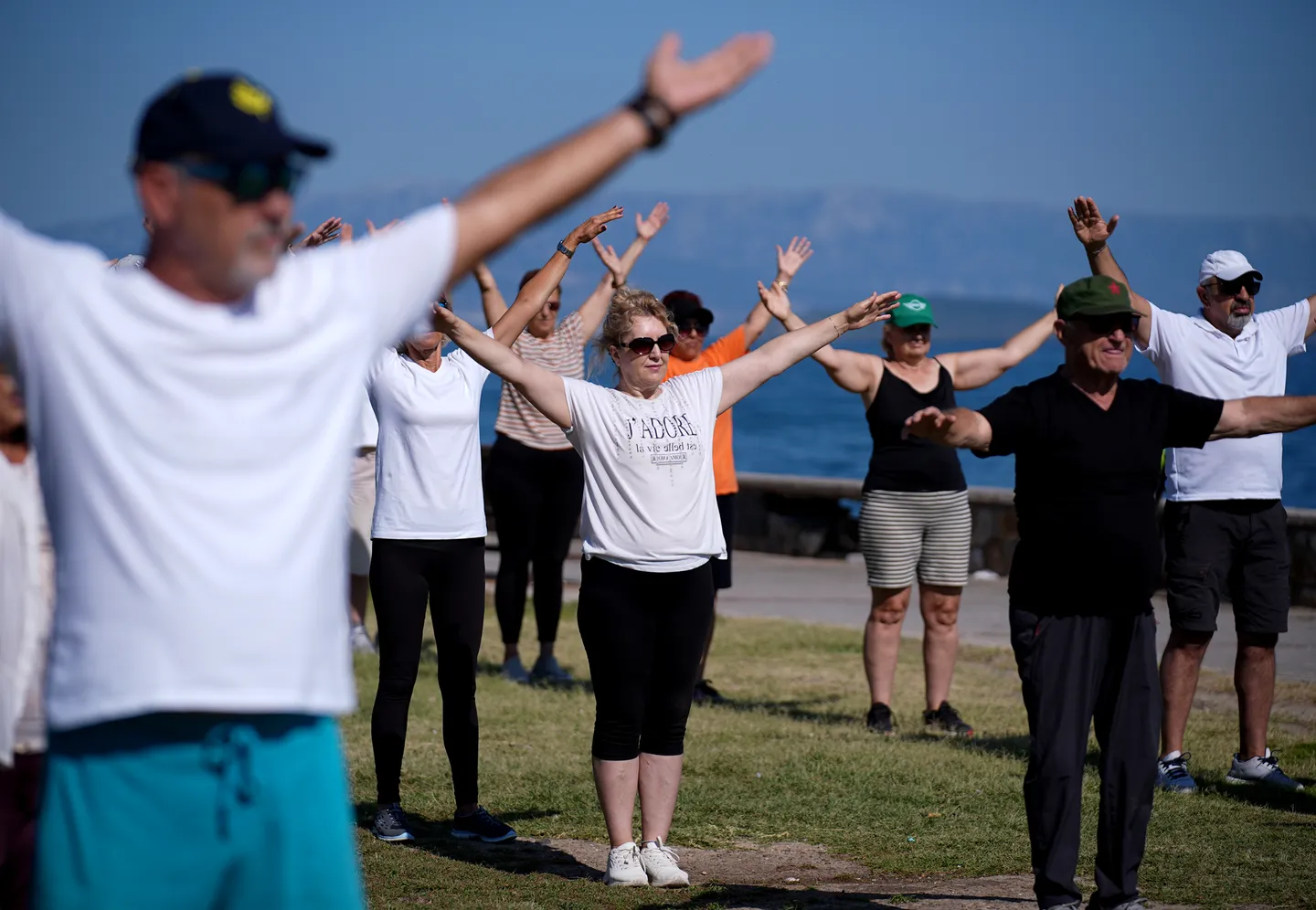
“I also organise nature walks and visits to organic markets in different parts of Türkiye with youth groups. These activities support their mental well-being and help them reconnect with and rediscover nature. It is one way of introducing young people to longevity through real-life experiences.”
Yildiz also questions imported “superfood” trends when nutritious local alternatives are readily available.
“Food trends exist, and people influence one another. Today, we all eat avocados, but are they really what we need? We already have locally grown foods that can serve the same purpose, such as olives, which are widely available and can be consumed without creating unnecessary waste.”
Beyran over supplements
For dermatologist Ahsen Demir, longevity is about extending healthy years, not simply living longer.
"Longevity isn't about living long — it's about living long and healthy," she tells TRT World.
She says skin ageing reflects the body's overall ageing process. While collagen naturally declines with age, sun protection remains the single most important defence.
Demir describes longevity as a pyramid: early diagnosis at the base, followed by healthy habits such as a Mediterranean-style diet, regular exercise and calorie moderation. Supplements come only after nutritional deficiencies are addressed, while treatments like IV vitamins and hyperbaric therapy sit at the top.
"Without that foundation, nothing built on top of it works," she says.
Rather than relying on supplements, Demir points to traditional Turkish foods such as beyran and iskembe, which are naturally rich in collagen and protein.
"Before buying collagen supplements, we already have beyran and iskembe," she says.
She also argues the Turkish hamam deserves recognition alongside the Nordic sauna, citing evidence that heat therapy can support cardiovascular health, while cautioning that research on cold plunges remains less conclusive.
Ultimately, Demir says no supplement can replace healthy living.
"You can't smoke, eat poorly and expect one supplement to undo all of that," she says. "The best investment you can make for healthy ageing is a lifestyle change."