 Agustín Gulman
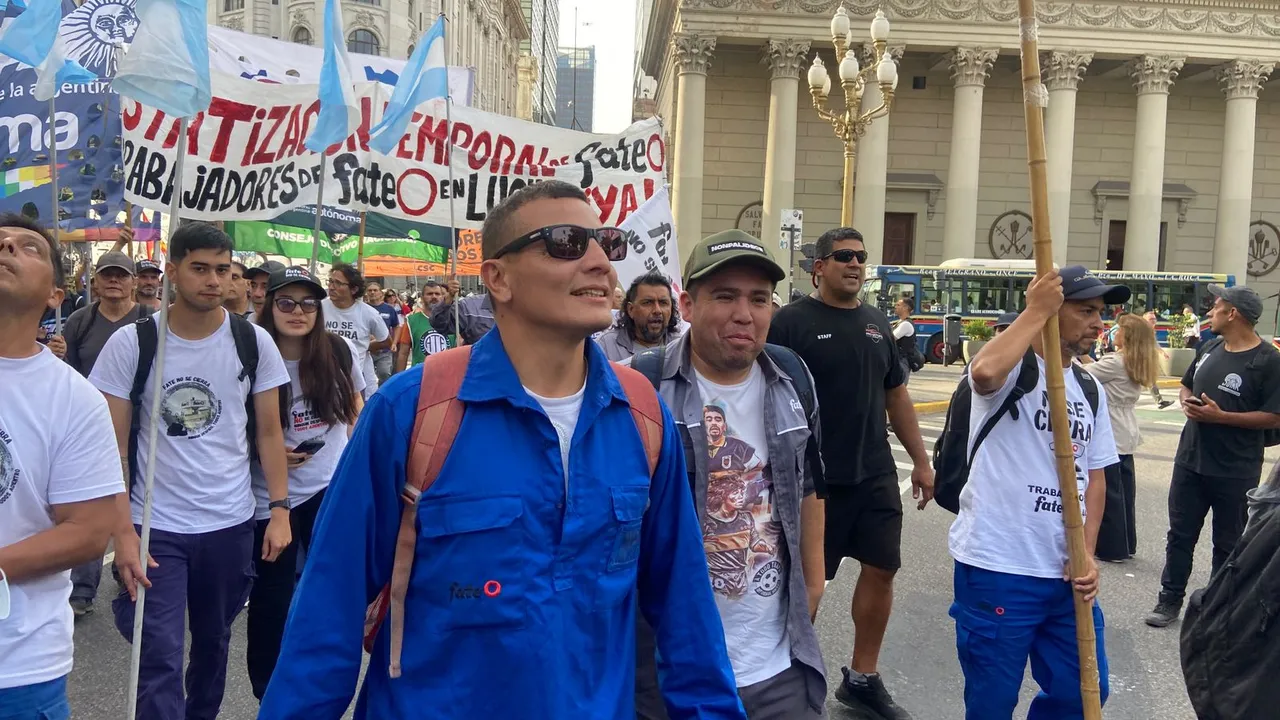
Sebastian Tesoro worked for 12 years in the sorting department at Fate, a tyre factory in Argentina that produced more than 7,000 tyres a month for cars and trucks.
In its heyday, the company shipped around five million tyres a year. But in February, it decided to close its doors, laying off 920 employees, including Tesoro.
On February 18, when Tesoro arrived at the factory — located on a 40-hectare site 30 kilometres from downtown Buenos Aires — he found a sign that read: “Fate announces that, as of today, it is ceasing operations at its industrial plant.”
The company, with an 80-year history, was the only domestic tyre producer.
“I felt angry, but not resigned. The first thing that came to mind was to protest. I couldn't go home resigned; I have three children, work-related illnesses, and colleagues who can't afford to lose their health insurance,” Tesoro told TRT Español.
The industry is in critical condition
Like Tesoro, Argentina has lost 300,000 registered jobs since Javier Milei took office, according to data from the National Labour Secretariat. During the same period, more than 22,000 businesses closed, according to official records.
Thus, the once-thriving Argentine industry, which was the country's productive engine, is now undergoing a critical period and a profound structural transformation, according to official reports, businesspeople, and experts, due to the opening of imports and the increase in public utility rates.
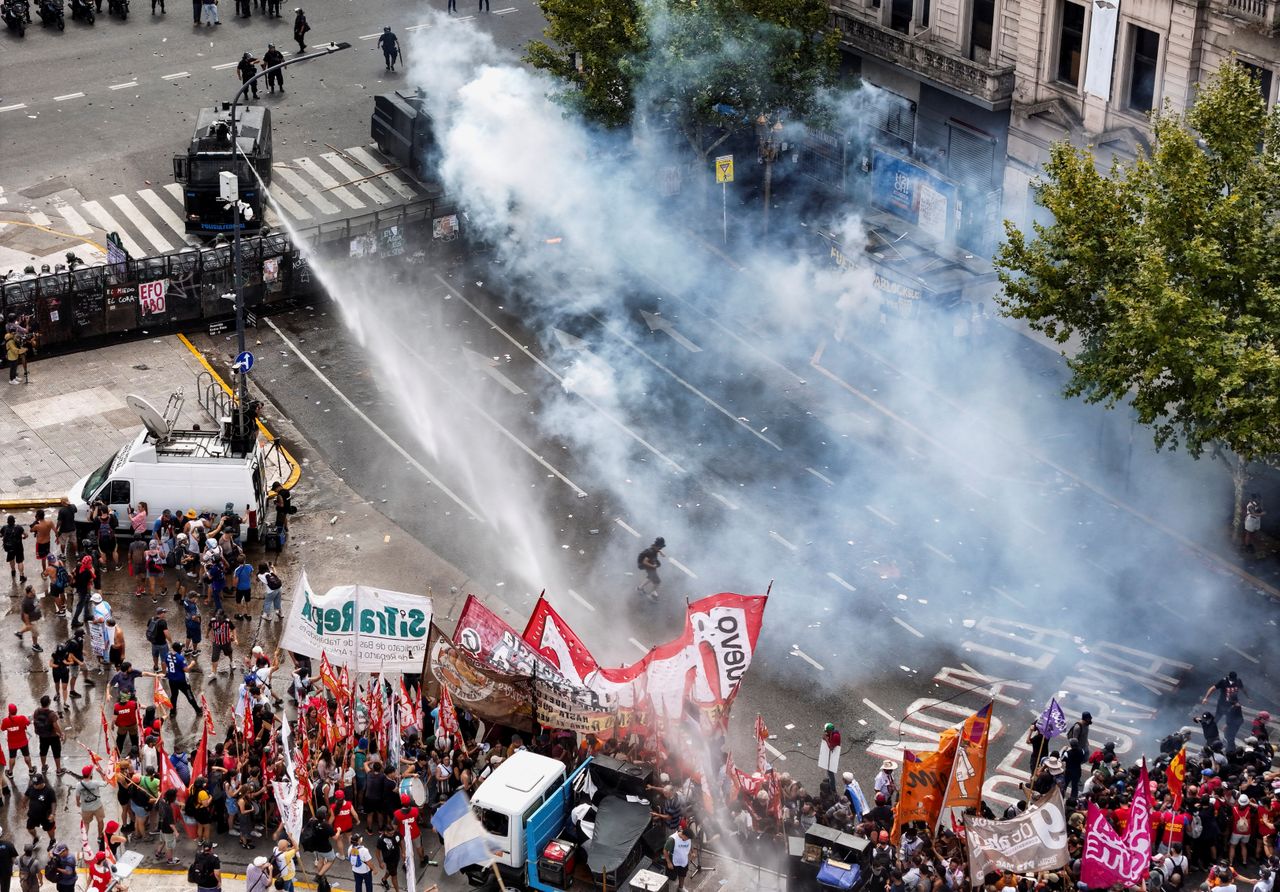
A report from the University of Buenos Aires warned that 100,000 jobs were lost in the industrial sector over the past two years, at a rate of 160 per day, while idle factory capacity rose by 40 percent.
Overall, companies' installed capacity (the maximum volume of production or services a company can provide) averaged 54.9 percent.
President Javier Milei is pushing for economic reforms amid changes in Argentina's industrial sector.
Since coming to power, President Javier Milei has boasted about the shift he intended to bring to the productive sector, prioritising primary activities such as oil extraction and agriculture over productive industry, which he discouraged by opening up to imports.
"To protect industry, the agricultural sector was robbed, and all that was created was a sector addicted to the state," Milei declared. For the president, the pillar of growth "comes hand in hand with trade liberalisation".
“For almost a century, Argentina has been trapped in the trap of industrial fetishism. We were told that the only way to generate employment was to maintain a heavily subsidised industrial system,” he stated in March.
He also recently stated that “economic activity has begun to rebound” and “revive.” “We are seeing record exports, investments are coming in, credit is growing strongly, and we are beginning to rebuild working capital,” Milei asserted.
“The economy will return to a path of growth,” he emphasised at a meeting organised by the American Chamber of Commerce in Argentina.
“The industrial sector is the biggest loser in the productive restructuring that Argentina is undergoing,” Federico Machado, a professor of Microeconomics at the National University of La Plata and member of the Observatory of Policies for the National Economy, told TRT Español.
‘Complicated situation’
While some economic variables have improved, such as inflation, which fell from 211 percent in 2023 to 32.6 percent in the last 12 months, and sectors that reported upturns, such as mining, energy and financial intermediation, others are plummeting, according to official records, including the textile and clothing industry, chemicals and the manufacture of machinery, tools and industrial vehicles, among others.
As a result, layoffs have increased over the past year, and these have not been offset by growth in other sectors. According to the National Institute of Statistics and Censuses, unemployment rose to 7.5 percent at the end of 2025, according to the latest official report.


Informal employment and self-employment—independent workers who do not have employees—also increased.
According to Machado, even if Milei's government does well, and the economy enters a path of sustained growth, "the previous jobs will not be recovered," at least in the short term.
While he values the productive restructuring, he asserts that the model “is not balanced if only sectors with export potential are going to grow.”
“The process should be slower and more careful, rather than this aggressive opening to imports,” he says.
“A segment of the population is excluded from formal employment, while informal employment is growing, fuelled by new tools such as apps. There is also an increase in multiple jobholding and a decline in the quality of work. Today, the social actors are those who hold many jobs.”
Businessman Daniel Rosato, owner of a paper company and a metalworking company, tells TRT Español that the Argentine manufacturing industry is "under threat" due to the absence of policies to protect a sector that had rebounded after the COVID-19 crisis and, by the end of 2023, employed 1.2 million workers.
“The country is not competitive with the rest of the world because production costs are in dollars. There is a heavy tax burden and high energy prices,” says Rosato, who employs 180 people and leads Industriales Pymes Argentinos, a network that brings together small and medium-sized businesses.
To survive, he has reduced his profit margins. Although he says he can still cover costs and pay salaries, he points out that other business owners have not been so fortunate, having laid off employees, declared bankruptcy, or closed their doors.
“We are all suffering from a very complicated situation; there is no demand,” says Rosato, who also maintains that for his sector, it is impossible to plan investments and project growth.
Daniel Moreira, a metalworking entrepreneur and president of the SME Association, agrees with the assessment. “The production network is suffering. Workers and business owners are losing their jobs,” he tells TRT Español.
“My sector is suffering because of the opening up of imports. We pay taxes on the import of raw materials and the export of finished products. There is unfair competition,” he says. “The current situation is catastrophic,” he concludes.
‘We want to work and live with dignity
Two months after being fired, Tesoro and his colleagues are still fighting to get their jobs back. “We’ve been through everything. We organised a strike fund, and people are donating money to us. Many of my colleagues are working for ride-hailing apps, my daughter helps me out, and I had to move to cut expenses,” he says.
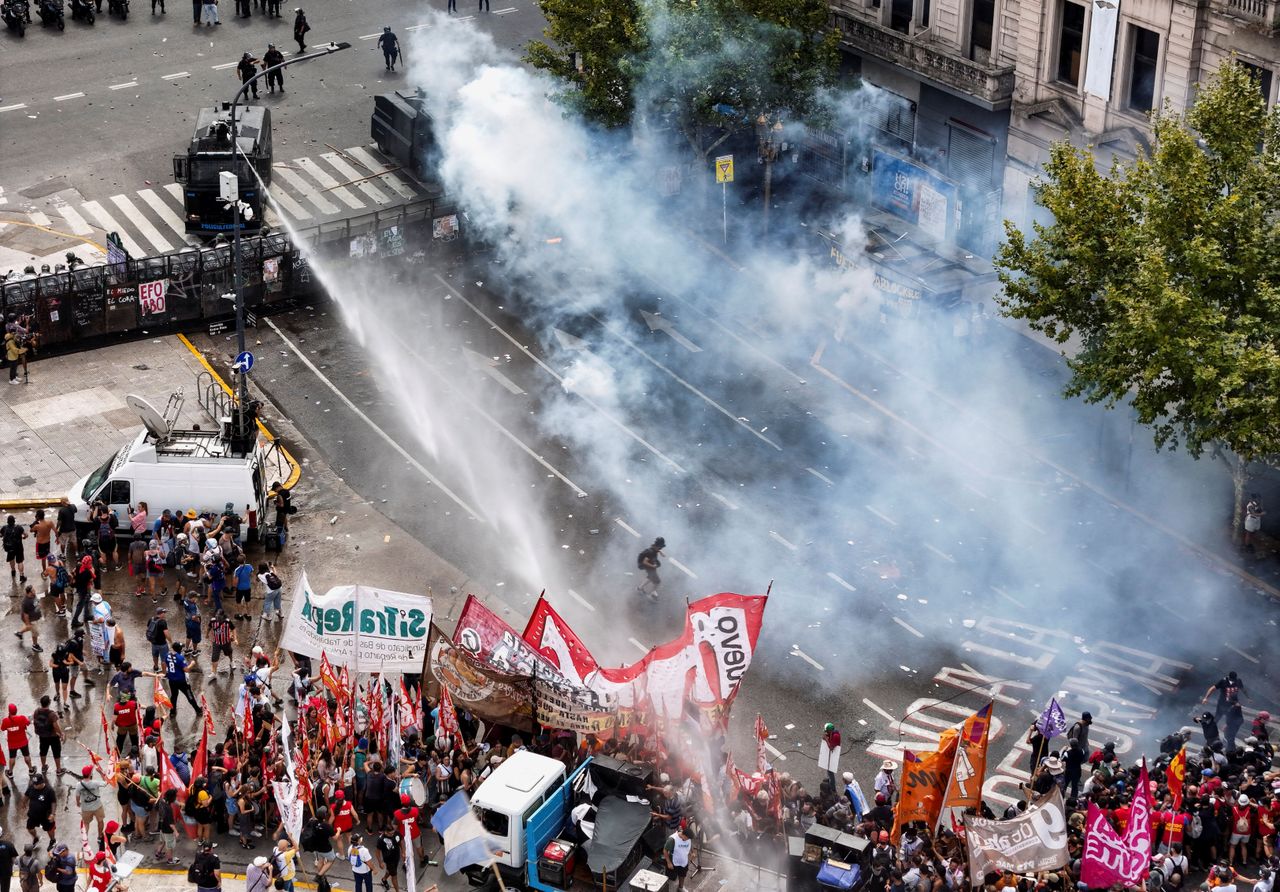
Furthermore, he points out that two years ago the factory employed 2,000 workers and questions the large-scale importation of tyres without adequate quality controls, at prices much lower than those of domestic-manufactured tyres.
According to a report by the consulting firm PxQ, over the past two years imports of this product have increased by 34.8 percent and prices have fallen by almost 40 percent, affecting profitability.
Tesoro recalls that during the 1990s, the unemployed became a significant social force as unemployment in Argentina reached 25 percent.
“We don’t want to be the next group laid off; they’re not going to force me to rummage through rubbish in the street. We want to work to live with dignity,” he says.
This article was initially published on TRT Español.