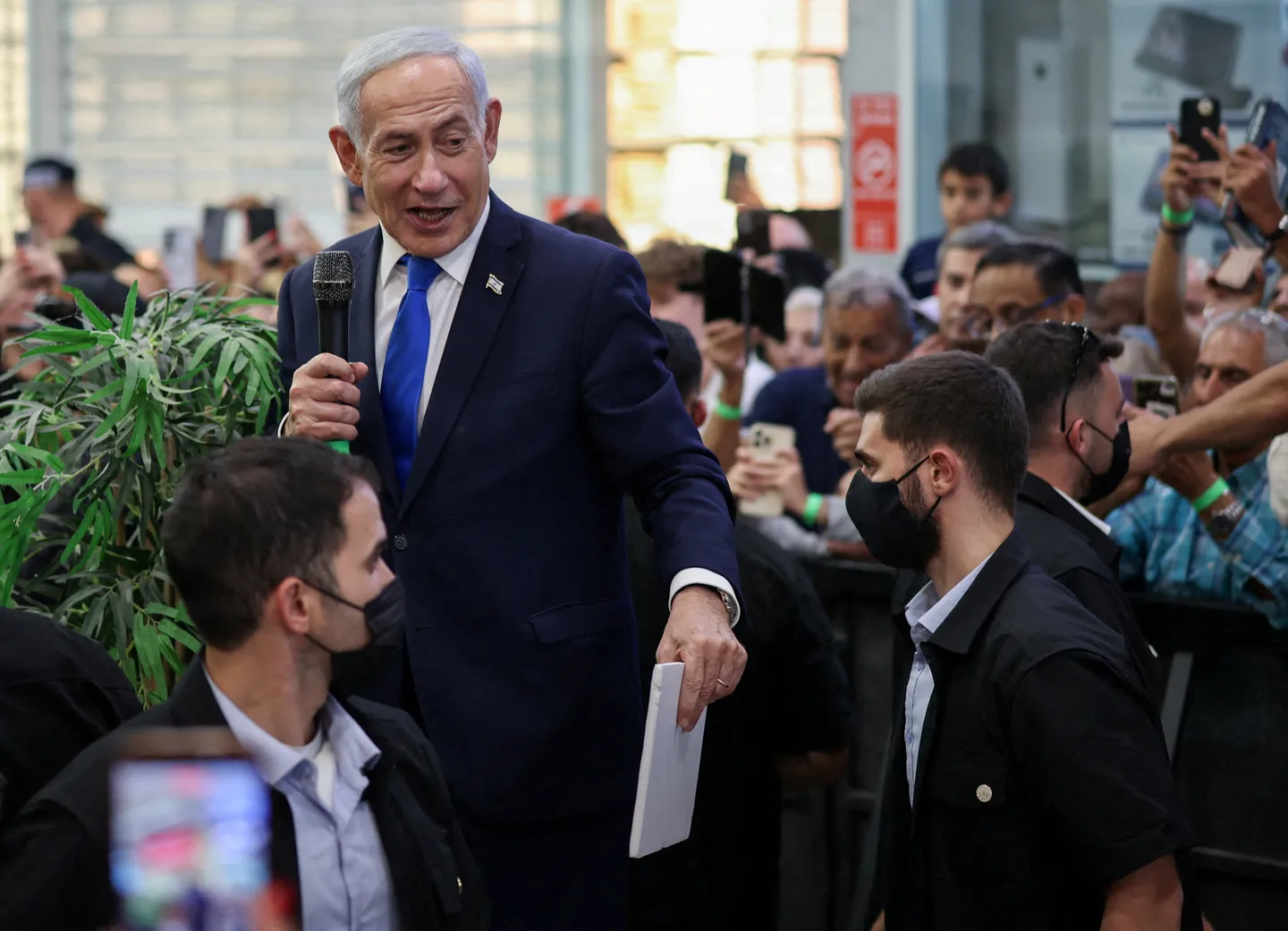
Israeli Prime Minister Benjamin Netanyahu has unveiled a new national security doctrine advocating preemptive strikes and border buffer zones, triggering immediate condemnation from political opponents who dismissed the plan as a collection of empty slogans designed to conceal past security lapses.
Published on the government's official website nine days before Israel's October 27 parliamentary elections, the three-page document sets out 10 principles intended to overhaul military strategy.
Netanyahu claimed Israel’s genocide in Gaza and military offensives in Lebanon, Yemen and Iran had dismantled what he described as an Iranian-led encirclement and eliminated a threat of “nuclear annihilation”, arguing these operations justify shifting priority from defensive containment to preemptive action.
The doctrine calls for pre-emptive military strikes against perceived threats, enhanced intelligence, and buffer zones along Israel's borders when deemed necessary, without specifying locations or affected neighbouring territories.
Other priorities include domestic arms production, artificial intelligence, quantum computing, and illegal settlement expansion across what Netanyahu calls the "Land of Israel".
Opposition backlash








Opposition leader Yair Lapid ridiculed the release as "superficial" and "bizarre," remarking that it looked as though it were drafted by the free version of an AI chatbot.
Lapid highlighted contradictions between the document and Netanyahu's policies, pointing to military service exemptions for ultra-Orthodox Jews, deteriorating foreign relations, and the prime minister's refusal to establish an official commission of inquiry into the security failures of October 2023.
Former military chief Gadi Eisenkot, leader of the opposition Yashar party, dismissed the publication as "empty pages filled with slogans" reflecting a "strategic vacuum."
Eisenkot accused Netanyahu of manipulating fear for electoral gain, stating that Hamas remains active in Gaza whilst Hezbollah rebuilds in Lebanon.
He pledged an opposition-led government would approve a formal national security strategy within 150 days of taking office.