 Murat Sofuoglu
"‘Welcome to hell’ – the banner greeting Othman Said Ahmed Said at an Israeli jail was as chilling as it could be for first-time prisoners. He was just 20 at that time.
But the Palestinian man had no idea that the words would haunt him for the next thirty years, as he languished in different jails. Daily torture and abuse became a routine for him and his fellow prisoners at the hands of Israeli prison officials and guards.
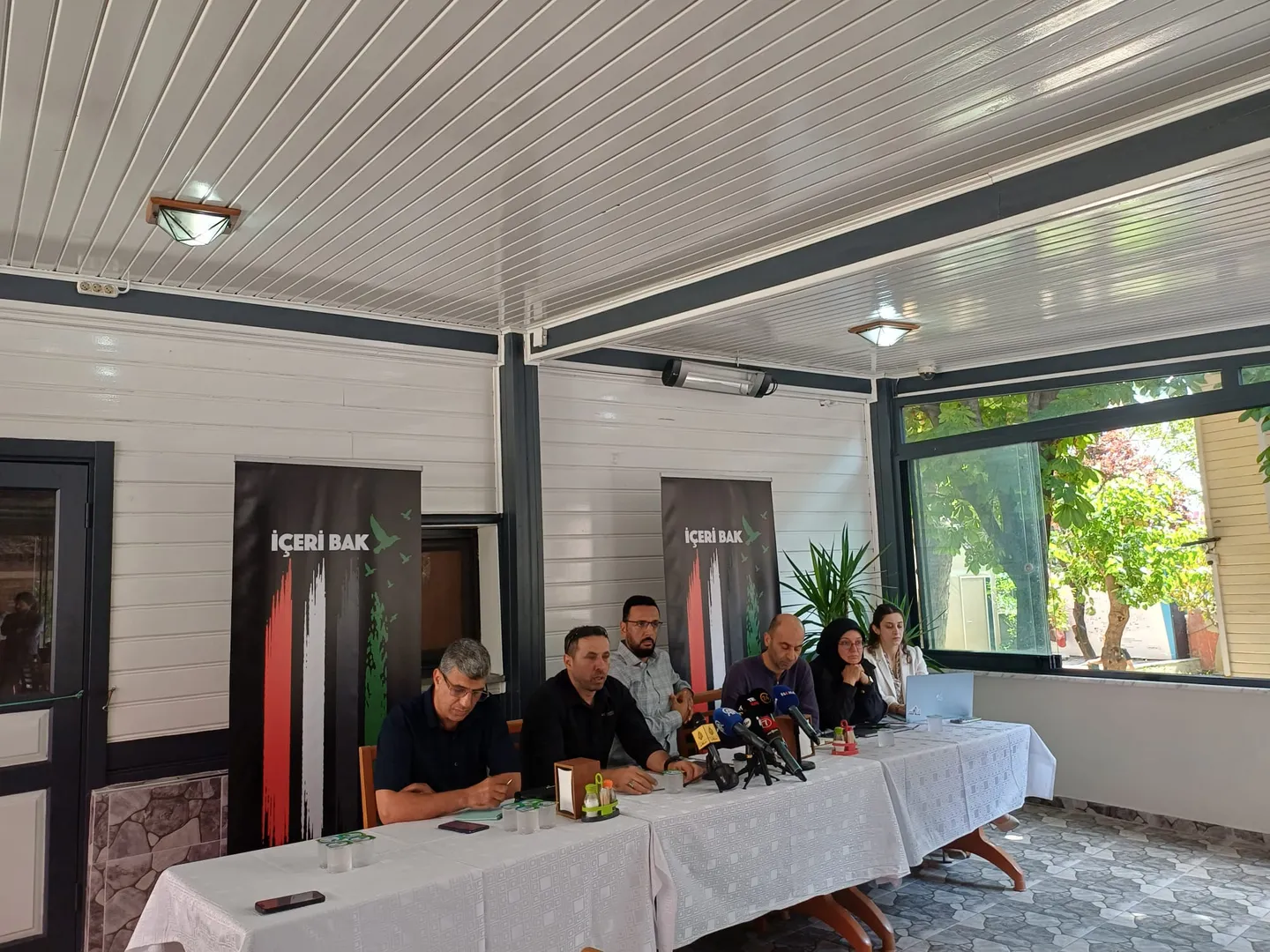
At a panel discussion organised on Friday in Istanbul’s Fatih by Iceri Bak (Look Inside), a non-governmental organisation, Said and two other former Palestinian prisoners recounted the horrors they faced in Israeli jails over many years.
While two of them were released separately following last year’s Hamas-Israel prisoner swap deal, one prisoner earned his freedom after a 2011 prisoner exchange agreement. All of them relocated to Türkiye after their release.
Since the October 7, 2023, cross-border blitz by Hamas, abuse of Palestinian prisoners has increased manifold under the orders of Israel’s far-right National Security Minister Itamar Ben-Gvir, who has explicitly stated that he is “proud” to have worsened living conditions for Palestinian prisoners.
The three former prisoners confirmed Ben-Gvir’s public assertion that Palestinian prisoners must receive “the minimum of the minimum (in food)” in Israel’s notorious prisons.
As per rough estimates, there are more than 9,000 Palestinian prisoners and detainees in Israeli jails, and most of them are said to have suffered some form of abuse and torture.
Besides various torture techniques and mistreatment, Said recounts Israel’s increasing use of sexual abuse, which included using dogs to rape prisoners.
“They are training dogs to rape Palestinian prisoners,” he says.
Israel has long claimed to have the world’s most moral security force, which has been universally condemned throughout its genocidal war across Gaza and other occupied Palestinian territories since October 2023.
Since the 1960s, nearly one million Palestinians have been jailed by Israel, making four out of every 10 Palestinians a prisoner.
“They keep prisoners naked and attack their sexual organs,” Said adds.
Said and two other former prisoners describe Israeli mistreatment and torture in jails as a “systematic” policy. “Many prisoners prefer to fast during the day to collect more food for their iftar (evening) meal,” he said, referring to inadequate food distribution. “Things got worse after October 7.”
Said was detained from Nablus, a Palestinian city in the occupied West Bank. Asked about why he was detained, Said tells TRT World that the reason was “his resistance to Israeli occupation”.
He refuses to specify his political affiliation, saying that all Palestinian groups have united in their opposition to Israeli occupation.
After his release, Said married a Palestinian woman, a resident of Türkiye. “It’s easier to face Israeli prisons’ hardships if you are single,” he says, referring to his captivity.
“Now I am married like regular people, but this should not make me forget the fact that I was a prisoner because I have resisted Israeli occupation.”
Nafeth Nayef Salim Hajhusein, a 42-year-old former Palestinian prisoner who was also recently released, says that he was a married man with two kids when he entered Israeli prison in 2002.
“I had an 18-day-old son, Amir, and 2.5-year-old daughter, Tehen,” Hajhusein tells TRT World. He could not see his wife for the next five years.
After spending 24 years in different prisons, Hajhusein is still separated from his wife because she is unable to leave Palestine under Israeli occupation. “They are banned from leaving their country. Israel even blocks the release of corpses of our fellow dead prisoners,” he adds.
“While we went through so much pain and brutality at the hands of Israeli captors, this miserable reality has not defined our lives. Our patriotic determination to free our country from captivity is what drives us.”
Hajhusein was happy when he was released from Israeli captivity, but he still feels “the burden” of Gaza, referring to Israel’s genocidal war that has killed thousands of people and turned the small enclave into a wasteland.
‘Prisoner movement’
Said says the patriotic determination fueled by Palestinian resistance against Israeli occupation has created a prisoner movement across the Zionist state’s dungeons since the 1960s.
Prisoners from different movements – from Fatah to Hamas, leftist and Christian Palestinian-dominated groups – have come together in Israeli jails, says Said. He even cites a Jewish-Palestinian prisoner, who comes from a Samaritan background, among their ranks.






“Israeli guards particularly targeted him because of his Jewish background,” he says.
Samaritans, who have long lived in the northern parts of the occupied West Bank, are an ethnoreligious group with some distinct features from modern Judaism. Said considers them as part of Palestinian identity. “We grew up and lived together for many years,” he says.
Every movement has one representative in each Israeli jail and different representatives come together in a prisoner council to manage Palestinian issues across the prisoner population, according to the former detainees.
“This is the beauty of our resistance,” says Hajhusein. “No matter which movements fellow prisoners come from, we are all united there.”
Marwan Barghouti, Fatah’s charismatic young leader in the West Bank prior to his imprisonment in 2002, is a towering figure for the prisoner movement.
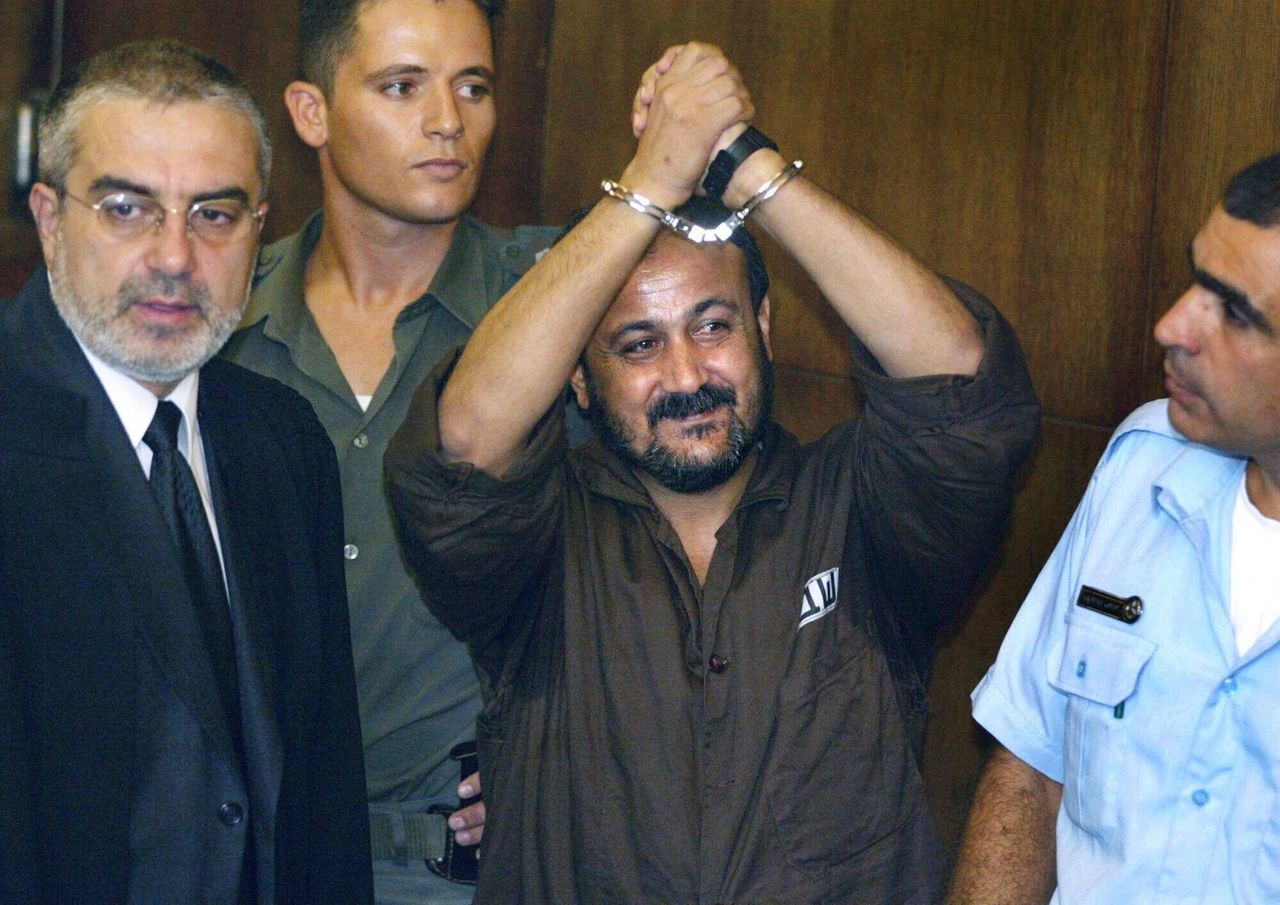
Barghouti has now spent more than two decades in Israeli jails, repeatedly tortured and mistreated by his guards. In a recent video, Ben-Gvir was seen insulting him.
“We consider him as our leader,” Fahed Shouludi, another of the three Palestinian ex-prisoners, tells TRT World.
Shouludi, a 55-year-old Palestinian from occupied East Jerusalem’s Silvan neighbourhood, says that he met Barghouti in jail once, besides the late Hamas leaders Ismael Aliyah and Yahya Sinwar.
Barghouti was at the top of Hamas’s list for recent swap deals, but Israel refused to release him.
Shouludi, who was released in 2011 by Israel through another swap deal, is politically closer to Hamas, believes that the Palestinian resistance group will “recognise” Barghouti’s leadership if he is released. “In a free election, he will definitely be elected as the next Palestinian leader,” he says.
Many analysts believe that Barghouti could bring the different Palestinian factions together under his leadership and even serve as a peacemaker between Israel and Palestine.
Like Shouludi, Said, who also met Barghouti, highly praises the Palestinian leader’s long-term commitment to their cause and his continuing struggle in Israeli prisons.
“We have learned a lot from his struggle,” he says. “While I do not agree with some of his political views, I have the utmost respect for his stances.”
“He is probably the cleanest Palestinian voice. He is the symbol of Palestinian prisoner resistance.”
How do ex-prisoners see Israel’s future?
The three ex-prisoners do not see much of a future for Israel’s most extremist government under Benjamin Netanyahu.
Extreme religious groups with Zionist ideology are now ruling Israel, says Hajhusein. Behind Israel’s notorious attacks from Gaza to Syria, Lebanon, Qatar and Iran, he sees this Zionist agenda.
These Israeli far-right groups believe that Israel can expand from Palestine to other Middle Eastern areas like Jordan, Lebanon, Syria, Iraq and Egypt between the Euphrates and Nile rivers, forming “Greater Israel”, he says.

Bezalel Smotrich, Israel’s finance minister, has publicly asserted that the Zionist state aims to form Greater Israel. Netanyahu also backed this extremist stance.
This kind of extremist agenda will be instrumental in bringing down the Israeli state, according to Shouludi, who was first arrested when he was only 14. He has spent time in 20 different jails during his imprisonment.
“In my entire life, I have not witnessed an Israel with this much division. They have no future. Their doom is inevitable,” he says. Shouludi, who is fluent in Hebrew, follows Israeli news daily.
“Life is good, but without dignity you can’t feel its beauty.”
“We have fought different occupations since British colonialism began in Palestine after WWI, with the collapse of the Ottoman Empire. Whatever Israelis do, we will continue to fight them. We transfer not only our cultural values but our fighting skills from one generation to another to make sure we continue to fight,” he says.
“If you asked my 7-year-old daughter what Palestine stands for, she would definitely tell you what it is.”