Chinese businessman Miles Guo, once celebrated in parts of the West as a prominent dissident and outspoken critic of Beijing, has been sentenced to 30 years in a United States federal prison after being convicted of orchestrating a fraud scheme that prosecutors said defrauded investors of more than $1 billion.
The sentence marks a dramatic reversal for Guo, also known as Guo Wengui and Ho Wan Kwok, who fled China in the mid-2010s while facing allegations of fraud and corruption from Chinese authorities.
After leaving China, he reinvented himself as one of the most visible critics of the Chinese government, portraying himself as a whistleblower exposing corruption within the Chinese Communist Party.
His anti-Beijing profile won him significant attention in Western political and media circles. Guo appeared in interviews with international outlets including the Voice of America, where he was frequently presented as a dissident persecuted by the Chinese government. His claims about China's leadership and political system helped establish him as a high-profile exile at a time of deteriorating US-China relations, while Beijing sought his extradition and pursued an Interpol Red Notice.
Guo also cultivated influential political allies in Washington.
In 2018, he and former White House chief strategist Steve Bannon co-founded the “Rule of Law Society”, an organisation that said it aimed to expose corruption in China and promote democratic reforms. The pair later collaborated on several anti-Beijing initiatives, further elevating Guo's standing among some China hawks in the United States.
Fast forward 12 years, and the narrative has come full circle following a lengthy US federal investigation.
A jury convicted Guo in July 2024 on multiple charges, including racketeering conspiracy, securities fraud, wire fraud and money laundering. Prosecutors said he used his reputation as an anti-Communist activist to persuade thousands of followers to invest in media ventures, cryptocurrency projects and membership programmes that ultimately financed an extravagant lifestyle featuring luxury properties, yachts and high-end cars.
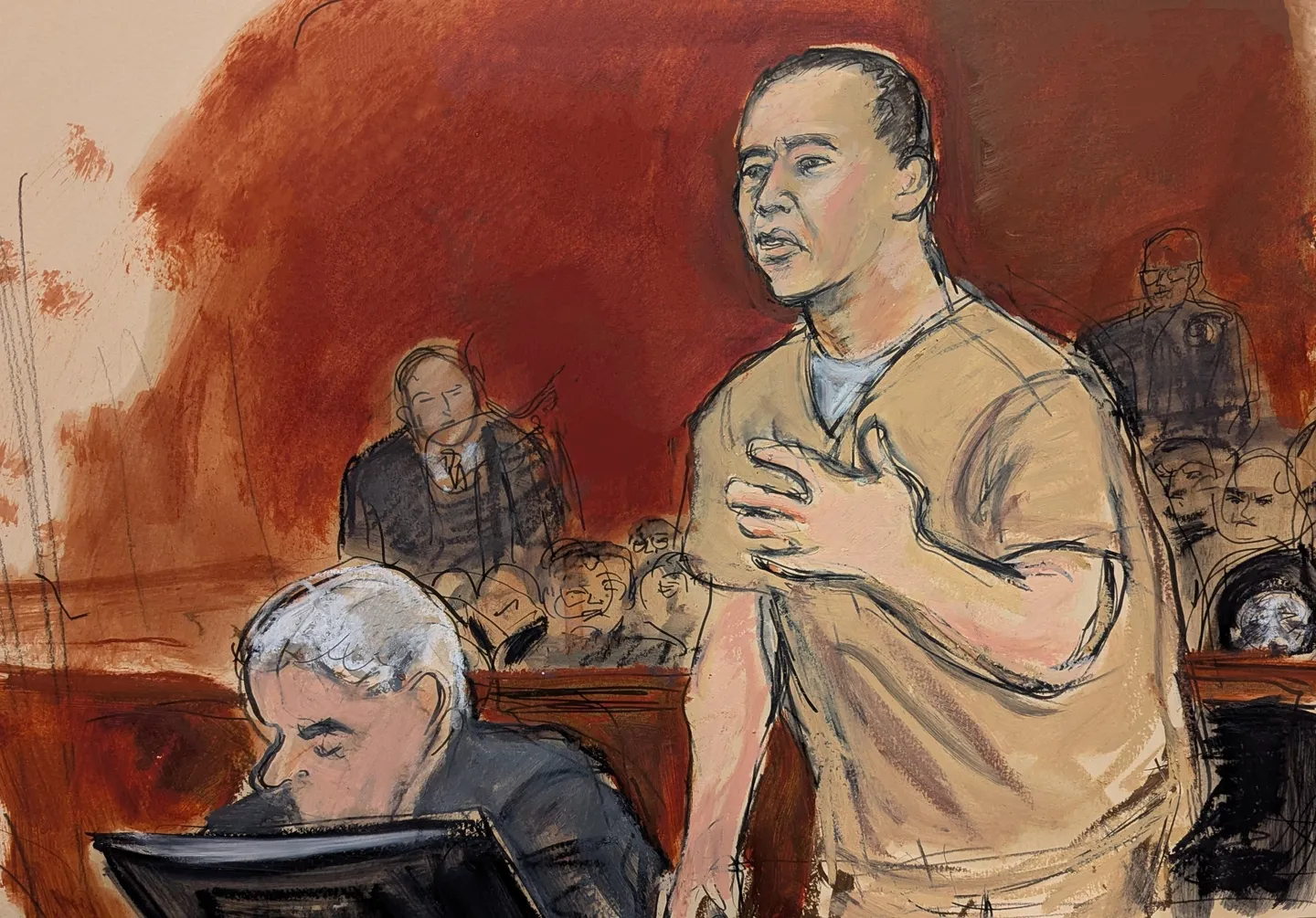
On Monday, US District Judge Analisa Torres sentenced Guo to 30 years in prison and ordered him to forfeit approximately $889 million in a Manhattan courtroom packed with his supporters.








During sentencing, the judge said Guo “preyed on those seeking to bring Democracy to China,” taking their money so he could live lavishly.
Before he was sentenced, Guo protested his treatment in jail, saying he was taken to the hospital early Monday. He disputed a prosecutor’s portrayal of him as a malingerer faking illness, saying he repeatedly vomited as he was returned to jail before being brought to court.
The judge, in sentencing him, read snippets of letters she received from victims who described losing their life savings and feeling severely anxious and shamed and having family members turn on them for their poor investment choice.
Following the sentencing, China-based French analyst Arnaud Bertrand captured the profound irony in a widely discussed post on X.
He labelled it as "probably the most expensive fact-check in history: $1 billion of damage to verify what an Interpol Red Notice said a decade ago."
China's foreign ministry said it had taken note of the sentencing and reiterated that Guo remains a fugitive wanted under an Interpol Red Notice requested by Beijing. The notice is a request to police forces around the world to arrest a suspect, pending extradition.
Prosecutors say Guo convinced between 2018-2023 hundreds of thousands of people to invest more than $1 billion total in entities he controlled, including his media company, GTV Media Group Inc, and his so-called Himalaya Farm Alliance and the Himalaya Exchange. They alleged the funds paid for luxury assets, including a 50,000-square-foot (4,645-square-metre) mansion, a $1 million Lamborghini, and a $37 million yacht.