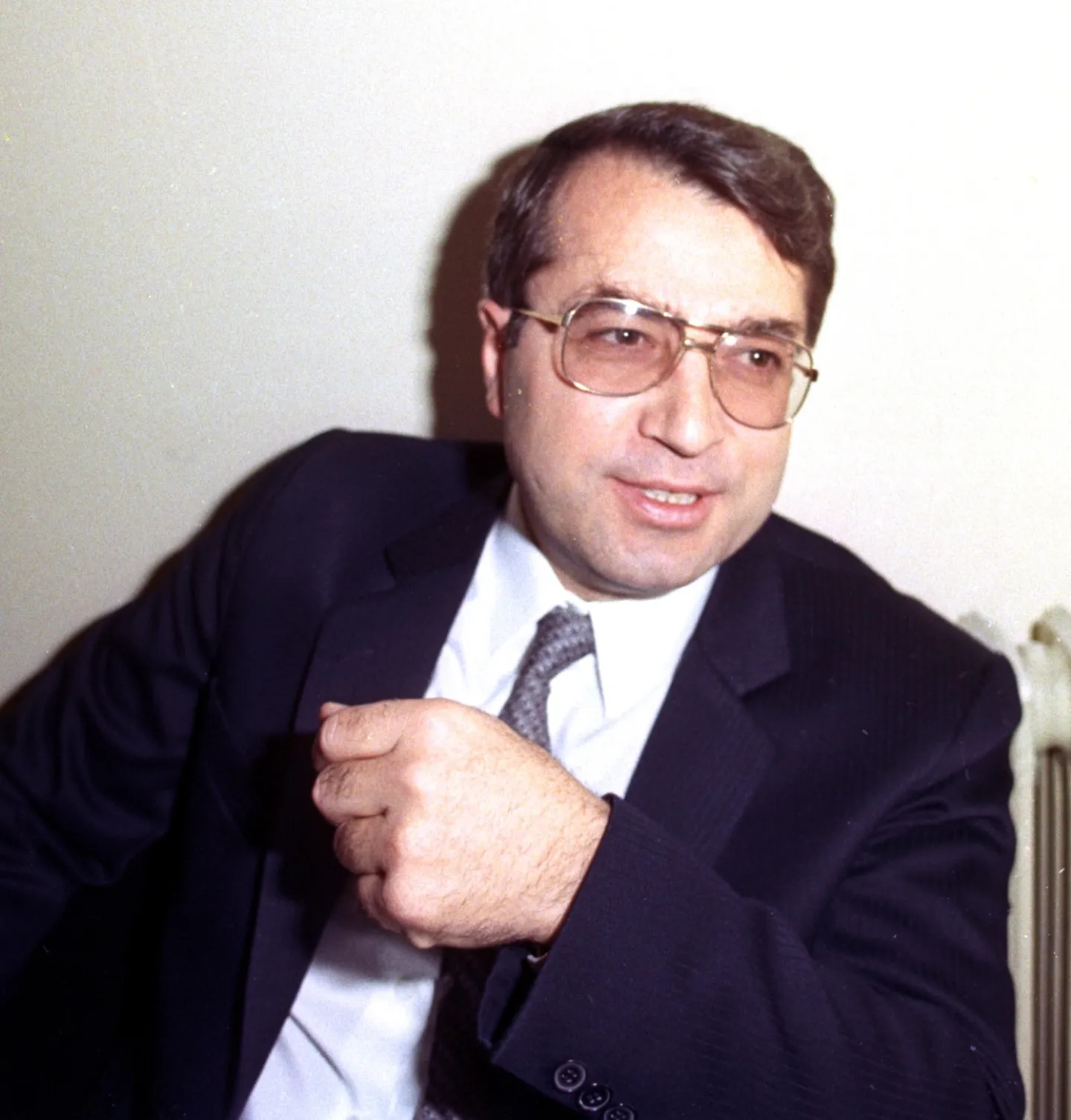
 Aslan Can Delibas
While still a high school student, Sadik Ahmet wrote an article titled The Expected Sun for a local newspaper, declaring, “The Turks of Western Thrace need a sun to lead them out of the darkness”.
Ahmet, who dedicated his life to defending the rights of the Turks of Western Thrace guaranteed under the Treaty of Lausanne, signed on July 24, 1923, died in a suspicious traffic accident on July 24, 1995 — the very anniversary of the treaty and at the height of the struggle he had devoted his life to.
With his death, he left the cause he had carried for decades in the hands of his people.
Born in 1947 in the village of Kucuk Sirkeli, near Gumulcine, one of Western Thrace's oldest cities, Ahmet returned to his homeland as a physician after completing his medical studies in Greece’s Thessaloniki.
But what he encountered there would not allow him to remain simply a doctor.
The plight of a community whose identity was denied, whose religious institutions were taken over, and whose schools were closing one by one transformed him first into a defender of rights and then into one of the leading figures in the Western Thrace Turkish community.
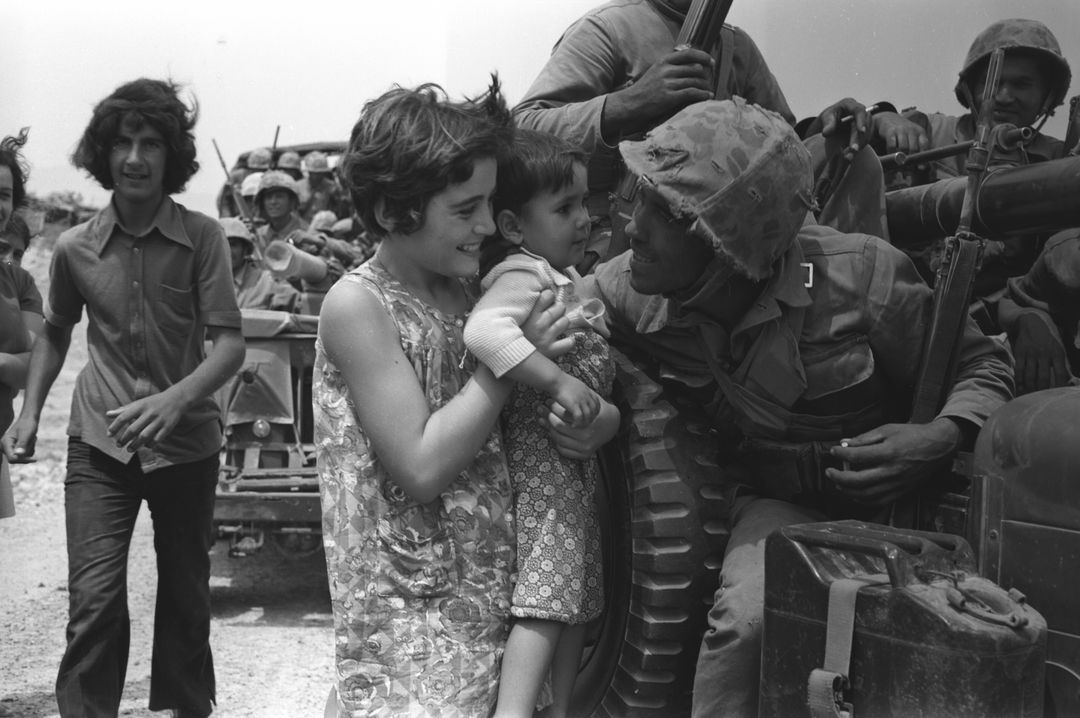
Western Thrace, which also borders Bulgaria and the Greek region of Macedonia, is home to an estimated 150,000 ethnic Turks, comprising approximately a third of the population.
In 1913, the Turks of Western Thrace established what is considered the first Turkish republic in history, long before modern Türkiye was founded.
In 1923, the Treaty of Lausanne did not merely redraw borders; it also made a mutual promise. The Turks of Western Thrace would remain under Greek sovereignty, while the Greeks of Istanbul and Gokceada (Imroz) and Bozcaada islands in the Aegean would be under Turkish sovereignty.
Ahmet grounded his struggle in international law. The 1923 treaty guaranteed the Turks of Western Thrace the right to preserve their identity, language and religious institutions.
However, members of the Western Thrace Turkish community have long argued that Greece failed to uphold those guarantees.
The restrictions that intensified under the 1967 military junta were compounded by the deterioration of Turkish-Greek relations after 1974.
During that period, thousands of Western Thrace Turks were stripped of their Greek citizenship under Article 19 of the Greek Citizenship Code.
Refusing to remain silent in the face of this reality, Ahmet launched a struggle that would prove historic and cost him his life.
‘Denial of their Turkish identity’
In 1985, he launched a petition campaign to bring the voice of the Western Thrace Turks to the international stage.
Cigdem Asafoglu, the current General Chair of the Friendship, Equality and Peace (DEB) Party, founded by Ahmet, recalls those days and his stance:
"Criminal charges were filed against Ahmet over signed papers [petition campaign papers] found in his car. But this process transformed into an existential struggle for the entire community and triggered the events of 29 January 1988,” Asafoglu tells TRT World.
“For the first time, the people of the minority mounted a mass resistance against the denial of their 'Turkish' identity. Ahmet was a courageous man who, at a time when even uttering the word 'Turkish' was forbidden, defiantly declared 'I am a Turk, and I will remain so.' His contribution to every gain that has been achieved is immeasurable.
Despite being sentenced to prison for his activism, Ahmet entered the Greek parliament as an independent candidate in 1989 and founded the DEB Party in 1991, the first and only political party representing the minority.
According to supporters of the minority, Athens sought to obstruct his political rise by amending the electoral law to impose a three percent national threshold, effectively preventing independent minority candidates from gaining representation.
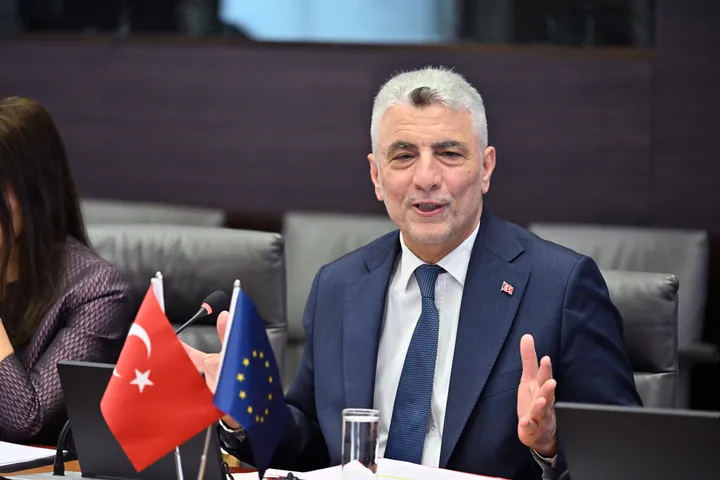

Asafoglu says the barrier remains in place today.
"Today we can only elect members of parliament from within Greek political parties, and our representatives are kept under control. This threshold, which also stands as an obstacle for the DEB Party, must urgently be removed in the name of democracy."
Supporters of the minority also point to the appointment of muftis and education as two of the community's longstanding grievances.
The Treaty of Lausanne guarantees the minority's right to elect its own religious leaders, yet they argue that Greece effectively suspended this right through a presidential decree issued in 1990.
Today, both elected muftis [religious leaders] chosen by the minority and state-appointed muftis exist in Gumulcine and Iskece.
"While the appointed muftis are recognised as interlocutors by the Greek authorities, they hold an extremely ineffective position in terms of the number of mosques under their authority and their relations with the minority. If this were a religious matter, our choice would be respected but the issue is entirely one of political control," Asafoglu says.
The same concerns are reflected in the field of education. Representatives of the minority say the number of minority schools has continued to decline as Greece closes them, citing insufficient student numbers.
Asafoglu argues that this policy runs counter to the spirit of the Treaty of Lausanne.
"Closing schools without regard to the status of minority schools, using economic savings and lack of children as pretexts, is contrary to the spirit of the Treaty of Lausanne. These closure attempts, devoid of good faith, are a project to assimilate, transform and end the educational autonomy of the minority."
Funda Sadikahmet Bayir, a lawyer who continues to uphold her father's legacy, says the methods may have changed over the years, but the underlying challenges remain the same.
"Over thirty-one years, people have barely managed to open businesses, till their fields, engage in trade and study in Turkish schools, yet minority rights have never been fully achieved,” Bayir tells TRT World.
“Despite being Greek citizens, they continue to face second-class treatment. Whether it is the police, the municipality or the judiciary, a separate procedure kicks in the moment you are Turkish. It may appear that there has been tangible progress, but in reality it amounts to nothing.”
The veil of mystery surrounding the accident in which Ahmet lost his life at just 48 years of age has never been lifted in thirty-one years.
Asafoglu draws attention to the fact that this has been deliberately consigned to oblivion.
"The veil over this tragic and suspicious accident has never been lifted. The vehicle involved in the accident, which we had on display at our party headquarters, was stolen and destroyed by individuals whose identities remain unknown.
“People were not even allowed to see the car. The greatest legacy Ahmet left behind is his fighting spirit, which continues to inspire those who remain."
Bayir says her family carries this reality as both a wound and a responsibility, describing her father's devotion by noting that despite being financially secure, he always put “his Turkish Muslim brothers and sisters first, setting aside the comforts of life and his own children for this struggle, paying a heavy price with his life”.
This historical legacy continues to live on in the streets of Western Thrace and in the memory of its youth.
Fatih Sar Hasan, a citizen of Western Thrace, says the significance of what Ahmet left behind is the awareness of unity, solidarity and commitment to the cause.
“Although the expected progress on critical issues such as the recognition of our ethnic identity, the election of muftis and educational problems has yet to be achieved, Hasan tells TRT World.
“Western Thrace Turks have never lost their hope or their determination."