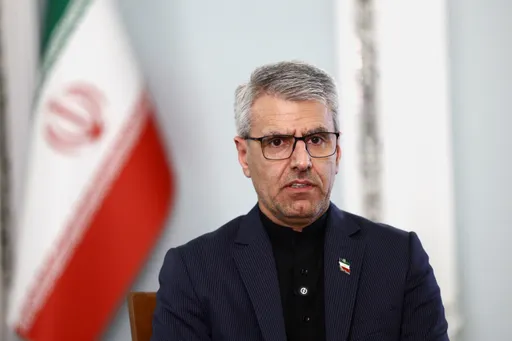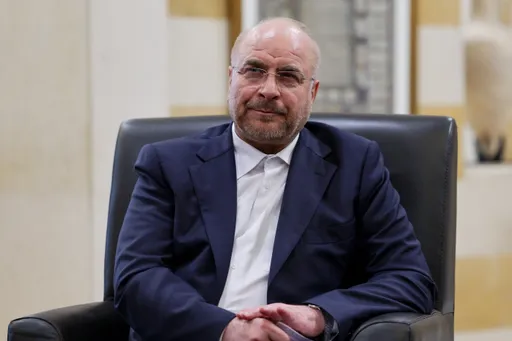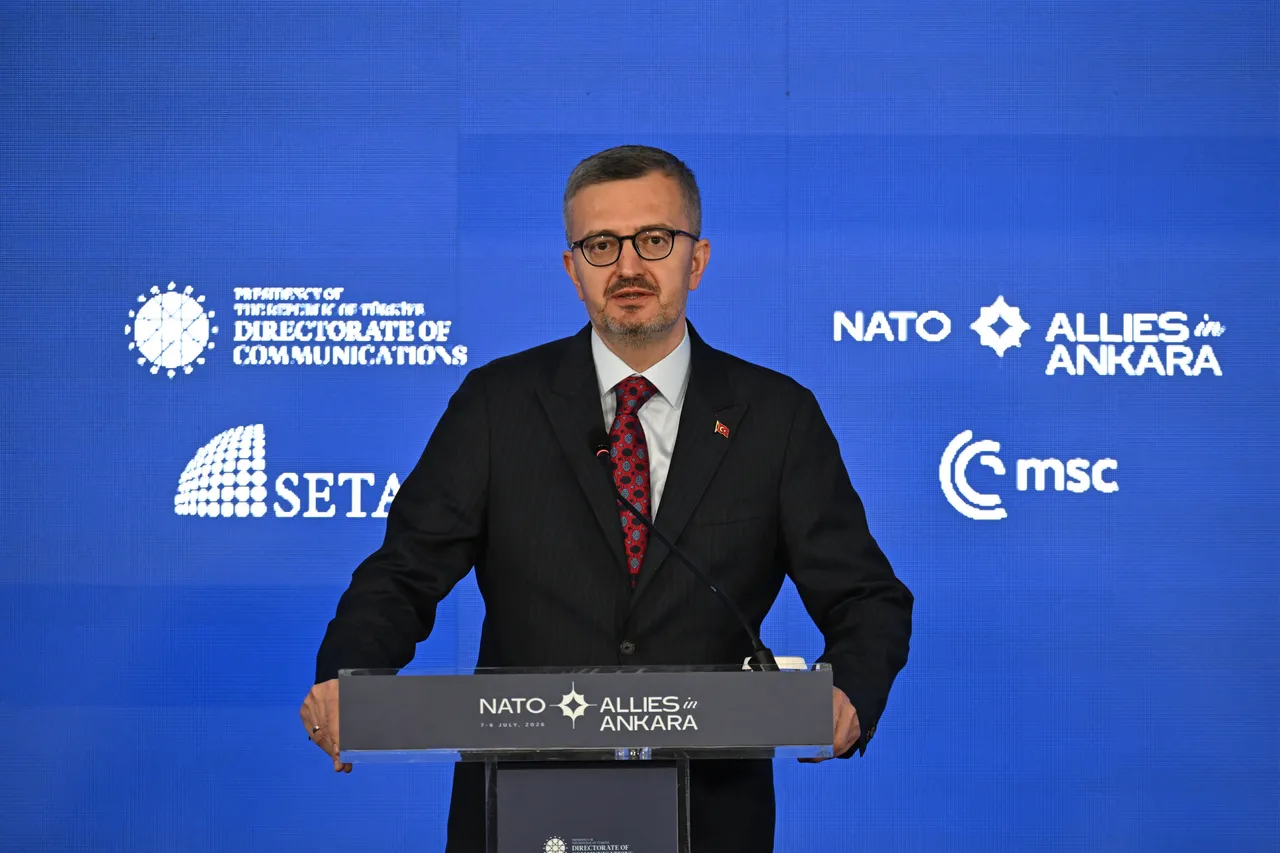
Türkiye's Head of Communications Burhanettin Duran has said Ankara is often viewed as a bridge between East and West, but in the face of new crisis, the country right now is a bridge "between West and West," thanks to its diplomatic capabilities.
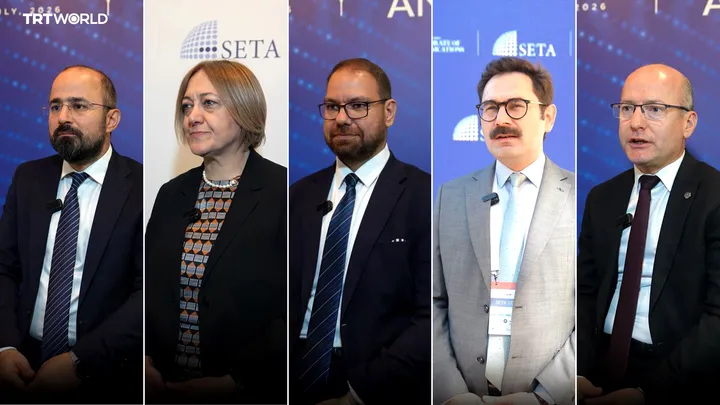
Duran was speaking at the NATO Allies in Ankara event on Tuesday, hosted in cooperation with the Communications Directorate, the Foundation for Political, Economic and Social Research (SETA), and the Munich Security Conference.
"Türkiye is (a bridge) between West and West, through its diplomatic reach and its capacity to contribute to de-escalation," Duran said.
Noting the country's NATO membership for 74 years and its military capacity, which puts the country on the second rank among allies, Duran urged that Türkiye's role in the alliance should be seen via its "strategic autonomy, operational experience and unique contribution to Euro-Atlantic security."
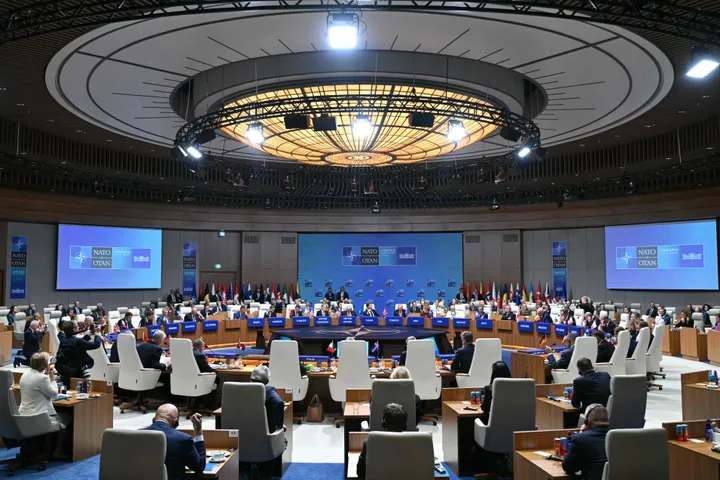
Calling the NATO meeting in Ankara "another turning point in NATO’s historical evolution," Duran said the challenges have changed since Türkiye's first hosting the alliance summit in 2004.
"Twenty-two years ago, Istanbul summit marked NATO’s evolution from a Cold War defence alliance into a broader security actor. The dynamics of the international system and the challenges we faced in 2004 were fundamentally different from those we confront today," he said.
Since the alliance has to address various challenges, including “a complex, fragmented and unpredictable security landscape shaped by renewed great power competition, regional conflicts, technological disruption, hybrid threats and an international system incapable of providing solutions to crises,” these shifts call on NATO members to reassess evolving threat perceptions and establish new shared priorities, Duran said.
Burden-sharing is essential in Alliance
Noting the crisis from Russia-Ukraine war to the Middle East, Duran urged NATO to treat challenges on its eastern and southern flanks as interconnected rather than separate, under NATO's 360-degree approach to security.
From the Strait of Hormuz and the Gulf to Syria, Iraq, the Eastern Mediterranean, North Africa and the Sahel, these regions are increasingly part of the same security equation, he added.
"For that, we need coherent policy instruments and a shared understanding of how military and non-military tools can work together. This is where burden-sharing becomes essential. Defence spending is a valuable political commitment, but spending alone is not enough," he said.
"What truly matters is building a multi-layered defence strategy that addresses threats such as AI-generated manipulation, cyber-attacks, disinformation and the erosion of public trust, while also investing in real military capacity.




"Türkiye’s role in the Alliance reflects exactly this understanding, which is, I believe, what NATO 3.0 stands for," he added.
'Türkiye’s defence industry has become a national asset'
Türkiye is positioning its defence industry as a growing strategic asset for NATO, offering the alliance a mix of combat-tested systems, air defence capabilities, AI-enabled technologies, engineering capacity and scalable production, Duran said.
Türkiye has raised its defence spending above NATO’s 2 percent threshold, while its defence budget has grown from $13 billion in 2021 to an estimated $33 billion in 2025.
"Türkiye’s defence industry has become a national asset with direct value for allied collective deterrence," he said.
Defence and aerospace exports have also surpassed $10 billion and the domestic production rate in the defence industry has reached 82 percent, he said.
AI threat
In today’s security environment, cyberattacks, disinformation campaigns and AI-enabled manipulation have become regular features of strategic competition, he said.
Duran urged that deterrence be paired with total resilience and public opinion to be protected against "systematic manipulation," stressing Türkiye's experience in the field.
"Through verification mechanisms, strategic communication and public diplomacy, Türkiye treats information integrity as a core element of national and collective security.
“These topics, such as cybersecurity, artificial intelligence and the critical infrastructure protection must not remain secondary topics for NATO now. They must be integrated into the alliance’s defence doctrine," he urged.