 Sabir Askeroglu
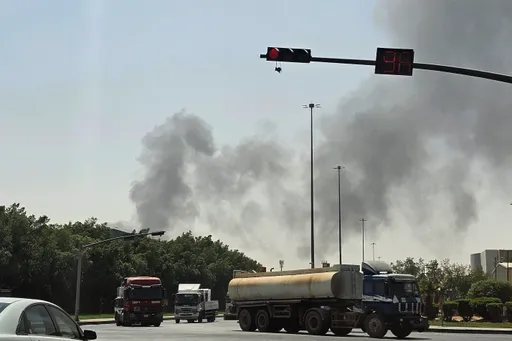
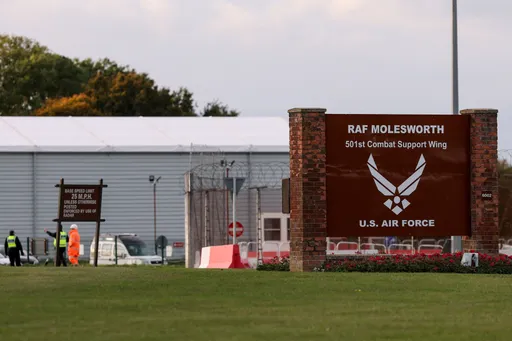
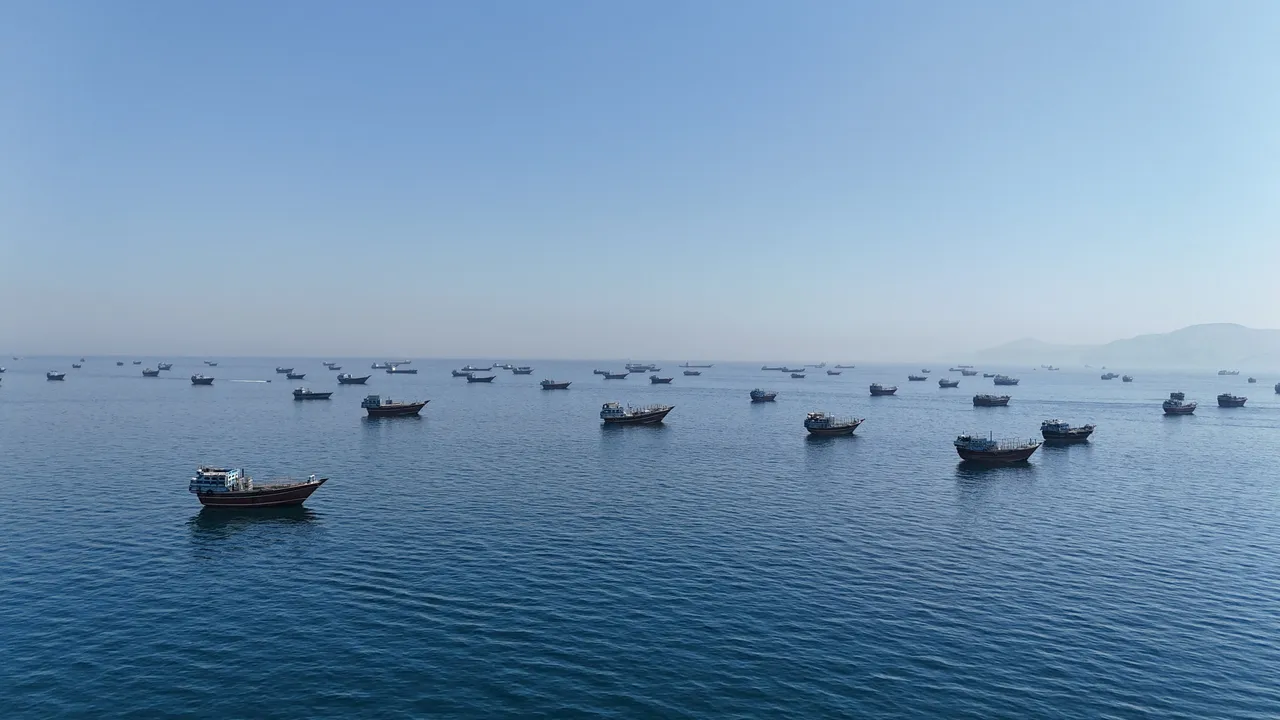
The United States is bombing Iran, Tehran is threatening the Strait of Hormuz, and world markets are once again pricing in the risks of energy supply disruptions.
The new crisis gives Türkiye a chance to turn its geography into a strategic asset and offer alternative trade routes to the region and the world.
But is the land corridor through Türkiye capable of becoming a real alternative to Hormuz, or is it still only a long-term geopolitical ambition?
The latest escalation around one of the world's key energy corridors has highlighted a deeper structural shift: global trade continues to rely on maritime routes whose vulnerabilities are outpacing the international system's ability to secure them.
Hormuz is not just a strait. This is the point where geopolitics directly collides with the global economy. And each new crisis around it shifts the previously peripheral question into a strategic centre: Is there a real land alternative for the Persian Gulf?
It is in this logic that Türkiye is increasingly perceived not as a regional player but as a potential transit hub between two economic spaces – the Gulf countries and Europe.
Today, the high dependence of world trade on a limited number of sea routes is obvious. Despite technological progress and the development of logistics, a significant share of global commodity and energy flows remains concentrated in narrow sea corridors that are sensitive to political and military instability.
Maritime trade remains the backbone of the global economy due to low transportation costs and high throughput. However, this advantage also creates a major vulnerability: the security of maritime communications depends not on a single state, but on the overall balance of power in the region.
In the context of growing instability, states are increasingly turning to land transport corridors as an element of strategic insurance.

Such routes are more expensive and less capacious, but they have a key geopolitical advantage: transit countries are directly interested in their protection and sustainable functioning.
Historically, two transport and economic spaces have been formed in the Middle East: the Persian Gulf and the Eastern Mediterranean.
The former has dominated for decades thanks to energy exports, while the latter has remained constrained by political fragmentation and chronic instability, including the Syrian conflict.
Despite numerous crises, the Strait of Hormuz has retained its status as the region's main energy gateway.
However, the increase in tensions between Iran, the US and Israel is gradually turning it from a stable route into a potential zone of systemic risk.
Even without the actual closure of the strait, the very likelihood of its being blocked becomes a source of strategic pressure. This creates a new demand - the diversification of supply routes.
Türkiye as a transit hub between continents
In this context, the importance of Türkiye, located at the junction of the Middle East, the Caucasus and Europe, is increasing.
Ankara already has practical experience in implementing trans-regional infrastructure projects, from the Baku-Tbilisi-Kars railway corridor to the Baku-Tbilisi-Ceyhan oil pipeline, and in participating in the development of the Middle Corridor.
However, today we are no longer talking about a single transport project, but about the formation of a network of interconnected corridors that can reshape the logistics map of the Middle East.
The Development Road project, promoted by Iraq, Türkiye, Qatar, and the UAE, attracts the most attention.
The project envisages the creation of about 1,200 kilometres of railways and highways from the Al-Faw port under construction on the shores of the Gulf of Basra to the Turkish border.
The route will pass through Basra, Diwaniyah, Najaf, Karbala, Baghdad, and Mosul, then connect to the Turkish transport network and Mediterranean ports.
According to Iraqi authorities, the cost of the project could exceed $17 billion, and its cumulative economic effect over the next decade is estimated at about $55 billion.
In parallel, a second route is being developed, which many experts consider a modern continuation of the historic Hejaz Railway. The project involves connecting Saudi Arabia with Türkiye through Jordan and Syria.
The Saudi railway network has already been extended to the Jordanian border, and Türkiye is expanding its infrastructure toward Syria.
After the completion of the missing sections in Syria and Jordan, a direct railway route will connect Istanbul, Aleppo, Damascus, Amman, Tabuk, Medina and Mecca, with access to the port of Jeddah on the Red Sea.
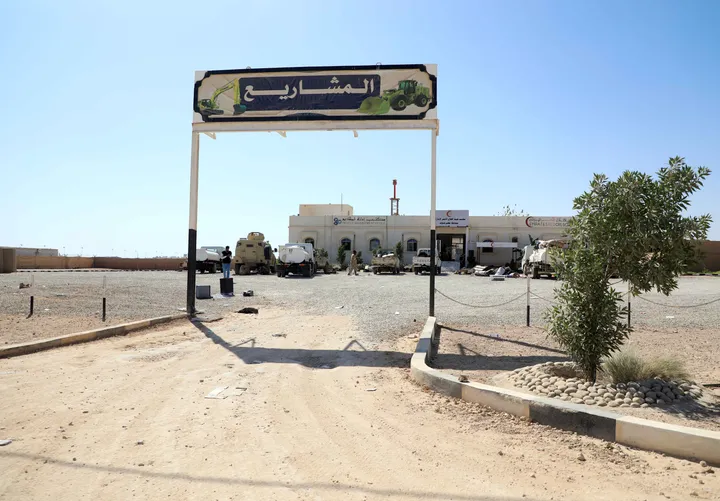
According to the Turkish side, the main work can be completed within the next few years.
While the Development Road creates a horizontal axis between the Persian Gulf and Europe, the Hejaz route forms a vertical link between Anatolia and the Red Sea.
Taken together, both projects have the potential to transform Türkiye from a transit country into one of the key logistics hubs in Eurasia.
It is no longer about replacing the Strait of Hormuz, but about forming a parallel logistics architecture to reduce regional trade's dependence on a single narrow sea route.
For the states on the Gulf of Persia, this means a transition from the logic of maximum efficiency to the logic of strategic stability.
But a few roadblocks remain
Despite its strategic attractiveness, such a transport architecture faces serious limitations.
The first is route safety. Potential routes pass through Iraq and parts of Syria, where the risks of instability, armed group activity, and external interference remain.
Without the long-term stabilisation of these spaces, infrastructure projects remain vulnerable.
The second is the scale of investment. We are talking about long-term capital investments and complex interstate coordination, in which economic returns materialise only over the long term.
The third is geopolitical competition. Any alternative corridor automatically becomes an element of the regional balance of power.
Iran remains the most sensitive external player in this process. For decades, the Strait of Hormuz has served not only as the most important transport artery in the region but also as a key instrument of Tehran's strategic influence over regional trade and global energy markets.
Therefore, the emergence of alternative routes objectively reduces the importance of this geographical advantage.
The development of the Development Road through Iraq and Türkiye does not entirely deprive Iran of its influence, but gradually reduces the region's dependence on Hormuz as its sole transport hub.
That is why Tehran may perceive these projects not only as economic initiatives, but also as a factor in changing the regional balance of traffic flows.
Under these conditions, Iran is likely to seek to maintain its influence in Iraq, as well as to more actively promote its own transport initiatives, primarily the International North-South Transport Corridor linking Russia, the Caspian region, Iran and India.
Israel is also developing its own East-West transport-link projects, which create additional competition among the region's various logistics concepts.
External players are forming an equally complex configuration of interests: the European Union is interested in diversifying supplies, the US evaluates projects through the prism of the regional balance of power, and China and Russia in terms of their influence on the Eurasian transport architecture.
Not a replacement, but an alternative
The Persian Gulf-Türkiye transport corridor cannot be considered a replacement for the Strait of Hormuz. Its meaning is different: creating an additional level of stability in the global trading system.
For the countries in the region, this is a tool to reduce strategic risks. For Türkiye, it is an opportunity to gain a foothold as a key transit hub between Asia and Europe.
For the global system, this is a step towards gradually reducing dependence on narrow maritime transport hubs.
It is too early to say whether Türkiye can become the main trade bridge between Asia and Europe.
However, if Ankara manages to implement the Development Road and the Hejaz Corridor projects simultaneously and integrate them with the existing Middle Corridor, Türkiye will be able to significantly strengthen its position as one of the most important logistics centres in Eurasia.
(This article was first published on TRT Russia)