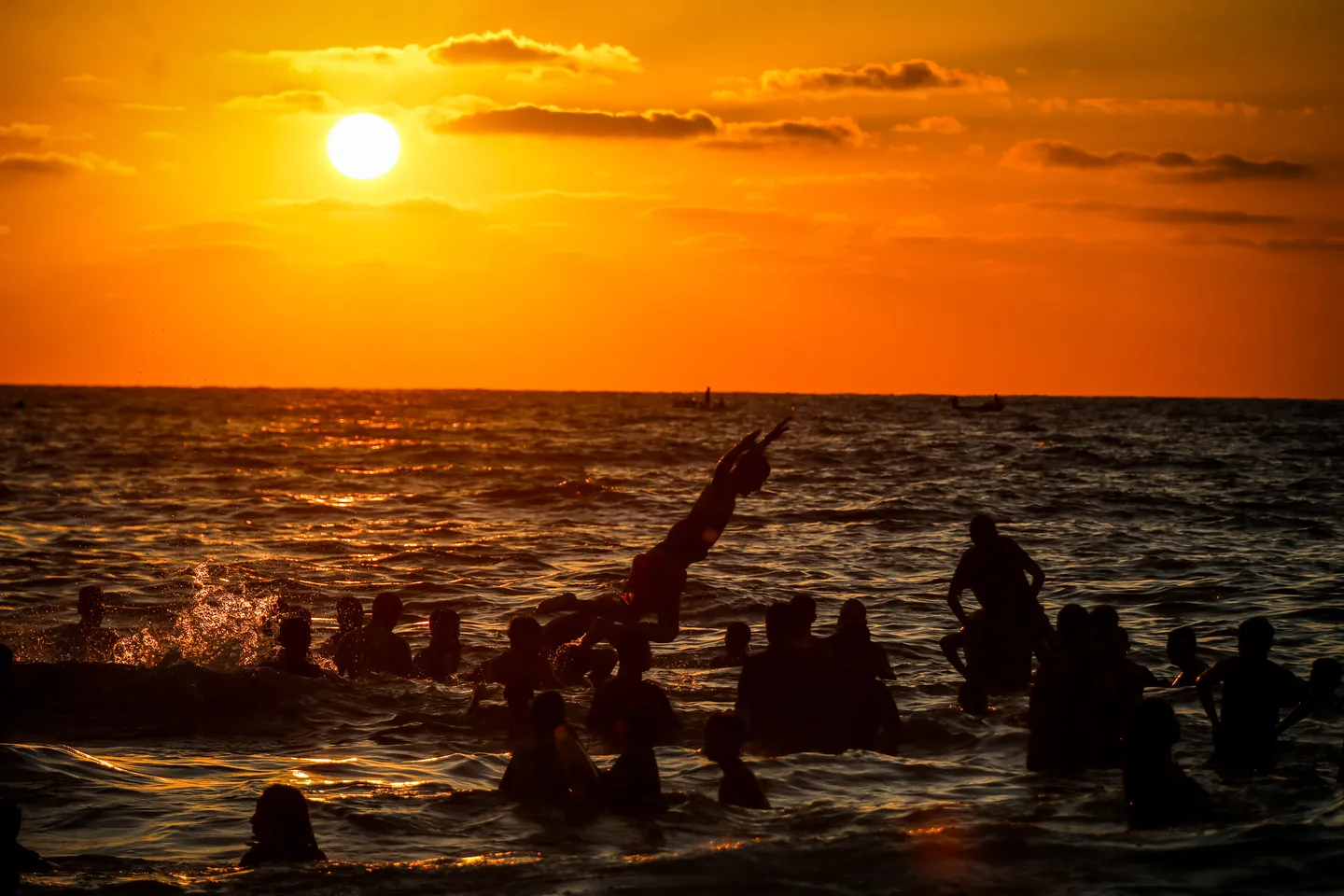
As the sun dips over Gaza's coastline, Palestinian families stream towards the beach, seeking a few hours of relief from a summer that offers little else.
Children splash in the shallows, teenagers wade out past the waves, and parents sit on what remains of the sand, watching their families enjoy a rare moment of normality.
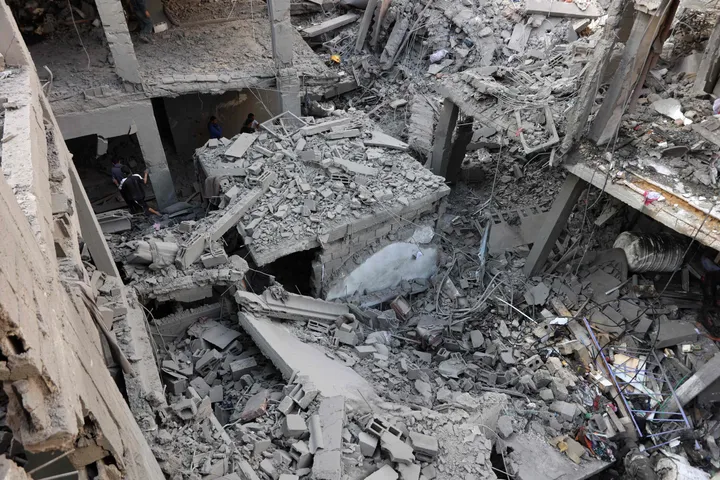
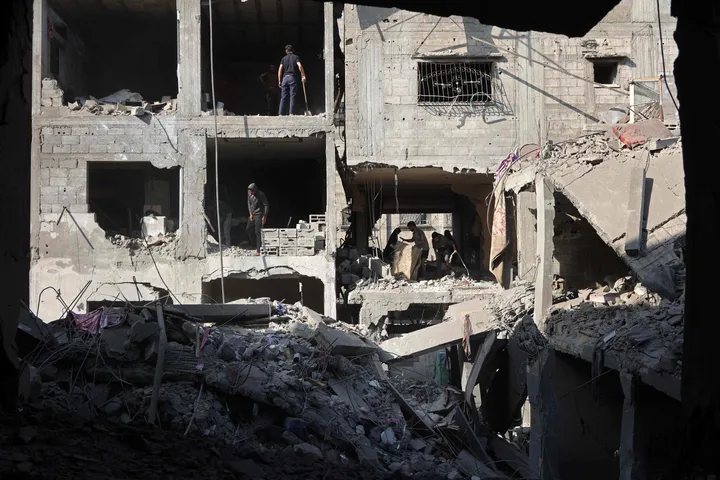
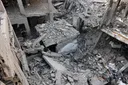
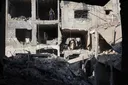
For many, the shoreline is not just an escape but home. Thousands of displaced families have already taken shelter in tents pitched along the beach and near the sea after Israeli army destroyed their houses elsewhere in the Palestinian enclave during the genocidal war, leaving the coastline as one of the few open spaces left to live in.
The gatherings come as Gaza's residents contend with soaring temperatures and the daily grind of survival under continued Israeli attacks, more than 1,000 days into a war that has killed over 73,000 Palestinians and displaced the vast majority of the territory's 2.4 million people.
Behind the laughter and the splashing water lies a starker reality. Aid remains restricted, reconstruction has barely begun, and Israeli forces still control large parts of the enclave.


Yet even here, Palestinians continue to carve out small pockets of joy, a swim at dusk, children playing in the surf, a family meal shared on the sand, refusing to let the war strip them entirely of ordinary life.
These images capture that contradiction: a people simultaneously mourning immense loss and insisting, however briefly, on living.
As ceasefire negotiations stall and Gaza's future remains uncertain, moments like these by the sea offer a fragile reminder of what resilience looks like when survival itself is not guaranteed.
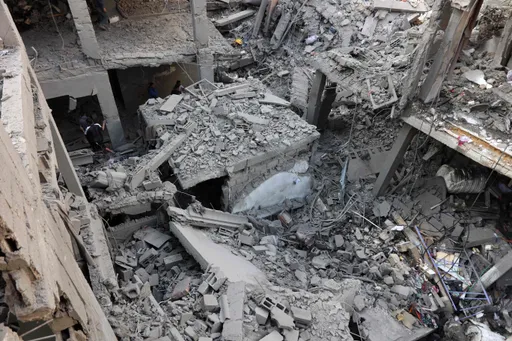
Gaza has been devastated by Israel's genocidal war since October 8, 2023, with more than 73,000 Palestinians killed and over 173,000 injured, according to Palestinian figures. Israeli attacks have also damaged or destroyed about 91 percent of the enclave's infrastructure.