On April 13, the Israeli platform Telem published an op-ed by General Yaakov (Mendi) Or.
He is neither a human rights activist, a journalist from a “hostile” publication, nor a foreign observer.
He is a man who, for decades, was part of the very system he now describes.
He served as the Israeli government’s coordinator in the occupied Palestinian territories, commanded Israeli forces in the occupied West Bank twice, and led a division in Gaza.
Today, he is a member of the Commanders for Israel’s Security movement, an organisation comprising high-ranking retired officers.
This man is not a bystander, horrified from afar. He travels around the occupied West Bank day and night, leading tours for Israeli politicians and seeing what’s happening with his own eyes.
What he describes is not excesses, not “local excesses.” In his words, it is an institutionalised state strategy of ethnic cleansing.
What exactly is happening, in his words
Or describes four axes of simultaneous pressure on the Palestinian population: land grabs through outposts and “farms,” economic strangulation, the seizure of key government positions by “their own people” – and physical terror.
He personally visited several points in the Jordan Valley.
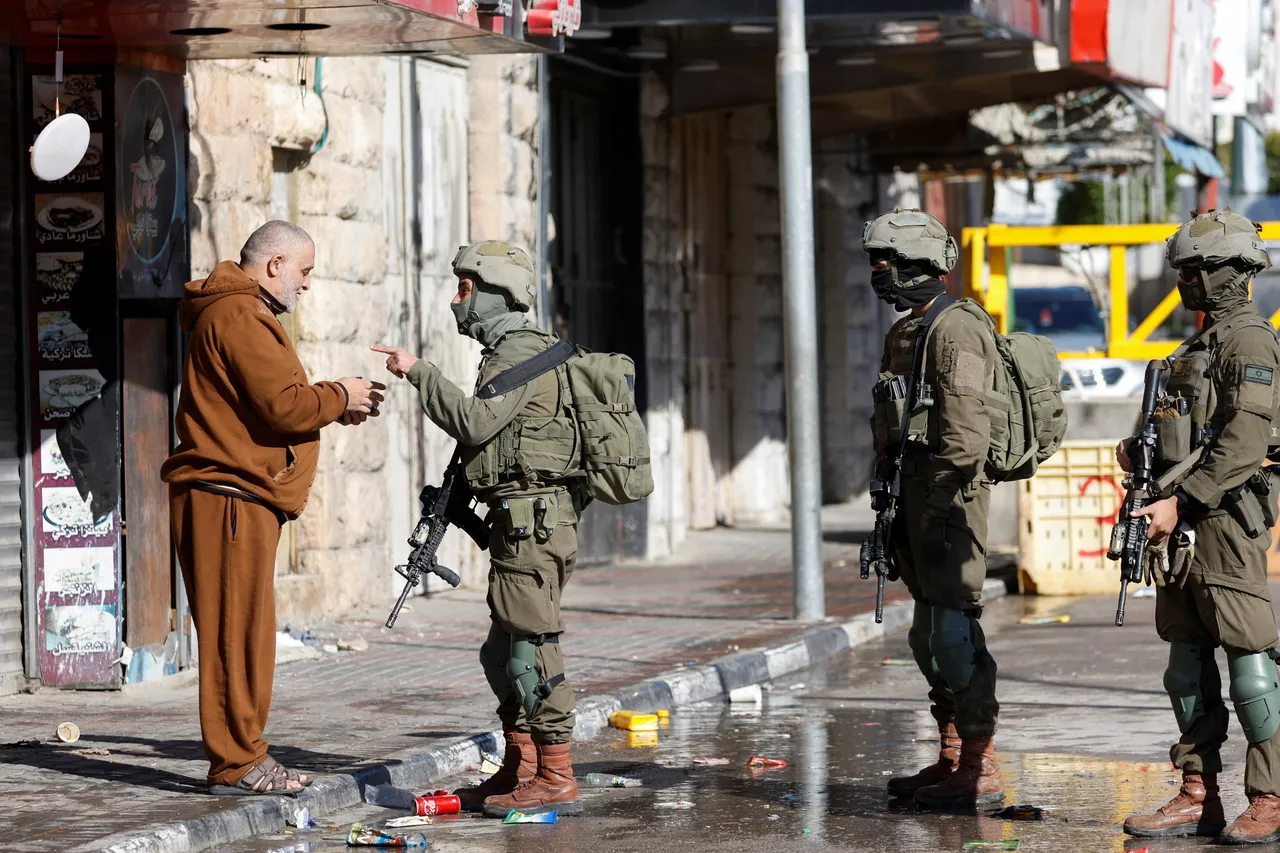
“At night, they cut off power lines and water supplies, emptied water tanks, damaged homes, and beat people. The police received numerous complaints... Soldiers and police either didn’t show up or showed up very late. Sometimes the attackers themselves were wearing Israeli army uniforms,” Or describes the situation in Ras al-Ayn, where hundreds of people lived just two months ago.
The result is that the village is empty, with all its residents having left.
In the community of Humsa, a family’s herd—their primary source of food—was stolen during a pogrom, and one of their sons was abused, including sexual assault.
In Hamam el-Maliah, General Or describes a moment that left a group of veteran commanders in stunned silence.
They watched as a Jewish woman and three children burst into the office of a Palestinian school that had been abandoned following a recent raid.
The children began tearing up notebooks and schoolwork, chanting "The People of Israel Lives" until their voices were hoarse.
After removing the group from the building, the generals—all men who had led troops through major, difficult wars—exchanged a silent look.
In that moment, Or notes, they were all struck by the same haunting thought: they were witnessing the very same kind of ethnic violence that had been used against their own parents and families in Europe just a century ago.
The mechanics of terror
Or methodically explains how it works.
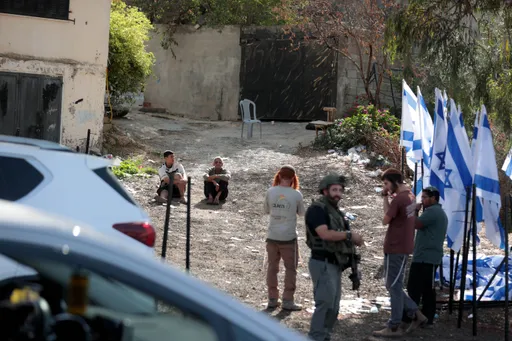
A farm or outpost is established around the community targeted for “cleansing.”
The state invests millions of shekels in infrastructure, security, SUVs (Smotrich jeeps), and herds.
Then come months of constant pressure: shepherds drive livestock, cut off electricity and water at night, steal animals, damage property, beat people, and set houses on fire.
“Each eviction operation takes several months, after which the Palestinian community is forced to leave a place where it has lived for generations,” says an Israeli army veteran.
Since the beginning of 2026, at least 10 Palestinians have been killed in this way, and approximately 270 people have been beaten and wounded.
Over the past three years, more than 30,000 people have been expelled from the occupied West Bank.
The state as an accomplice
Alongside street terrorism, the government is systematically altering the legal landscape.
In January 2026, half a billion shekels ($168 million) will be allocated to roads and infrastructure in the illegal settlements.
In February, decisions will be made to expand Israeli authority in Area C. The land registry will be published, restrictions on land sales to Jews will be lifted, and 240 million shekels will be allocated for land transfers.
A project to build thousands of housing units in Area E1 will cut the occupied West Bank in two.
Or directly names those responsible: Prime Minister Netanyahu, Ministers Katz, Smotrich, and Ben-Gvir. Shin Bet Director David Zini “refuses to define these crimes as terrorism”.
The Central Command Commander and the Chief of the General Staff, according to Or, are turning a blind eye—and this is not a coincidence but policy.
“The Israeli army and the Shin Bet have been almost entirely reluctant to prevent or stop violence, riots, and pogroms; they often turn a blind eye to them in real time; and in many cases, it appears that those in uniform—rightfully or not—are themselves complicit.”
Everyday nightmare
The fact that a man from within the system is this horrified says everything about the nightmare that has become the Palestinian reality.
Their reality isn’t sporadic violence or the “excesses of isolated extremists.” It’s a methodical, state-funded, legally and politically sanctioned campaign of displacement.
Waking up in the morning, a Palestinian family doesn’t know whether someone will come to their yard that night with sheep and clubs, whether the water will be cut off, whether their livestock will be stolen, or whether their car will be set on fire.
They only know that complaining is futile: the police won’t come, will arrive late, or will side with the attackers.
That even if a court rules in their favour on their right to live on their land, no one will enforce it. That their children will arrive at school to find other children ripping up their notebooks.
This is what is called ethnic cleansing - when people’s lives are not taken away by a single decree, but are made unbearable day after day until they themselves leave.
When a man with the pedigree of Yaakov Or—a true insider of the system—is horrified, his comparison to the pogroms of the last century is no mere rhetoric. It is a damning verdict on the era, the state, and the ideology driving Israel’s expansion.
‘I felt like a monster’: Israeli soldiers on what they did in Gaza
While generals describe ethnic cleansing in the occupied West Bank as state policy, another Israeli publication, Haaretz, publishes testimony from within the military machine itself.
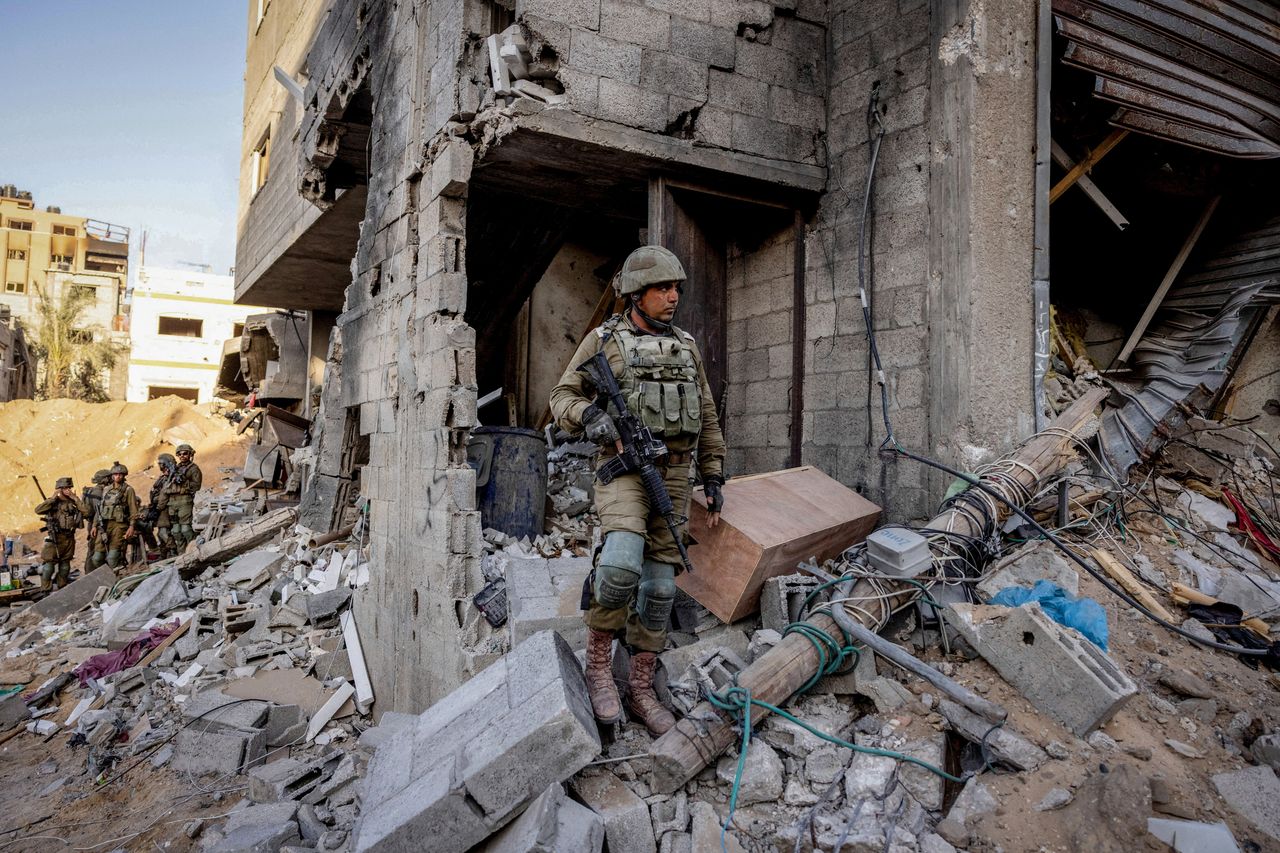
These are the voices of soldiers, reservists, and officers, broken not by fear of death but by what they themselves have done—or have silently watched others do.
Experts have given this phenomenon a name: “moral trauma”.




Professor Yossi Levi-Belts of the University of Haifa distinguishes it from PTSD: “PTSD is a reaction to a threat to one’s own life. Moral trauma arises from exposure to events that are perceived as a gross violation of basic moral values—one’s own or others’. Typical symptoms include guilt, shame, rage, alienation, and disintegration of identity.”
Gil Salzman, head of the National Council for Suicide Prevention, says the number of requests for help has increased sharply since the ceasefire in Gaza.
“We’re seeing emotional trauma on a scale never seen before. It’s even reaching the children of reservists who’ve heard a story and can’t cope,” Salzman says.
Yuval, a 34-year-old former Israeli soldier and computer programmer, said his unit pursued “suspicious figures” spotted by a drone near the Salah al-Din Highway in Khan Younis in December 2023.
“I fired like crazy, just like they teach in training,” he said.
When they reached their target, they found an old man and three teenagers. No weapons.
“Their bodies were riddled with bullets, their insides spilling out.” The battalion commander approached, one of his men spat on the bodies, and shouted, “This is what happens to those who mess with Israel.”
Yuval remained silent.
“I’m a coward and a loser,” he says of himself.
After his demobilisation, his fellow soldiers threw him a party and called him a hero.
“But I felt like a monster,” the soldier says.
He threw out all the mirrors from his house and stopped going outside.
“Maybe in some way I want to die, to end it all. I’m not killing myself because I promised my mother. But I don’t know how long I’ll last,” Haaretz quotes Yuval as saying.
Two days after speaking with reporters, Yuval was hospitalised in a psychiatric ward.
Maya, a reservist officer in an armoured battalion, watched from an outpost in southern Gaza as, on orders from the battalion commander, a tank opened machine-gun fire on five Palestinians attempting to cross north.
Four were killed, and a D9 bulldozer buried the bodies. The survivor was locked in a cage.
That night, several soldiers called her over to watch. One of them urinated on the prisoner: “That’s for Be’eri, you bastard, that’s for Nova.”
“I might have laughed too,” Maya says.
A Shin Bet agent who arrived the next day interrogated the prisoner for ten minutes and concluded that he was an ordinary resident trying to return home and had no connection to Hamas.
He was released.
“I felt like a hypocrite. I was taking three showers a day. The image of his helplessness wouldn’t go away. How could I stand by and do nothing? How could I, someone who goes to protests and volunteers with refugees, agree to this? I don’t know,” Maya recounts.
Yehuda, a reservist serving at the same outpost on a different shift, remembers the night his team was sent to make an arrest. The Palestinian man they encountered immediately raised his hands. “It was obvious he was unarmed,” Yehuda recalls.
Without a word, an officer with an American name—a "strange guy" who drifted between brigades—approached the man, waited a few seconds, and opened fire.
There had been no threat and no questions asked. Even when the command post reviewed the drone footage and a senior officer called it "just murder," the system remained unmoved. There was no investigation; the final report simply read: Terrorist killed.
The weight of that moment didn't hit Yehuda until two months later, while visiting the Prado Museum in Madrid with his wife, an art historian.
As they walked through the galleries, Yehuda—who admits he knows nothing about art—suddenly froze. He found himself staring at a Goya painting of a helpless man, hands raised, standing before a line of soldiers with rifles.
“The look in his eyes—fear, terror. I couldn’t tear myself away. I broke out in a sweat. And then, out of nowhere, I started crying. I never cry. People were looking at me. Try explaining why you’re crying in a museum,” the reservist describes his state.
That same night, he promised his wife he’d see a therapist.
Eitan, an infantryman, and his unit in northern Gaza detained a Hamas member. Two men from Special Forces Unit 504 arrived—an interrogator and a combat soldier.
The interrogator removed the detainee’s trousers and underclothes and attached zip ties to his genitals. He asked questions. When he didn’t receive an answer, he tightened the zip ties.
“He screamed as if his soul was being torn out of him,” Eitan recalls.
Finally, the detainee spoke. The zip ties were removed, and he was put in a truck.
“That screaming hasn’t gone away since then. It destroyed everything I thought about the army, about us, about me. If we’re capable of such things, what else is going on in the basements?” the Israeli asks.
Ran, an Air Force officer at the Defence Headquarters in Tel Aviv, hadn’t spent a single day in Gaza while planning air strikes.
“After October 7, everything changed. Everything I knew about acceptable civilian casualties was thrown out the window. We planned and got approval for strikes knowing dozens of civilians would die, sometimes more. And it didn’t matter,” he recalls.
The crisis came on March 18, 2025, when Israel violated the ceasefire: hundreds died overnight, most of them civilians. Ran refused to continue his service.
Several other pilots did the same—commanders agreed, but asked them to remain silent
“I became obsessed: I’d look at the most horrific photos of dead and wounded Palestinians and try to figure out if I was responsible,” he says.
An army without conscience
The Israeli army has never officially recognised the term “moral injury,” preferring instead “identity trauma.” Sources in the military healthcare system explain why.
“If we acknowledge that many soldiers suffer from moral trauma, how does that fit with the cliche of the most moral army in the world?” says one officer psychologist.
Another describes a meeting in which a high-ranking officer said bluntly: “We can’t call this moral injury - we’ll be hanged on Channel 14.”
Soldiers, in turn, are afraid to tell their fellow soldiers about their doubts: they will be branded traitors or “leftists.”
All this is happening against the backdrop of what General Or describes: while some soldiers are breaking down in shame over what they saw in Gaza, others—in the occupied West Bank—are committing pogroms that no one can stop.
It’s the same system. The same chain of command. The same prime minister.
This article was originally published on TRT Russia.