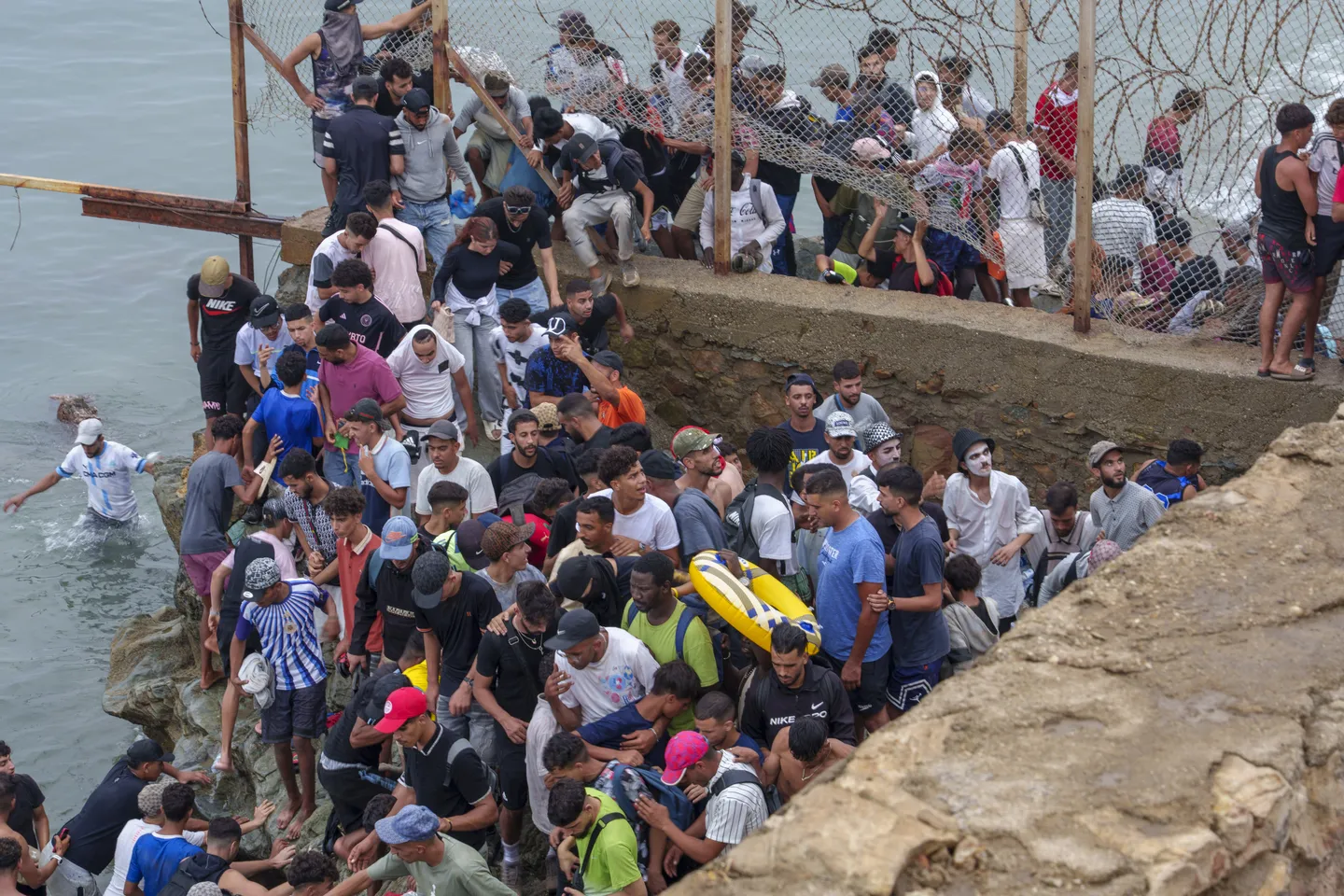
Tens of thousands of people from Morocco undertook a risky journey through the sea and across the land border to reach the Spanish enclaves of Ceuta and Melilla over the past few days, sparking one of the biggest migration crises in Europe in recent times.
Spanish Prime Minister Pedro Sanchez criticised the sudden arrival of an estimated 40,000 migrants at the North African enclaves as "an attack, a violation" of Spain's national territory.
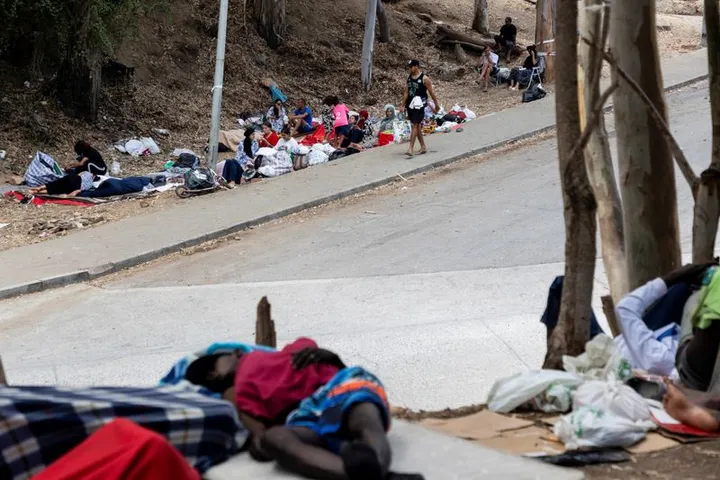
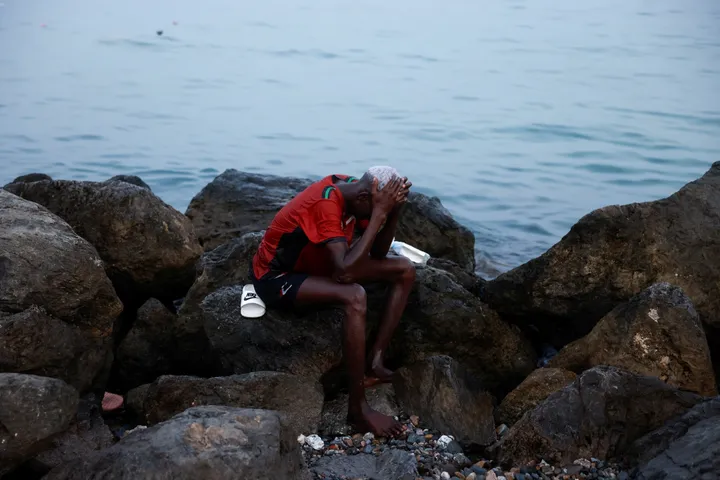
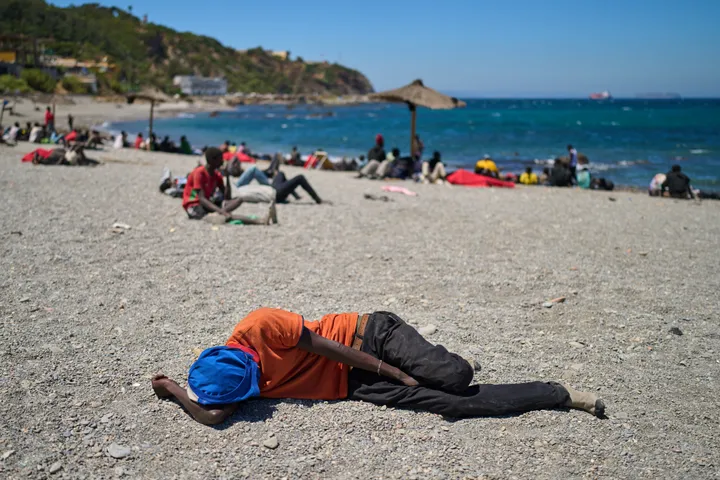
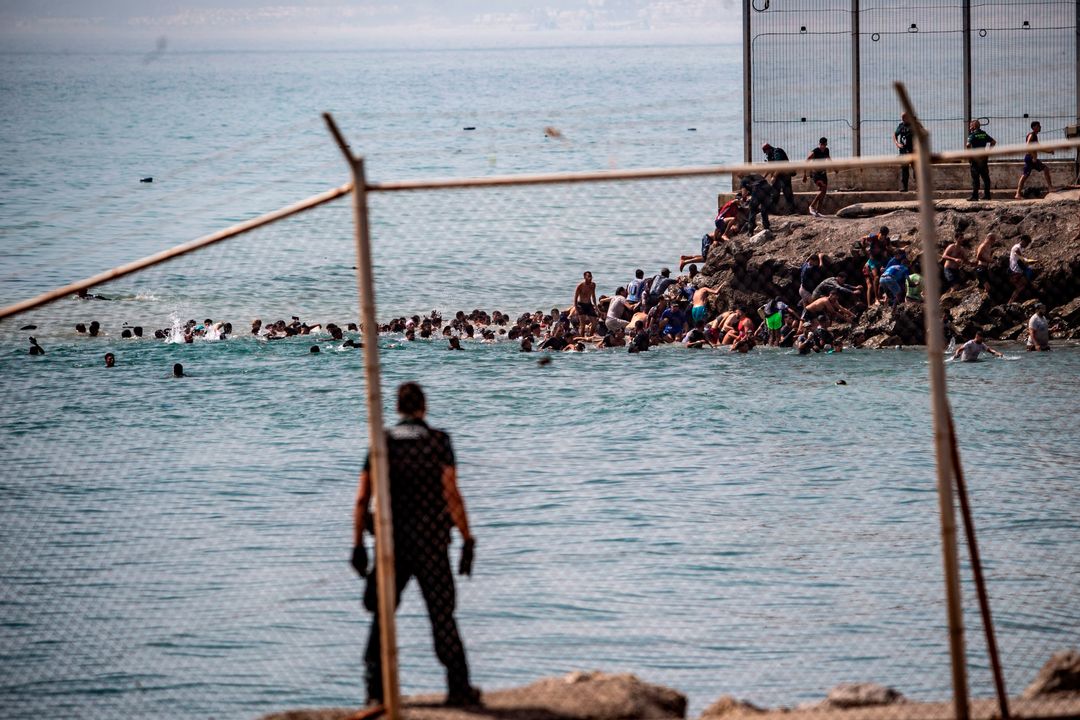
Videos and images showed crowds of people walking around the breakwaters at an urban beach near a border checkpoint with Morocco onto local roads in Ceuta. The majority looked to be young men, though there were also families with women and children.
A destination for migrants trying to reach Europe, Spain is one of the main points of arrival for migrants seeking better economic opportunities or an escape from violence in their home countries in Africa. The migration is either through Gibraltar or, in this case, Ceuta and Melilla.
Many migrants who reach Ceuta or Melilla are immediately turned back, while others held in migrant shelters are processed and can apply for asylum in Spain.
To reach Ceuta, migrants often swim from the Moroccan town of Castillejos, covering about 5 kilometres to reach Spanish territory. Others attempt the crossing from the nearby town of Belyounech, where the distance is shorter.
How Ceuta and Melilla became Spanish enclaves
Ceuta and the larger territory of Melilla, about 400 kilometres apart, are located on the northern shores of the Mediterranean coast at the tip of Africa. The autonomous cities share the European Union's only land borders with Africa.
Ceuta is home to a mixed population of Christians and Muslims, both Spanish and Moroccans, who live in relative harmony. Morocco does not officially recognise Ceuta and Melilla as Spanish territory, and often refers to them as occupied lands.
The two port cities were once launch pads for the Umayyad Caliphate's conquest of the Iberian Peninsula in the 8th century. The Moorish conquest led to the establishment of Muslim control over what is present-day Spain and Portugal.
During the Spanish Reconquista between the 14th and 16th centuries – the wars which ended Muslim control of the region – the Spanish and Portuguese kingdoms also took Ceuta and Melilla port cities under their control.
Subsequently, these two enclaves were used again as launchpads by Christopher Columbus on his voyages to “discover” the Americas in the 16th century.
In 1912, the Spanish and French established their “protectorates” in Morocco, furthering their goal of colonising the land.
Under Spanish control since 1580, the region saw an upheaval when Abdulkerim Hattabi, a judge in Melilla, revolted and founded the Republic of Rif (1921-26) to overthrow Spanish rule in North Africa.
While Rif’s military had the upper hand in the war, Spain was later bolstered by a military alliance with France, which also had several colonies in Morocco. The joint army, which was accused of using chemical weapons, managed to defeat Rif’s forces and regain control of Morocco in 1926.
After the Spanish left North Africa and Morocco declared independence in 1956, Ceuta and Melilla remained under Spanish control, which was confirmed during a meeting between Moroccan King Hassan II and Spain’s General Franco in July 1963.



In 1995, Spain approved the autonomous status for Ceuta and Melilla, though Morocco never recognised it.
A long-running dispute
Ceuta, a city of 85,000, has been a flashpoint in major diplomatic crises in recent memory between Madrid and Rabat.
Ceuta receives thousands of day workers who cross the border each day from Morocco to earn a living.
In May 2021, the Moroccan government dropped its border controls and let some 8,000 people from Morocco and sub-Saharan countries pour into Ceuta in just two days.
The move was broadly interpreted as retaliation by Morocco for Spain’s decision to allow a pro-independence leader from the disputed Western Sahara region to be treated for Covid-19 at a Spanish hospital.
Tensions were diffused and the border restored only after Spain’s prime minister shifted Spain’s long-standing position on Western Sahara, and met with Moroccan King Mohammed VI the following year.
However, the migration didn’t stop in Ceuta.
In June 2022, nearly 2,000 migrants were reported entering Melilla, cutting the border fence in order to reach the Spanish enclave.
Even though most were returned, it is reported that over a hundred migrants were processed at the immigrant reception centre.
The Spanish PM tied the sudden influx of migrants this week to a Spanish Supreme Court ruling earlier this month that immediate returns of migrants crossing the border illegally did not apply to those arriving by sea.
Even though Spain declared a national emergency and assumed control in Ceuta and Melilla, the migrant surge has once again exposed fault lines in Europe on the sensitive issue.
Italy’s Minister of Foreign Affairs Antonio Tajani posted on X, calling for Spain's exclusion from the Schengen area.
Italy’s Prime Minister Giorgia Meloni also suported supported Tajani, saying that Rome was ready to take "extraordinary measures" to defend Italy's borders, including the "suspension of the Schengen area with Spain."