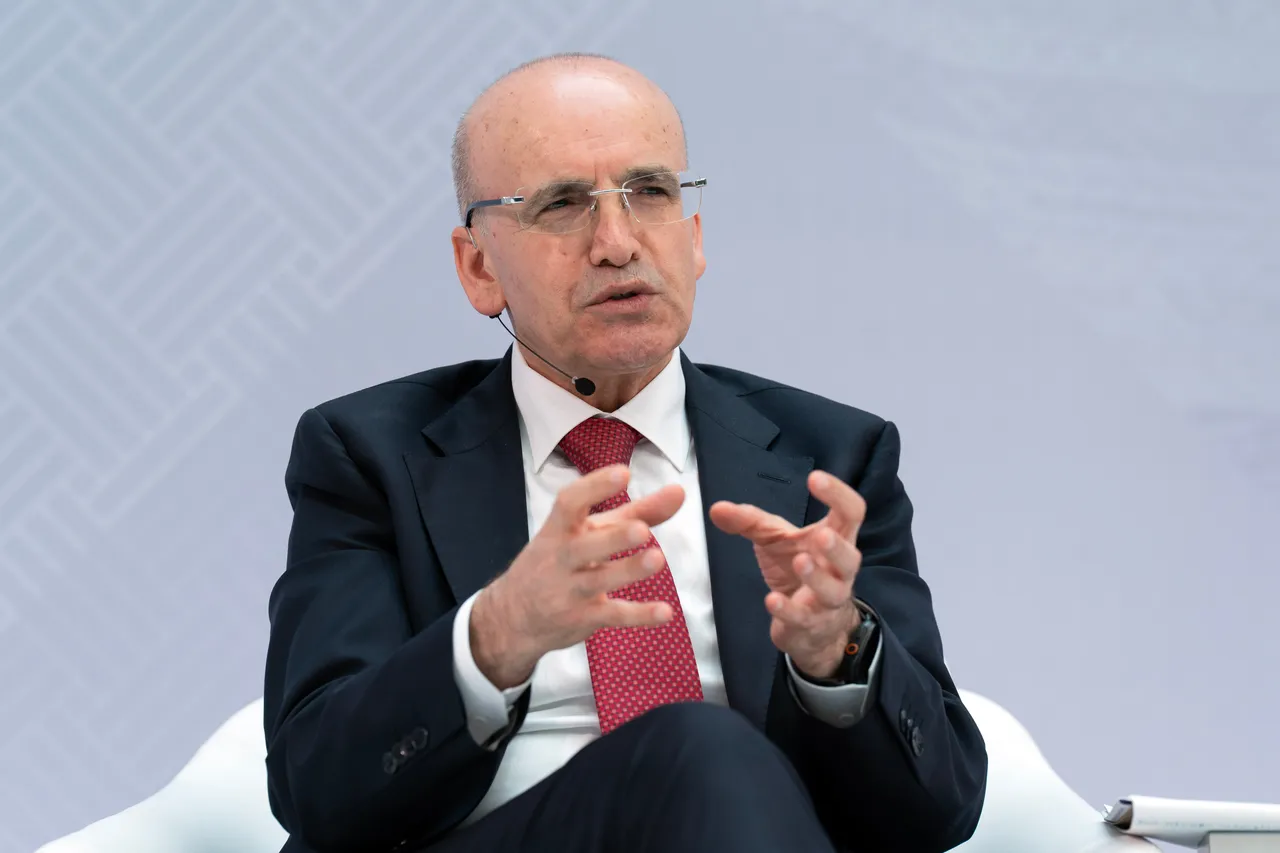
Türkiye has declared 2026 the "year of reforms," stated Türkiye's Treasury and Finance Minister Mehmet Simsek, who outlined a comprehensive structural reform agenda focused on industrial transformation, moving up the value chain, green and digital transitions, productivity investments, and enhancing infrastructure such as railways.
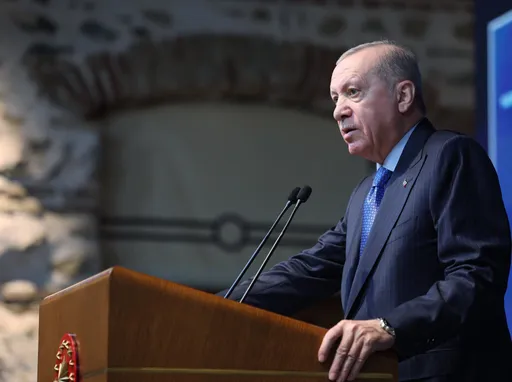
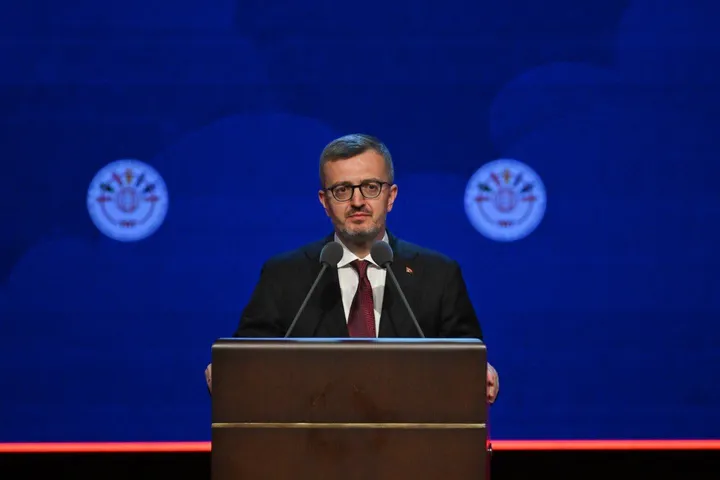
Speaking at the Powerhouse for Investment in the Türkiye Century press conference in Ankara on Monday, Simsek detailed the reform package announced last week by President Recep Tayyip Erdogan.
Simsek explained that the new investment framework aims to boost exports of goods and services, encourage asset repatriation, incentivise domestic investors to base their activities in Türkiye, and position the Istanbul Finance Centre as a key regional hub.
He noted that the first initiative introduces a 100 percent corporate income tax exemption on transit trade for companies based in the Istanbul Financial Centre, adding that companies operating outside of designated financial sectors will receive a 95 percent tax exemption on transit trade.
Simsek highlighted that the government aims to establish a competitive merchanting similar to those in Asia, citing Singapore, Hong Kong, and the Maldives, while leveraging Türkiye's strategic geographical position along the Middle Corridor to capture key trade routes.
He noted that the government's previously provided 50 percent tax exemption when the Istanbul Finance Centre regulation passed in 2009, has now been expanded to 100 percent.
The minister added that Türkiye already serves as a major energy hub and hosts a leading global commodity trader, prompting efforts to create similar companies locally.
Radical steps
Simsek announced a second initiative aimed at boosting goods exports by sharply reducing the standard 25 percent corporate tax rate for exporters in an effort to increase competitiveness.
Manufacturer exporters will now benefit from a single-digit corporate tax rate of 9 percent, he stated, adding that this radical step targets foreign direct manufacturing investment, particularly because the outsourcing trends of the 1990’s no longer apply.
The minister pointed out that Türkiye's manufacturing value-added rate relative to gross domestic product stands on par with that of the Asian tigers.
Simsek said the industrial transformation aims to move the country's manufacturing up the value chain from medium-low technology to medium and high-tech production.
The government has also expanded the tax exemption for service exports to 100 percent in an effort to capture a larger market share.
Simsek explained that this measure targets high-value services such as software, video gaming, medical tourism, education, engineering, design, and architecture.
The minister emphasised that the services sector remains resilient to global trade protectionism and fragmentation, noting that Türkiye already boasts a strong global position with a service export surplus exceeding $60 billion.
Simsek highlighted that Türkiye offers a large domestic market with a GDP of $1.6 trillion last year, surpassing the combined $1.3 trillion economy of its eight neighbouring countries.
The minister noted that Türkiye's GDP soared from an index of 100 in 2002 to 328, outperforming the emerging market average of 314.



Strong foundations for sustainable growth
Acknowledging a temporary economic slowdown due to the current disinflation program, Simsek said the government has laid strong foundations for sustainable growth.
In addition to the new package granting a 20-year corporate tax exemption for companies that move their regional headquarters to the Istanbul Financial Centre, while firms relocating headquarters elsewhere in Türkiye will receive a 95 percent corporate tax exemption, Simsek stated that eligible employees will also benefit from an income tax exemption of up to nearly $3,000, which equals four times the minimum wage.
The minister explained that eligible services, including management, advisory, and human resources, must generate 80 percent of their revenues from outside of Türkiye.
Simsek noted that the ruling party attracted nearly $300 billion in foreign direct investment over the past 20 years, bringing 87,000 international companies to the country.
He said this streamlined process covers company formation, work and residence permits, tax and social security, land allocation, and environmental approvals.
The minister introduced a 20-year non-domiciled window offering zero tax on foreign-sourced income for Turkish citizens and global expats.
Eligible individuals must not have lived in Türkiye as tax residents for more than six months over the past three years.
Simsek added that the framework reduces the standard 10 percent inheritance tax to just 1 percent for these individuals, outperforming similar 15-year programmes in Italy and Greece.
Terminal Istanbul
Service companies can also qualify for the citizenship program by providing employment opportunities for 50 people.
He added that company incorporation and operations can be conducted fully online without a physical presence.
The government also plans to expand tax-efficient employee stock option schemes and venture capital funding tools, using the old Ataturk Airport terminal as a new technology hub called Terminal Istanbul.
Simsek said a new asset repatriation framework will encourage offshore wealth to return, helping to deepen domestic capital markets.
He emphasised that the Istanbul Finance Centre strategy combines governance and talent with long-term incentives, extending benefits through 2047.
Simsek concluded that the comprehensive economic positioning strategy offers 20-year visibility, top-tier global attractiveness, and friction-free entry for investors.