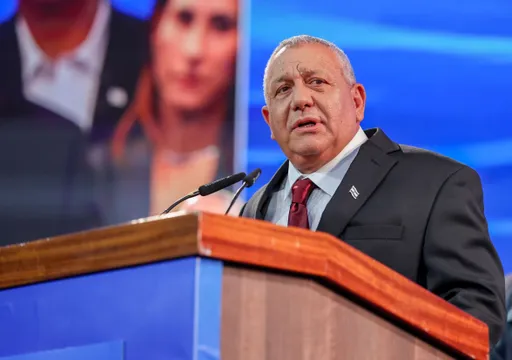
Israeli opposition parties have decided to recommend that President Isaac Herzog task Yashar party leader Gadi Eisenkot with forming the next government, as consultations get under way on Wednesday and Thursday following last week's inconclusive elections.
The Democrats, led by Yair Golan, announced their decision on Monday in a statement carried by public broadcaster KAN. It followed similar announcements by former Prime Minister Naftali Bennett's Together party on Sunday and Avigdor Lieberman's Yisrael Beytenu on Monday.
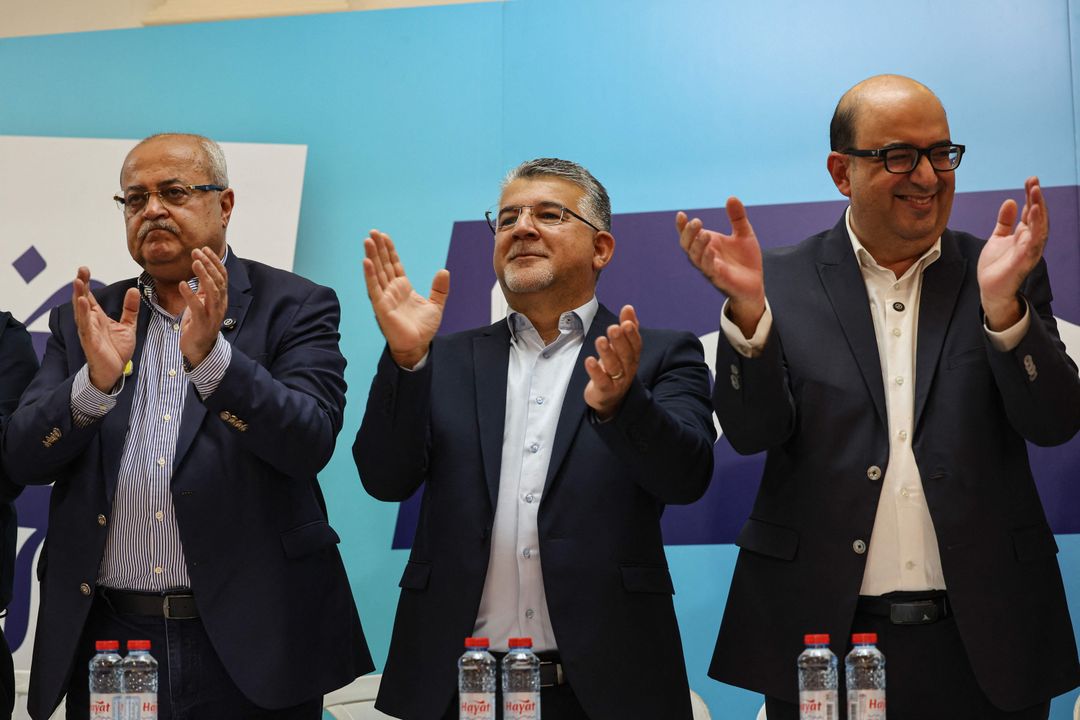
According to an Anadolu correspondent, the Joint List, a three-party Arab alliance led by Yousef Jabareen, and the United Arab List, led by Mansour Abbas, are expected to make similar recommendations.
If all opposition and Arab parties back Eisenkot, he could receive recommendations from 67 lawmakers in the 120-member Knesset, compared with 53 for Prime Minister Benjamin Netanyahu's bloc.
A divided Knesset
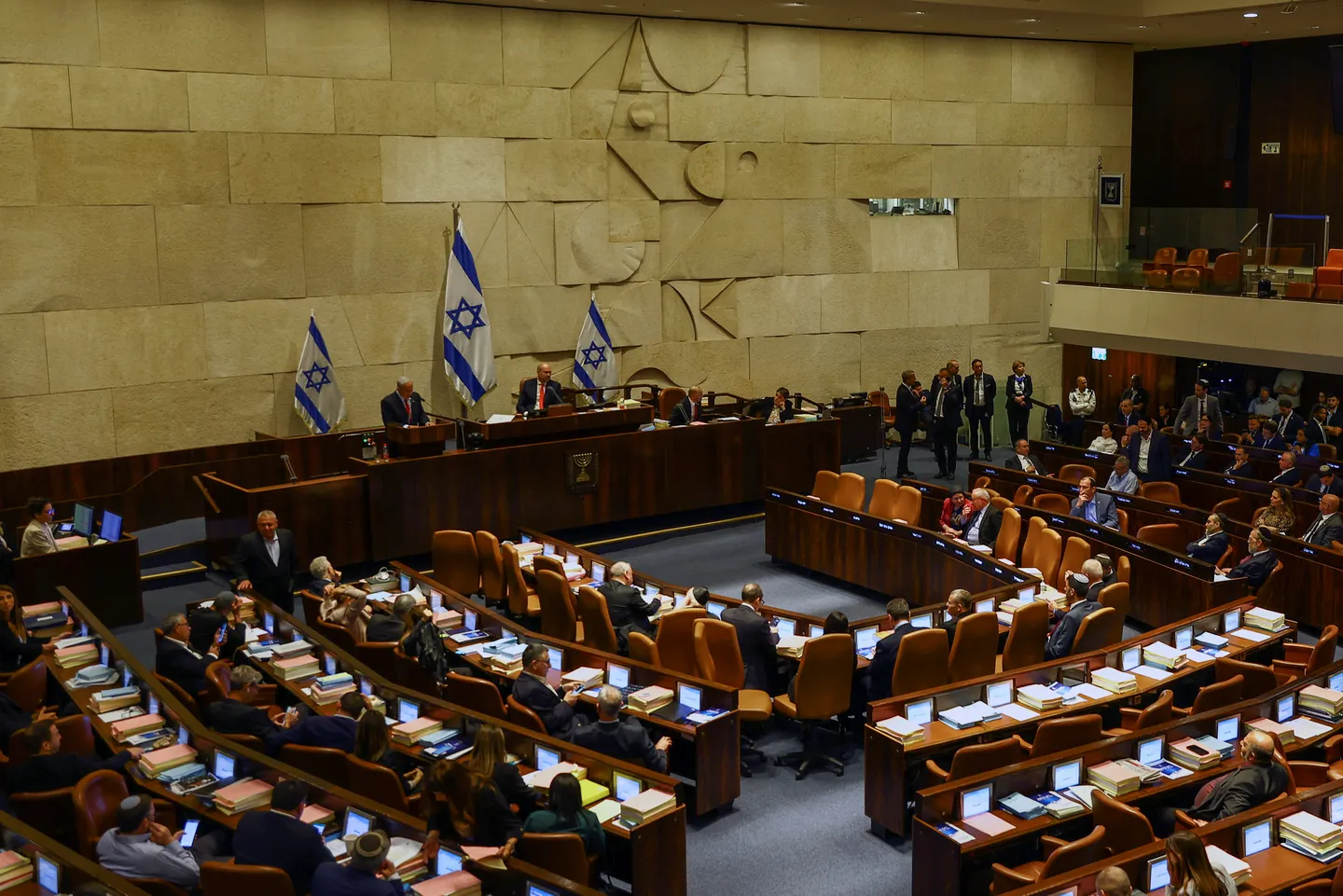
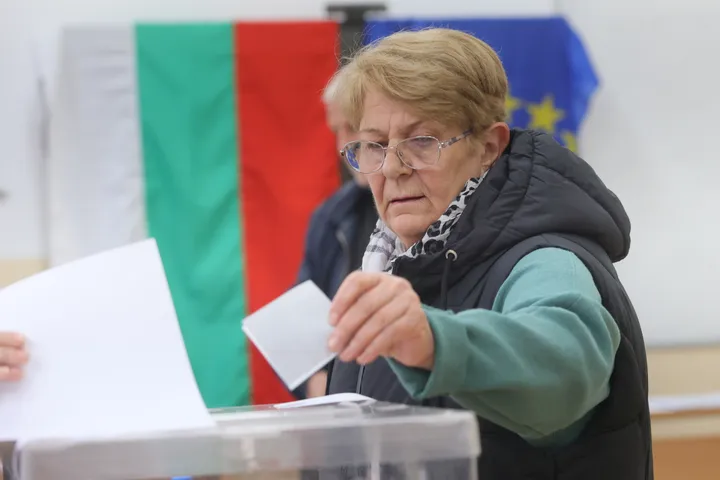
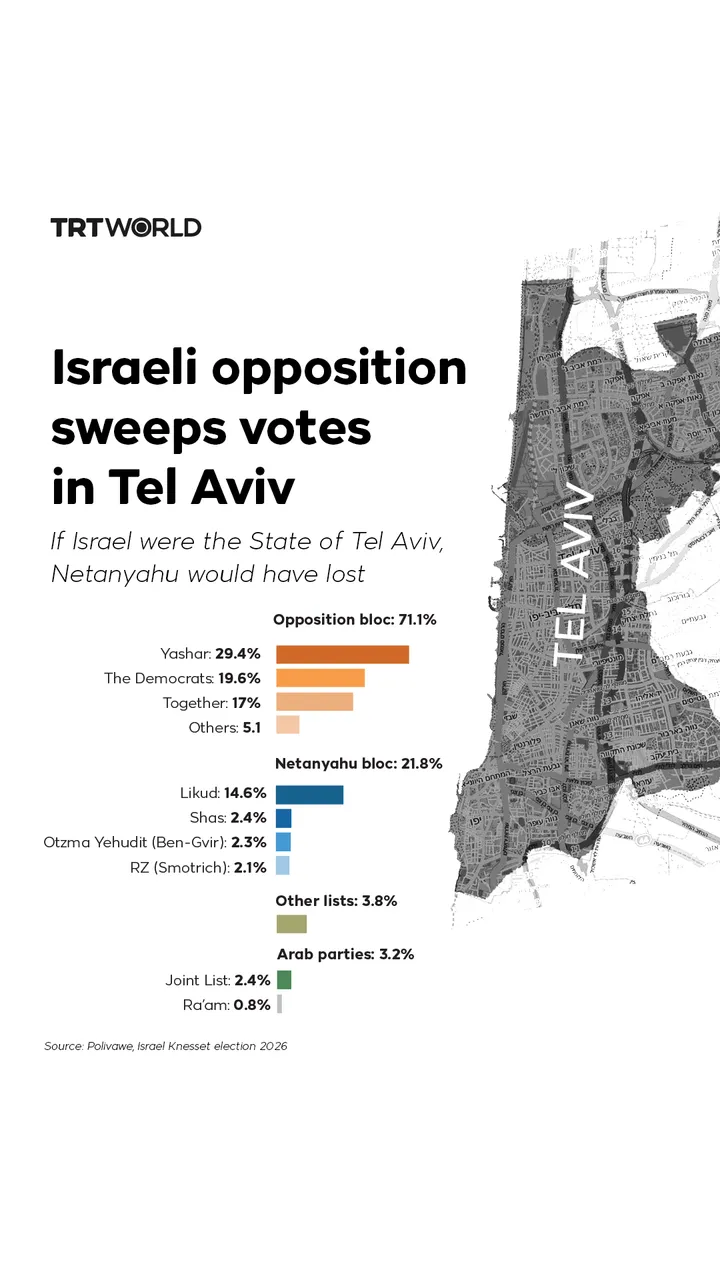
Last Tuesday's elections produced a fractured parliament, with neither Netanyahu's bloc nor the opposition securing the 61 seats needed for a majority.
Netanyahu's bloc won 53 seats, including 27 for Likud, seven each for United Torah Judaism and Otzma Yehudit, and six each for Shas and Religious Zionism. Opposition parties took 48 seats, with 21 for Eisenkot's Yashar, 12 for Together, eight for the Democrats and seven for Yisrael Beytenu.
Arab parties won 19 seats, with 11 for the Joint List and eight for Ra'am, also known as the United Arab List.
Netanyahu's bloc is therefore eight seats short of a majority, while the opposition needs another 13 lawmakers to reach 61. Although the opposition and Arab parties together hold 67 seats, they have not agreed to form a governing coalition.
That gap is the main obstacle facing Eisenkot. Speaking at a news conference in Modi'in in central Israel on Monday, Lieberman said his party would back Eisenkot for prime minister and support Yair Lapid for Knesset speaker when the new parliament convenes on November 10, according to The Jerusalem Post.
However, he ruled out sitting in a government with Netanyahu or supporting a minority administration, warning that such a government could collapse within a year and pave the way for Netanyahu's return.
Lieberman also refuses to join a government that includes Arab parties or relies on their parliamentary support.


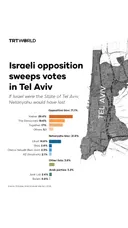
He conceded that the opposition had performed far worse than expected. "The opposition suffered a resounding failure in the elections. Winning 48 seats was far below our expectations," he said, placing responsibility on Eisenkot and his team.
Opposition lawmakers, Lieberman added, would seek to replace incumbent Speaker Amir Ohana of Likud, accusing him of violating parliamentary rules.
How the mandate works
Herzog's office said consultations will begin at 5pm local time (1500GMT) on Wednesday, with factions invited in ascending order of parliamentary strength, a departure from customary practice meant to encourage fresh ideas. Religious Zionism, Shas and Yisrael Beytenu will be heard first.
On Thursday, Herzog will meet United Torah Judaism, Otzma Yehudit, the Democrats, Ra'am, the Joint List, Together, Yashar and, finally, Likud, before announcing whom he is tasking with forming a government.
Under Israel's parliamentary system, voters elect members of the Knesset rather than directly choosing a prime minister. The president is not obliged to pick the leader of the largest party and can instead choose the lawmaker he judges most capable of securing the Knesset's confidence.
Under Basic Law, the designated lawmaker has 28 days to form a government, with a possible extension of up to 14 days. If the attempt fails, the president can assign the task to another lawmaker, who receives 28 days without an extension.
Further failure could lead to another election.
A government takes office only after winning a Knesset vote of confidence, and the outgoing government remains in place until then.
Securing the mandate would strengthen Eisenkot's hand despite Likud remaining the largest single party, but it would not make him prime minister.
Without a coalition deal, he would need support from additional lawmakers, including possible defections from Netanyahu's bloc. Failure could mean further negotiations, a unity government or another election.