Syrian authorities have arrested an Assad-era official responsible for stockpiling deadly nerve gas sarin and chemical weapons production, the interior ministry said.
The ministry on Wednesday identified the suspect as Colonel Ahmad Habib Ali, a chemical weapons specialist from the town of Harf al-Musaytirah in the Al-Qardaha countryside of western Latakia province.
It said security units in Latakia carried out a special operation that led to his arrest.
According to the ministry, Ali formerly headed a centre affiliated with Scientific Studies and Research and was responsible for sarin gas warehouses and chemical manufacturing at Unit 417.
Preliminary investigations indicated that he was among the officers who supervised the production of about 20 bombs loaded with sarin gas, each weighing 250 kilogrammes, the ministry said.
The bombs were used in attacks targeting Syrian cities and towns in 2013 and 2017, it added.
The ministry said investigations were continuing to identify and document all crimes attributed to the suspect before referring him to the relevant judicial authorities.
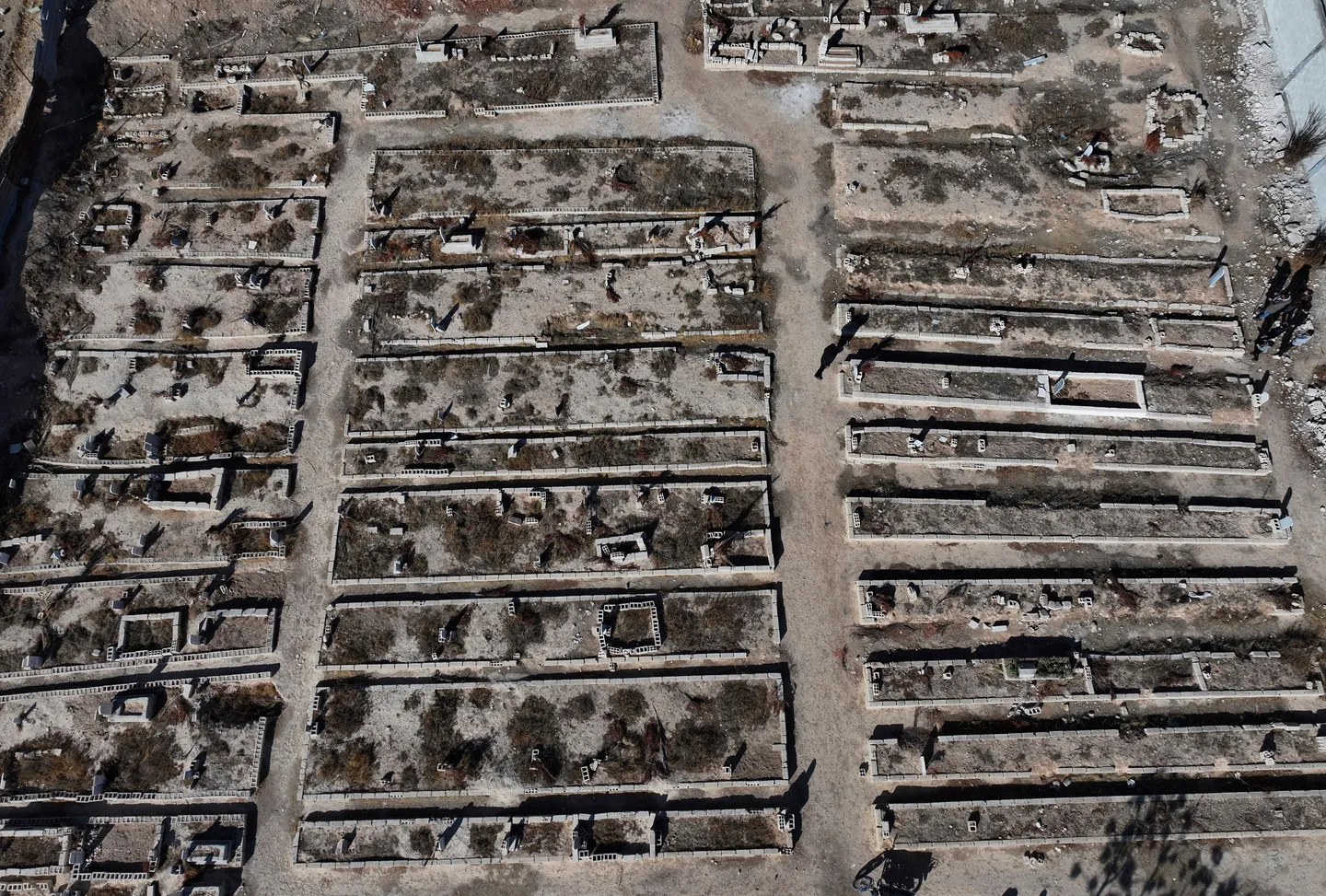
Sarin gas was also used in one of the deadliest chemical attacks against the popular Syrian uprising, when the Assad regime launched strikes on Eastern Ghouta and Moadamiyat al-Sham on August 21, 2013.
The attack killed more than 1,400 civilians, including hundreds of women and children, and wounded more than 10,000 others.
Following the attack, Syria joined the Organization for the Prohibition of Chemical Weapons (OPCW) on September 13, 2013, and the UN Security Council later that month adopted Resolution 2118 on the destruction of the country's chemical weapons program.
The OPCW and the UN subsequently established a joint mission that declared the destruction of Syria's declared chemical weapons stockpile in August 2014.
However, it later became clear that the destruction was limited to sites declared by the Assad regime, as its forces subsequently carried out numerous chemical attacks using chlorine and sarin gas in several cities, most notably Aleppo in northern Syria.
In April 2021, OPCW member states voted to suspend some of Syria’s rights and privileges after the organisation concluded that Syrian government forces had used chemical weapons in attacks on the town of Ltamenah in Hama province in March 2017 and the city of Saraqib in Idlib province in February 2018.
The arrest came days after the OPCW Executive Council adopted a decision restoring Syria’s rights and privileges under the Chemical Weapons Convention.
In November 2025, Syria reactivated its permanent mission to the OPCW in The Hague and appointed Mohammad Katoub as its permanent representative.