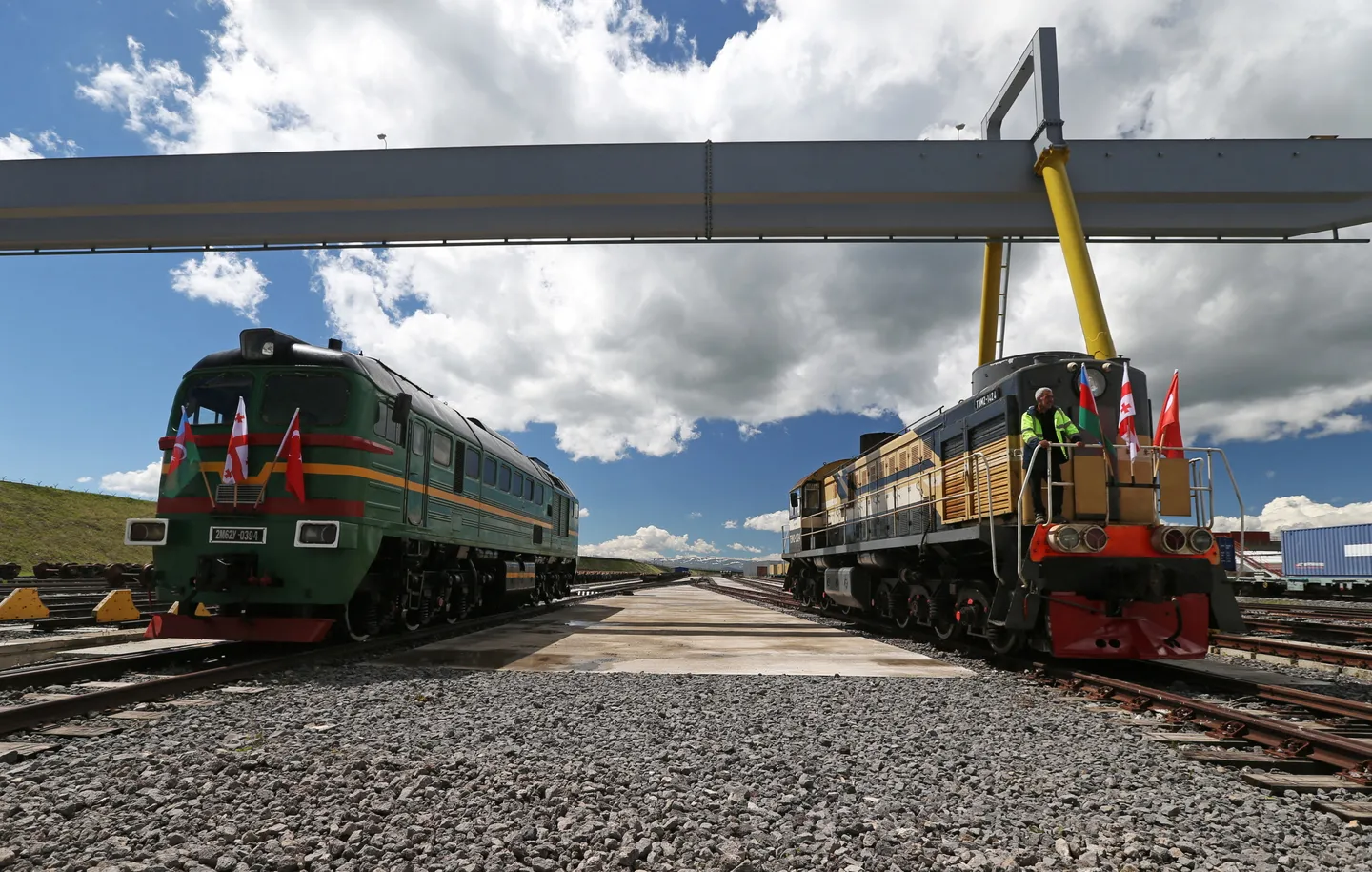
Azerbaijan expects freight volumes along the "Middle Corridor" trade route to rise 17 percent to 5.5 million metric tons this year before reaching 7 million tons in 2027, a government official told Reuters.
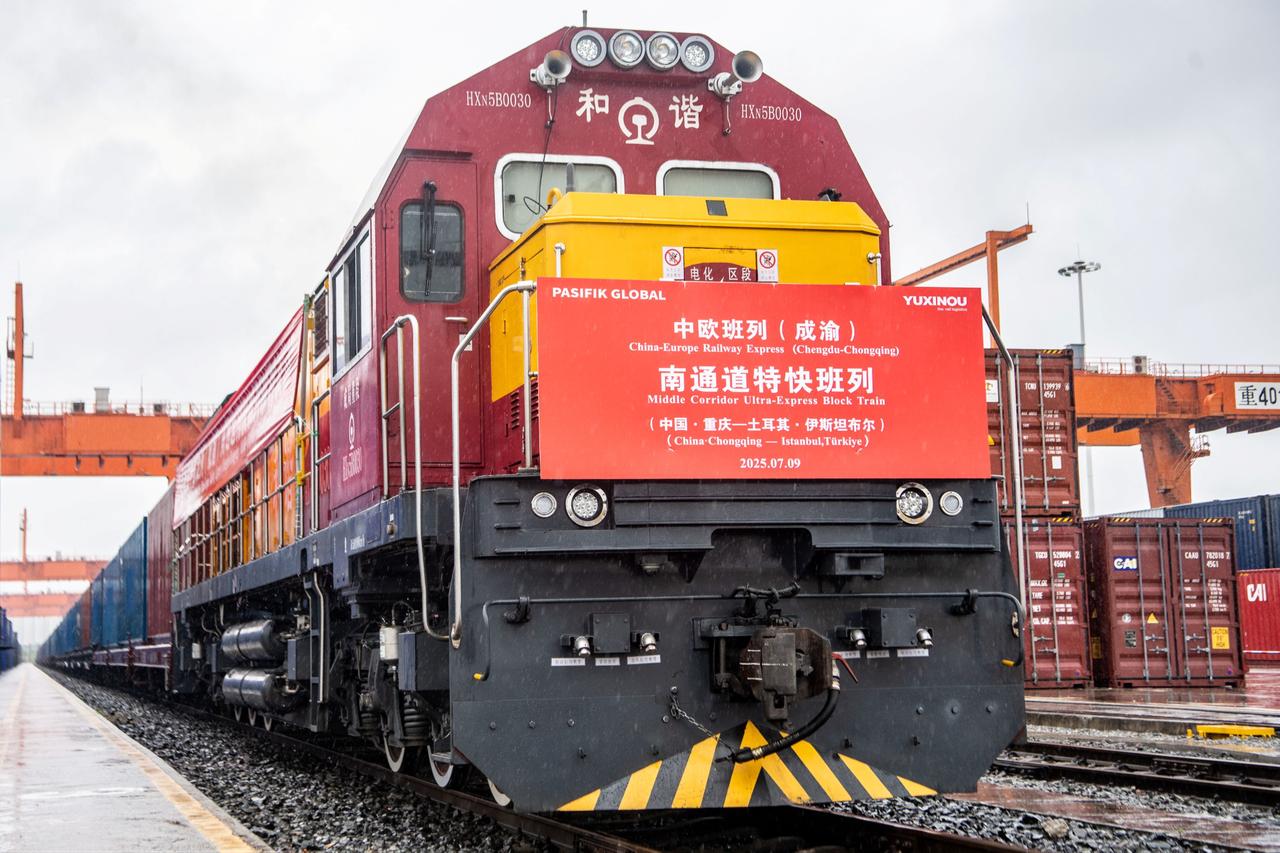
The corridor, also known as the Trans-Caspian International Transport Route, which links China with European countries via Kazakhstan, Azerbaijan, Georgia and Türkiye, plays an important role in Azerbaijan's efforts to promote itself as a global transit hub.
Cargo passing along the route includes containers with clothing, electronics and other consumer goods, as well as grain, coal, ore, fertilisers, construction materials, oil products and metallurgical goods.
With its current annual capacity of over 15 million tons, the corridor still accounts for a small share of rail traffic between China and Europe.
However, Baku is expanding port and rail infrastructure to capture a larger share of that trade as many global logistics firms seek to diversify away from Russia due to its war in Ukraine and the Iran war disrupts other routes.
Azerbaijan's total transit volumes rose 10.1 percent year-on-year in the first half of this year, said Aytan Turabova, head of the Transport Policy Department at Azerbaijan's Ministry of Digital Development and Transport. Middle Corridor freight grew 13.1 percent, she said.
"We see sustained growth in cargo flows and expect this trend to continue as infrastructure, transport digitalisation, and regional cooperation advance," Turabova said.
Corridor expansion plans






The European Union pledged up to €200 million ($229 million) in grants for transport, energy and digital links across the South Caucasus, while the United States is seeking to advance a proposed transit corridor that would cut across Azerbaijan and Armenia — longtime foes which signed an initial peace agreement last year — to Türkiye.
The World Bank projects key Middle Corridor infrastructure projects to cost around $25 billion, with about 87 percent of those projects already under implementation or covered by short-term government plans.
Rauf Agamirzayev, a Baku-based transport analyst, said the corridor's strategic weight had grown in the past years.
"Cargo volumes along the Middle Corridor have grown two- to three-fold compared to when the route was introduced nine years ago," he said. "This momentum will continue through 2030."
Turabova said increasing the Middle Corridor's capacity would require coordinated investments, harmonised tariffs and streamlined border procedures.
An expansion of the Baku International Sea Trade Port will further boost handling capacity to 25 million tons from 15 million, and container capacity to 500,000 twenty-foot equivalent units (TEU) from 150,000 TEU, she said.
To mitigate risks to these plans, Baku wants to boost regional cooperation to monitor and adapt to the shrinking of the Caspian Sea, which has seen its water levels drop by about a metre over the last five years.