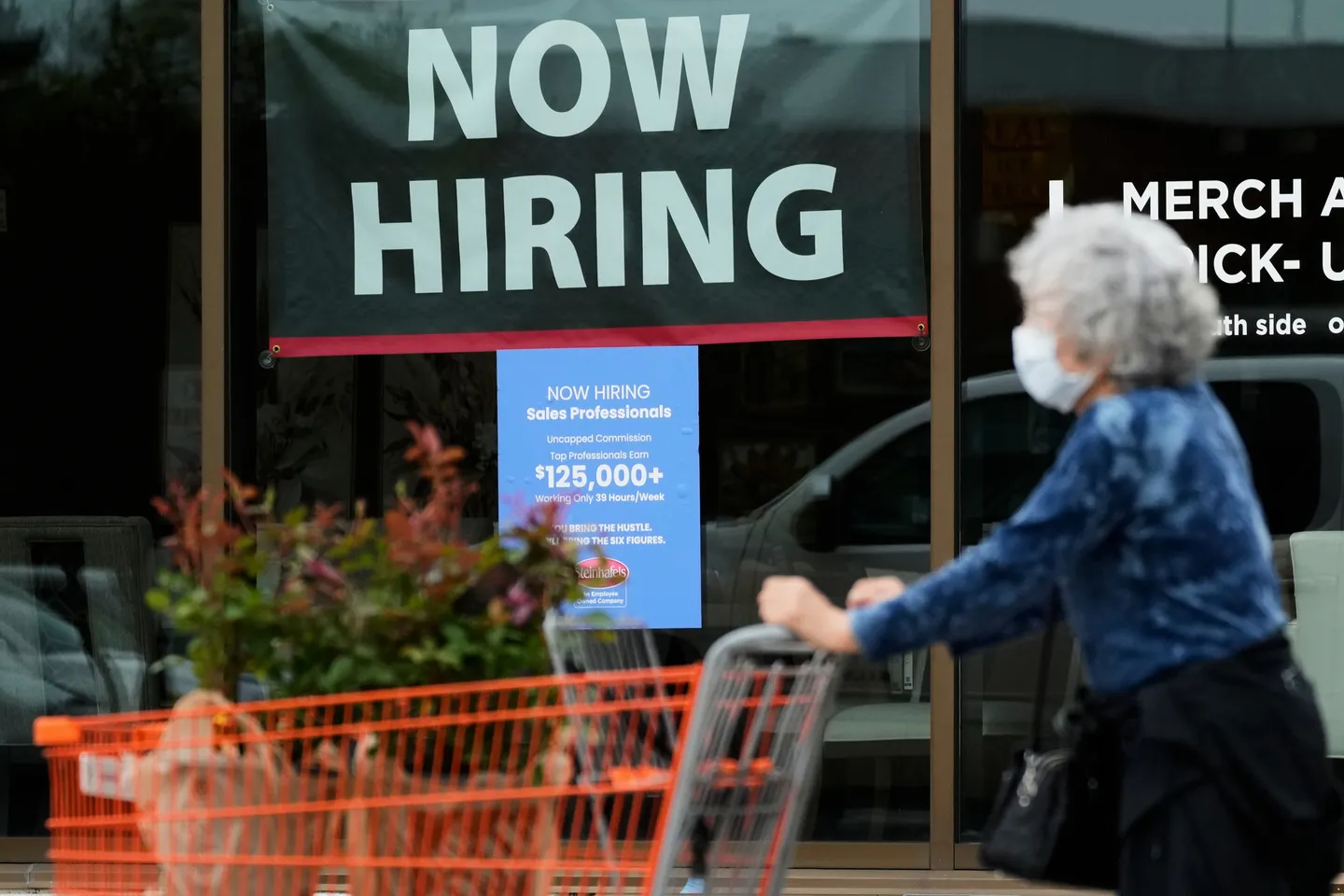
The US economy has unexpectedly lost jobs in July, while sharp downward revisions to previous months pointed to weakening labour demand, official figures show.
Nonfarm payroll employment fell by 23,000, compared with market expectations for an increase of 85,000, according to the Bureau of Labour Statistics (BLS).
The unemployment rate, meanwhile, declined to 4.1% from 4.2% in June. The number of unemployed people stood at 6.9 million.
The labour force participation rate was little changed at 61.4%, but has fallen 0.7 percentage points since January.
Employment declined by 50,000 in local government education and by 19,000 in retail trade, while financial activities lost 14,000 jobs.
Health care added 22,000 positions, continuing its upward trend but falling short of its average monthly gain of 36,000 over the previous year.
Average hourly earnings rose by 2 cents to $37.62 and increased 3.2% year-on-year. The average workweek remained unchanged at 34.3 hours.

Little to celebrate







The BLS also revised payroll growth sharply lower for the previous two months. May’s gain was cut to 63,000 from 129,000, while June’s was reduced to 20,000 from 57,000.
The revisions showed that the economy added 103,000 fewer jobs in May and June combined than previously reported.
The Federal Reserve held its policy rate at 3.5%-3.75% in July. The weak jobs report could strengthen the case for lower interest rates, as the Fed considers labour-market conditions alongside inflation when setting monetary policy.
Meanwhile, economists found little to celebrate in the latest jobs figures.
“The July employment report was flat-out weak,” Chris Low, chief economist at FHN Financial, wrote in a note to clients.
Eric Winograd, an economist at AllianceBernstein, said statistical noise may have dragged down government employment and contributed to July’s weak numbers. But he said the sharp downward revisions to previous months were harder to dismiss.
“July is a month with massive seasonal adjustments, but you can’t explain away the downward revisions to May and June quite as well,” Winograd said.