 Oyku Karabay
Growing concerns over cyberbullying, addictive algorithms and children's mental health are prompting governments around the world to rethink how young people should be protected online.
There is no single blueprint. While some countries are introducing age limits, others are tightening platform regulation or investing in digital literacy.
Together, these approaches reflect a growing consensus that children's online safety can no longer be left solely to parents and technology companies.
France became the latest to join a growing list of countries when it banned social media for children under 15, reflecting the global shift.
France’s case illustrates how governments are increasingly moving away from relying on voluntary commitments by technology companies and towards direct state intervention.
Australia sets the benchmark
But while France became the first country in the European Union to adopt such a law, the idea had already been tested elsewhere.
Australia had moved first, introducing the world's first nationwide social media age restriction months earlier, embarking on one of the world's boldest experiments in regulating children's access to social media.
Under the law, major platforms must take reasonable steps to prevent children under 16 from creating or maintaining accounts, with companies facing fines of up to A$54.6 million if they fail to comply.
Rather than targeting individual users, the legislation places the burden on platforms to enforce the rules.
As the first country to enforce a nationwide social media age limit, Australia has effectively become a global test case for whether age-based restrictions can reduce the risks children face online.
Yet the law has also raised a broader question: is limiting access enough, or should governments focus on making digital spaces safer for children?
Clinical psychologist Tugce Yilmaz says that age limits could serve as a deterrent but warned they were not enough on their own.
"The most effective approach combines age restrictions with parental guidance, digital literacy education and child-protection policies implemented by platforms," she tells TRT World.
Beyond age limits
Australia's landmark legislation has also reignited a broader debate over whether restricting children's access to social media is enough to address the risks they face online.
As governments tighten regulations, experts continue to disagree on what drives the growing mental health crisis among young people and how best to respond.
One of the most influential voices in that debate is social psychologist Jonathan Haidt.
In his bestselling book The Anxious Generation, Haidt argues that the shift from a "play-based childhood" to a "phone-based childhood" has contributed to rising levels of anxiety, depression and loneliness among adolescents.
He argues that addressing the youth mental health crisis requires action not only from parents, but also from schools, policymakers and technology companies.
While Haidt's work has helped shape public debate and influenced policymakers in several countries, international organisations have urged governments to look beyond screen time alone.
A 2025 UNICEF Innocenti report argues that restricting children's access to digital technologies alone is unlikely to adequately protect their mental health and may even limit the development of digital skills.
Instead, it recommends that governments and technology companies focus on tackling online bullying, sexual abuse and harmful content, which the report identifies as the strongest threats to children's well-being.
It also calls for stronger platform accountability, safety-by-design measures and more effective content moderation to create safer digital environments for children.
Together, these perspectives highlight that the debate is no longer simply about how much time children spend online, but about how to make the digital environment itself safer.
Yilmaz says the two perspectives complement each other.
While excessive smartphone use increases children's exposure to online risks, she believes that cyberbullying, inappropriate content, social comparison and the constant search for online validation are the factors that ultimately harm mental health.
A different path: Türkiye's approach
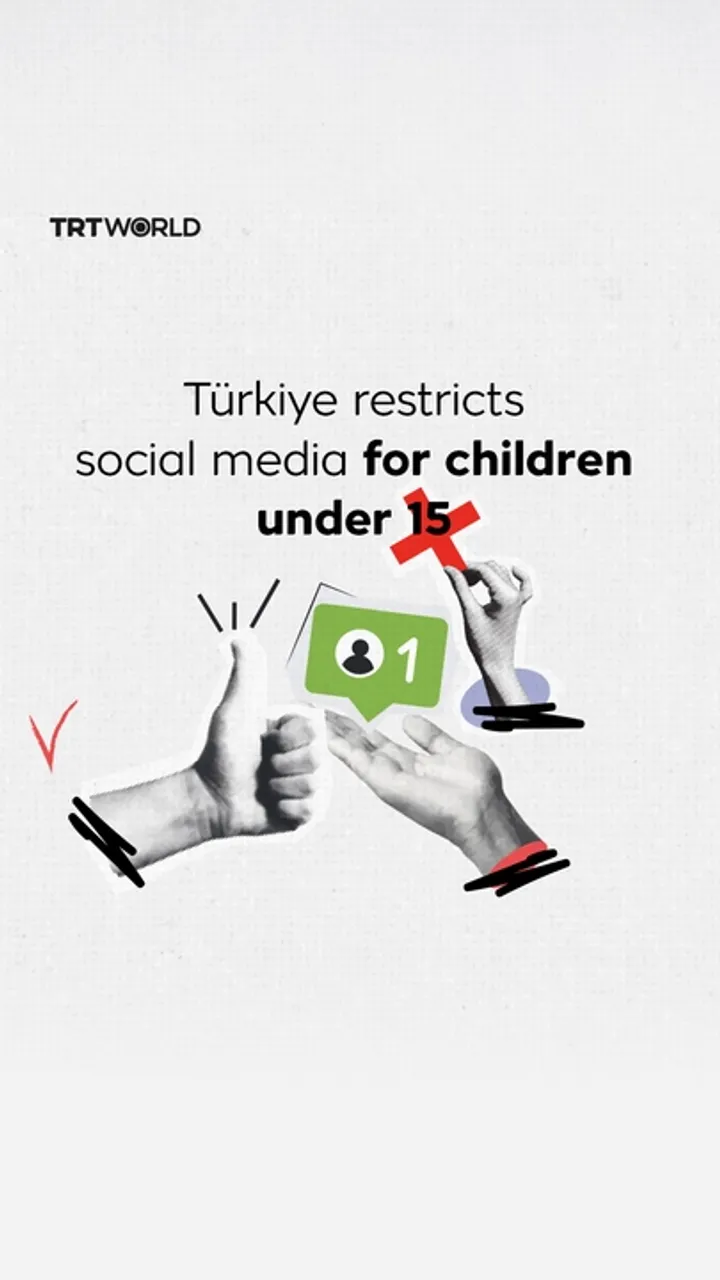




While France and Australia have centred their strategies on age-based restrictions, Türkiye has also pursued a more targeted approach, limiting access to platforms authorities believe pose the greatest risks to children rather than introducing an immediate nationwide social media age limit.
That approach came into sharp focus in August 2024, when a Turkish court ordered the blocking of the gaming platform Roblox, ruling that some content on the platform could facilitate the exploitation and abuse of children.
The decision marked one of Türkiye's most significant interventions in children's online safety to date.
Yilmaz says that measures such as age verification and restrictions on high-risk platforms could help protect children, particularly where there are concerns about harmful interactions or inappropriate content.
"Games like Roblox can expose children to risks ranging from the normalisation of violence to direct contact with ill-intentioned individuals through in-game communication," she adds.
However, she said the long-term goal should be to prepare children to navigate the digital world safely rather than exclude them from it altogether.
The Roblox decision was not an isolated measure.
Since 2025, Turkish officials have been developing legislation that would introduce age-based safeguards for social media users, including mandatory age verification, parental controls and age-appropriate services for minors.
Yilmaz argues that stronger digital literacy, parental education and child-centred policies are equally important.
Officials have consistently said the aim is not to keep children away from the internet altogether, but to create a safer online environment by reducing children's exposure to harmful content and digital risks.
Roblox responded by saying child safety was central to its operations and that it was willing to work with Turkish authorities to address the concerns and restore access in the country.
Türkiye's evolving approach reflects a broader effort to balance children's access to the digital world with stronger safeguards against harmful content.
Education instead of restriction
While many governments have responded to children's online safety with bans and age limits, Finland has taken a different approach.
Rather than asking how to keep children away from social media, policymakers have focused on how to prepare them for life in an increasingly digital world.
That philosophy is reflected in Finland's education system, where digital and media literacy are embedded across the national curriculum instead of being taught as standalone subjects.
From an early age, students learn to question online information, identify misinformation, understand how recommendation algorithms shape what they see and recognise manipulative or harmful content.
The emphasis on digital literacy has helped position Finland among the world's leading countries in media literacy.
UNESCO has also promoted media and information literacy as a key tool for helping people critically engage with information, navigate online environments safely and respond to challenges such as misinformation and harmful content.
Instead of treating children solely as users who need protection, the system aims to equip them with the skills to navigate digital spaces safely and responsibly.
Yilmaz says Finland's approach reflects a more sustainable long-term strategy than relying solely on restrictions.
"Rather than keeping children away from the digital world, we should equip them with the skills to navigate it safely and consciously," she says.
"Digital literacy education helps children recognise online risks, question the information they encounter and develop healthy digital habits from an early age."
From France's nationwide ban and Australia's landmark legislation to Türkiye's platform-specific interventions and Finland's education-first strategy, governments are testing different ways to protect children online.
Yilmaz says no single approach is sufficient on its own. While each model has its strengths, she argues that the most effective strategy combines regulation, platform responsibility, digital literacy and parental guidance.
She also recommends nationwide digital literacy and digital well-being programmes in school curricula, arguing that children should learn to recognise online risks and develop healthy digital habits from an early age.
Whether through bans, regulation or education, governments are increasingly concluding that the digital world requires the same level of public protection once reserved for schools, playgrounds and other spaces where children grow up.
How that balance is struck, however, is likely to remain one of the defining policy debates of the digital age.