 Ahmed Najar
The US government’s announcement that the United States will stop providing Israel with nearly $4 billion in annual military aid sounds, at first glance, like a historic rupture.
It is certainly significant. But Palestinians should distinguish between ending the annual cheque and dismantling the machinery that has enabled Israel’s violence, occupation and impunity.
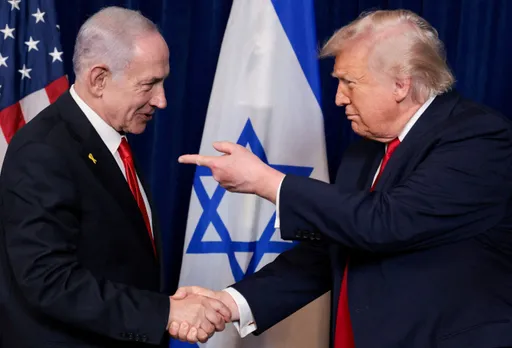
Speaking on Fox News, Trump claimed that Washington and Netanyahu had agreed to terminate the assistance by the end of this year because Israel had become a successful country that no longer needed American money.
Israel, he added, would remain free to purchase American weapons, and the United States would still help if it needed assistance.
This was not a moral reckoning with Gaza. The Trump administration did not mention the tens of thousands of Palestinians killed, the destruction of entire cities or the role American weapons played in enabling it.
It did not announce an arms embargo, demand accountability or condition future cooperation on compliance with international law.
Instead, it offered a strikingly political explanation. Military aid to Israel had become, in its words, a “bad talking point” for Republicans.
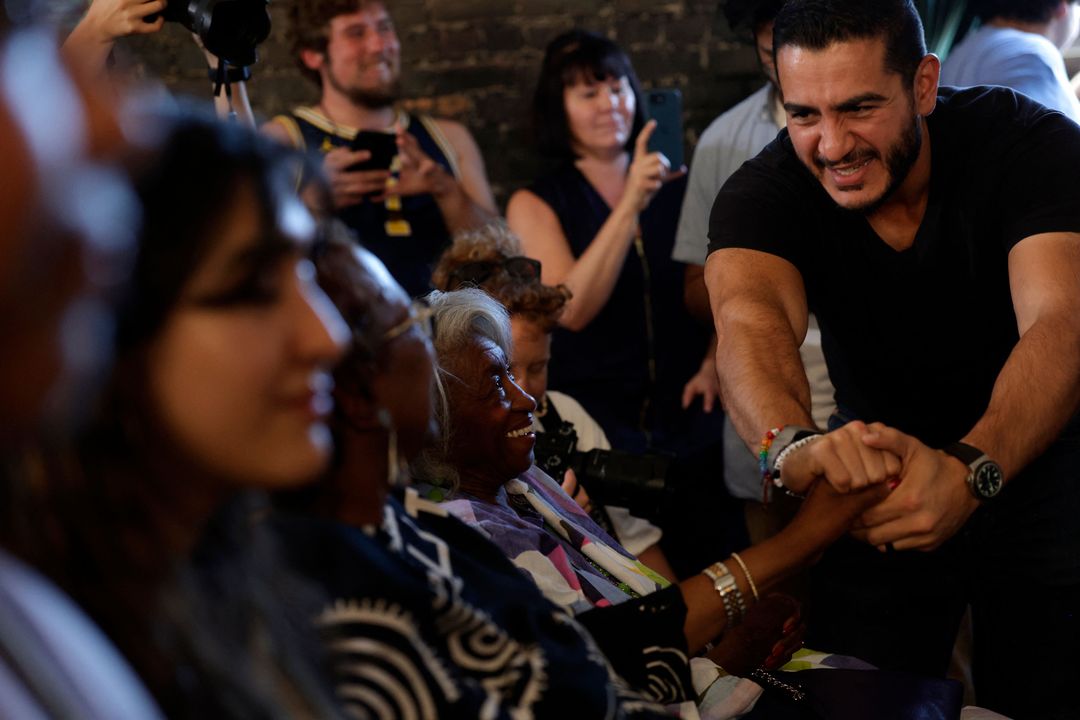
It specifically complained about criticism from Abdul El-Sayed, the Democratic Senate candidate in Michigan who has opposed unconditional support for Israel.
That admission matters enormously.
For decades, American politicians treated support for Israel as cost-free. Sending billions of dollars to Israel required little public explanation, even as successive Israeli governments entrenched occupation, expanded illegal settlements and repeatedly assaulted Gaza.
Palestinians were expected to accept that American military support for Israel was permanent, bipartisan and beyond democratic challenge.
That political immunity is breaking down.
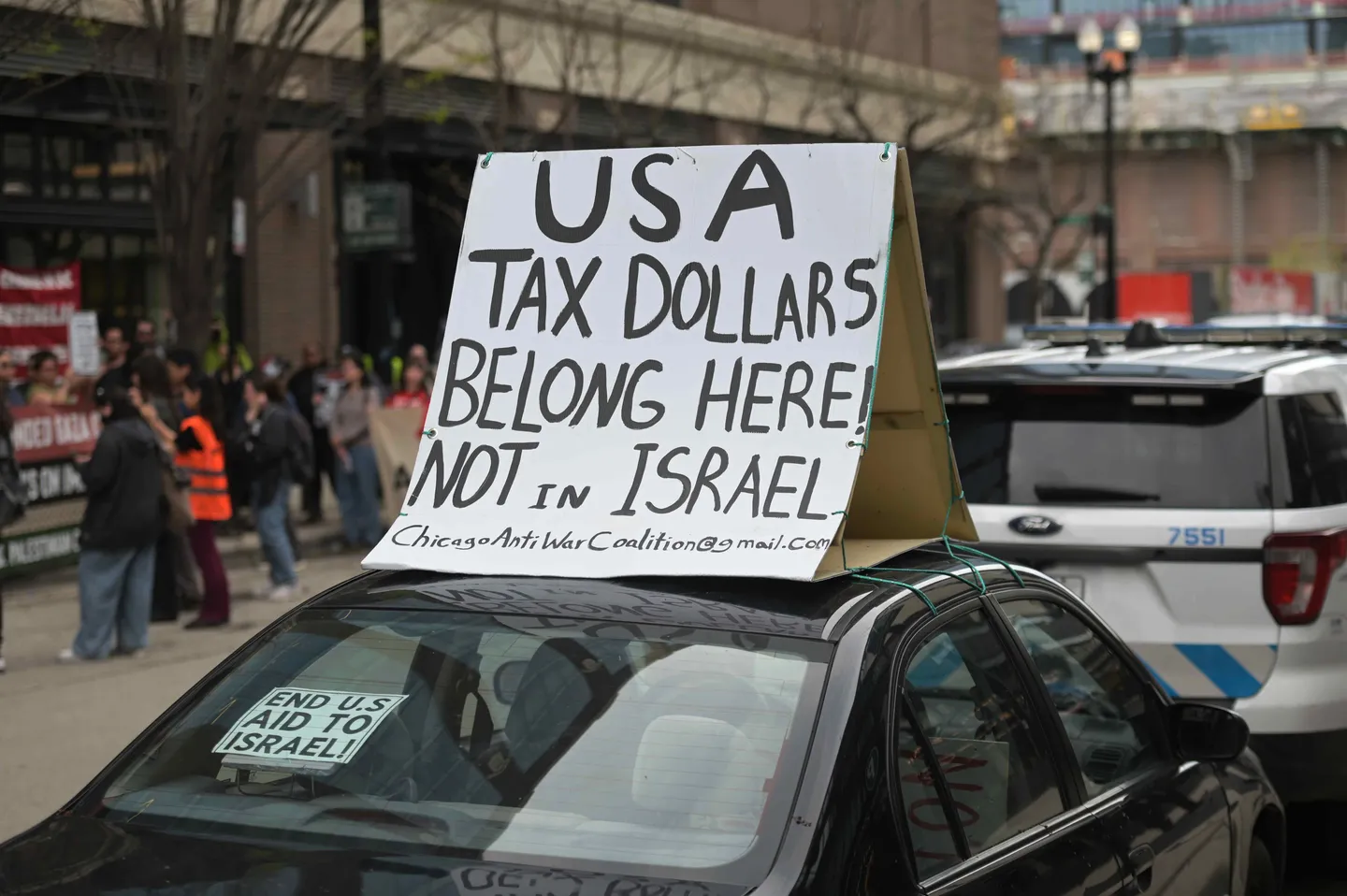
The Trump administration’s announcement is evidence that years of Palestinian testimony, organising and campaigning have altered the political calculation in Washington, DC.
It reflects the work of students, activists, journalists, Palestinian, Arab and Muslim communities, antiwar groups and a growing number of Americans who refused to allow Gaza to be reduced to another temporary crisis.
Aid beyond grants
Israel has not suddenly become less useful to Washington. It has become more difficult to defend before the American public.
The fact that the US administration felt compelled to announce the end of aid while Americans were voting—and to invoke El-Sayed by name—shows how far the debate has moved.
A policy once presented as an unquestionable expression of American values is now regarded as an electoral vulnerability.
Even Trump, who has given Israel extraordinary political and military support, appears to believe that association with unconditional aid can cost his party votes.
That should be recognised as a genuine victory for the Palestine movement. But it should not be mistaken for the end of American complicity.
Netanyahu himself has advocated moving Israel away from traditional American aid.
His preferred language is a transition from “aid to partnership”: Israel would stop receiving a visible annual subsidy while expanding joint weapons development, military technology, intelligence cooperation and defence production with the United States.
This is not separation. It may become a deeper form of integration.
The current arrangement provides Israel with $3.8 billion annually, mostly to purchase American weapons, under a memorandum covering the period until 2028.
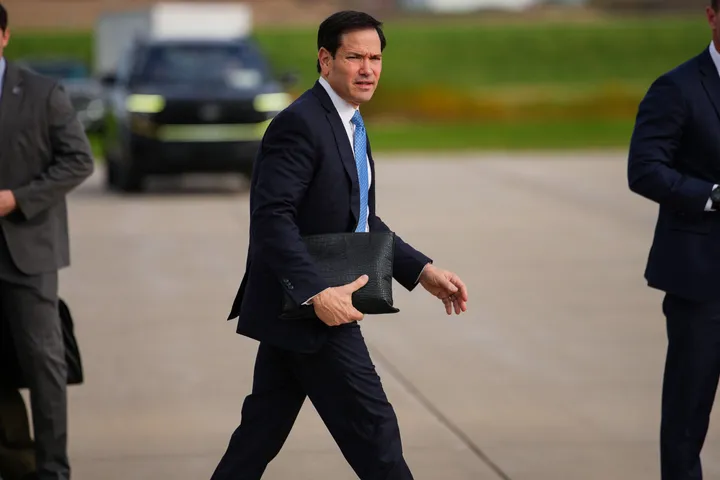
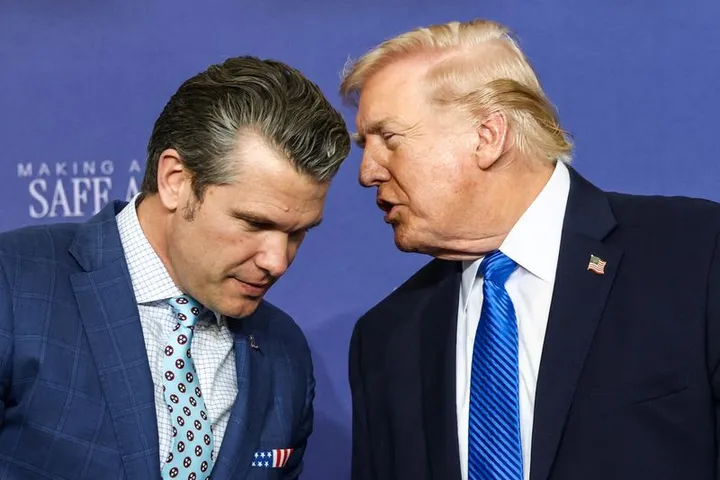



The Trump administration has not yet explained how it will terminate it early, what funding will actually disappear, or how Congress will respond. Netanyahu has also not publicly confirmed the supposed agreement the US describes.
More importantly, ending that arrangement would not prevent Israel from buying US aircraft, bombs and missiles with its own money.
Trump made that explicit: Israel could continue purchasing whatever weapons it wanted.
American support could also continue through missile-defence funding, emergency military assistance, intelligence sharing, loan guarantees, and joint research into artificial intelligence, cyberwarfare, biotechnology, counter-drone systems, and other military technologies.
Proposals already under discussion would expand cooperation between the American and Israeli defence industries and move parts of the relationship deeper into Pentagon programmes.
In other words, assistance could become less visible without becoming less consequential.
That may suit both Trump and Netanyahu. The Trump administration can tell American voters that their taxes are no longer paying Israel’s bills. Netanyahu can claim that Israel has achieved strategic independence.
Meanwhile, the weapons continue to flow, military industries become more intertwined, and Washington preserves its ability to intervene whenever Israel requires support.
The cheque disappears, but the pipeline remains.
Traditional aid, for all its political protection, is at least visible. It produces a recognisable figure that journalists, voters and legislators can scrutinise.
Shifting support into joint ventures, defence contracts and Pentagon procurement risks making the relationship more opaque and, therefore, harder to challenge.
It may also allow Israel to escape one of the most powerful questions raised by Gaza: why are American taxpayers financing the destruction of Palestinian lives?
If Israel begins paying directly for the same weapons, American politicians may argue that the moral responsibility belongs solely to the buyer. But a state does not absolve itself merely by changing the invoice.
Ending aid and complicity
A government that knowingly sells the bombs, shares the intelligence, protects the perpetrator diplomatically and replenishes its arsenal during war remains complicit in what those weapons are used to do.
For Palestinians, therefore, the measure of change cannot be whether Israel is described as an aid recipient or a strategic partner.
The measure must be whether American policy ceases to enable occupation, apartheid, forced displacement and mass killing.
Ending the annual military grant would still matter. Israel has enjoyed a privilege granted to no other wealthy state: billions of dollars in guaranteed American military financing despite repeated violations of international law.
Removing that entitlement would break an important political taboo and demonstrate that unconditional support is neither inevitable nor irreversible.
But the movement for Palestinian freedom must now push beyond the headline. The demand cannot simply be: stop giving Israel free weapons.
It must also be: stop selling weapons used against civilians, stop shielding Israel from accountability, stop treating Palestinian rights as subordinate to Israeli military dominance, and stop disguising complicity as strategic cooperation.
Trump’s announcement is both a victory and a warning. It shows that public pressure has made financing Israel politically toxic.
But it also reveals how quickly governments can redesign an unpopular relationship without changing its substance.
The end of aid would be significant. The end of complicity would be historic. Palestinians—and those who have fought alongside them—must insist upon the difference.