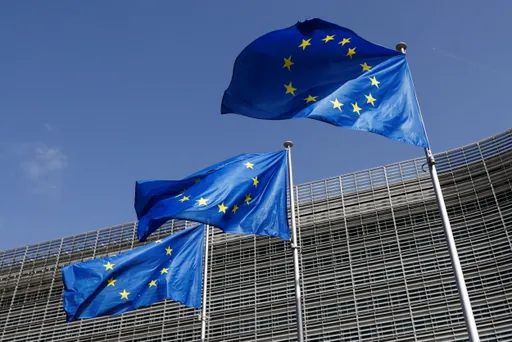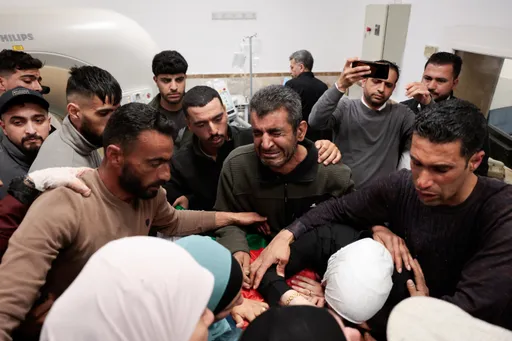
The European Union foreign ministers meeting in Luxembourg on Monday exposed sharp divisions within the bloc over whether to suspend the EU-Israel Association Agreement, as pressure mounts over Israeli violence and human rights violations in Gaza, the occupied West Bank and Lebanon.
Despite calls from several member states for action, no agreement was reached, with EU foreign policy chief Kaja Kallas confirming that unanimity was lacking. The failure to act reflects a pattern of delay, while humanitarian groups warn that continued inaction risks undermining the EU’s credibility and values.
Oxfam on Tuesday criticised the European Union for failing to suspend its association agreement with Israel saying repeated discussions without concrete action undermine the bloc’s credibility on human rights.
EU member states remain broadly split into three informal camps.
A group led by Ireland, Spain, Slovenia and increasingly Belgium is pushing for stronger action, including a review and possible suspension of the agreement, citing human rights concerns and the need to align EU policy with international law.
A second, more cautious group — including France and the Netherlands — supports reviewing Israel’s compliance and expressing concern over the humanitarian situation but prefers continued engagement and diplomatic pressure over punitive measures.
Meanwhile, Germany, Italy and Austria firmly oppose suspension, arguing that maintaining dialogue with Israel is essential for influence, de-escalation and regional stability, and warning that punitive steps could reduce the EU’s diplomatic leverage.
Here are the positions of major EU countries on the pact:
Ireland
Ireland has been at the forefront of calls to suspend the EU-Israel Association Agreement, arguing that the bloc must uphold its human rights commitments.
Dublin has pushed for either a full suspension or at least a halt to trade elements, citing escalating violence and settlement expansion.
Irish officials say continued engagement without consequences risks eroding the EU’s credibility and have called for stronger accountability measures.
Irish Foreign Minister Helen McEntee said that the EU must take action against what she described as a country “very clearly violating human rights,” urging either a full suspension of the EU-Israel Association Agreement or at least its trade provisions.
Her remarks reflect a broader shift among some EU members, who say the bloc’s credibility is at stake if it fails to act on its human rights commitments. “We need to, as an EU, uphold our fundamental values,” McEntee said, adding that countries with which the EU has agreements must comply with international law.
Spain
Spain has aligned closely with Ireland, emerging as one of the most vocal EU states calling for a review and potential suspension of the agreement.
Madrid has repeatedly criticised Israel’s atrocities in Gaza and warned that continuing business as usual sends the wrong message. Spanish officials argue that the EU must match its rhetoric on human rights with concrete measures, including economic pressure if necessary.
Spain has also been active diplomatically, pushing the issue onto the EU agenda and building alliances with like-minded states. Its stance reflects a broader shift toward a more assertive and values-driven foreign policy within the bloc. Spanish officials argue that maintaining the pact without conditions undermines international law and weakens the EU’s moral standing.
Slovenia
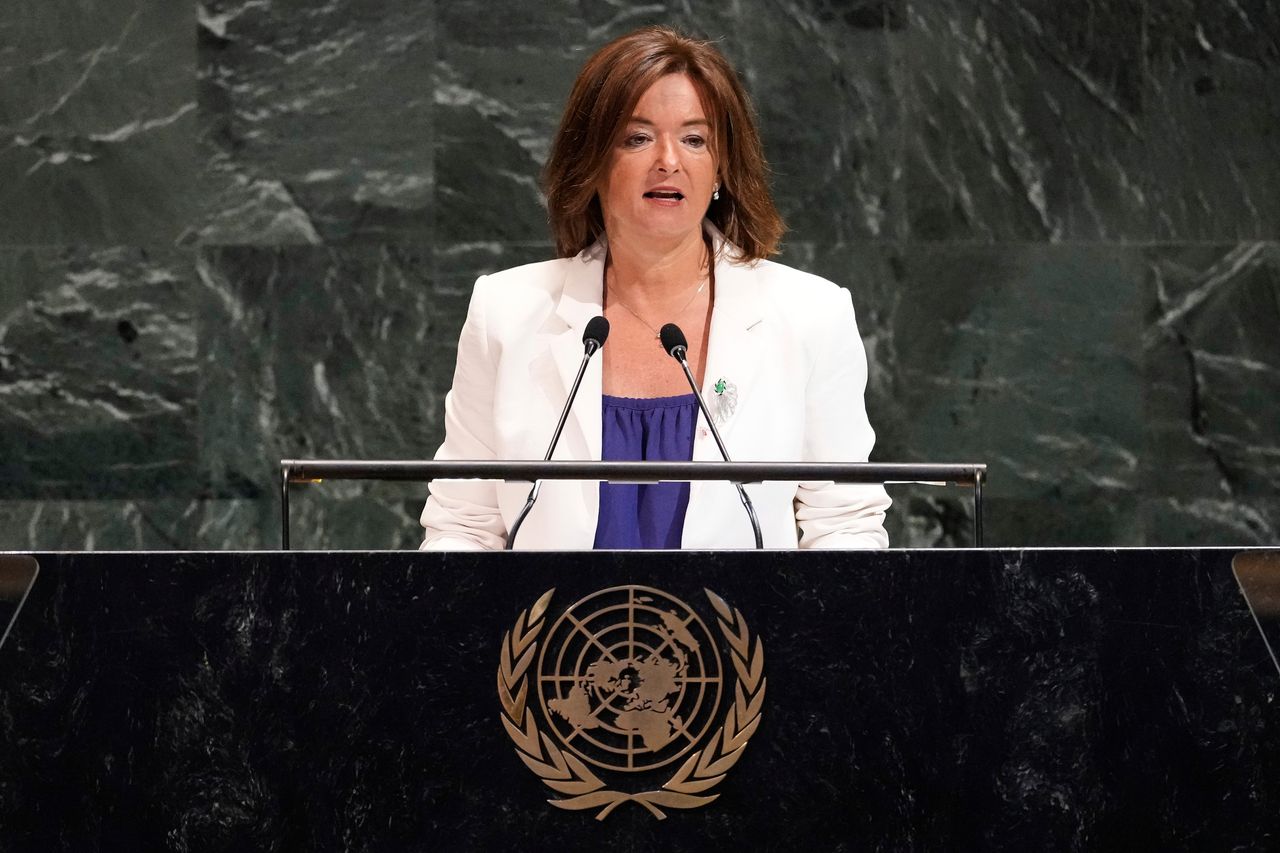
Slovenia has joined Ireland and Spain in formally requesting a review of the EU-Israel Association Agreement, signalling support for stronger measures against Israel.
The government has raised concerns over rising violence, illegal settlement expansion and the humanitarian situation, arguing that the EU cannot ignore developments on the ground.
While not always as outspoken as Ireland or Spain, Slovenia has positioned itself firmly within the pro-action camp. Officials have indicated that suspension remains a possible option if conditions continue to deteriorate, highlighting the importance of aligning EU foreign policy with its legal and ethical commitments.
Belgium
Belgium has recently adopted a more forceful stance, calling for stronger EU measures including sanctions and a partial suspension of the agreement.
Belgian officials have described Israel’s actions as unacceptable and questioned whether the EU’s traditional “equidistant” approach remains effective. The country has also emphasised the need for a clearer and more assertive foreign policy response, arguing that the bloc risks losing credibility if it fails to act.
Belgian Foreign Minister Maxime Prevot said on Tuesday that Israel’s actions are “totally unacceptable,” calling for stronger EU measures, including sanctions and a tougher foreign policy response.
He described Israel’s conduct in the Middle East as “disproportionate and indiscriminate,” while backing a partial suspension of the EU-Israel Association Agreement over settlement expansion and rising violence.
Germany




Germany remains firmly opposed to suspending the agreement, emphasising Israel’s “right to defend itself” and the importance of maintaining open channels of communication.
Berlin argues that engagement, rather than isolation, offers a chance to influence Israeli policy and support de-escalation efforts. German officials have also warned that suspension could reduce the EU’s diplomatic leverage and complicate broader regional dynamics.
Following the meeting in Luxembourg, German Foreign Minister Johann Wadephul called the idea “inappropriate,” arguing that difficult issues should be handled through direct engagement rather than diplomatic rupture.
“We have to talk with Israel about the critical issues,” Wadephul said. “That has to be done in a critical, constructive dialogue with Israel.”
Italy
Italy has also rejected calls to suspend the EU-Israel pact, aligning closely with Germany’s position and opposing punitive measures.
Foreign Minister Antonio Tajani said Rome does not support suspension and stressed the importance of maintaining dialogue with Israel.
Italian officials argue that engagement remains the most effective way to influence developments and support de-escalation, rather than isolating Israel through sanctions or trade restrictions.
Austria
Austria also aligns closely with Germany in opposing suspension, stressing the need for stability and continued diplomatic engagement.
Vienna has cautioned against actions that could escalate tensions or undermine the EU’s ability to act as a mediator in the region.
The country generally adopts a supportive stance toward Israel within EU debates, reinforcing the bloc’s internal divisions and making consensus on stronger measures more difficult to achieve.
France
France has adopted a more cautious and balanced approach, expressing concern over humanitarian conditions while stopping short of calling for suspension.
Paris supports reviewing Israel’s compliance with the agreement’s human rights provisions but prefers diplomatic pressure and dialogue over immediate punitive action.
French officials have positioned the country as a mediator within the EU, seeking to bridge the gap between opposing camps.
Netherlands
The Netherlands has expressed concern over the situation in Gaza but remains cautious about suspending the agreement. Dutch officials support continued engagement and emphasise the importance of monitoring compliance with international law.
The country’s position reflects a pragmatic approach, seeking to balance humanitarian concerns with strategic considerations.
As part of the EU’s middle group, the Netherlands plays a role in shaping a more moderate response, contributing to the ongoing deadlock over whether to take stronger action against Israeli policies.
Deadlock
For now, the debate highlights the EU’s ongoing struggle to balance strategic ties with its stated commitment to human rights. Despite growing frustration among some member states, the bloc failed to reach a consensus on suspending the EU-Israel Association Agreement, with Germany and Italy firmly opposing the move and urging continued engagement instead.
The unanimity required for full suspension proved out of reach, while even measures requiring a qualified majority failed to advance as key countries refused to shift positions.
Although smaller steps such as restrictions on illegal settlement goods or targeted sanctions may still move forward, the broader impasse leaves the EU unable to turn mounting criticism into decisive action on Israel.
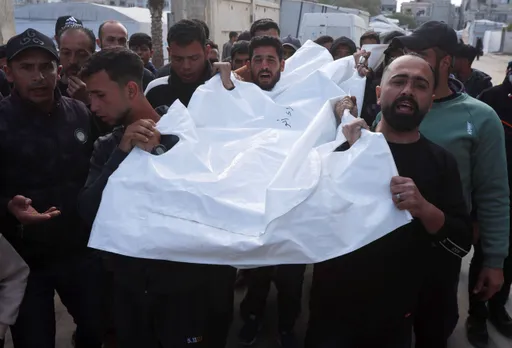
Israel has killed over 72,000 Palestinians in Gaza in its two-year genocidal war on the densely-populated enclave.
Tens of thousands were also injured, the majority of whom are civilians, including thousands of women and children, drawing widespread international condemnation and allegations of violations of international humanitarian law, including disproportionate use of force, obstruction of humanitarian aid, and targeting of civilian infrastructure such as hospitals, schools, and refugee camps.
Israeli violations also proceeded in the occupied West Bank and most recently in its war on Lebanon.