 Murat Sofuoglu
The Colombian presidential election last weekend failed to produce an outright winner, with none of the candidates securing more than 50 percent of the vote.
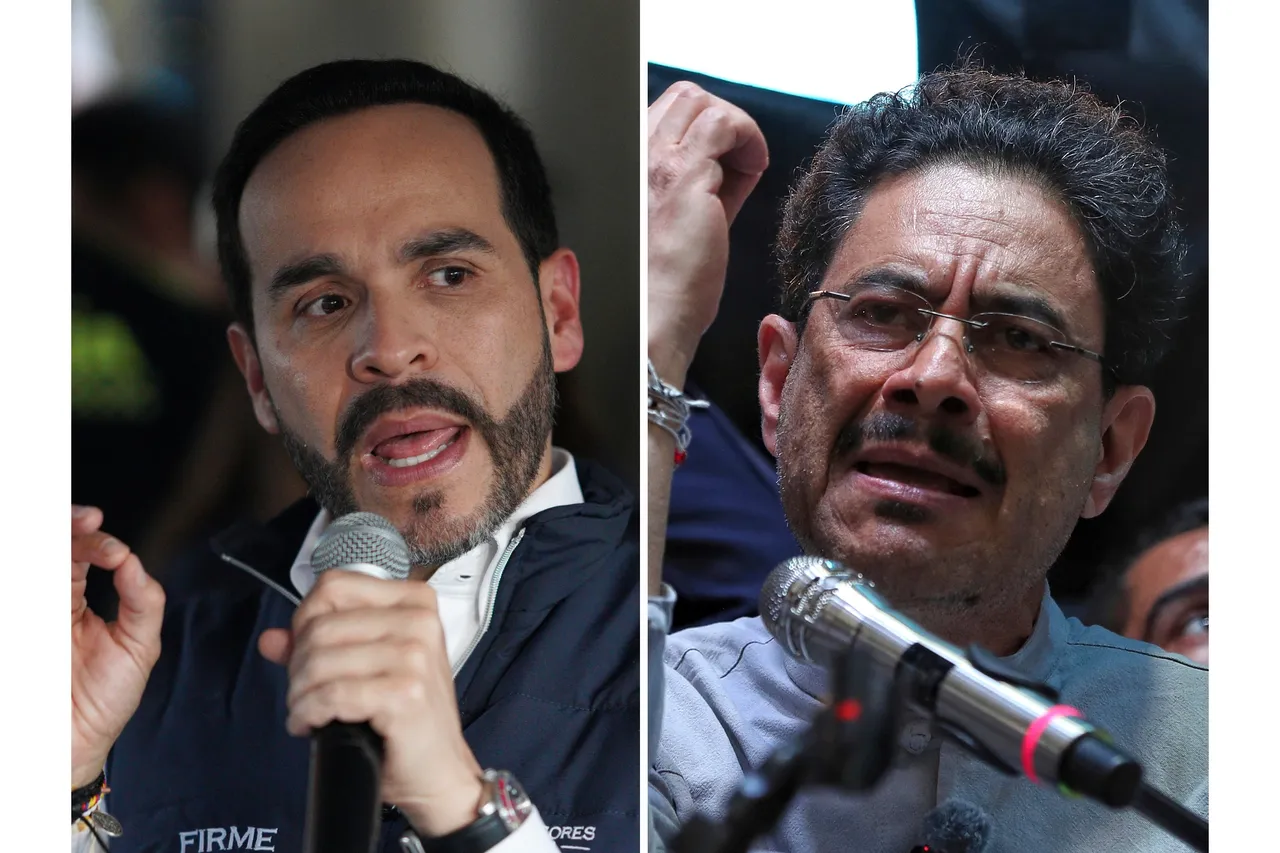
The result set up a runoff on June 21 between Abelardo de la Espriella, a populist conservative lawyer, and Ivan Cepeda, a leftist senator.
The runoff comes amid a broader rightward shift across Latin America, where conservative governments in countries such as Argentina, El Salvador, Bolivia and Chile have forged close ties with the Trump administration and want to see a shift in Bogota from socialism to conservatism.
Trump has publicly endorsed de la Espriella, describing him as a "smart, strong, and tough leader".
For many Colombians, the election presents a choice between competing priorities. While concerns about crime, armed groups and public security remain high, many voters are also focused on economic inequality and the need for stronger social protections.
“What is at stake transcends a conventional electoral competition,” Alfonso Insuasty Rodriguez, a Colombia-based political analyst, tells TRT World.
“Two visions of the country confront one another: one favouring the continuation of traditional economic models based on market liberalisation, and another advocating expanded social rights, stronger public intervention and the implementation of peace agreements,” Rodriguez, who is also the director of the GIDPAD research group at the University of San Buenaventura, says.
De la Espriella advocates a free-market economic model similar to those championed by several right-wing populist movements across Latin America, emphasising limited government intervention and private-sector growth.
Cepeda, by contrast, supports a stronger welfare state, greater public spending and a more active role for the government in addressing social and economic inequalities.
The election is also unfolding against the backdrop of Colombia's long-running struggle with armed groups and organised crime.
The Trump administration has increased pressure on President Gustavo Petro's left-wing government to intensify its fight against drug trafficking organisations while distancing itself from countries such as Cuba, China and Russia.
The two candidates offer sharply different approaches to Colombia's security challenges.
De la Espriella has pledged to confront armed groups with an iron fist, while Cepeda supports strengthening and implementing peace agreements designed to integrate militants into civilian and political life, alongside rural land reforms aimed at addressing the root causes of conflict.
Despite progress in negotiations with some armed groups, the peace process has repeatedly faced setbacks as security conditions have deteriorated in several regions of the country.
According to humanitarian organisations, last year was Colombia's worst in humanitarian terms in recent years.
Rodriguez argues that Petro's "Total Peace" strategy encountered significant operational difficulties, contradictions and obstacles.
However, he also rejects the narrative that Colombia's worsening security situation is solely the result of the president's approach to armed groups.
Much of the current violence stems from the failure to fully implement the 2016 Peace Agreement and the weakening of institutions created under the accord during the presidency of Ivan Duque, according to Rodriguez.
He also points to what he describes as a far-right disinformation campaign that has portrayed Petro's presidency as a period of permanent crisis, “magnifying its mistakes and obscuring achievements while fostering widespread perceptions of fear, uncertainty and ungovernability”.
Rodriguez argues that opposition from a conservative-dominated Congress, sections of the state bureaucracy and higher courts has also hindered Petro's reform agenda, particularly in healthcare, labour rights and land redistribution.
Despite deteriorating security and shortcomings in the Total Peace strategy, Rodriguez notes that Petro’s government increased the minimum wage, expanded social programmes, and advanced agrarian reforms to support peasant communities.
Those policies, he says, could help Cepeda mobilise support among Indigenous and Afro-Colombian voters in the runoff.
Who has the upper hand?
While de la Espriella emerged from the first round with a clear lead over Cepeda, analysts say the runoff will ultimately depend on each camp’s ability to build alliances, mobilise voters and shape public perceptions in the final weeks of the campaign.
Voter turnout could prove decisive. More than 40 percent of eligible voters abstained in the first round, leaving a significant pool of potential supporters that both the right and the left will seek to mobilise ahead of the June 21 runoff.
Cristian Arturo Galindo, a Bogota-based political analyst, expects a closely contested race.
While de la Espriella enjoys support from conservative political forces across Latin America, including networks in Ecuador, Chile, Argentina and Bolivia, as well as segments of the Hispanic right in Miami, Cepeda enters the runoff with extensive political experience and the backing of the Petro administration.
“Cepeda could win the presidency. But it is necessary that, in this final stretch, the current government needs to show the progress they have made because there are many shortcomings both in the Petro presidency and in Cepeda's candidacy regarding how to organise his leftist campaign,” Galindo tells TRT World.
Still, de la Espriella's strong first-round performance has positioned him as the frontrunner.

One factor working in his favour is the support of Paloma Valencia, the third-place candidate from Colombia's traditional conservative camp and an ally of former president Alvaro Uribe.
Valencia has signalled that she will back de la Espriella in the runoff, potentially bringing with her a substantial share of the 7 percent vote she secured in the first round. Given that de la Espriella won 43 percent of the vote, that endorsement could prove significant.
“De la Espriella will probably win because the Valencia voters will mostly go to him,” James E. Mahon Jr, an expert on Latin American politics, tells TRT World.
If Cepeda loses, “Petro deserves some blame for dropping his initial moderate approach,” he says.
“He looks to me like trouble for Colombian democracy. He's a thin-skinned guy who puts his name on everything and wants to rule with an iron fist. I predict that he will not allow himself to be voted out.”
Rodriguez, however, cautions against assuming that the first-round result will determine the outcome of the runoff.
“The first round provides an important advantage, but it does not automatically determine the final outcome. Colombia remains a highly fragmented society with a volatile electorate,” he says.
Why did the far-right surge?
According to analysts, a combination of factors, including an aggressive social media strategy, the use of AI-driven campaign tools, a carefully cultivated tough-on-crime image, and a broader rightward shift across the Americas, helped fuel de la Espriella’s rise in the polls.
Much of that success can be attributed to his strong presence across platforms such as Facebook, Instagram and TikTok, which significantly boosted his visibility among voters, says Galindo, the Bogota-based political analyst.
But Galindo argues that the campaign's focus was less about policy and more about crafting a relatable public persona.
He describes de la Espriella's image as chabacano — a Spanish term that roughly translates as "brash" or "tacky" but, in this context, refers to a politician who projects himself as charismatic, approachable and entertaining.
According to Galindo, the image centres on gestures that resonate with ordinary voters: dancing in public, dressing in a distinctive style, interacting warmly with crowds, and kissing babies on the campaign trail. The aim is not necessarily to communicate policy proposals but to forge an emotional connection with voters.
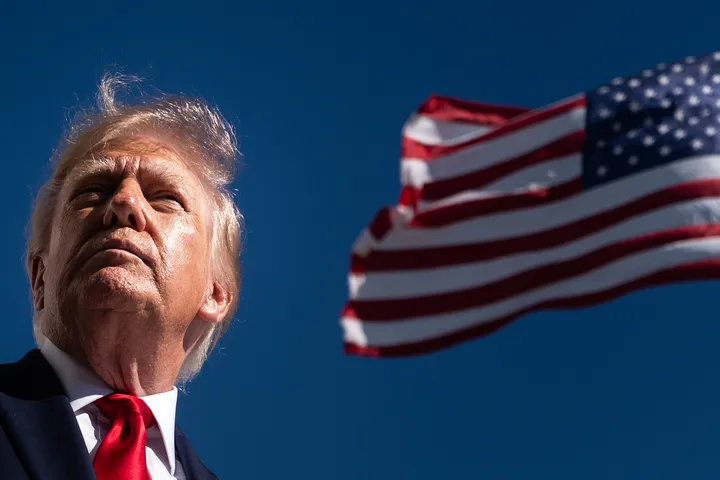
At 43, de la Espriella has embraced a style reminiscent of other populist figures across the Americas, from Donald Trump to Argentina's Javier Milei, both of whom built loyal followings by combining media savvy with larger-than-life personalities.
Galindo says his Chabacano showmanship has helped transform him from a political outsider into a major electoral force.
“He comes across as dynamic, funny, and charismatic; many people see themselves reflected in that desire to be like him. There is a feeling that if he can be that way, so can Colombia,” Galindo tells TRT World.
This trend reflects a broader shift in contemporary politics, where electoral battles are increasingly driven by emotions rather than policy platforms.
“The objective is no longer persuasion through rational argument but the shaping of perceptions, the production of fear, the amplification of frustrations and the steering of collective behaviour through sophisticated mechanisms of symbolic manipulation,” Rodriguez says.
Like Trump, de la Espriella has frequently targeted left-wing groups, portraying them as communists and using that rhetoric to galvanise conservative voters.
Although he is not known for being particularly religious, his message has also resonated with segments of Colombia's Christian community.
Galindo says de la Espriella has also benefited from support from establishment conservatives who fear another left-wing presidency following Gustavo Petro's term. As a result, many traditional conservative voters have rallied behind the far-right candidate.
Experts also point to factors beyond campaign strategy and media outreach. De la Espriella's rise has coincided with a broader surge in right-wing populism across the Americas, from the United States to Argentina, Chile and Bolivia, as well as with growing US interest in political developments across the region.
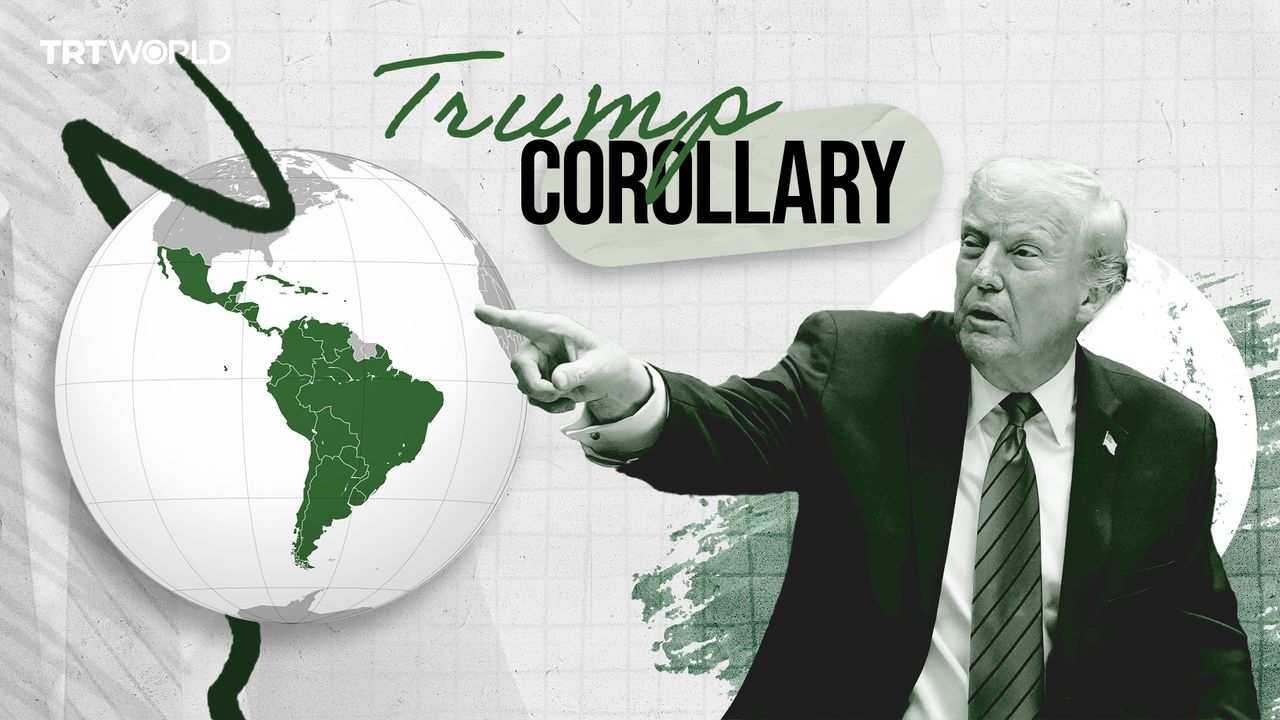
Martin Alejandro Martinelli, a historian and sociologist who heads the Geohistorical Observatory at Argentina's National University of Lujan, argues that recent right-wing victories in countries such as Argentina and Chile cannot be viewed in isolation from broader geopolitical dynamics and their close alignment with Washington.
There is “a full-blown political struggle between leftist and far-right movements” across the Americas, Martinelli tells TRT World.
With far-right leaders winning and consolidating power across Chile, Argentina and Bolivia, the focus is now turning to Colombia, Brazil and Mexico, three of Latin America's most politically significant countries, he says.
“The far-right movement is gaining momentum, but we must see if this phenomenon extends to Colombia, Brazil and Mexico,” he adds.
Other experts agree with Martinelli on the impact of the shifting political mood in Latin America and US influence on Colombia’s first round.
“Latin America is currently experiencing a renewed expansion of ultra-conservative, neoliberal and authoritarian currents that have successfully combined narratives of security, anti-politics, exclusionary nationalism and opposition to social justice agendas,” Rodriguez tells TRT World.
“From Argentina to Ecuador, and across various political sectors in Peru and elsewhere, political, economic and media networks aligned with US geopolitical interests have emerged with the objective of containing sovereign, redistributive and regional integration projects.”