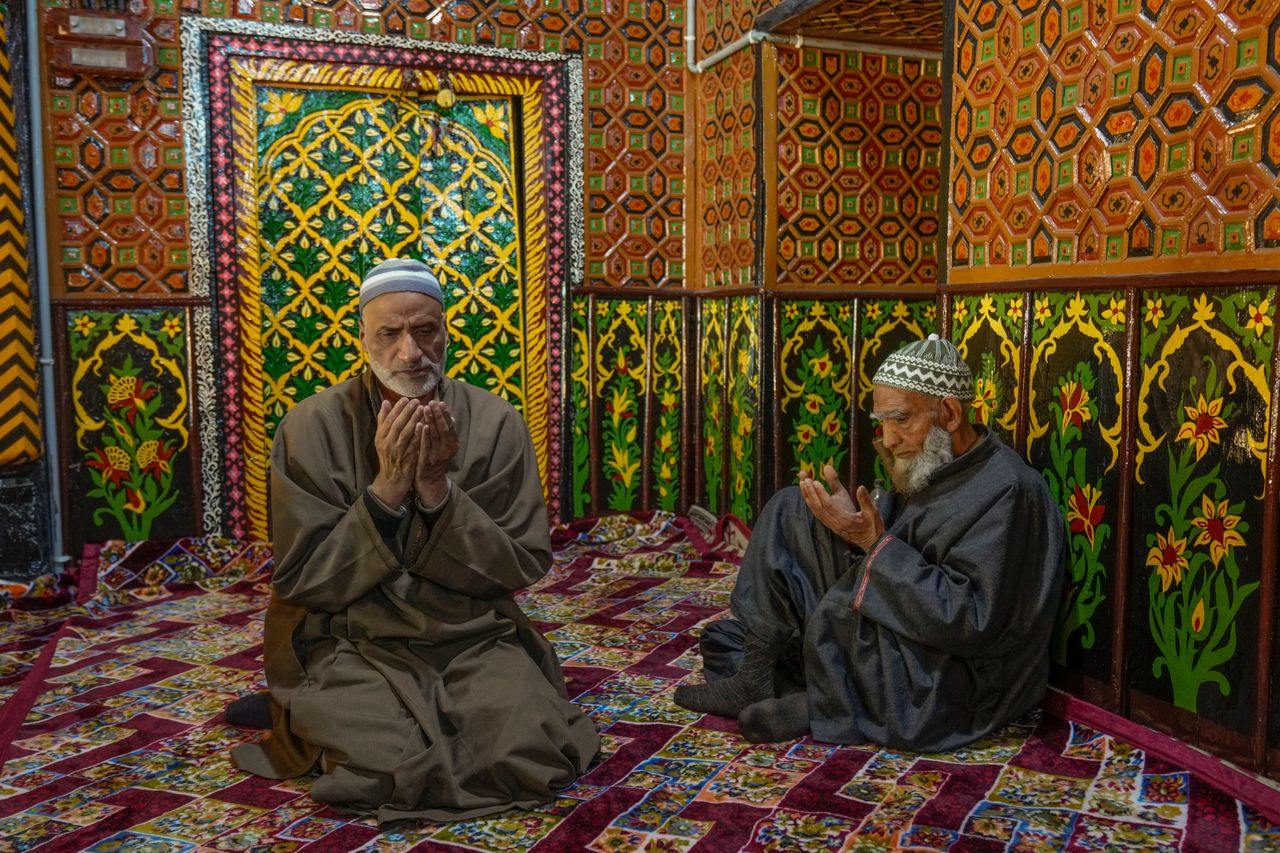
A proposal to introduce common themes for Friday sermons in mosques and religious institutions in India-administered Kashmir has triggered backlash from political leaders and Muslim religious bodies.
The Mutahida Majlis-e-Ulema (MMU), a grouping of religious organisations headed by Mirwaiz Umar Farooq, strongly condemned the move on Tuesday and said, "That determining sermon content was the responsibility of Islamic scholars and not an administrative body.”
Chief Minister Omar Abdullah called the proposal "unacceptable", accusing Prime Minister Narendra Modi’s Hindu right-wing Bharatiya Janata Party (BJP) of interfering in Muslim religious affairs and urging the Jammu and Kashmir Waqf Board chairperson to withdraw it.
“The BJP-appointed Chairperson must immediately halt this misplaced attempt to please her masters,” Abdullah said in a post on X.
People’s Democratic Party (PDP) President Mehbooba Mufti also criticised the move, questioning who would decide what imams should preach.
“Our imams and maulvis know what to say and when to speak,” she said, calling for the Jammu and Kashmir government to bring the board under its administrative control.
“The pulpit loses its essence and institutional value if it surrenders to power. It was never meant to bow down, and it never should,” Aga Syed Ruhullah Mehdi, a Member of Parliament from Kashmir, said.
The Waqf Board's plan to dictate Friday sermons is an assault on our faith, dressed up as "coordination".
Since August 2019, when New Delhi revoked Jammu and Kashmir’s semi-autonomous status, control over policing and security has rested with a federally appointed lieutenant governor, currently Manoj Sinha, and local elected representatives no longer have authority over law and order.
Likewise, the ruling Bharatiya Janata Party, rather than the local elected government, controls the Jammu and Kashmir Waqf Board.
Former Srinagar Mayor Junaid Mattu also questioned the implications for religious freedom.
“If the BJP wants to decide what our Imams say in Friday sermons, what is left in this pretence of ‘freedom of religion’??? Or the Constitution?” he said on X.
The controversy follows Waqf Board Chairperson Darakhshan Andrabi’s announcement of a core committee of muftis, imams and khateebs to identify and finalise common sermon topics for affiliated institutions.





Surveillance of mosques
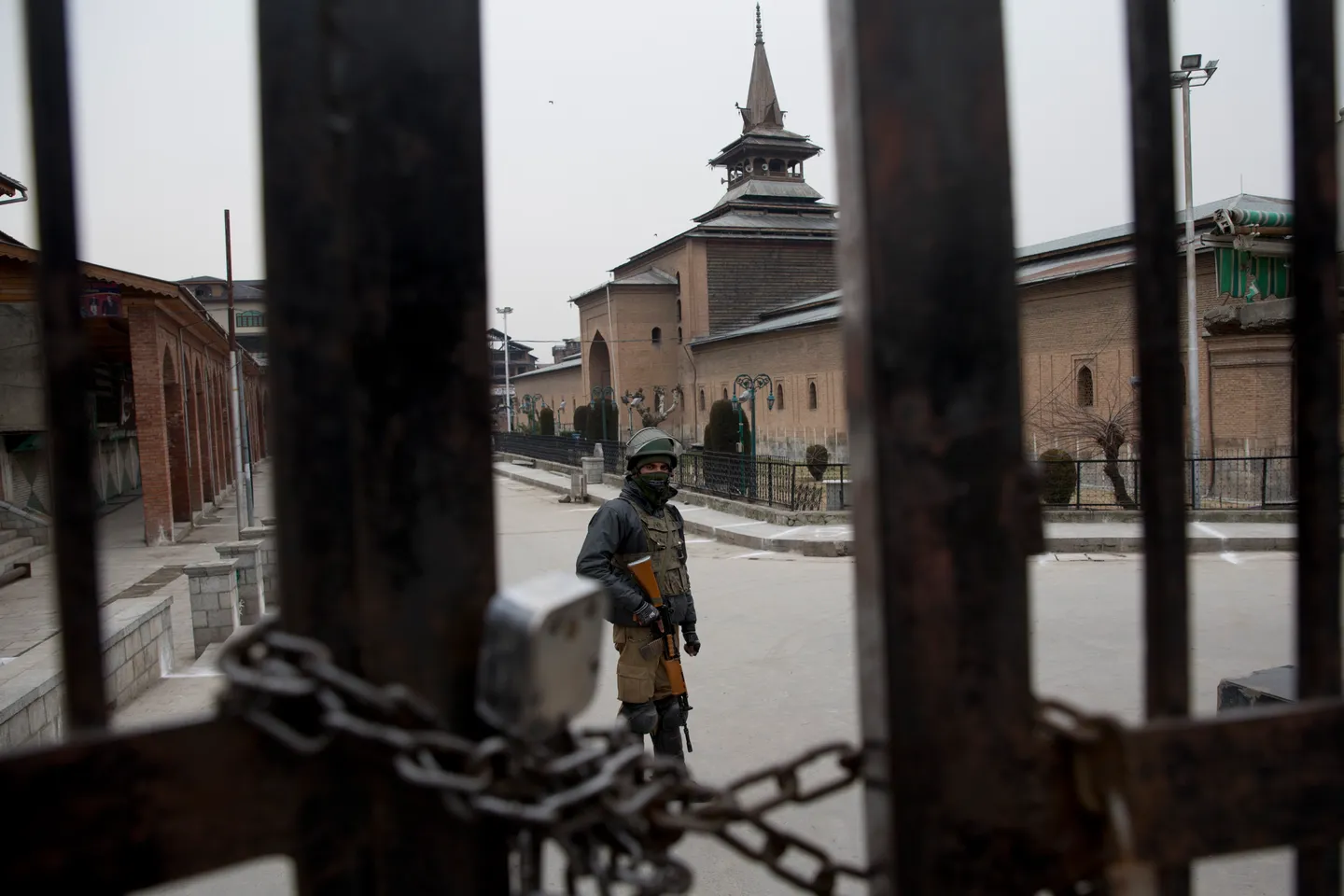
Earlier this year, Indian police carried out a controversial surveillance operation to profile all the mosques, their imams and affiliated people.
Police even went after journalists in Kashmir for reporting on mosque profiling.
Muslims constitute more than 97 percent of the population in the Kashmir Valley.
After the abrogation of semi-autonomous status in August 2019, the region experienced prolonged communication blackouts, mass detentions, and sweeping administrative changes.
Kashmir has remained at the heart of a decades-long dispute between nuclear-armed neighbours India and Pakistan, both of which claim the territory in full but control separate parts.
Armed resistance to New Delhi's rule began in 1989 in India-administered Kashmir, where many Muslim residents support independence or a merger with Pakistan.
India, which has stationed more than 700,000 troops in Kashmir, accuses Pakistan of fuelling the insurgency. Islamabad denies the allegations and says it only extends political, moral, and diplomatic support to Kashmiris.
Kashmiris widely view the armed revolt as a legitimate freedom struggle.
The conflict has claimed tens of thousands of lives, including civilians, fighters, and Indian troops, over nearly eight decades.
The UN has passed several resolutions advocating for a plebiscite in the region.
Rights groups have accused India of using repression to suppress the movement for self-determination.