 Zeynep Conkar
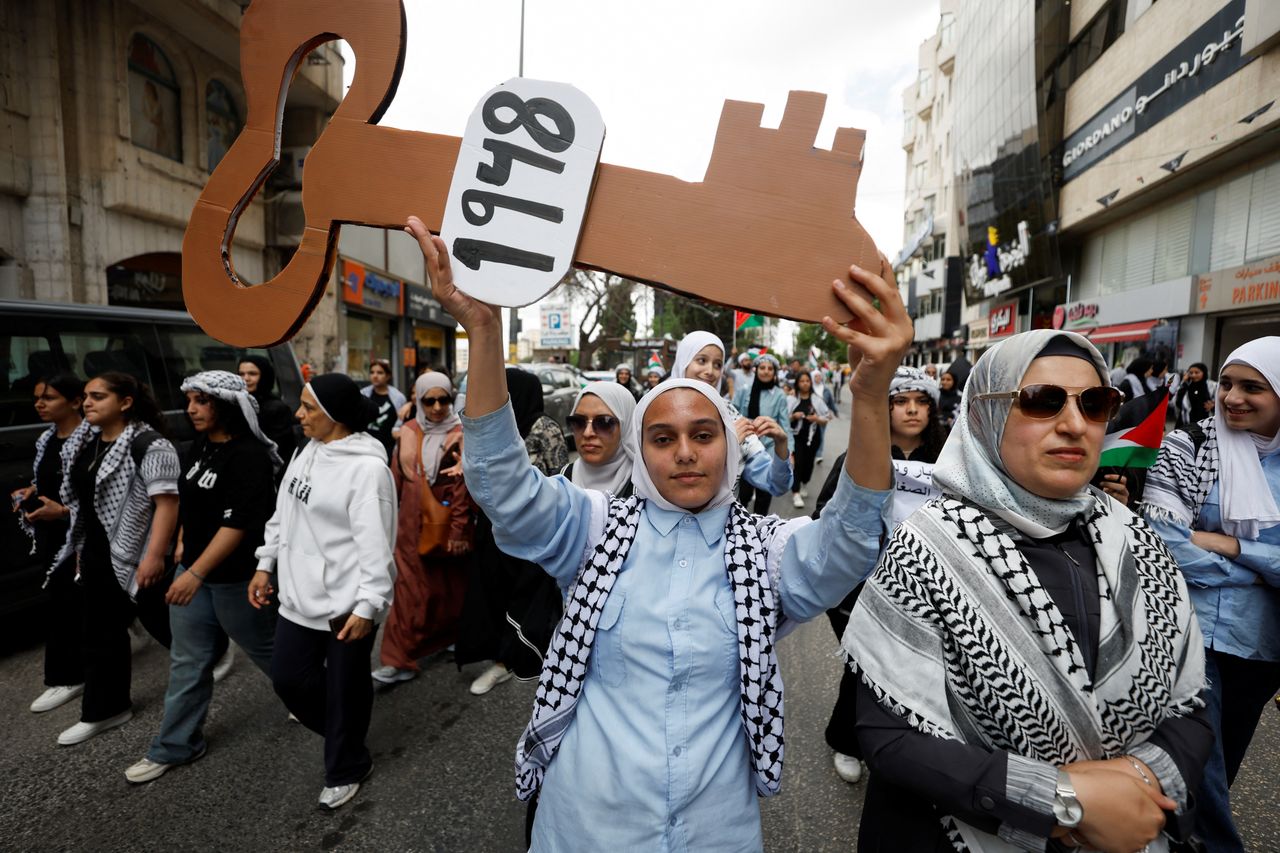
Every year on May 15, Palestinians across the world in Gaza, the occupied West Bank, refugee camps in Lebanon and Jordan, and diaspora communities on every continent pause to remember one of the most devastating humanitarian disasters in modern history, the Nakba.
This year, the 78th anniversary arrives amid growing recognition of that catastrophe that is still unfolding today.
Yusuf Abu Hamam, 78 years old and one of a dwindling number of Nakba survivors, now lives next to his heavily damaged home in the Shati refugee camp in northern Gaza. The village his family fled in 1948, al-Joura, has since vanished under Israeli occupation. He says the current war is an even greater catastrophe.
"There is no country left, a square kilometre and a half extending from the sea… it's indescribable, unbearable."
For decades, the Nakba occupied a largely suppressed and unrecognised space in the global imagination. While it remained etched into Palestinian memory, it was, unfortunately, erased from dominant Western narratives.
Israel's genocide in Gaza changed that, according to Moonis Ahmar, Meritorious Professor of International Relations and former Dean Faculty of Social Sciences, University of Karachi.
“Thousands of Palestinians were killed in Gaza. Around 2.1 million people were displaced, the majority of them forced from their homes. So it reminded people in the Global North, in the West, who had little sympathy, knowledge or awareness, about the Nakba,” Ahmar tells TRT World.
“Through the print media, electronic media and social media, it created a sort of awareness about what the Nakba was in 1948 and how it is being repeated today by Israel through the displacement of Palestinians in Gaza and the occupied West Bank.”
“Globally, there is now an understanding about the systematic Israeli policy of displacement of Palestinians from Gaza,” Ahmar adds.
The second Nakba
What the world has watched since October 2023 has collapsed the distance between 1948 and now as more and more people are starting to gather how today's aggression in Gaza and the occupied West Bank is a continuation of the ethnic cleansing of Palestinian people from their homeland that began in 1948.
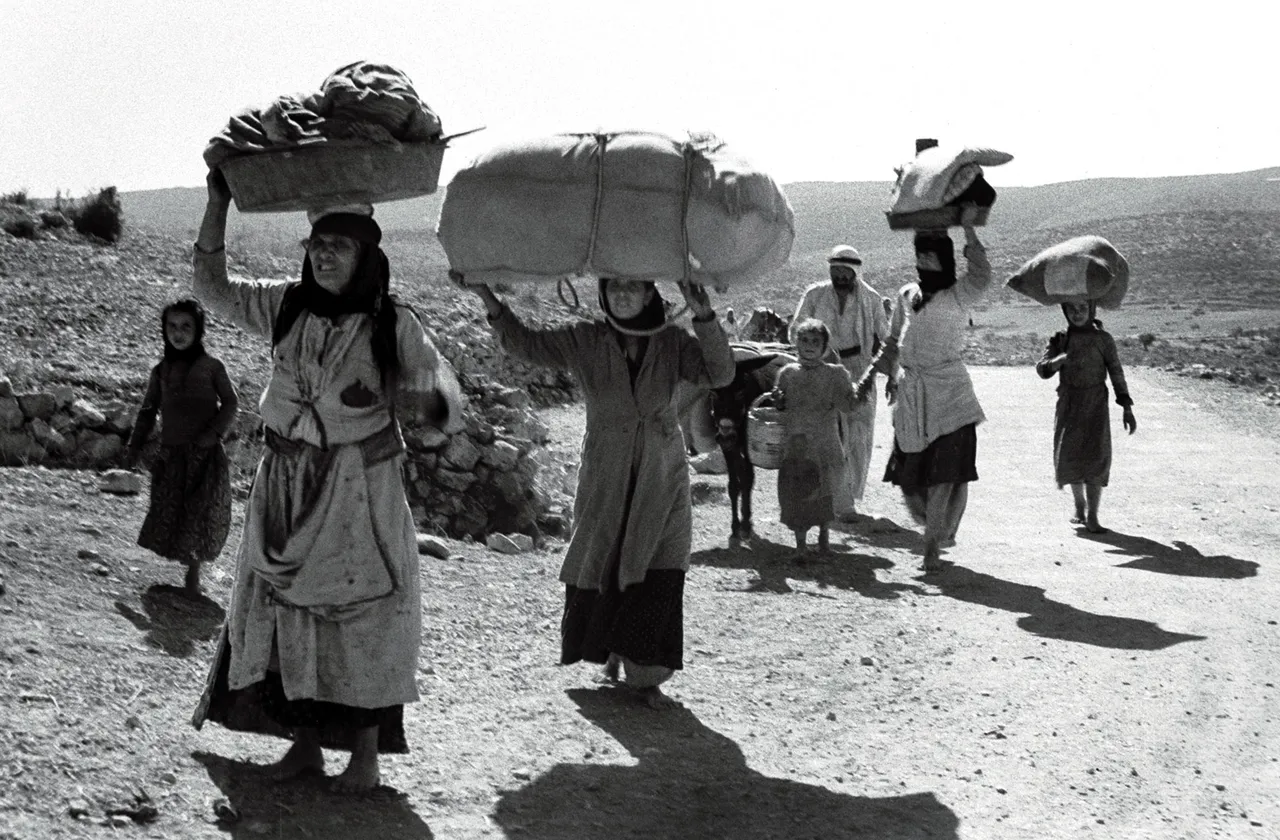
Between 750,000 and a million Palestinians were expelled from their homeland and made refugees by Zionist militias and the new Israeli army during Israel’s establishment in 1947-1949, amounting to approximately 75 percent of all Palestinians.
And around 500 Palestinian towns and villages were systematically destroyed by Zionist militias and the Israeli army. Most Palestinian communities, including homes, businesses, houses of worship, and vibrant urban centres, were destroyed to prevent the return of their Palestinian owners.
Today, their descendants are being displaced again. The Abu Jarad family, for instance, have been displaced more than a dozen times over 31 months of war as they fled Israeli bombardment across Gaza. Their hometown, Majida Abu Jarad now simply calls it “our Nakba”.
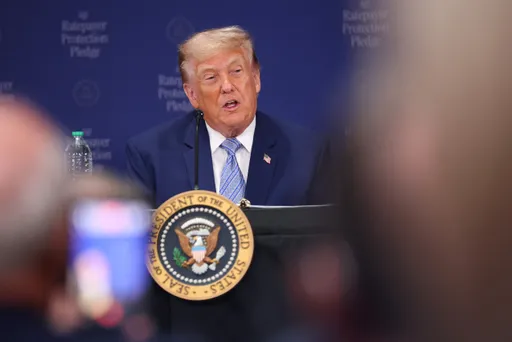
The rhetoric that Palestinians are a population to be repeatedly displaced or ‘cleansed’ has also been promoted by Israel’s staunchest ally and accomplice, the United States.
“That is also what Trump argued when he said that Palestinians should leave Gaza so it could be transformed into a paradise, a tourist resort, which was unacceptable to the local Palestinians,” Ahmar says.


“So it is a continuation of displacement, and that also has to do with the apathy and indifference of the frontline Arab states, meaning those states sharing direct borders with Israel.”
“They are also to be held responsible for the Nakba, the post-Nakba period and the post 2023 period, during which around 70,000 Palestinians have been killed, including thousands of children, alongside displacement not only in Gaza but also in the West Bank, as well as siege and search operations creating terror and fear among local Palestinians,” Ahmar adds.
.JPG?width=1080&format=jpg&quality=80)
A shift in consciousness
The scale of destruction in Gaza has done something no academic paper or advocacy campaign has fully managed before, as it has forced a global public, particularly in the Global North, to confront the Nakba as an ongoing, documented reality.
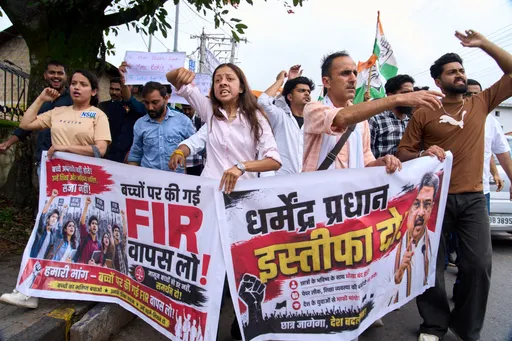
Nakba Day protests have increased dramatically in size and volume since the outbreak of the genocide in Gaza in late 2023.
In cities including London, New York, Paris, Berlin, and Barcelona, protests are frequently attended by hundreds of thousands of people, the 2025 London event drew 500,000 participants.
University campuses on both sides of the Atlantic became centres of protest and political education, with students connecting the genocide of Gaza to the original dispossession of 1948.
“I think the Palestinian narrative and recognition are there now. In the last couple of years, the humanitarian aid flotillas and the help from the international community show that,” Ahmar says.
“We’ve seen solidarity across Spain, Greece, Italy and France in the Western world, aimed at helping the people of Gaza who have been besieged because Israel does not allow them to move freely.”
Ahead of its Nakba commemoration in New York, the United Nations too have referred to the enduring plight of the Palestinian people, reflecting the fact that the injustices of the Nakba are an ongoing process.
That acknowledgement of the ongoing Nakba is precisely what the war has seared into global consciousness. The images and videos streaming out of Gaza, over 75,000 killed, families displaced repeatedly, entire cities razed to rubble, a population confined to an ever-shrinking strip of coast, have given the abstract vocabulary of settler-colonialism a concrete, present-tense face.
Yet awareness without political consequence and accountability remains the central problem of this moment.
“Unfortunately, the Gaza war reinforced the Palestinian narrative and amplified it worldwide, but it has not impacted Israel and the United States yet.”
“Despite the broader peace plans of President Trump, nothing has taken off. Therefore, the only solution is that Israel must completely withdraw militarily from Gaza and also from the West Bank, and revert back to the Oslo process of 1993.”
“That is the only way for a peace formula that can provide some sort of security to the people of Israel too, because through the policies of Benjamin Netanyahu and his own domestic survival issues, he has plunged his country into an endless state of war.”