 Mursel Dogrul
When war erupts in the Middle East, the cost is borne by the countries nearest to the conflict, as well as by those not involved.
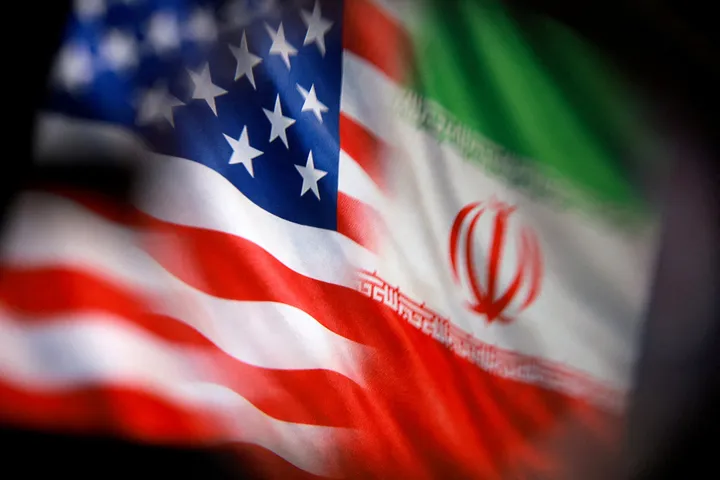
The US and Israel carried out attacks on Iran late last month while negotiations were still in progress.
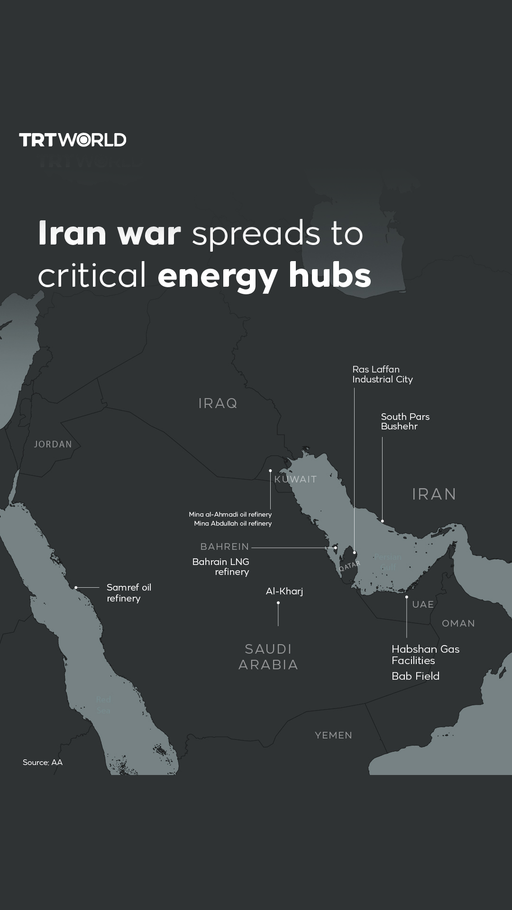
This has led to a sudden and severe energy crisis in Japan, South Korea, and China, especially after Iran partially closed the Strait of Hormuz, which accounts for roughly one-fifth of global oil trade.
This is worse than any war game had predicted. This conflict is not just a problem for one area.
This is a big test for the global energy order. And the Asia-Pacific region is the one most affected.
The arithmetic of dependency
The numbers alone are stark. In 2024, most of the oil and gas that passed through the Strait of Hormuz was bound for Asia.
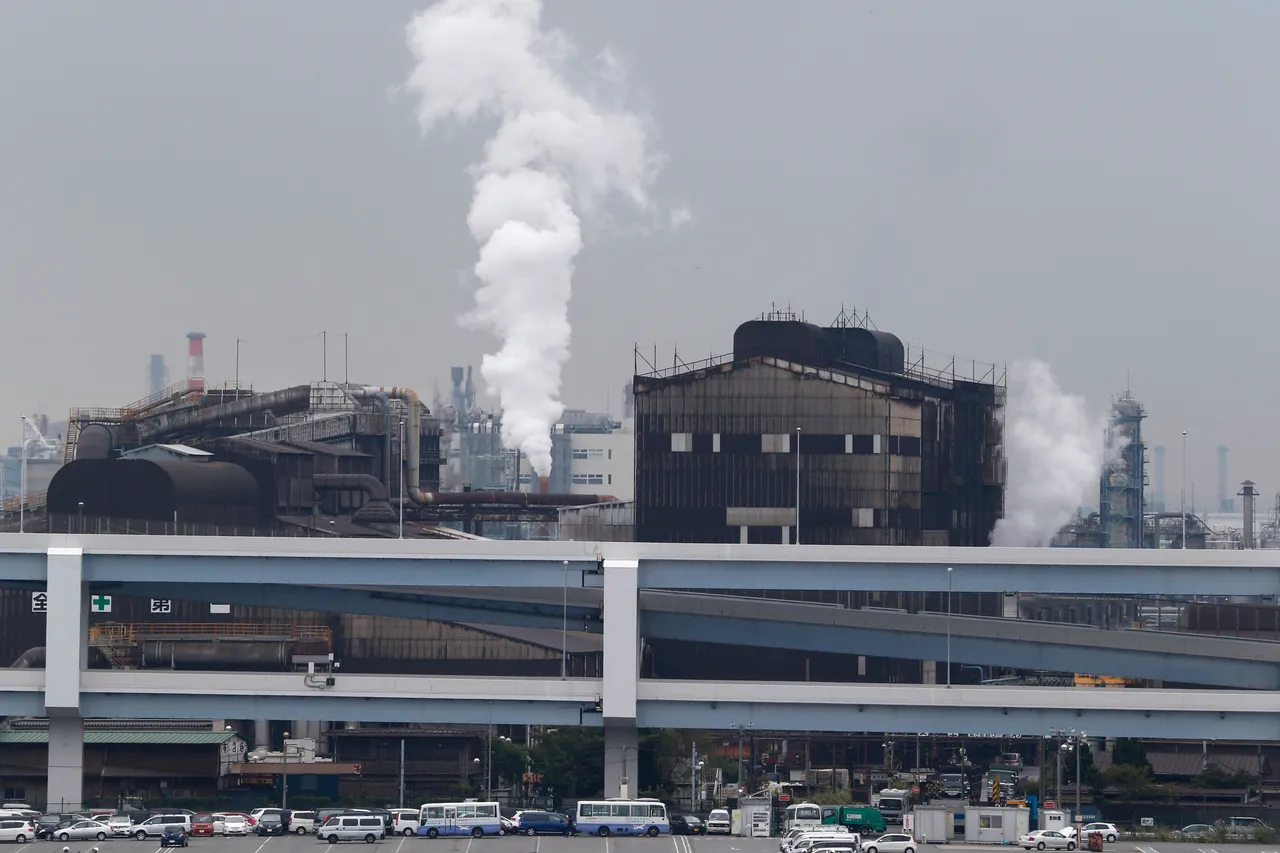
Japan sources approximately 90 percent of its crude oil from the Middle East, with most of it passing through the Strait of Hormuz.
South Korea gets about 70 percent of its crude oil from the Middle East, and 95 percent of that passes through Hormuz.
These figures demonstrate that energy policy has failed to alter this fundamental situation for many years.
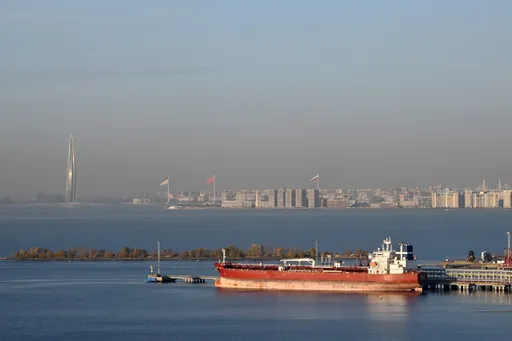
As of March 17, more than two weeks after the start of the blockade, over 150 oil tankers were still stuck in the Gulf.
On March 16, the Japanese government began releasing a substantial quantity of strategic oil reserves, amounting to 80 million barrels, as an emergency measure.
This is expected to last only about 45 days. It illustrates how serious the situation could become if it continues.
The problem is made worse by the fact that there are almost no good options available.
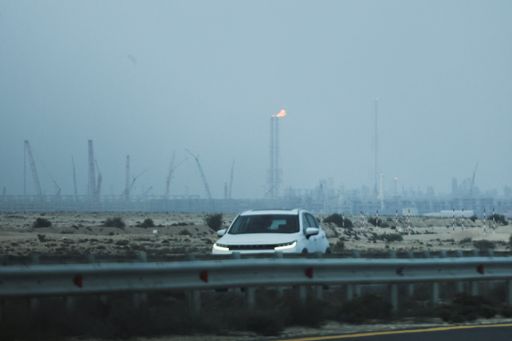
Saudi Arabia and the UAE are the only countries with pipelines that could be used to send oil elsewhere while the Strait of Hormuz is blocked.
These pipelines could transport between 3.5 and 5.5 million barrels of oil daily.
This is a small amount compared to the 20 million barrels that usually pass through Hormuz each day.
Iraq, Kuwait, and Qatar have no alternatives, so even in the best-case scenario, two-thirds of the current Gulf crude exports will still need to use Hormuz.
The economic consequences are cascading.
The price of Brent crude oil rose by about 15 percent in the first days of the conflict, then climbed further to $120 a barrel as the conflict worsened.
In the worst-case scenario, it is predicted that prices could reach $150 or more.
If the price of crude oil stays between $120 and $130 per barrel, Japan's GDP in 2026 could go down by 0.6 percent.
South Korea has already taken steps to implement a 100 trillion won programme to stabilise the market amid war-related uncertainty.
China possesses a large oil supply, which should help protect it from short-term problems.
The war has landed in a global economy already dealing with tariffs, pandemic-related debt, and rising prices.
Central banks in Europe and Asia have only recently begun addressing these issues, and each additional week of disruption makes recovery harder and more expensive.
Japan's Constitutional Labyrinth
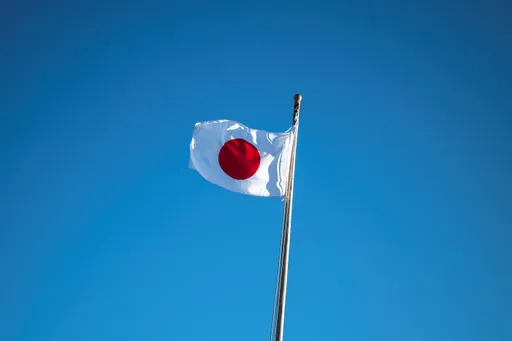
The political impact of this crisis has been especially dramatic in Japan.
On 15 March, Trump wrote on social media that countries like Japan, South Korea, France, and the United Kingdom should send warships to the area to make the Hormuz Strait safer.
The request was made a few days before PM Sanae Takaichi was due to visit Washington.
Takaichi is a very conservative politician who has increased Japan's defence spending.
She wants to change the country's pacifist constitution.
She also does not want to send a Japanese warship into the Strait of Hormuz.
Instead, people started thinking about what Tokyo could offer, like helping with mine sweeping, keeping an eye on the sea, or other non-combat roles that might be acceptable to Washington without causing problems at home.
The US&Israeli war on Iran highlighted the problems Takaichi faces as she seeks to encourage Japan to build a stronger military to address rising international tensions.
Indeed, there is a partnership where both sides help each other.
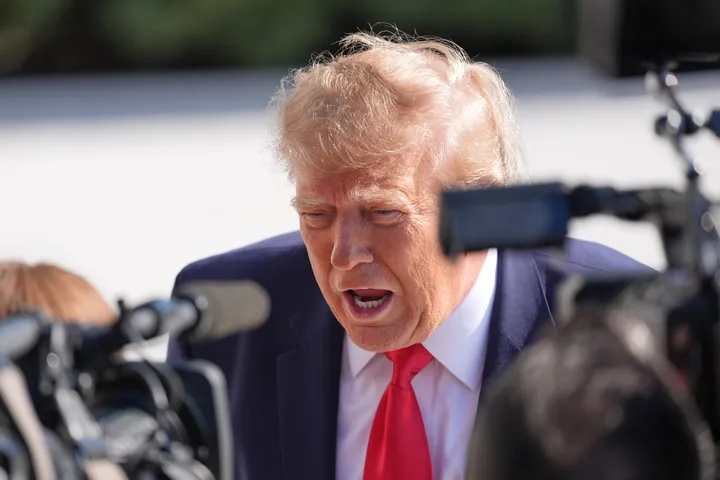


Trump was very clear about what he wanted. He said that a lot of the oil Japan relies on goes through the Strait of Hormuz, and so that was "a big reason to step up," adding: "I expect Japan to step up, because we have that kind of relationship".
The Indo-Pacific security gap
The most significant long-term consequence of this war could be its effect on the security framework of the Indo-Pacific region.
After a series of drone and missile strikes by Iran on Israel and other Gulf countries, the US started redeploying THAAD and Patriot missile defence systems from South Korea to the Middle East to strengthen defences there. Meanwhile, North Korea continued testing cruise missiles.
This contradicts the reassurances given by administration officials, as the redeployment involves missile defence systems, the movement of multiple THAAD launchers, and a third of the US naval surface fleet from South Korea to the Middle East.
At a Cabinet meeting, South Korean President Lee Jae Myung acknowledged the redeployment, stating that Seoul had conveyed its concerns to Washington but had limited ability to block the move.
“While we have expressed our opposition to the removal of certain air defence assets, the reality is that our position cannot be fully reflected,” he said.
Beyond the immediate concern about military deterrence regarding North Korea, there is also the issue of diplomatic relations with China.
Reintroducing THAAD to South Korea would be both logistically challenging and politically sensitive due to the backlash from its 2017 deployment.
Seoul is discovering that any decline in American reliability in the Indo-Pacific region weakens confidence in Washington and reinforces China's narrative that the US is unwilling to commit to the region when its interests shift elsewhere.
Even before the outbreak of war in the Middle East, South Korea was wary of US calls for 'strategic flexibility' and of the potential deployment of US Forces Korea against China.
Now that the US is redeploying air defence assets from the Korean Peninsula to the Middle East, these concerns have become more critical.
Asia needs strategic autonomy
Like many other emerging middle powers, Türkiye offers something neither Tokyo nor Seoul has yet acquired.
It has a tried-and-tested framework for navigating great-power competition while retaining strategic autonomy.
While remaining a NATO member, Ankara has engaged with Russia, strengthened ties with the Gulf states and pursued active diplomacy across Central Asia and Africa.
This multidirectional approach often puts Türkiye at odds with its traditional partners, but this hedging behaviour is increasingly adopted by middle powers as rigid alignment starts to constrain rather than safeguard national interests.
Türkiye's energy architecture is one of the best examples of this model in practice. Türkiye’s pipeline network provides strategic leverage, while Ankara also strengthens its position through offshore drilling and partnerships with major oil companies.
This forms part of a broader strategy to convert geographic centrality into durable political leverage rather than remaining a passive transit corridor.
Türkiye belongs to a group of emerging middle powers that are committed to preserving their strategic autonomy while avoiding costly involvement in rivalries between major powers.
Japan and South Korea have long operated under opposite logics, basing their security on deep alignment with the US.
The Hormuz crisis has exposed the costs of that dependency, both in terms of energy and strategy.
The point is not that Tokyo or Seoul should abandon their alliances, but rather that they should develop greater autonomy.
The ability to engage with both Washington and Moscow, as well as Brussels and Beijing, simultaneously is exactly the kind of policy toolkit that purely alliance-dependent states lack when their patron's attention shifts.
The lesson the market already knew
The way the world responds to energy crises follows a familiar pattern: diversification and structural reforms.
However, this time the scale of dependence is large enough to produce genuinely systemic consequences.
A one-year closure would result in a 15 percent decline in global LNG supply compared to 2024 levels.
This shortfall could not be fully offset by short-term demand adjustments.
However, in 2026, Japan's dependence on Middle Eastern crude oil stood at 93.5 percent.
This was not solely due to policy failure, but also because Middle Eastern crude oil is highly cost-competitive and of high quality, and the distances involved are manageable.
Alternative sources, such as American or Canadian crude oil, incur substantially higher transportation costs, while Russian crude oil raises concerns about sanctions.
The US meets most of its energy needs through domestic production, making it less vulnerable to disruptions in the Strait of Hormuz.
This war has made it undeniable that energy security and geopolitical architecture cannot be managed as separate policy domains.
The strait that fuels Asian industry is also the waterway over which alliance commitments are being renegotiated in real time.
As long as this dependence persists and the Indo-Pacific's security architecture remains weak, the next crisis over the Strait of Hormuz will not be unexpected, but inevitable.