 Murat Sofuoglu
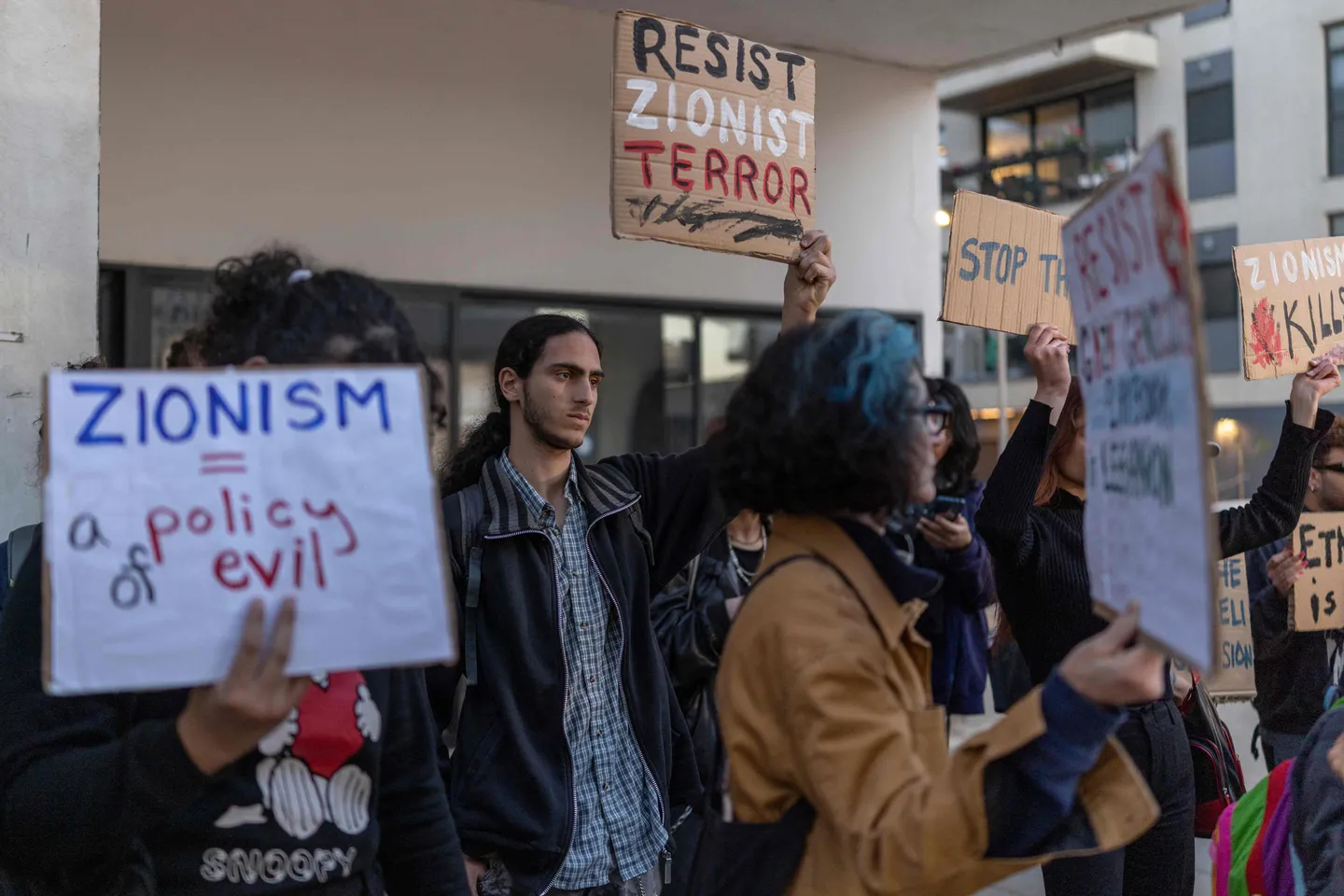
The UK's Green Party, whose leader Zack Polanski is Jewish, recently described Zionism as an ethnonationalist political project, triggering a fierce debate about the nature of Israel's founding ideology.
Zionism emerged in the late 19th century, shaped by European Jewish intellectuals like Moses Hess, Theodor Herzl and Nathan Birnbaum, partly in response to Western antisemitism.
Yet it has paradoxically embraced Jewish supremacy over Palestine’s native population, denying Palestinian self-determination and their national aspirations.
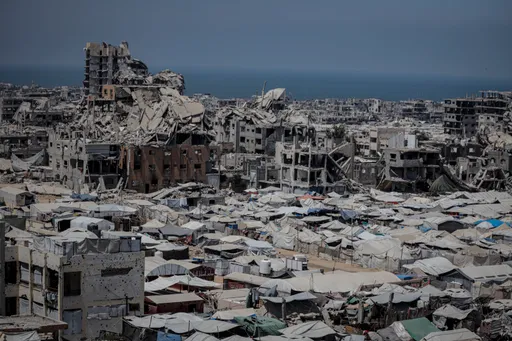
Israel’s atrocities in Gaza and the occupied West Bank since October 7, which some leading international bodies and political scientists have described as genocide, have led analysts to argue that Zionism has increasingly taken a racist turn.
This is a particularly stark accusation against a state that has drawn much of its historical legitimacy from the Holocaust, in which Nazi Germany murdered millions of European Jews during World War II.
“In the aftermath of the Gaza genocide in response to the October 7 Hamas attack, the racist character of Israel has again surfaced,” seriously discrediting Zionism, according to Richard Falk, a prominent Jewish-American professor of international law.
Growing international criticism of Zionism has been reinforced by racist and genocidal statements from senior Israeli leaders, including Prime Minister Benjamin Netanyahu, since October 7.
Pro-Israel groups, meanwhile, have sought to equate criticism of Zionism with antisemitism, a move critics see as an attempt to shield Israel from international accountability.
From the British Green Party's characterisation of Zionism to the findings of the UN Special Rapporteur Francesca Albanese on the occupied Palestinian territories and the UN Human Rights Council's Commission of Inquiry, chaired by Navi Pillay, these developments “have deepened the perception of Zionism as an aggressive ideology,” Falk tells TRT World.
Zionism's growing aggressiveness has become “abhorrent to many countries in the world as testified to by the walkout of many delegations when it came time for Netanyahu to address the recent UN General Assembly,” he says.
The UK Green Party episode has also revived memories of the UN General Assembly Resolution 3379, adopted on November 10, 1975, which determined that Zionism was a form of racism. The resolution passed by 72 votes to 32, with 35 states abstaining.
It received overwhelming support from countries in the Global South, though Latin American nations were divided and Western countries largely opposed it.
“The resolution was withdrawn in response to Israel/US lobbying leverage in 1991, but without any language explaining the withdrawal, or exonerating Israel from the earlier charges,” Falk tells TRT World.
In a 2017 report commissioned by the UN Economic and Social Commission for Western Asia (ESCWA), Falk and Virginia Tilley, an American political scientist specialising in ethnic and racial conflict, concluded that Israel had established a system of racial discrimination against Palestinians.
“Despite Israel's strenuous objections to being labeled an apartheid state, it virtually acknowledged the allegation in the Knesset of a 2018 Basic Law which proclaimed Jewish preeminence in Israel, and vesting the right of self-determination exclusively in the Jewish people with Hebrew designated as the only official language,” Falk says.
Many see the Basic Law, enacted by the Netanyahu government, as the codification of Zionist principles within Israel's constitutional framework.
Has Zionism always been racist?
Beyond the developments since October 7, some Israeli historians argue that Zionism has been a racist ideology since Israel's establishment in 1948, rejecting the notion that different versions of Zionism have existed.
While a more recent narrative suggests that Israel's racist and discriminatory policies have emerged under Prime Minister Benjamin Netanyahu and his far-right coalition partners, Israeli historian and political scientist Ilan Pappe argues that racism has always been central to the Jewish state's identity, describing “liberal Zionism” as an “illusion”.
In a recent interview, Pappe rejected this distinction, saying that “the problem is Zionism in its all varieties”, which was “behind the ethnic cleansing of 1948 and the military rule on Palestinians” as Israel's state ideology.
According to Pappe, the intimidation of Palestinians within Israel since 1948, as well as the tactics used against Palestinians and support for illegal settlers in territories occupied since 1967, have been “the results and the implementation of the Zionist ideology”.
British-Israeli historian Avi Shlaim, who identifies as an Arab Jew, argues that even if “liberal Zionism” once existed in Israel, it is now “dead” under Netanyahu, particularly following the adoption of far-right policies since October 7.
“This promise was never fulfilled. It was just one of many examples of the huge gap between the liberal Zionist rhetoric on universal values and the discriminatory, racist reality, a gap that was filled by Israel’s leaders with hypocrisy and humbug,” Shlaim wrote in an article last month.
“One of the very few things that can be said in favour of the present, far-right Israeli Government is that it has dispensed with the liberal rhetoric and exposed the ugly reality of contemporary Israeli society for all to see,” he added.
However, Alon Liel, a former director-general of Israel's foreign ministry, offers a different perspective, arguing that his country “had a different kind of Zionism” three decades ago.







“The comeback of equating Zionism as racism is definitely an outcome of the last war, especially because of the number of casualties and the destruction in Gaza,” Liel tells TRT World.
Over the years, Zionism, originally regarded as a secular ideology, “has become more nationalistic and messianic”, according to Liel.
He points to the growing influence of far-right groups in Israel, a development some analysts associate with the convergence of revisionist and messianic Zionism.
Zionism: settler colonialism
Western imperial powers ruled much of the world, from the Americas and Africa to Southeast Asia and the Middle East, drawing many of today's international borders. But colonial rule largely receded after World War II, as former colonies gained independence.
Despite this wave of decolonisation, Israel emerged as a settler-colonial state in Palestine, a land inhabited by its native population for centuries, following the armed campaigns of Zionist militant groups such as Haganah and Irgun.

Against this historical backdrop, experts argue that Zionism constitutes a settler-colonial project.
“Zionism is a self-avowed settler-colonial movement, and its principal political progeny – the State of Israel – is a settler-colonial state. The logic of settler-colonialism is the elimination of the natives in order to take over the land and its resources. Ethnic cleansing is the means by which this goal is achieved,” Shlaim viewed.
Zionist leaders also drew on European Orientalist attitudes and the continent's colonial history to gain support for their project, presenting themselves as representatives of Western civilisation in the Muslim-majority Middle East.
While Zionism was originally “a movement among Jews countering the racism embedded in European antisemitism”, it also “had its own racist outlook that can be associated with an Orientalist version of Western cultural superiority and a disregard for the rights of inferior non-Europeans, especially as embedded in Islamic majority countries of the MENA,” Falk says.
“In the aftermath of WW II, Orientalist attitudes combined with liberal guilt associated with allowing Hitler to get away with extreme forms of antisemitism eventuated in a Zionist settler colonial project to establish a state of their own within Palestine, pretending to accept partition as a solution but never giving up their vision of unified Israeli sovereignty over the whole of Palestine.”
Future of Zionism
If Zionism continues on its current aggressive path, what does the future hold for Israel?
The Netanyahu government, which has launched military campaigns in Gaza, Lebanon and Iran, appears confident in its approach, claiming it is changing “the face of the Middle East.”
But some historians argue that Israel's embrace of an increasingly aggressive form of Zionism, driven by ambitions pursued on a shorter timetable than those of earlier Zionist generations, could signal the ideology's final phase.
“Historically, I’m willing to say with some caution that this is the last phase of Zionism. Such developments in ideological movements, whether they are colonial or empires, it’s usually the final chapter [that is] the ruthless one, the most ambitious one. And then it’s too much and then they fall and collapse,” Pappe said in an interview last year.
Like Pappe, Gregory Simmons, an independent researcher and academic, sees a bleak future for Zionism beyond Israel and its Western supporters.
Simmons argues that Israel's actions in Gaza and its military campaigns across the Middle East have eroded public support and sympathy, even in Western countries, while alienating Jewish communities abroad and turning Zionism into “a globally toxic ideology”.
Liel, however, takes a more cautious view. The former Israeli diplomat says he wants to wait for the results of the October 27 election before assessing Zionism's future.
He considers the ideology “very solid” within Israel, while acknowledging that it has been “more rejected” internationally.
Nathan Birnbaum, the Austrian-Jewish writer and journalist credited with coining the term Zionism, offers a historical example of how attitudes towards the ideology can change.
Despite helping organise the First Zionist Congress in Basel in 1897 and serving as secretary-general of the Zionist Organisation, Birnbaum later became a staunch opponent of Zionism and the establishment of a Jewish state in Palestine.