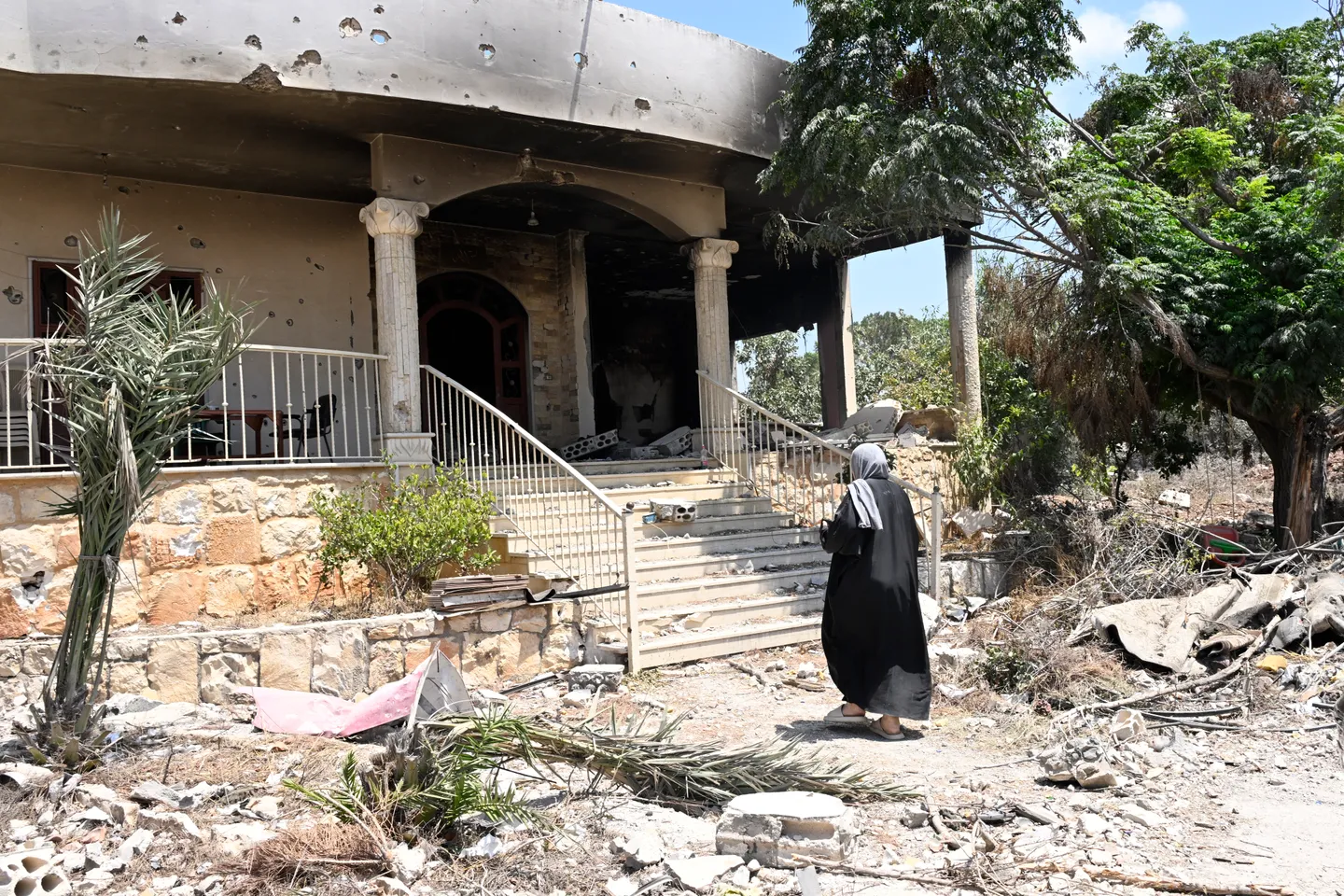
Five months of relentless Israeli bombardment have left the town of Zawtar al-Gharbiyeh in southern Lebanon in shambles.
Residents returning to the border town described massive destruction in their areas as homes were completely or partially destroyed, burned and vandalised, roads bulldozed and infrastructure widely damaged.
The Israeli army withdrew from the town last week under a US-mediated framework agreement signed last month between Lebanon and Israel.
The town lies south of the Litani River and is among the pilot areas included in the first phase of the agreement, which calls for a gradual Israeli withdrawal from occupied Lebanese territory, with the Lebanese army assuming security responsibility in areas vacated by Israeli forces, along with the disarmament of armed groups, including Hezbollah.
“The scale of destruction is huge and extensive, and the damage is indescribable,” Mayor Abd Ezzedine told Anadolu.
“The Israeli army has completely destroyed around 260 housing units” in the town, home to around 5,000 residents, he said.
The mayor noted that many houses suffered partial damage in the Israeli assault.
“Nearly half of the houses are no longer fit for habitation and need to be demolished, while others require restoration,” he said.
Ezzedine said some residents began returning from the first day they were allowed to enter the town.
“Those who have a place to shelter or can sit in their homes have started returning and repairing what they can, but the numbers remain low,” he said.
“We are working to reopen roads and follow up on infrastructure, water and electricity,” he added.
Massive destruction
Lebanese resident Ihsan Yaghi, 60, said she was shocked by the scale of destruction in the town.
“Our house was burned and destroyed. Everything here was burned. Our whole life has been burned,” she told Anadolu while inspecting the house.
Yaghi said she had cleaned part of the place, describing her return to the town as the “most important step” despite the scale of destruction.
She said she uses social media to share residents' suffering.
“Many people cannot speak or express themselves, so I express their pain because they are my family, my village and my people,” she said.

“We are hurt and oppressed by what is happening to us. We hope Arab, foreign and local associations will come and stand with us. We are not only asking for aid; their presence gives us strength and reinforces our steadfastness,” she added.
Mohammed, 10, said his family’s home was destroyed but insisted they would rebuild it better.
“My family cannot stay in the house now and will leave the area later Tuesday,” he said.
Thuraya Noureddine, 65, said damage had affected all parts of her son’s home.
“The bedroom was ruined, and the living room has no walls left. The house cannot be lived in. They left nothing undestroyed,” she told Anadolu.
‘Catastrophic’
Abbas, 46, who declined to give his full name, said Israeli forces had been present in the area for a long time, and traces of their presence remain visible inside homes.
“Their food is still there, as well as their sleeping places, in addition to the destruction they left in the house and the town in general,” he said.
He described the damage as “catastrophic.”
“The house has no foundations and no columns. Bombs were detonated inside the house, damaging the building’s structure, while fires consumed its contents and furniture,” he added.
He said residents are currently coming only to inspect their homes because many are “unfit for habitation and even unfit for repair,” calling on the Lebanese authorities to help them return gradually.
“Security comes first, then we can talk about life, infrastructure, electricity and water. Zawtar al-Gharbiyeh today lacks the basic requirements of life,” he said.
Ali Hreibi, 54, said his home suffered extensive destruction, with bullet marks visible on walls.
“As you can see, the destruction is massive. On top of that, they entered, vandalised, broke things and fired inside the house. This is an enemy without mercy. The harm is very great,” he told Anadolu.
The destruction comes amid continued Israeli violations of the US-mediated framework agreement, as the army continues destroying facilities and infrastructure in other Lebanese areas through shelling and explosions.
Since March 2, 2026, Israeli attacks on Lebanon have killed 4,330 people and injured 12,236 others, according to the Lebanese Health Ministry.
Israel still occupies areas in southern Lebanon despite the agreement, some for decades and others since the 2023-2024 confrontations. It has also advanced more than 10 kilometres into Lebanese territory during the current offensive.