 Emmett Imani
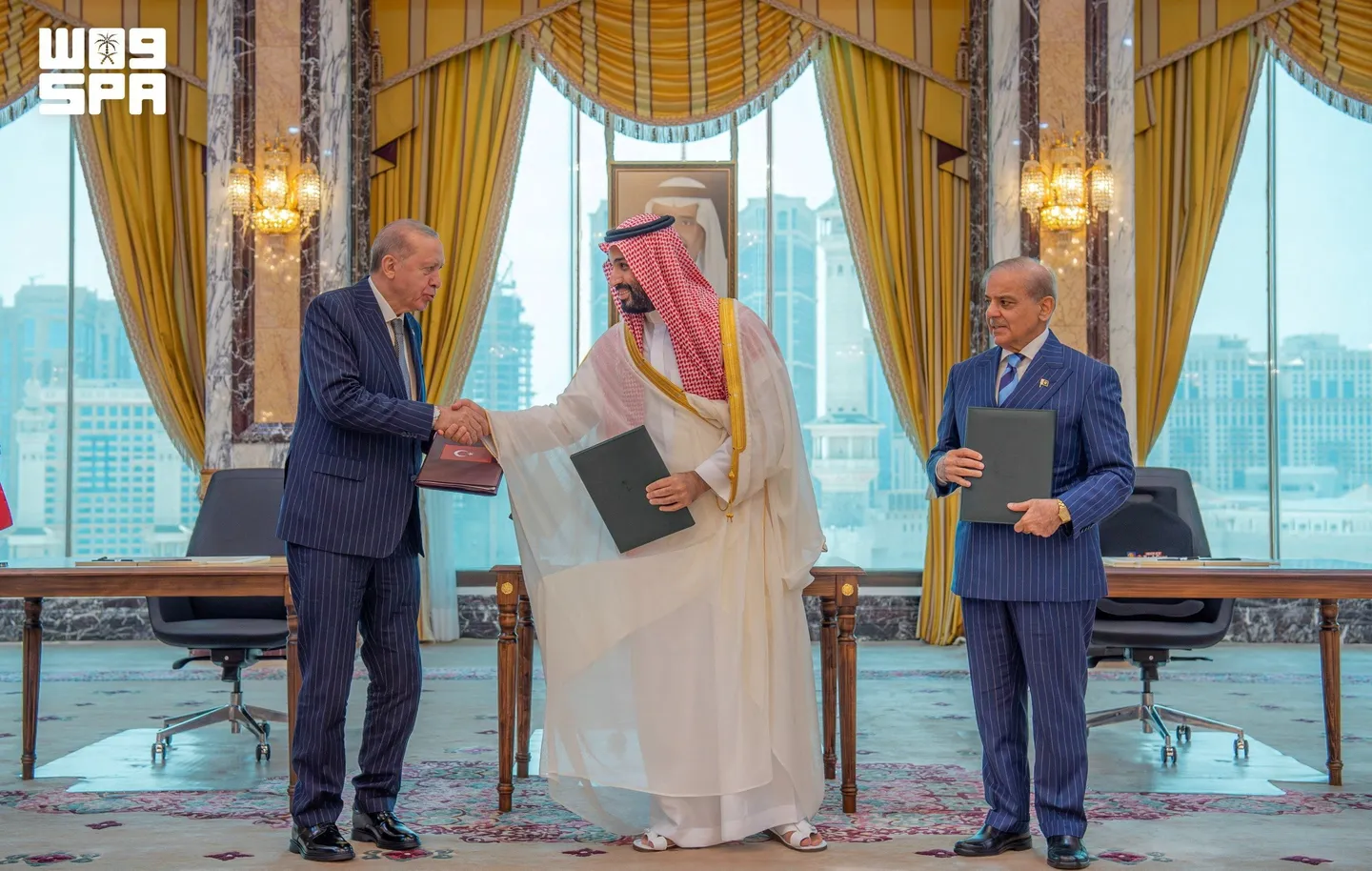
In Mecca on Friday, three men who hold very different traditions of power in the Islamic world put their signatures on a single document that could quietly remake the security map of the Middle East and South Asia.
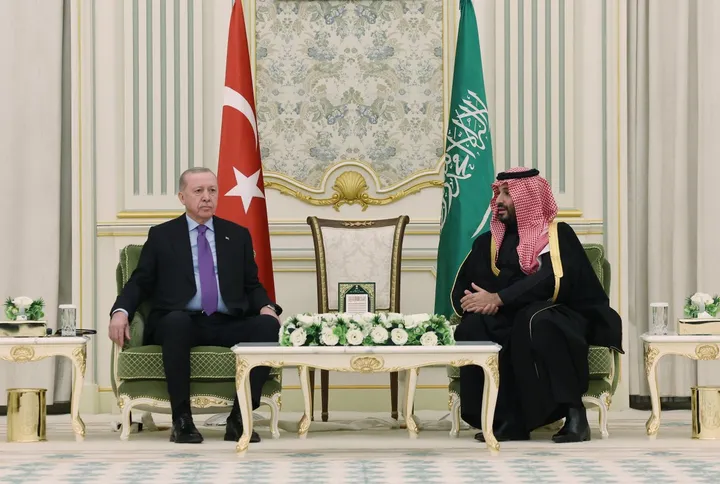
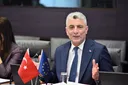
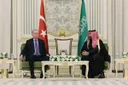
President Recep Tayyip Erdogan of Türkiye, Crown Prince Mohammed bin Salman of Saudi Arabia, and Prime Minister Shehbaz Sharif of Pakistan signed what is now commonly known as the Mecca Joint Defence Agreement, a trilateral agreement that states any attack on any of the three countries will be considered an attack on all three.
It’s a brief sentence with long consequences.
The agreement comes five months into a tortuous war between the United States and Iran, a war that has closed shipping routes through the Strait of Hormuz, drawn in Houthis and Iraqi militias and left Gulf states openly wondering whether Washington’s security umbrella still covers them the way it once did.
Saudi Arabia has borne direct strikes. Its oil exports and its Vision 2030 development agenda, the mainstay of MBS’s domestic agenda, have been jeopardised in the process.
So a mutual-defence clause in Islam’s holiest city is not merely a diplomatic gesture. It is a hedge.
More than another defence document
Trilateral security pacts are common enough in diplomatic history that most of them are forgotten within a decade.
What sets this one apart is what it builds on. In September 2025, Saudi Arabia and Pakistan signed a Strategic Mutual Defence Agreement in Riyadh, an accord notable above all for the reason that Pakistan is the only nuclear-armed state in the Muslim world, and as the pact explicitly framed any aggression against either country as aggression against both.
That bilateral treaty was already described by analysts as a watershed.
Adding Türkiye does not simply widen the circle; it changes the geometry entirely, linking a nuclear-capable South Asian power, the Gulf's most consequential Arab state, and a NATO member with the second-largest army in the alliance after the US.
This is the first time in the modern era that these three specific poles of Muslim-majority power – financial, military, and demographic – have been bound together under a single defence instrument invoking collective response.
That alone marks a threshold moment in regional security architecture, regardless of how the clause is eventually tested or interpreted.
A measure of strategic trust
Formal defence pacts are, at bottom, expressions of trust that took years to earn.
Pakistan has quietly trained and advised Saudi forces for close to eight decades. Türkiye and Pakistan have exchanged warships and training aircraft.
Türkiye and Saudi Arabia, for their part, overcame strained ties through trade and later bilateral security deals.
That a trilateral mutual-defence clause could be reached within roughly a year of negotiation, according to officials close to the talks, says something about how quickly strategic necessity can compress timelines that political history would otherwise have kept apart.
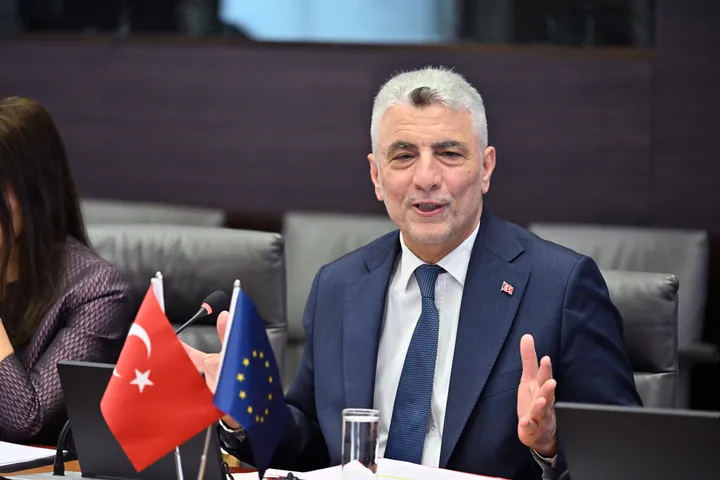
For Ankara, the Mecca agreement is the clearest evidence yet that Türkiye has stopped thinking of itself as a regional actor confined to its immediate neighbourhood and started acting as a connector between regions that rarely interact directly, the Gulf and South Asia among them.
Türkiye's defence-industrial base has done much of the groundwork.
In 2023, Baykar signed what its chief executive called the largest defence export contract in Turkish history with the Saudis, an agreement worth billions of dollars covering the Akinci unmanned combat aircraft, complete with local production lines inside the Saudi Kingdom and aligned with Vision 2030's push toward domestic manufacturing.
Riyadh's air force and navy were expected to fully integrate the platform by the end of 2025.
That single contract did more to rebuild trust between Ankara and Riyadh than a decade of communiques.
Pakistan has been a defence partner of a different kind, supplying Türkiye with trained personnel exchanges and cooperation reaching back generations, most visibly in naval and aviation cooperation.
Türkiye's own hardware, from the TCG Anadolu drone carrier to the KAAN fifth-generation fighter now in development, has made it a credible supplier to both.
What the Mecca agreement adds is a layer beyond commerce: Ankara is no longer only selling systems to the region, it is now formally underwriting part of its security.
What the pact implies going forward
Three implications stand out. The first is collective deterrence.
A mutual-defence clause linking a nuclear-armed state, a leading Gulf military spender, and a NATO member complicates the calculations of any actor weighing coercion against one of the three.
Iran is the chief among them, though the Houthis and other non-state actors in Yemen and Iraq will also have to reckon with a wider tripwire.
The second is institutional stability. Defence pacts that survive tend to generate standing structures, joint exercises, intelligence-sharing arrangements, and interoperability standards that outlast the crisis that produced them.
The third is longer-term coordination. A framework signed by a nuclear-armed South Asian state, an oil-rich Gulf monarchy, and a NATO-anchored bridge state creates channels that could, in time, extend well beyond military matters, into energy security, reconstruction financing, and diplomatic coordination on issues from Gaza to Kashmir.
None of this guarantees the agreement will hold under real pressure.
Mutual-defence clauses are tested only when war actually spreads, and how Riyadh, Ankara, and Islamabad would interpret their obligations if one of them comes under attack directly remains, for now, untested.
What is not in doubt is that three of the Muslim world's most consequential states have decided the moment called for more than statements of solidarity. They wanted something written down.