 Kazim Alam
Ahead of COP 31 in the Turkish resort city of Antalya, where the leaders of 196 countries will discuss in November their policies to address the climate crisis, a new scholarly volume on environmental challenges has made a strong case for Islamic jurisprudence – one of the world’s oldest sources of law that the international climate framework has so far ignored.
A first-of-its-kind publication released recently by Cambridge University Press, The Cambridge Handbook of Islam and Environmental Law maps 14 centuries of Islamic legal thought on stewardship, resource management and ecological governance.
Nadia B Ahmad, co-editor of the handbook and a professor of law at Barry University in the US, tells TRT World that the Islamic tradition is not just cultural heritage, but a practical source of solutions that the global climate regime has systematically overlooked over the decades.
“International climate law has a canon written in Western European languages by institutions reflecting Western European legal assumptions, and that history excluded traditions that developed outside it,” she says.
Other co-editors of the landmark publication are Saba Kareemi, Erum K Sattar and Oluwakemi A Ayanleye.
“What the handbook does is make the exclusion (of Islamic law from the global climate regime) visible and provide the jurisprudential material to correct it,” Ahmad says.
The communities bearing the heaviest climate burdens are disproportionately Muslim, disproportionately in the Global South, and disproportionately the least responsible for the emissions driving the crisis, she says.
According to the editors of the handbook, climate action is primarily a question of justice – a question that the Islamic legal tradition has been asking for centuries.
Ahmad says the 1,400 years of Islamic jurisprudence have produced precisely the tools that climate governance needs: binding stewardship obligations (khilafa) that tie present generations to future ones, communal resource systems like hima that managed ecosystems without market logic, equitable water-rights frameworks rooted in justice, and, more recently, constitutional litigation in Pakistan that has rendered environmental degradation actionable as a violation of human dignity.
Yet these tools of governance have remained largely outside the dominant climate canon produced in Western languages.
Ahmad highlights that Türkiye’s role as host at COP 31 later this year makes that gap “politically legible for the first time”.
Militarism and its environmental impact
The Loss and Damage Fund, a global climate finance mechanism meant to help vulnerable developing countries recover from the harm caused by the climate crisis, was agreed at COP 27 in Sharm el-Sheikh and operationalised at COP 28 in Dubai.
However, the fund remains vastly underfunded relative to the scale of harm already inflicted on vulnerable nations.
One dimension of this harm that receives little attention in international accounting is the environmental destruction caused by militarism.
In one chapter of the handbook – titled “Militarism, Climate Emissions, and Islamic Environmental Ethics: A Transnational Perspective on Demilitarisation and Ecological Justice” – Ahmad documents how wars generate massive greenhouse-gas emissions that “remain largely invisible in international climate negotiations”.
Their exclusion stems from “deliberate policy decisions” that specifically exempt military emissions from reporting requirements under major international climate agreements.
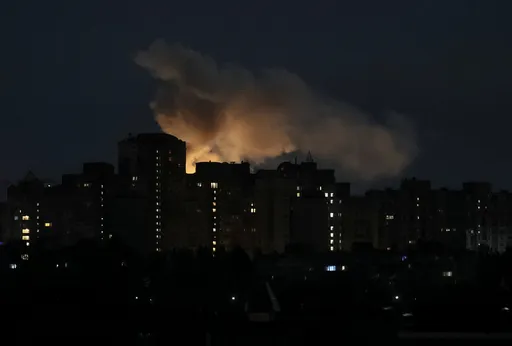
“War destroys the environmental infrastructure communities depend on for survival, like water systems, agricultural land, soil stability in places already carrying disproportionate climate burdens before the first bomb fell,” Ahmad says.
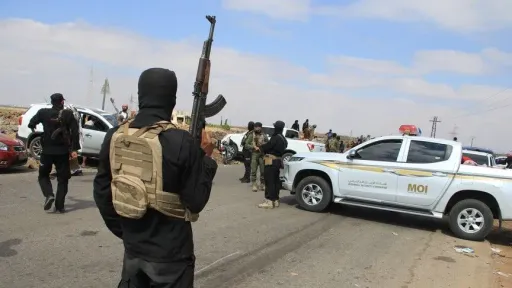
“Iraq, Gaza, and Afghanistan have Muslim populations whose environments have been degraded by decades of military activity they did not choose and did not cause,” she adds.
Ahmad points to specific cases detailed in the handbook.
In Iraq, successive wars turned the Mesopotamian marshes – the largest wetland ecosystem in the Middle East – into arid wastelands.







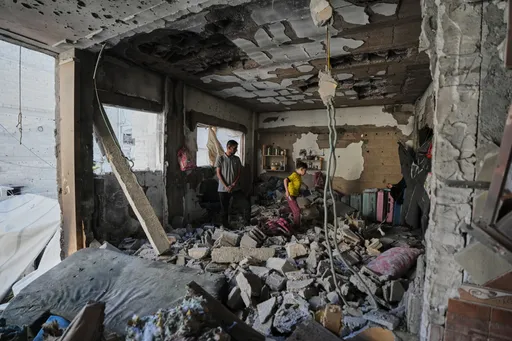
In Gaza, Israel has dropped hundreds of tonnes of explosives equal to at least six “Hiroshima-sized” atomic bombs since October 2023.
The repeated Israeli bombings have destroyed wastewater facilities, solar infrastructure and farmland, creating what the chapter describes as an “artificial ecological disaster zone”.
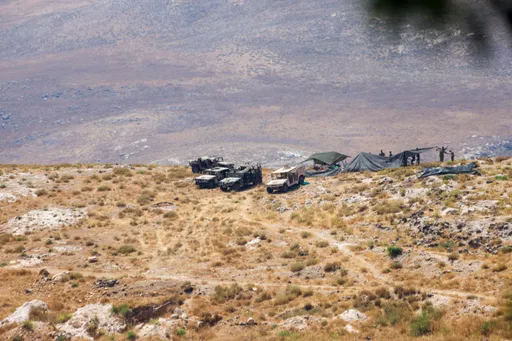
Similarly, abandoned military hardware leaks toxins into soil and groundwater in Afghanistan, while wartime deforestation has stripped valleys of cover, amplifying flood and landslide risks.
These are all structural – not collateral – effects, she insists.

A moral violation of divinely ordained harmony
Islamic environmental ethics refuse to treat environmental destruction as an acceptable cost of security, Ahmad says.
Her argument rests on three principles. One, khilafa or trusteeship, which casts humans as accountable caretakers of the Earth.
Two, mizan or balance, which frames ecological disruption as a moral violation of divinely ordained harmony.
And three, adl or justice, which demands that the burden of ecological destruction should not be systematically concentrated on the same population.
“Warfare as currently practised violates all three simultaneously,” Ahmad says.
“(This) means demilitarisation is not a peace-studies argument grafted onto climate policy. It is a direct implication of principles operative in Islamic jurisprudence for 14 centuries,” she says.
The Paris Agreement’s military-emissions exemption exists because the world’s largest military powers refused to subject their defence sectors to binding accounting.
“The exemption was a condition of participation,” she says, adding that Islamic environmental ethics address this point by refusing the premise that produces it.
“Khilafa does not recognise a category of human activity exempt from accountability for its environmental consequences. Mizan operates as an absolute in the Quranic framework, not a default that yields when state interests intervene,” she says.
Other chapters of the 344-page handbook examine subjects like the hima conservation system’s medieval roots in communal resource management, Hanafi land-law flexibility as a potential remedy for rural displacement, and classical coastal and marine environmental law that governed shared waters.
Pakistani constitutional cases, analysed in the volume, have already translated Islamic dignity principles into enforceable environmental rights.
Collectively, the handbook seeks to show that Islamic jurisprudence on the environment is not merely abstract ideas from the distant past. Rather, the body of Islamic environmental laws consists of tested tools refined across jurisdictions for centuries.
Ahmad says the question for global leaders meeting in Türkiye is whether international institutions will finally treat the Islamic tradition as a source of law rather than “cultural backdrop”.
“The countries gathering in Antalya are bearing the environmental costs of conflicts largely initiated by the same states that wrote the exemption into the agreement,” she says.