 Kazim Alam
Pakistani and Turkish leaders vowed on Saturday to translate decades of fraternal ties into a concrete investment road map.
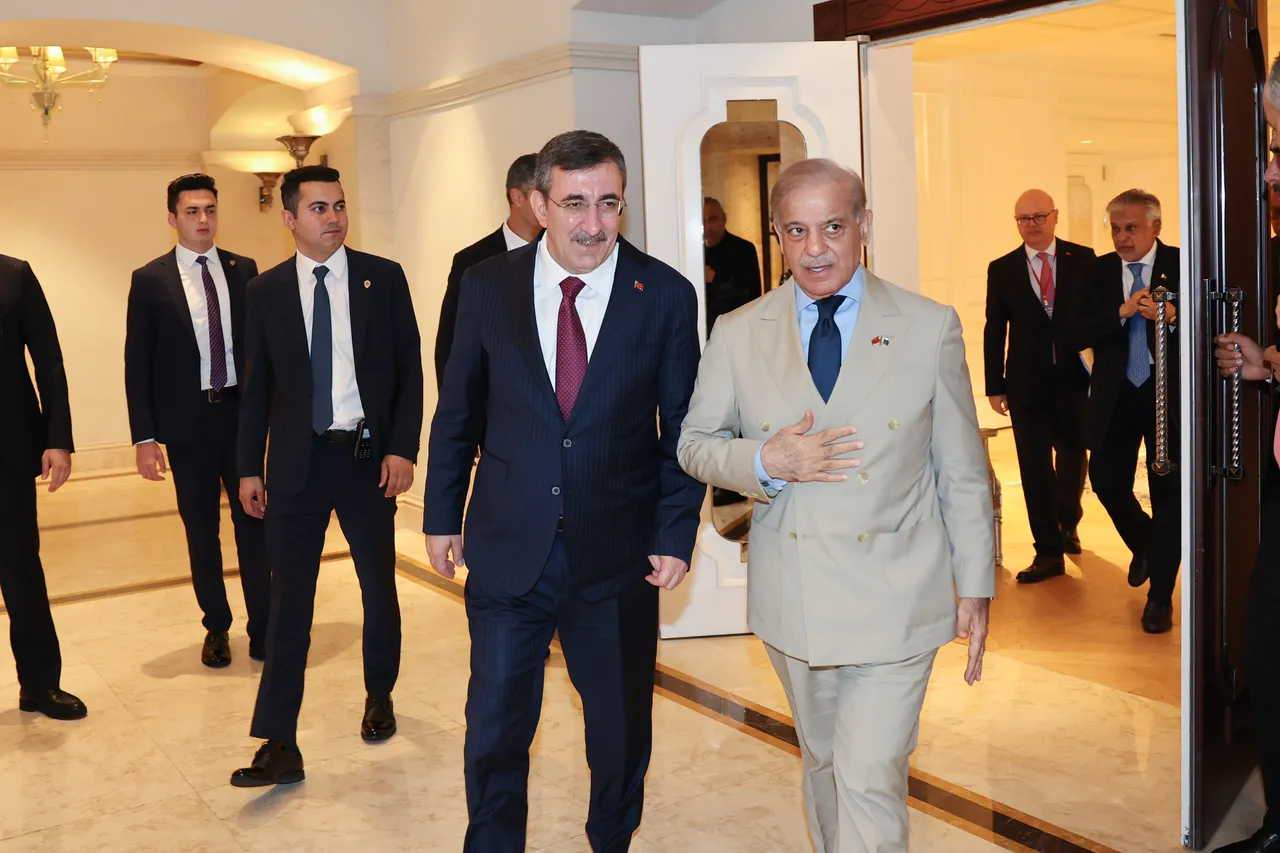
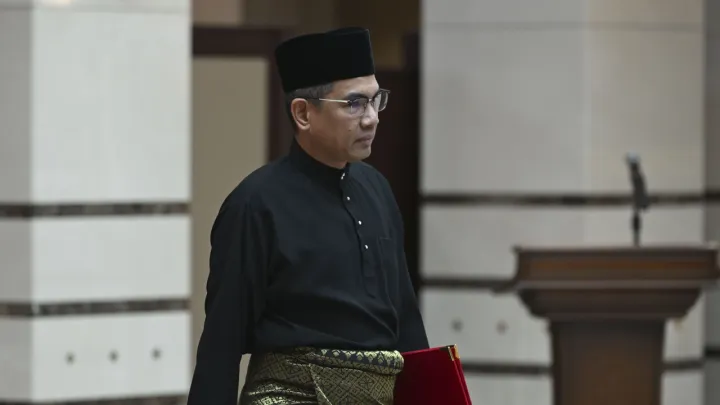
Presenting Turkish businesses with specific opportunities in energy exploration, mining, power infrastructure, privatisation, and special economic zones, Pakistan Prime Minister Shehbaz Sharif urged participants at the Pakistan-Türkiye Business Conference in Istanbul to convert brotherly sentiments into actual investments and hit the ground running without delay.
“I want to declare here that Pakistan has earmarked 1,000 acres for…Turkish investors in this Special Economic Zone in Karachi, by the name of President Erdogan Special Economic Zone,” Sharif told a hall full of Turkish investors.
Sharif said that if business-to-business deals faced impediments, Pakistan stood ready for business-to-government arrangements “because that is what brotherhood is all about”.
Sharif pledged personal commitment, saying he would roll out the red carpet for Turkish investors as the prime minister of Pakistan. “All impediments and delays will be removed,” he said.
“My Turkish investor would be my master.”
Pakistan and Türkiye share deep religious and cultural bonds. Muslims in the Subcontinent took part in the Turkish struggle for independence after World War I by contributing money, jewellery, and other donations.
Ankara was among the very first countries that officially recognised Pakistan as a sovereign state in 1947.
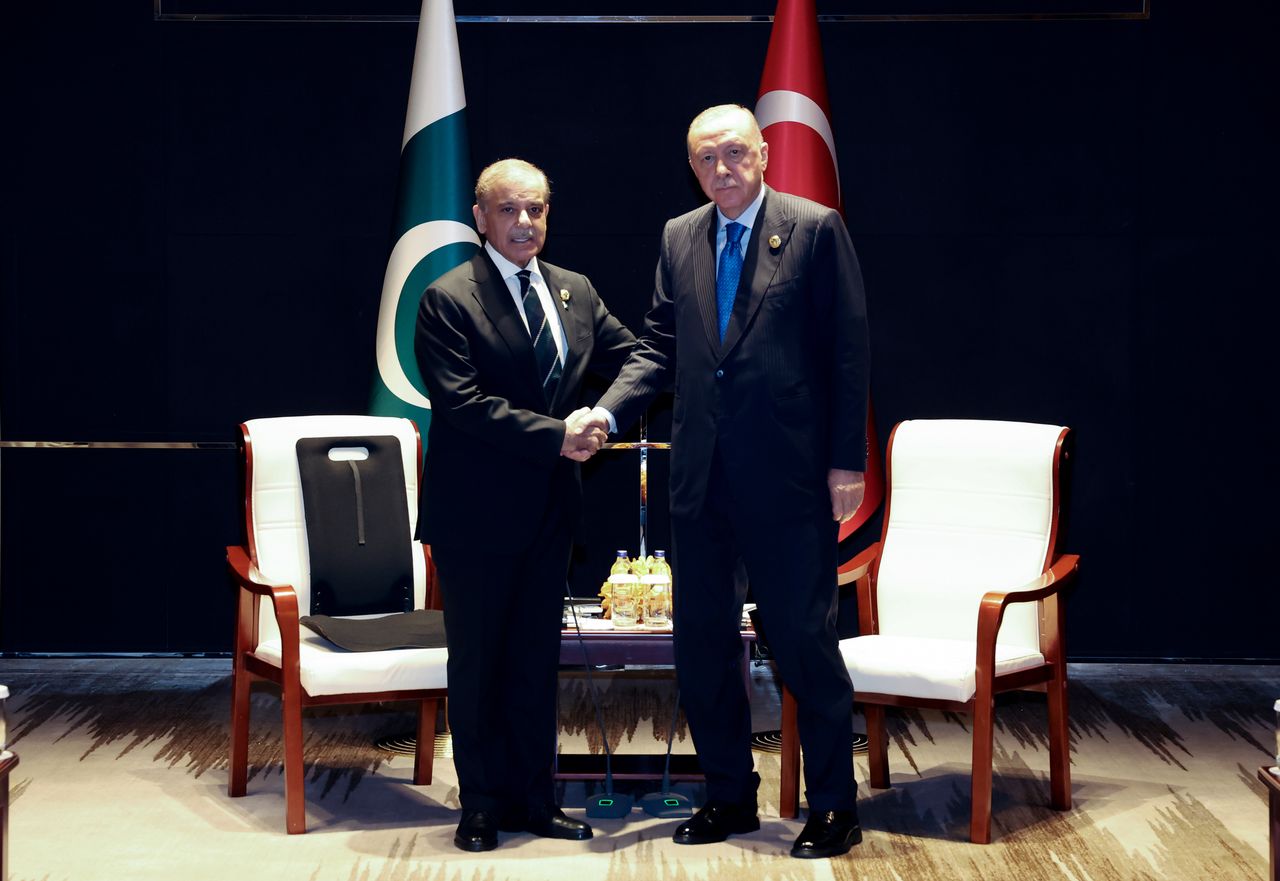
Speaking on the occasion, Turkish Vice President Cevdet Yilmaz welcomed the Pakistani delegation and praised Islamabad’s role as a mediator that produced the Islamabad Memorandum of Understanding between the US and Iran, leading to a 60-day ceasefire.
He vowed to raise bilateral trade from its current level of approximately $1.2 billion to $5 billion, a target that he termed “very modest”.
“We need to raise it much higher,” he added.
Yilmaz highlighted existing Turkish success as proof of concept: direct investments in Pakistan already exceed $2 billion, while Turkish contracting firms have completed 74 projects worth approximately $3.5 billion.
He listed automotive, agriculture, food processing, medical devices, renewable energy, IT, e-commerce, education, tourism, shipbuilding, defence industry, and film and television production as promising sectors for deeper cooperation.
He specifically thanked Sharif on the Türkiye-specific special-zone project in Karachi, calling it “a very valuable model”.
Addressing the participants, Adviser to Pakistan Prime Minister on Privatisation Muhammad Ali said Pakistan has achieved macroeconomic stability in recent years.
The hard-earned economic consolidation reflects in Pakistan’s current-account surplus, exchange rate consistency, single-digit inflation, and per-capita income of around $1,800 – less than 10 percent of Türkiye’s $19,000, underscoring “the potential for growth”.
Ali told Turkish businessmen about robust legal protections that Pakistan offers to all foreign investors: change-in-law clauses, which protect businesses from the effects of amended regulations, sovereign guarantees where applicable, Pakistan-Türkiye Bilateral Investment Treaty, and international arbitration.
“Investors, principal products in investment and dividends repatriation are all protected,” he said.
He presented immediate privatisation opportunities: three electricity distribution companies in Faisalabad, Gujranwala and Islamabad.
Faisalabad alone serves around 25 million customers and accounts for 26 percent of Pakistan’s textile exports. Others also cater to large populations with solid revenue streams.


In addition, three major airports – Islamabad, Lahore, and Karachi – are also on offer, with a scope for expansion, duty-free retail and new commercial facilities.
Projects under public-private partnership – where businesses build and run public projects like schools and hospitals to get paid based on performance – include two southern motorways requiring billions in investments, he said.
He also mentioned health and hospitality assets in Islamabad that are up for sale.
As for special economic zones, Ali described two models. The second, developed specifically for Turkish investors on Prime Minister Sharif’s instructions, offers 1,000 acres of undeveloped land at Port Qasim industrial zone.
Industries exporting more than 50 percent of output will pay $10,000 per acre rental. Those exporting more than 70 percent of their output will pay only $1,000, with the government subsidising the remainder through Pakistan Industrial Development Corporation.
Reforms already yielding results
Speaking on the occasion, Pakistan’s Minister for Energy Ali Pervaiz Malik told the gathering that the exploration industry is already attracting Turkish capital.
Turkish Petroleum, the state-owned energy company, secured three offshore blocks and two onshore concessions in the 2025 bidding rounds, he said.
Seismic vessels are scheduled to arrive in Pakistani waters by October, with drilling to follow, he added.
Pakistan’s recoverable conventional gas reserves stand at around 23 trillion cubic feet (TCF), with unconventional potential estimated at more than 100 TCF, he said.
In the mining sector, Malik pointed to the Reko Diq copper-gold project and adjacent blocks along the Tethyan metallogenic belt, the same geological formation that has yielded more than 650 mineral discoveries since 1965 in both Pakistan and Türkiye.
Pakistan’s Minister for Power Awais Leghari briefed Turkish businessmen about two years of reforms that eliminated future surplus-electricity purchases, restructured the power distribution companies and cut inefficiencies by more than 45 percent.
“The private sector is the only tool and route that we have to take for the management of distribution companies,” he said.
He listed investment-ready opportunities for Turkish investors, such as advanced metering infrastructure worth over $1.7 billion and transmission lines valued at $830 million.
All investments enjoy regulator-approved tariffs, predictable long-term revenues and a track record of uninterrupted payments to independent power producers and transmission investors, he said.
Projects can proceed via government-to-government arrangements or transparent international competitive bidding, he noted.
Turkish Trade Minister Omer Bolat told summit participants that the country’s Preferential Trade Agreement with Pakistan is being expanded to cover more products, services and investments.
Significant opportunities for Turkish investors in Pakistan’s infrastructure and energy privatisation exist, alongside cooperation in IT, the defence industry, the digital economy, and engineering, he said.
“Türkiye and Pakistan, by combining their strengths in all areas, will both raise the welfare level of their friendly and brotherly peoples,” he said.