Serkan Birgel
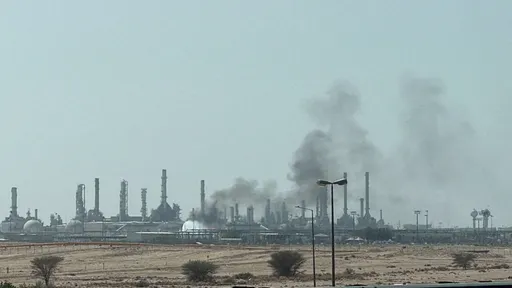
‘Collapse’ is probably insufficient when it comes to describing the scale of the historical plummet witnessed yesterday in global oil prices, with global oil markets still under immense pressure.
The dramatic drop in the US futures markets meant that the May contract price of a barrel of West Texas Intermediate (WTI) – one of the primary global oil benchmarks against which global crude oil prices are pegged – reached a new record-low of minus (negative) $37.63. The reverberations of the event have already been felt in the price of other global benchmarks, with the June Brent price already having taken a knock.
With such a dramatic drop witnessed last night, there would have undoubtedly been many lay observers who, before this moment, would never have thought that such a development was possible. To the rescue were the more informed observers of the world who quickly scrambled to explain just exactly what the implications of the price plunge would be, both in its expected economic and the more grandiose geopolitical ramifications to come. For the everyday consumer, however, as such a drop in prices has occurred against the backdrop of currently stalled economic activity, ordinary people may not be able to act upon their now enhanced purchasing power in what is quickly turning out to be a second global economic recession for the millennial generation.
The gravity of the situation (that US President Trump allayed as merely short-term), largely mirrors the extraordinary drop in global economic activity amid the pandemic that has now gripped the world, altering as has done so just about every walk of life imaginable. Unsurprising in its occurrence but surprising in its magnitude, the reduction in global economic activity witnessed as of late, subsequently translated into exceptionally suppressed demand for oil. That reduced demand then went on to induce a global oil glut which, combined with latent limitations in regional storage capacity (a further sign of the unprecedented times, but also global variation in storage capacity), resulted in the staggeringly low prices in futures contracts seen yesterday.
What makes the changes that are being witnessed in the global oil industry such a prominent and guaranteed feature of political talk and the daily news is the centrality of the use of fossil fuels as the major source of the world’s primary energy generation. Moreso, and perhaps susceptible to the greatest amount of spin, speculation, and sensationalism, is the geopolitical value habitually read into such developments, warranted or unwarranted, excessively deterministic or otherwise naively underplayed.
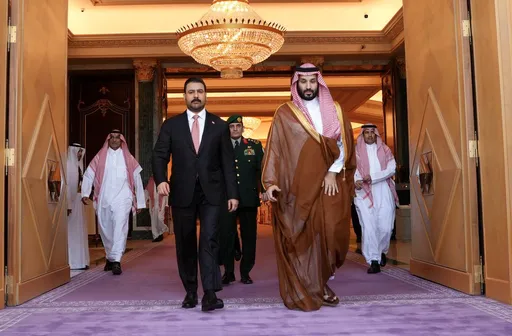
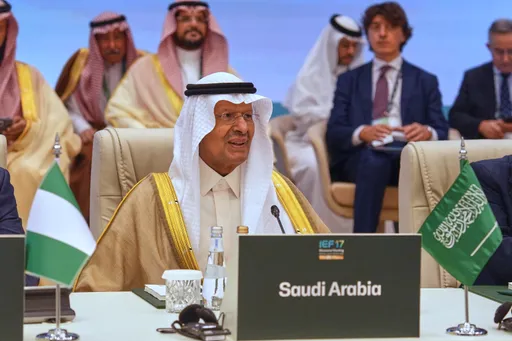
One quip has been that the move is a manifestation of Saudi Arabia’s new-found penchant for independence and Saudi-nationalism, inspired by its young and quite unhinged de-facto ruler, who seems not to mind incurring a US backlash as he drives to gut the US shale oil industry, secure in the thought that his country could weather what was expected to be a short global economic downturn. In contrast, rather than part of a cunning strategy, the detriment to US interests may simply be welcome collateral damage brought on by a fickle disagreement on the scale of production cuts amidst the global health crisis, that then turned into a reckless price war initiated by the Saudis on Russia earlier this month.


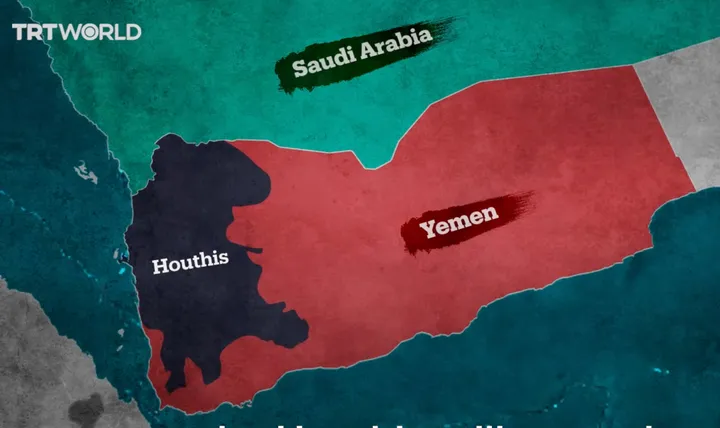




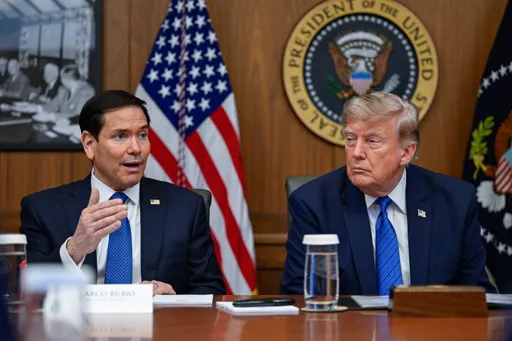
President Donald Trump found a silver lining in this all, floating the possibility of ceasing Saudi Arabian oil imports whilst simultaneously taking advantage of the cheap oil to ‘top-out’ US strategic oil reserves. In any case, the idea that Russia and Saudi Arabia might for the time being draw upon less revenue to fund the various regional wars they have driven is certainly not the worst of all possible outcomes in the world.
In retrospect, the raucous efforts to curtail oil production by members of the OPEC+ cartel and ebb away at the state of oversupply (stymied at one point by a divergence between Russia and Saudi Arabia and rescued in a startling turn of events by the US president himself), seems at this point to have been either futile from the start or simply shockingly inadequate. One immediate reaction already promised here has been the fast-tracking of further production cuts ahead of schedule in light of a dire need to do “something […] about this bloodbath”, as a Saudi official, reported in the Wall Street Journal, is to have said on the matter, alongside the ominous addition that such a development “may be a bit too late”.
If anything, the current collapse should reiterate just how pivotal and prominent in the food chain of thought global demand for a commodity such as oil really is, alongside how fragile global commodity markets can be. Writing in 1948 in The Middle East Journal, Prof. John Loftus of SAIS argued that oil is “frequently viewed solely in the light of power or ‘oil’ politics”, but that “this pattern of control is nevertheless more immediately determined by basic economic considerations of production and supply”.
Economic concerns should be considered first then, before the often-nebulous notion of energy security or dependence (and the geopolitical concessions extracted from it), are made the stuff of politics. In what now seems an age away, in January this year President Trump asserted: “We are independent, and we do not need Middle East oil.” He seemed to ignore entirely the fact that it is a global commodity and subject to a myriad of different developments to various extents outside US control.
Even if the US were a net producer, the industry would still have to compete on price on the global stage, for example. Going forward, if the ‘dependence’ on Middle Eastern oil is ever to end or become less pivotal, or even if market competition is now to be the more dominate framework that relations are considered by, perhaps the time is nigh to question the extension of a carte blanche to the various irreligious authoritarian theocracies and dictatorships in the region.