 Abhishek G Bhaya
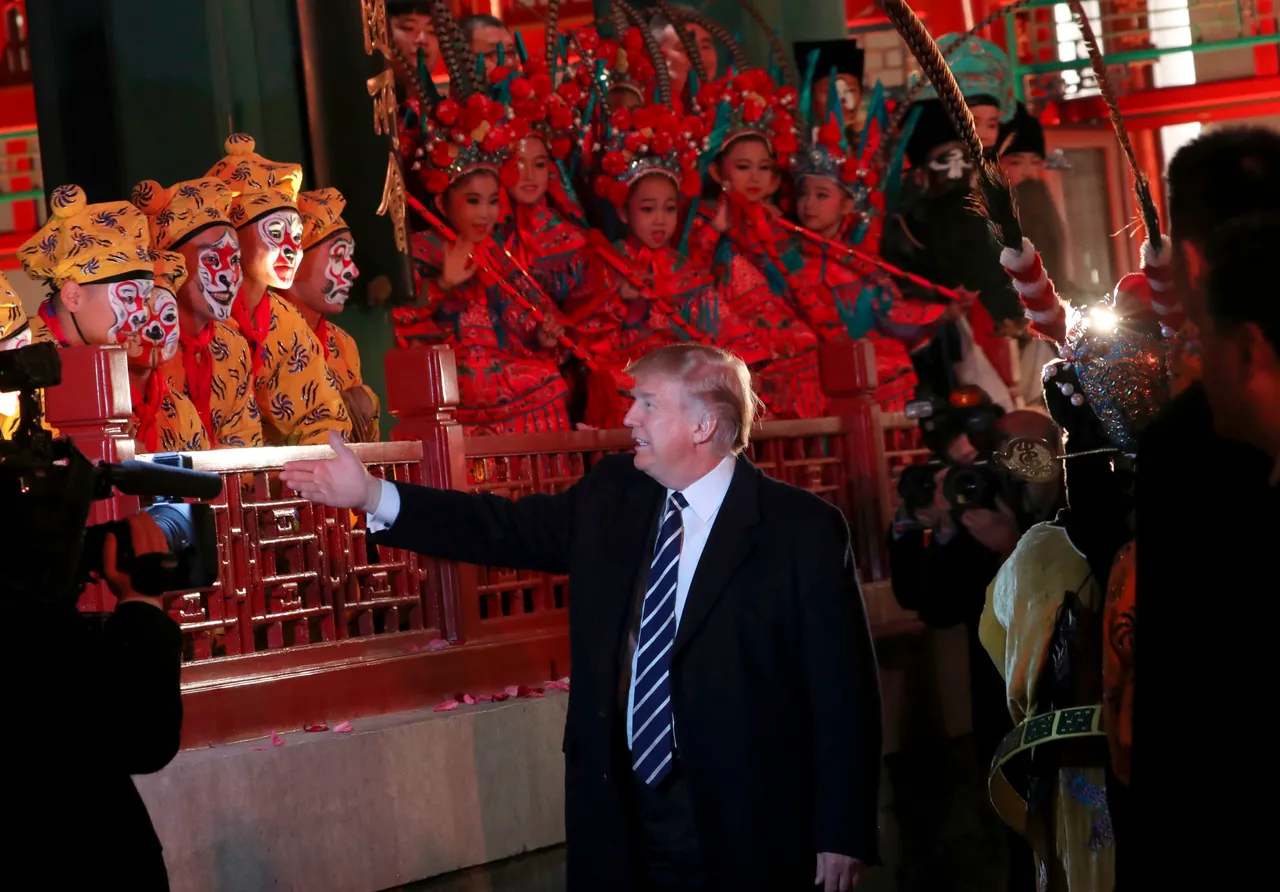
US President Donald Trump’s visit to Beijing has unfolded at a moment when the Asia-Pacific region is grappling with overlapping crises – intensifying China-US competition, fragile energy security and the destabilising ripple effects of conflict in the Middle East. Far from being a bilateral reset, the summit is being interpreted across the region as a stress test for a rapidly fragmenting global order.
Accompanying Trump is an extremely influential business delegation that includes Elon Musk, Jensen Huang, Tim Cook, Larry Fink and other leading American executives from the technology, finance and energy sectors, underscoring the economic weight still binding the world’s two largest economies even amid deep strategic rivalry.
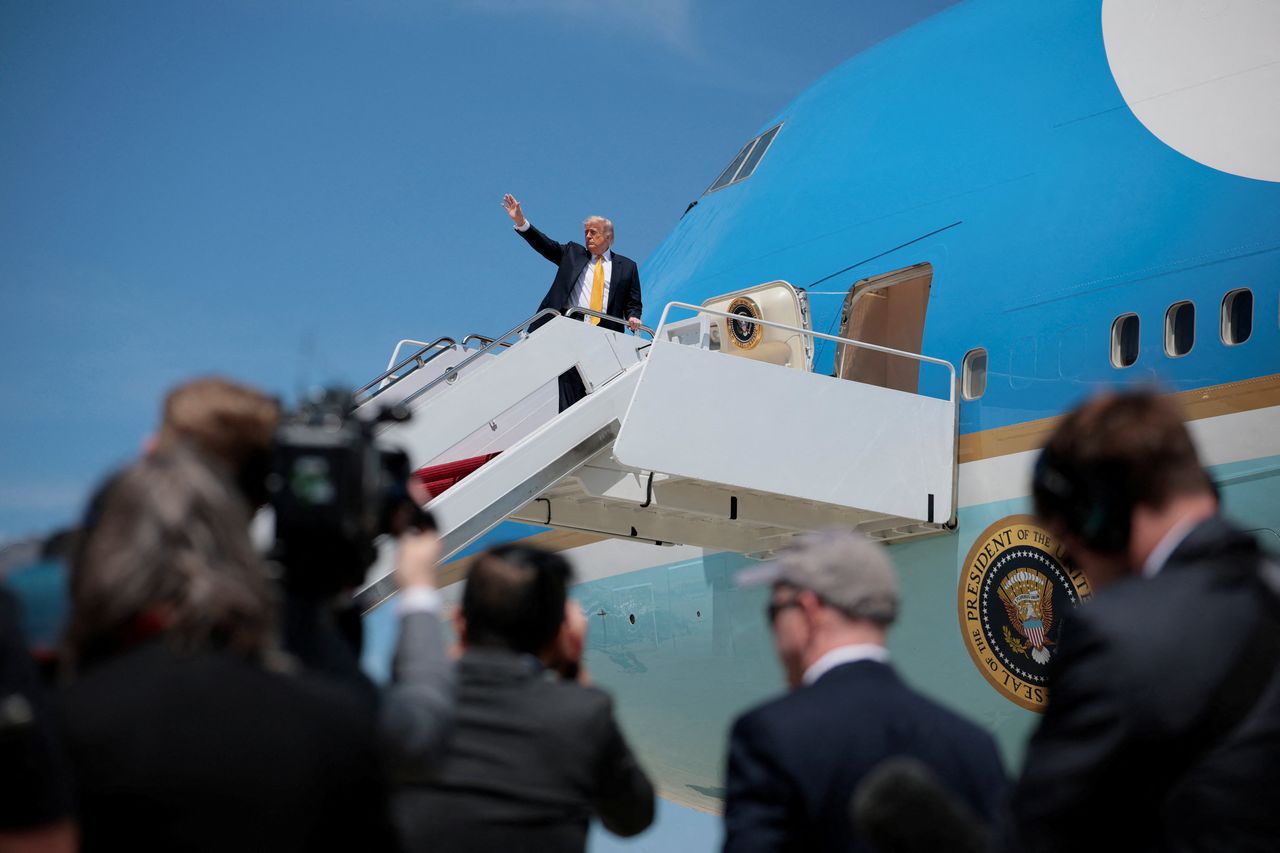
Before departure, Trump said his “very first request” to Chinese President Xi Jinping would be to “open up” China further to American business. Yet beyond trade rhetoric, the agenda spans Taiwan, artificial intelligence, rare earths, sanctions and – most urgently – the escalating crisis involving Iran and the disruption of the Strait of Hormuz.
Ahead of formal talks in Beijing, Chinese geopolitical analyst Gao Jian told TRT World that the significance of the visit extends beyond bilateral diplomacy, noting that “the easing of China–US relations injects significant stability into the Asia-Pacific region,” particularly at a time when regional states are navigating intensifying great-power competition and economic uncertainty.
“Under the previous Biden administration, the US compelled Asia-Pacific countries to take sides to strategically contain China, treating the region as a frontline for great power confrontation," said the professor at Shanghai International Studies University.
Gao, who is also a visiting fellow at Tsinghua University’s Center for International Strategy and Security Studies, said he was hoping that a key outcome of the Xi–Trump summit would be “reduced tensions” between the two major powers.
The China-US rivalry over the decades has placed mounting pressure on key Asian economies such as Japan, South Korea and Vietnam – all of which are deeply integrated into Beijing’s manufacturing supply chains while, at the same time, relying on Washington for security guarantees.
This dual dependency has forced them into increasingly complex balancing acts amid growing technological and strategic competition between China and the US.
On the security front, US treaty alliances with Japan and South Korea – strengthened through expanded missile defence cooperation, joint exercises and regional deterrence planning – have sharpened China’s concerns about military encirclement. This has contributed to rising regional mistrust among the Asian neighbours.
‘Asia is for Asians’
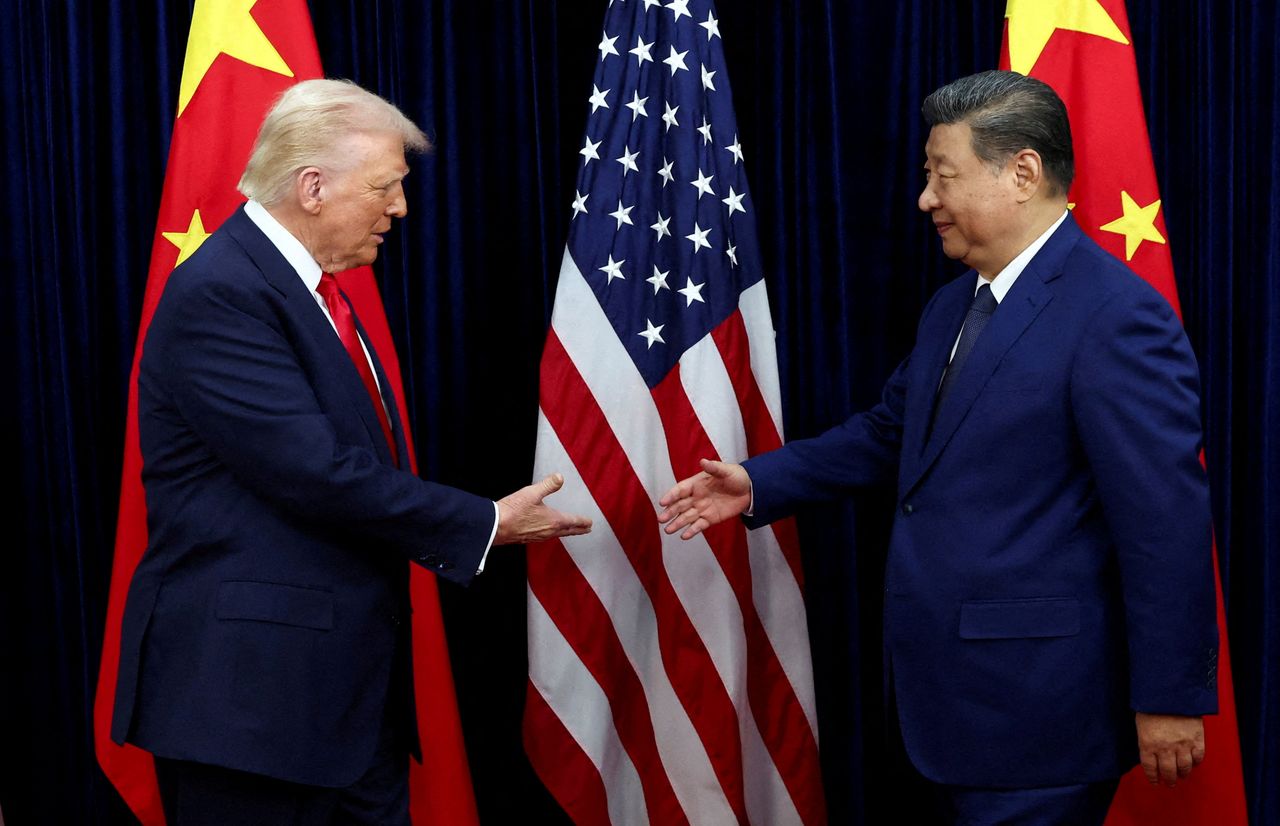
Beijing has framed Trump’s visit as an attempt to stabilise an increasingly volatile relationship rather than transform it.
That broader strategic significance was reflected in remarks by Chinese Foreign Ministry spokesperson Guo Jiakun, who said the two leaders would hold “in-depth exchanges of views on major issues concerning China-US relations and world peace and development,” while reaffirming Beijing’s willingness to expand cooperation “in the spirit of equality, respect and mutual benefit.”
Gao Jian, meanwhile, said Trump’s visit helps reduce the pressure on regional states to navigate “a frontline for great power confrontation,” reinforcing instead a regional environment where “Asia is for Asians,” and Asian countries can exercise greater agency in shaping their own development priorities.
A more stable China-US relationship, he added, would allow regional states to shift their focus away from geopolitical alignment pressures toward “development issues,” which he said would be “extremely beneficial for stabilising global economic and trade relations as well as regional economic development.”
That sentiment is widely shared across ASEAN and other regional actors, where governments have long resisted binary alignment between Washington and Beijing. Yet beneath this cautious optimism lies a deeper concern: whether great-power detente – if it emerges – might come with its own form of strategic constraint.
China–US relations are now widely seen as “competition with managed coexistence” rather than renewed engagement. Analysts note a sharp shift since Trump’s 2017 visit, driven by tariff conflicts, tech restrictions and reciprocal economic pressure such as US chip controls and China’s leverage over rare earths.
According to Josef Gregory Mahoney of East China Normal University, this has created a more constrained diplomatic environment, with US policy increasingly oscillating between crisis management and short-term deal-making amid domestic economic and political pressures.
He also warns that even managed coexistence could worry middle powers, if Washington and Beijing begin shaping regional rules bilaterally and limit their strategic autonomy.
This tension is particularly visible in maritime Asia, according to analysts, where countries such as Japan, South Korea, Australia and Southeast Asian states remain deeply dependent on both Chinese supply chains and US security guarantees.






Iran, Hormuz and Asia’s energy vulnerability
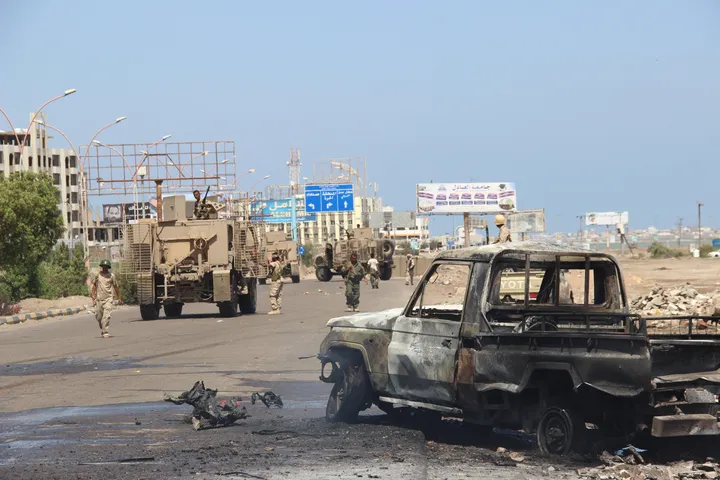
The most consequential issue on the agenda during the Xi-Trump summit may be the US-Israeli war on Iran and the security of the Strait of Hormuz. Trump has indicated he expects a “long talk” with Chinese President Xi Jinping on the conflict, even while downplaying the need for direct mediation from Beijing.
China’s leverage in this theatre is significant. It remains one of the largest buyers of Iranian oil and maintains a long-standing strategic partnership with Tehran, giving Beijing both economic and diplomatic channels of influence at a moment of heightened regional volatility.
“China's position on the US-Israel-Iran conflict is highly consistent, advocating for peace talks and an immediate cessation of military action,” Gao emphasised. “Prolonged fighting not only causes a humanitarian disaster but also impacts global energy security and economic stability,” he argued, articulating Beijing’s sentiments and official position.
“China believes that force cannot bring peace and political resolution is the only way out,” he said, adding that Beijing continues to support a regional security framework based on “sovereignty, international law and development-oriented regional cooperation.”
For the broader region, the implications are immediate. Asian economies such as Japan, South Korea, India and major Southeast Asian countries remain among the most exposed globally to energy shocks, with supply chains, inflation trajectories and industrial output all sensitive to fluctuations in Gulf stability.
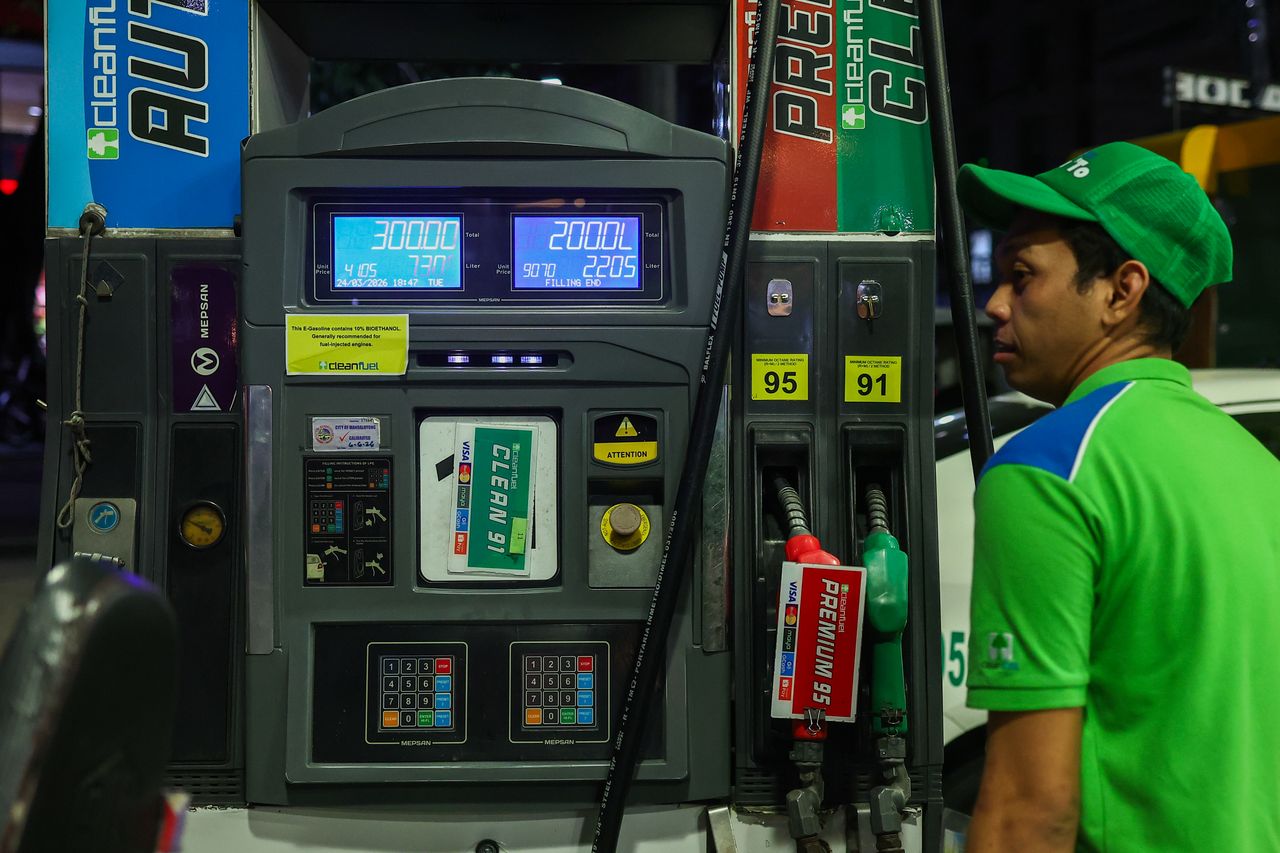
Energy markets across Asia have already reflected this vulnerability. Brent crude has surged past the $100 per barrel mark in recent sessions amid fears of prolonged disruption to Gulf exports, while Asian LNG spot prices have climbed sharply, as supply routes through the Strait of Hormuz remain constrained.
The impact has been uneven but acute. Several import-dependent economies in Asia have been forced to tap emergency reserves, adjust fuel subsidies, and absorb higher import bills as shipping and insurance costs escalate.
Countries such as India, Indonesia, Thailand and the Philippines have responded with a mix of strategic petroleum reserve releases, temporary tax or subsidy adjustments, and short-term procurement diversification to stabilise domestic fuel prices and contain inflationary pressures linked to volatile Gulf supplies.
In this context, Swaran Singh of Jawaharlal Nehru University told TRT World that India’s overriding interest – and by extension much of the wider region’s – is “rapid de-escalation rather than alignment with any bloc.” The emphasis, he noted, is on stability rather than strategic positioning.
Mahoney similarly highlighted the volatility of the crisis, noting that the Gulf conflict is no longer just a regional war but part of a wider systemic risk environment shaped by technological escalation, energy insecurity and political fragmentation.
China’s growing diplomatic footprint
If Beijing plays a role in de-escalating tensions, it could further consolidate its diplomatic influence in the Middle East, building on its 2023 Saudi–Iran rapprochement.
China is already the Gulf’s largest trading partner, with deepening involvement in infrastructure, energy and logistics through the Belt and Road Initiative. A successful mediating role in the Iran crisis would reinforce perceptions of China as not just an economic actor, but an emerging security stakeholder.
“China’s diplomatic breakthrough in facilitating the 2023 Saudi-Iran rapprochement had marked a major symbolic shift,” noted Singh.
“If Beijing now helps resolve a US-Iran confrontation or restore freedom of navigation in the Strait of Hormuz, it could strengthen perceptions that China is becoming a credible security and diplomatic actor – not merely an economic partner of Gulf States. This would challenge decades of near-monopoly American influence in Gulf security,” he added.
Across Asia, expectations from the Trump–Xi summit remain modest. Few anticipate a structural breakthrough. Instead, the emphasis is on containment of risk: extending trade pauses, stabilising supply chains and preventing escalation in the Gulf.
Swaran Singh’s framing of China-US ties as “tactical stabilisation between systemic rivals” captures the prevailing mood across much of Asia.