Gaza's Government Media Office said on Monday that it had completed the legal and administrative steps needed to hand over the enclave’s governing system, confirming the resignation of its acting chairman, and the formal dissolution of the Emergency Committee.
The arrangements were presented to a national team of Palestinian factions, the Higher Committee of Clans and Tribes, and civil society groups, with a UN observer present.
Only technical civil servants remain in their post to keep public services running during the transition period, under a roadmap agreed by Palestinian factions in Cairo.
A good-faith move
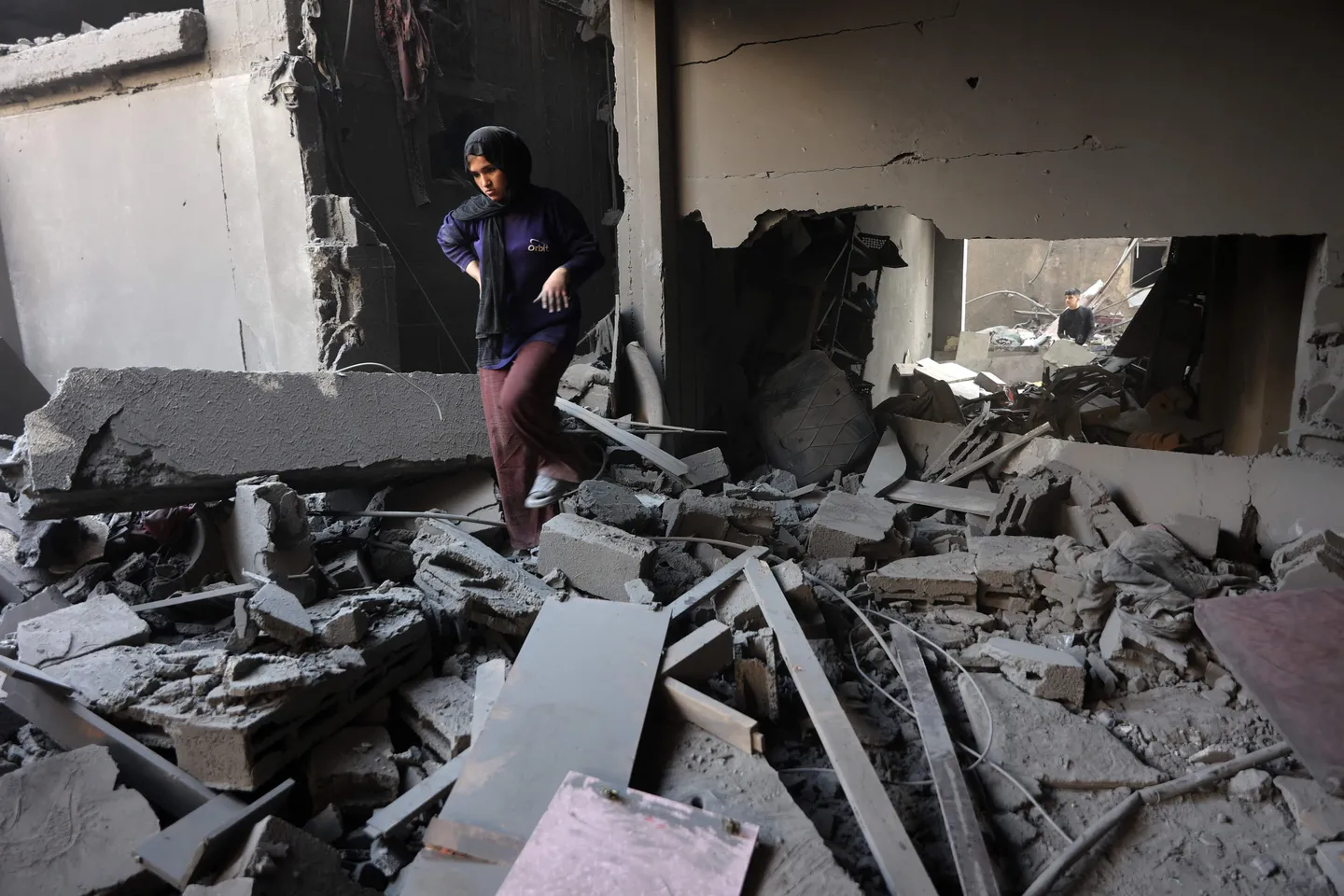
The government in Gaza said the dissolution reflects its commitment to reorganising governance and easing the suffering caused by the ongoing Israeli genocide, the reconstruction delay, the blockade and continued Israeli military presence.
It said the step was designed to remove any administrative obstacles standing in the way of the transition and to ensure that public institutions keep functioning without interruption while authority passes to the new body.
The Palestinian resistance group framed the dissolution as proof it is honouring the Cairo understandings, and called on mediators to match the step with pressure on Israel to lift its blockade on Gaza and withdraw its forces.
Israel's public broadcaster KAN, citing an unnamed official, dismissed the resignation as "a deception with no practical significance," alleging its members had simply stayed in their posts and that Hamas is "stalling" to avoid being blamed for breaching the ceasefire.
UN welcomes Hamas move
The UN has welcomed Hamas's decision, saying the step could help advance the ceasefire.
"We've taken note of Hamas' announcement concerning the dissolution of the Government of Emergency Committee and the transfer of administrative responsibilities to the National Committee for the Administration of Gaza," UN spokesperson Stephane Dujarric said on Monday.
He said the UN "welcomes any step that contributes to the implementation of the ceasefire agreement," pointing to the objectives set out in relevant Security Council resolutions, including full implementation of the truce, protection of civilians and unhindered humanitarian access.
Dujarric added that the UN "continues to support efforts towards unified Palestinian governance under the Palestinian Authority."
Bridge between declarations and implementations






Nikolay Mladenov, the Board of Peace's lead envoy for Gaza, said the decision "underscores the importance of bringing the roadmap discussions to a successful conclusion," describing it as "the bridge between declarations and implementation."
He said finalising the remaining provisions would let the NCAG assume its responsibilities, open the door to decommissioning weapons, enable an Israeli withdrawal and pave the way for large-scale reconstruction, building on the 15-point roadmap he unveiled on 21 May.
NCAG is ready on paper, absent on the ground
The National Committee for the Administration of Gaza describes itself as a non-political body of Palestinian national figures tasked with running day-to-day civil affairs.
The committee has operated out of Cairo since mid-January but has yet to begin working inside Gaza itself.
The Gaza government has urged all parties to speed up its deployment so it can take on its administrative role, while a separate technocratic government remains under discussion in Cairo alongside the Board of Peace and the Gaza Executive Council.
Pressure on Israel
Palestinian analysts describe the move as putting the ball in the court of Israel, arguing it demonstrates Hamas's readiness to proceed and now awaits effective international pressure on Israel to meet its own ceasefire commitments.
That includes the entry of enough humanitarian aid, fuel and shelter materials, and the reopening of border crossings, none of which Israel has yet fully implemented despite Hamas maintaining it fulfilled its obligations under the ceasefire's first phase.
What happens next hinges on whether mediators can convert this symbolic step into a working handover.
Until Israel allows the committee's technocrats to operate inside the Palestinian enclave the transition will remain more a declaration than a reality on the ground.
That leaves the roadmap proposed by Mladenov in May as the next key test, determining whether this week’s move leads to a real transfer of power or leaves Gaza’s civil administration in limbo as Israel continues its genocidal attacks and ceasefire violations, killing more Palestinians.
.jpg?width=1080&format=jpg&quality=80)