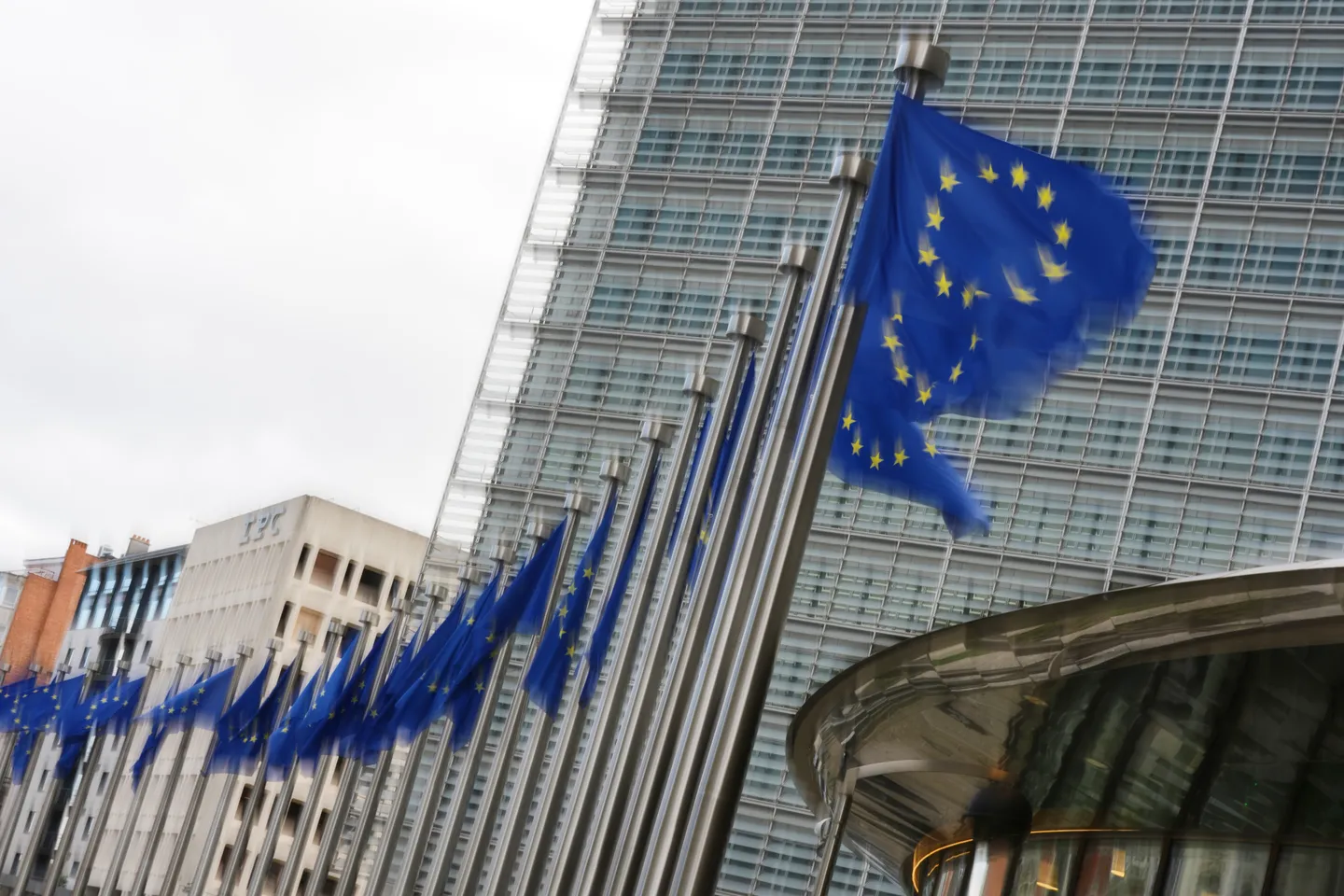
The European Union has reiterated that Israeli settlements in the occupied Palestinian territories are illegal under international law, describing them as a major obstacle to peace and the viability of a two-state solution.
“We take note of the announcement of eight member states — together with the UK, Canada, Iceland and Norway — to impose national restrictions on trade with illegal settlements,” EU Commission spokesperson for foreign affairs Anouar El Anouni said.
“The EU’s longstanding position is clear: settlements are illegal under international law. They constitute an obstacle to peace and to the viability of the two-state solution,” he added.
The EU considers Israeli settlements established in the occupied Palestinian territory after June 1967 to be illegal.
Goods originating from those settlements are not eligible for preferential tariff treatment under the EU-Israel trade framework, El Anouni said.

European countries step up trade restrictions
France, the UK, Denmark, Spain, Finland, Ireland, Iceland, Norway, Poland, Portugal and Sweden, along with Canada, have announced plans to impose national restrictions on trade with Israeli settlements and support broader European measures.
In a joint declaration, the countries said conditions in the occupied West Bank are “rapidly deteriorating,” citing increased settler violence and continued illegal settlement expansion.






They opposed any move towards the annexation of Palestinian land or the forced displacement of Palestinians and called on Israel to halt settlement expansion and the extension of civilian administrative powers in the occupied West Bank.
The countries also called for accountability for those responsible for illegal settler violence and investigations into allegations involving Israeli forces.

Calls grow for tougher EU action
Pressure is mounting on the EU to go beyond restrictions on settlement goods and take broader action through its trade relationship with Israel.
Several European governments, lawmakers and civil society groups have called for the EU-Israel Association Agreement to be reviewed or suspended, arguing that the bloc should use its economic ties with Israel to address settlement expansion and policies towards Palestinians.
However, EU-wide trade measures require agreement among member states, and divisions within the bloc have complicated efforts to adopt a common approach.
The EU has not imposed a general import ban on goods from Israeli settlements, but it excludes settlement products from preferential trade treatment and continues to consider options for broader measures.