 Noureldein Ghanem
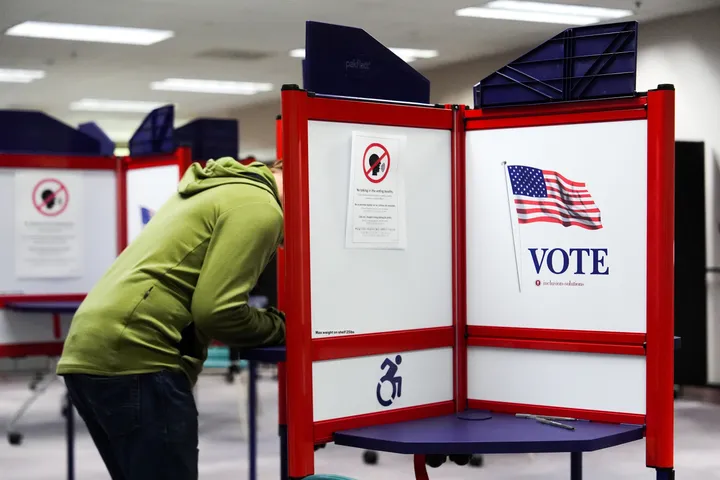
Washington, DC — When Colombians head to the polls on May 31 to choose a successor to President Gustavo Petro — the South American country's first-ever leftist leader — issues such as the economy, security, and social reforms will be central to the electoral process.
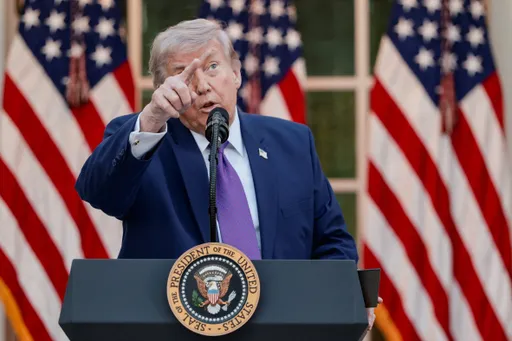
However, one topic that could also play some role is Bogota's ties with Washington and the incoming leader's relationship with US President Donald Trump, who has had largely strained relations with President Petro, particularly regarding US military operations in the Caribbean Sea and Israel's aggression in the Middle East.
"President Trump does not function as a central campaign issue in the same way that security, the economy, or climate do, but he operates as a background structuring force in the election," Jenaro Abraham, a political scientist and professor of Latin American politics at Gonzaga University, tells TRT World.
"It is possible that he could become more visible, particularly if he signals support for specific candidates, as he has in countries like Brazil, Argentina, and Honduras," adds Abraham.
Colombia, which has historically been governed by right-wing administrations, is a key ally of the US and, along with Panama, hosts the largest number of US bases in Latin America.
However, ties between Bogota and Washington have been rocky in recent years, especially after President Petro won the election in 2022.
In September 2025, at the UN General Assembly in New York, Petro called for a global force to liberate Palestine from Israeli occupation. Tensions mounted further after he opposed the US military posturing regarding Venezuela.
That, in turn, prompted the US Treasury to sanction Petro and his "support network," while President Trump and his Secretary of State Marco Rubio labelled him a "lunatic," mirroring their aggressive stance against Venezuela’s abducted leader Nicolas Maduro.
A surprisingly cordial White House meeting between Trump and Petro in February 2026 cooled things down somewhat, but the friction remains a campaign issue.
A model of governance
In recent years, there has been a wave of right-wing victories in many countries across Latin America, most notably Argentina, Chile, Ecuador, and Bolivia. The US influence, however, comes in the form of ideological framing rather than being a direct issue in the election, Abraham explains.
"His (Trump’s) influence is most evident in the ideological framing of right-wing candidates, especially in their emphasis on militarisation, law-and-order policies, and closer alignment with US security priorities," says Abraham. "In that sense, Trumpism appears less as a direct electoral issue and more as a model of governance that informs certain sectors of the political field."
Abraham stresses that candidates associated with the Centro Democratico or other right-wing movements are generally more aligned with President Trump's geopolitical positioning and strategies, particularly in areas such as migration control, regional security, and relations with Venezuela.
"At the same time, US influence extends beyond any single administration. Trade, migration, and security cooperation continue to shape Colombia's economic and political environment regardless of who is in power in Washington," he says.
"So while voters are not explicitly voting 'on Trump,' the broader architecture of US influence remains embedded in the issues that do matter. His role is therefore indirect but still consequential, particularly in shaping the ideological and strategic orientation of candidates on the right and the broader geopolitical context in which the election unfolds."
Colombia is one of a small bloc in Latin America and the Caribbean that opposes US regional dominance, which includes Brazil, Mexico, Cuba, and Nicaragua.
While President Trump has not publicly supported any candidate in the election, Washington maintains a neutral stance regarding the country's polls. However, experts argue that voters are likely to choose the candidate who can maintain strong ties with the US.
Elizabeth Dickinson, interim deputy director for Latin America at the International Crisis Group, tells TRT World that the US is by far Colombia's biggest trading partner and political ally.
"The relationship with the United States is an issue that matters to voters because the United States is far and away Colombia's most important commercial partner, political ally, and also a key partner in international cooperation, particularly in the defence sector," Dickinson says.
"I think that certainly one thing on at least a certain sector of voters' minds would be which candidate can maintain that relationship in the best condition."
Dickinson highlights that the business sector in Colombia is more concerned about the issue of ties with the US than regular voters.


"There are also enormous amounts of investment here from American businesses, and so maintaining that relationship is fundamental to the stability of the macroeconomic system," she says.
'Polarised electorate'
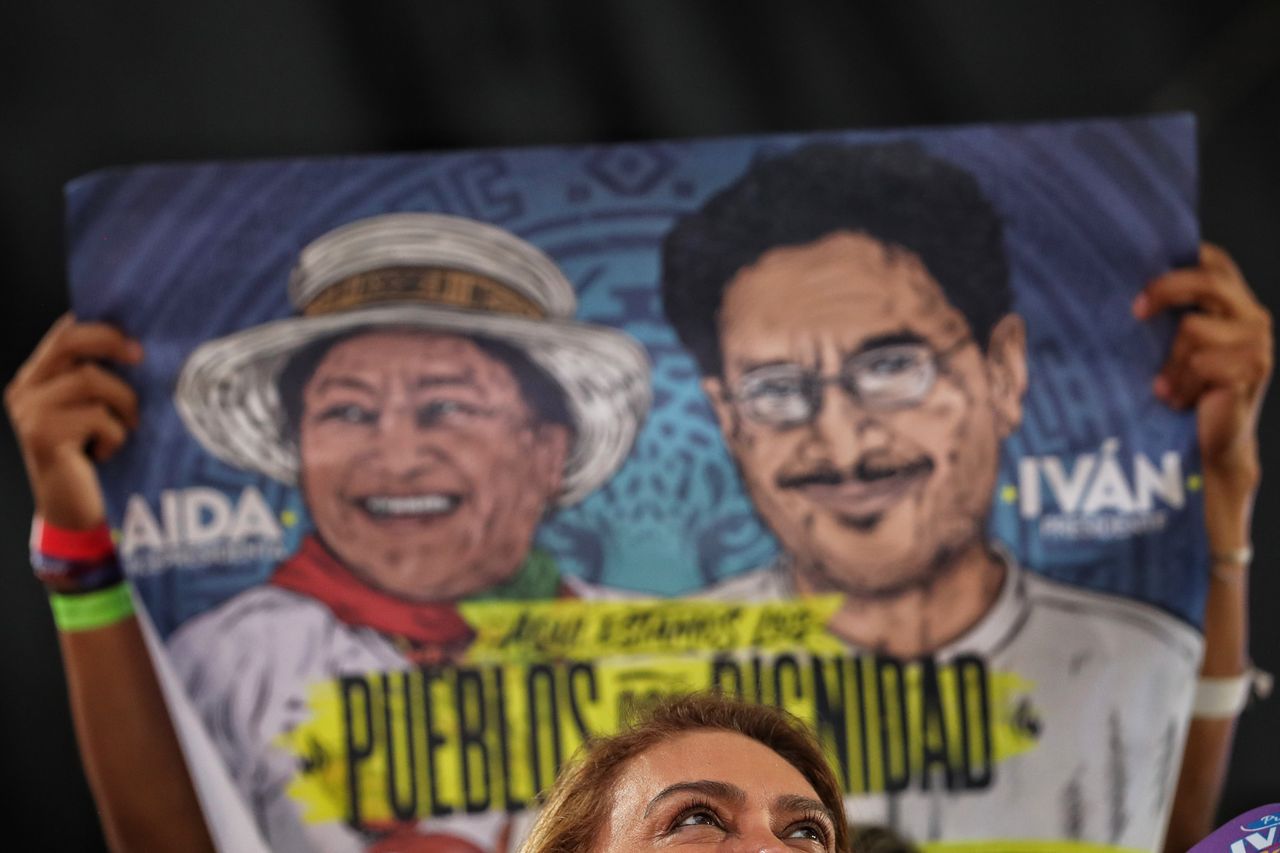
Ivan Cepeda, the left-wing senator and candidate backed by President Petro, is known for his key role in peace processes and negotiations with armed groups. Despite Colombia's right-wing political history, Cepeda is leading in several recent polls.
He has been strongly critical of Trump during his campaigning.
Cepeda has portrayed Trump’s policies as aggressive imperialism, electoral interference, and a broader threat to Latin American sovereignty and global stability.
Recently, reacting to Trump’s threats to Petro, Cepeda said he “categorically” repudiates threats to Petro and accused Trump of trying to influence the election.
"He (Trump) is mistaken if he believes that with slander, insults, or threats he will manage to intimidate him or influence this year's elections in Colombia. We are not a colony or a protectorate of the USA. We do not submit servilely to any kind of imperial and authoritarian supremacism," Cepeda said.
Cepeda has said a future government under him would be "serena y firme" (calm yet firm), demanding respect for Colombia’s sovereignty and dignity.
He has left the door open to dialogue with Trump but only on the basis of reciprocity and mutual respect — rejecting any "servile" or subordinate relationship.
Following a recent meeting with the US Chamber of Commerce, Cepeda asserted that, under a potential administration led by him, the relationship with US companies and capital would be of strategic importance.
"My message to them was that foreign investment — and the relationship with US companies — would be accorded the utmost importance and priority. Naturally, this would be done while respecting the rules, our sovereignty, and our interests, but also the interests of the communities within Colombia. For me, that is a golden rule: people first, the poor first," he said.
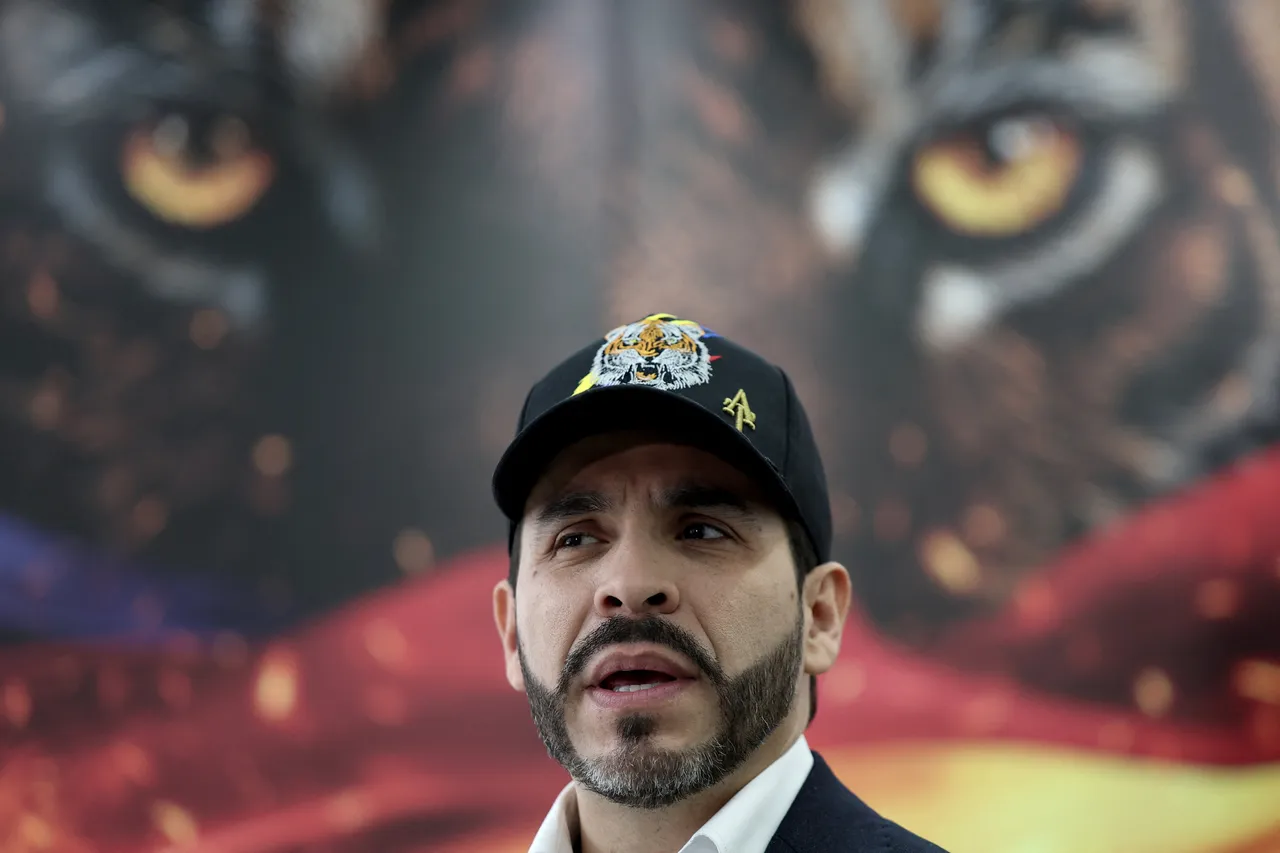
Cepeda opponent, Abelardo de la Espriella, who refers to himself as "El Tigre" (The Tiger), is an outsider-turned-candidate and has repeatedly praised Trump and actively sought alignment with his administration throughout his campaigning.
In a March 2026 interview, de la Espriella named Trump as one of his key ideological references, saying he admires Trump "for his cultural battle against Wokism, against globalism."
He has also called himself "a very honorable Republican" when discussing Trump.
De la Espriella has publicly sent multiple open letters and videos addressed to Trump, Secretary of State Rubio, and Attorney General Pam Bondi, urging US sanctions and pressure on Petro, and saying the US and Colombia need each other to fight drugs and narcotrafficking.
Centre-right candidate Paloma Valencia has explicitly sought assistance from US President Trump.
She has proposed a "Plan Colombia 2.0" alliance with the US and the administration of President Trump to combat drug cartels. She has also pledged to join the Americas Counter Cartel initiative and proposed rigorous security measures, including targeting armed groups, in cooperation with the US.
Domestic issues such as security, crime, corruption, and the economy remain the primary concerns for voters, while relations with the US under President Trump constitute one of the clearer dividing lines in foreign policy.
Dickinson of the International Crisis Group says that the driving issues "are often pulling at bread-and-butter concerns," including the quality of the healthcare system and economic opportunity.
"After that, there is voter concern around security, which tends to be among the top three or four issues. This encompasses everything from the expanding presence of armed and criminal groups to urban insecurity, such as extortion and robbery," she says.
"This is a very polarised electorate, and candidates have made their pitches to voters in ways that are diametrically opposed to one another regarding the security situation," she adds, noting that right-wing candidates are promising a military crackdown on criminal gangs and armed groups, while the left-wing candidate has a history of peace negotiations.