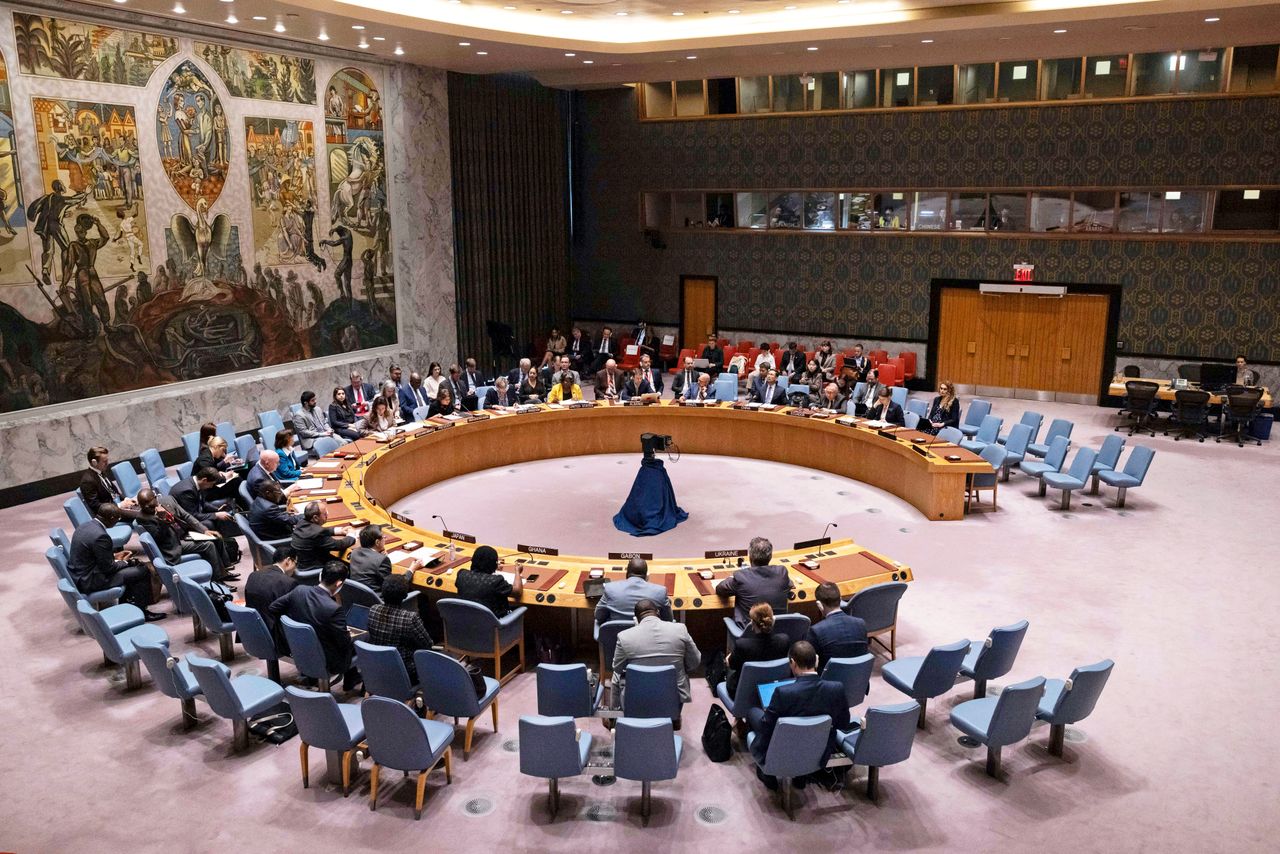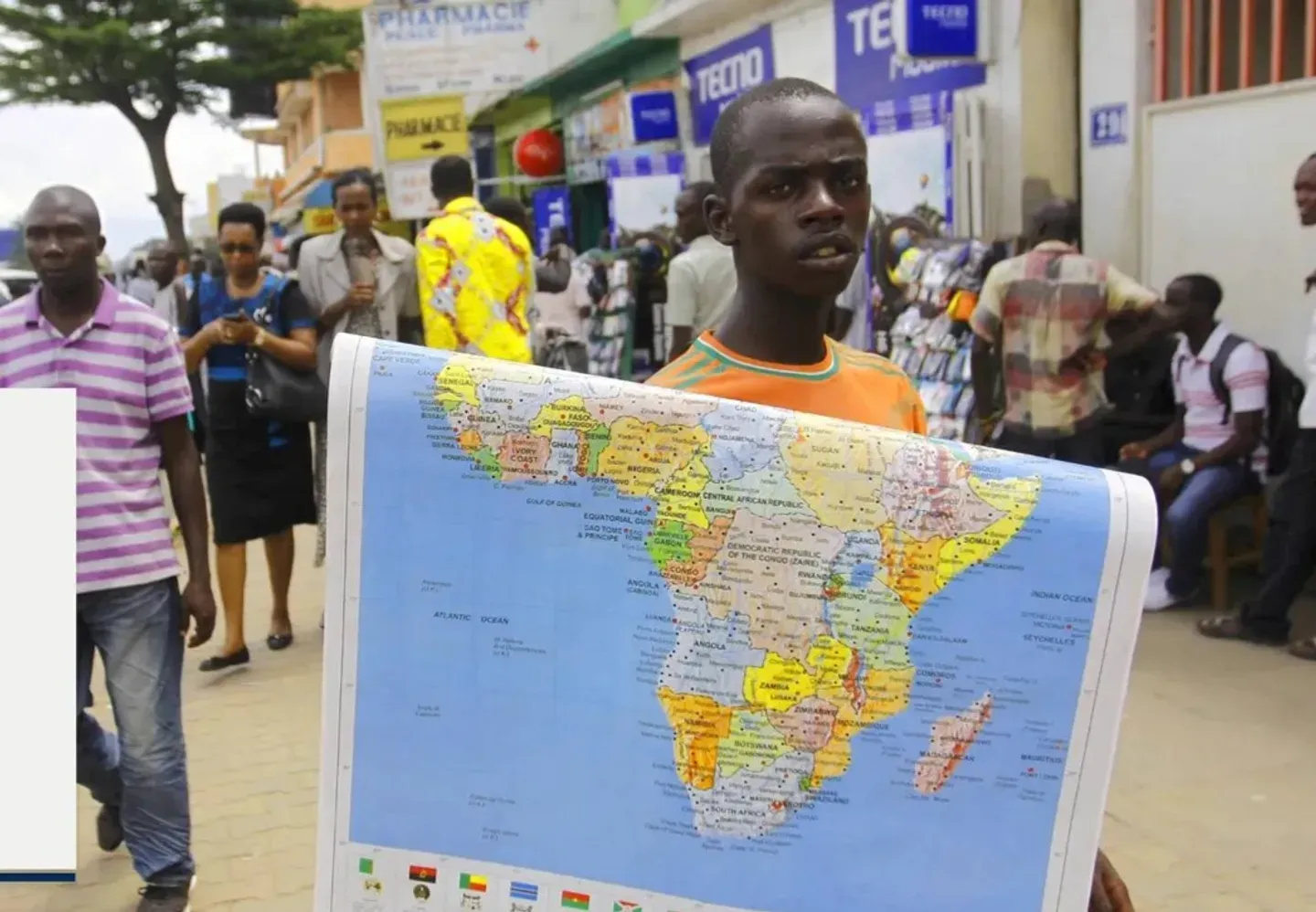
The United Nations General Assembly has backed an Africa-led campaign to replace the widely used Mercator world map with a projection that more accurately represents the relative size of countries and continents.
The resolution, sponsored by African states and led by Togo, passed on Friday by a vote of 164-1, with six abstentions. The United States was the only country to vote against it.
Togo’s Foreign Minister Robert Dussey said the initiative was aimed at challenging perceptions created by a map that significantly distorts the size of land masses, particularly those near the poles.
“A fair world begins with a fair map,” Dussey told Reuters ahead of the vote.

Why Africa is challenging the Mercator map
Created in the 16th century, the Mercator projection expands the apparent size of land masses as they move towards the poles. As a result, Greenland can appear roughly comparable in size to Africa on many maps, even though Africa is about 14 times larger.
The UN resolution promotes the Equal Earth projection, which is designed to represent continents’ relative areas more accurately.
The measure is not legally binding and does not seek to eliminate Mercator for navigation. Togo’s Foreign Ministry said the projection remains appropriate for maritime and aerial navigation.
The campaign reflects broader African efforts to address what Togo describes as the lingering influence of colonial-era representations.








“This is not against Europe, it is not against any other civilisation,” Dussey said, arguing that the widespread use of Mercator is linked in part to the legacy of colonisation.
Togo plans classroom overhaul
Togo plans to become the first country to replace Mercator-based geography materials in its schools, with Dussey saying the government aims to update its textbooks by the end of the year.
“In the classroom, we need to change it to give an example to all the countries in the world,” he said.
Togo also plans to encourage other governments, schools, international organisations and technology companies to adopt Equal Earth and other more accurate alternatives.
Over the next six months, the country intends to engage African Union members and supporters from other regions on ways to expand adoption, including discussions with companies involved in mapping, GPS and other location-based technologies.
The United States opposed the resolution, describing it as promoting an “ideological agenda” and distracting from what it called more pressing issues involving international peace, prosperity and relations.
For Togo, however, the debate is about more than cartography.
“The world is changing. Africa also is changing,” Dussey said.