 Daniel Morales Ruvalcaba
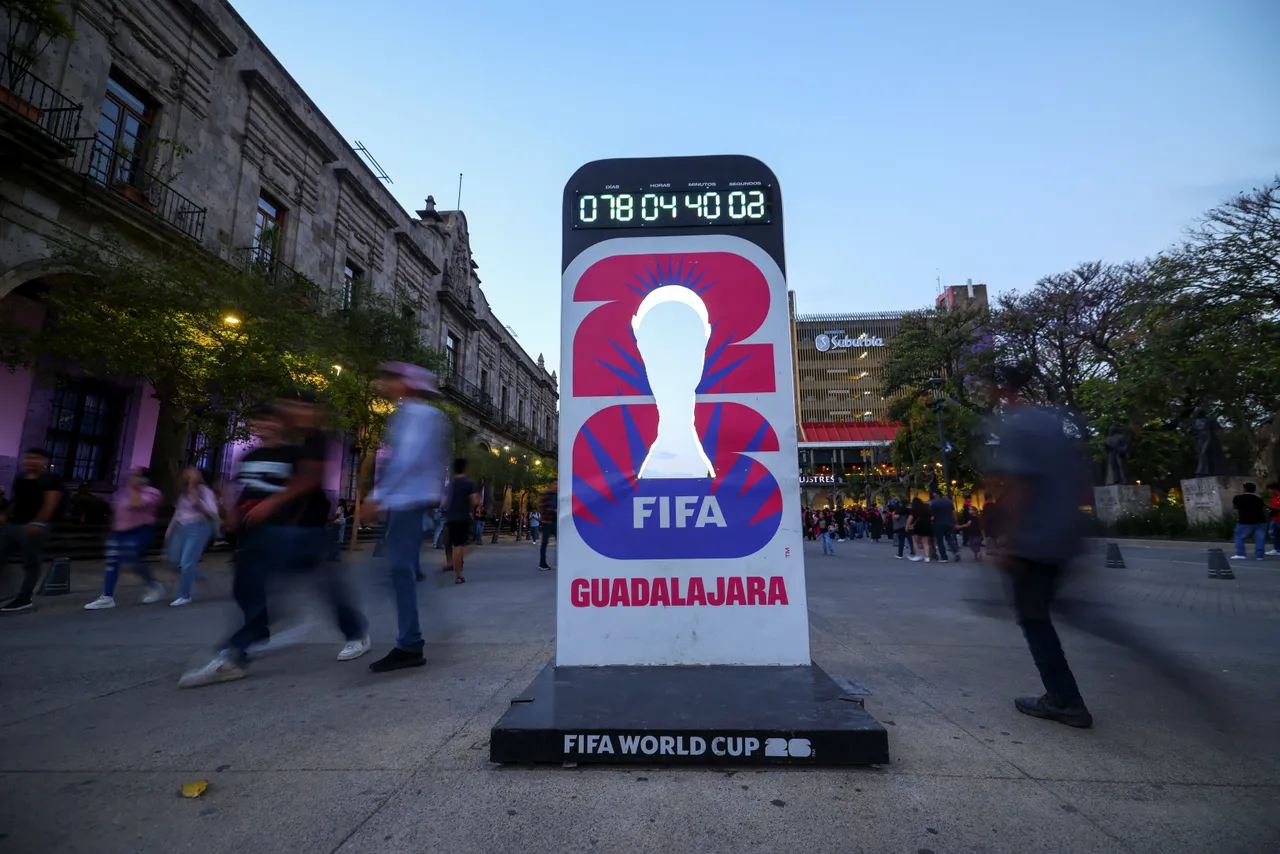
The 2026 FIFA World Cup is set to become the biggest tournament in World Cup history. For the first time, the competition will feature 48 teams and 104 matches — more than any previous edition — hosted across 16 cities in the United States, Canada and Mexico.
The expansion is also reflected in the tournament’s record prize money. FIFA will distribute more than $871 million among participating teams, while the winners will receive $50 million — nearly double the prize money awarded during the 2010 World Cup in South Africa.
The scale of the tournament — combined with the participation of several nations making their World Cup debut, including Cape Verde, Curaçao, Jordan and Uzbekistan — has sparked unprecedented global excitement, with more than 500 million ticket requests already submitted.
The overwhelming demand highlights the tournament’s enormous international appeal and media reach.
Analysts estimate that between five and seven million international visitors could travel to North America for the event, generating an economic impact of more than $40 billion.
Because of its scale, complexity and unprecedented format, the 2026 FIFA World Cup is expected to set a new benchmark for global sporting events.
Co-hosted by three countries, the tournament will not only redefine how mega-events are organised and coordinated, but could also become a model for future international competitions over the next decade.
When countries share a tournament
The idea of jointly hosting major football tournaments began in July 1995, when UEFA Euro 2000 was awarded to Belgium and the Netherlands. It marked the first time a major continental tournament was staged across more than one country.
Beyond football, the decision was driven by practical considerations: sharing responsibilities helped both countries meet the infrastructure and logistical demands of hosting while also generating strong financial returns for their national football associations.
Under the slogan “Football Without Borders,” the tournament also promoted an image of cross-border cooperation and a shared European identity.
The model was later repeated at UEFA Euro 2008, UEFA Euro 2012 and UEFA Euro 2020, which were played across 12 host cities in 12 different countries. Future editions are also set to follow the same format, with the United Kingdom and Ireland hosting in 2028, and Italy and Türkiye co-hosting in 2032.
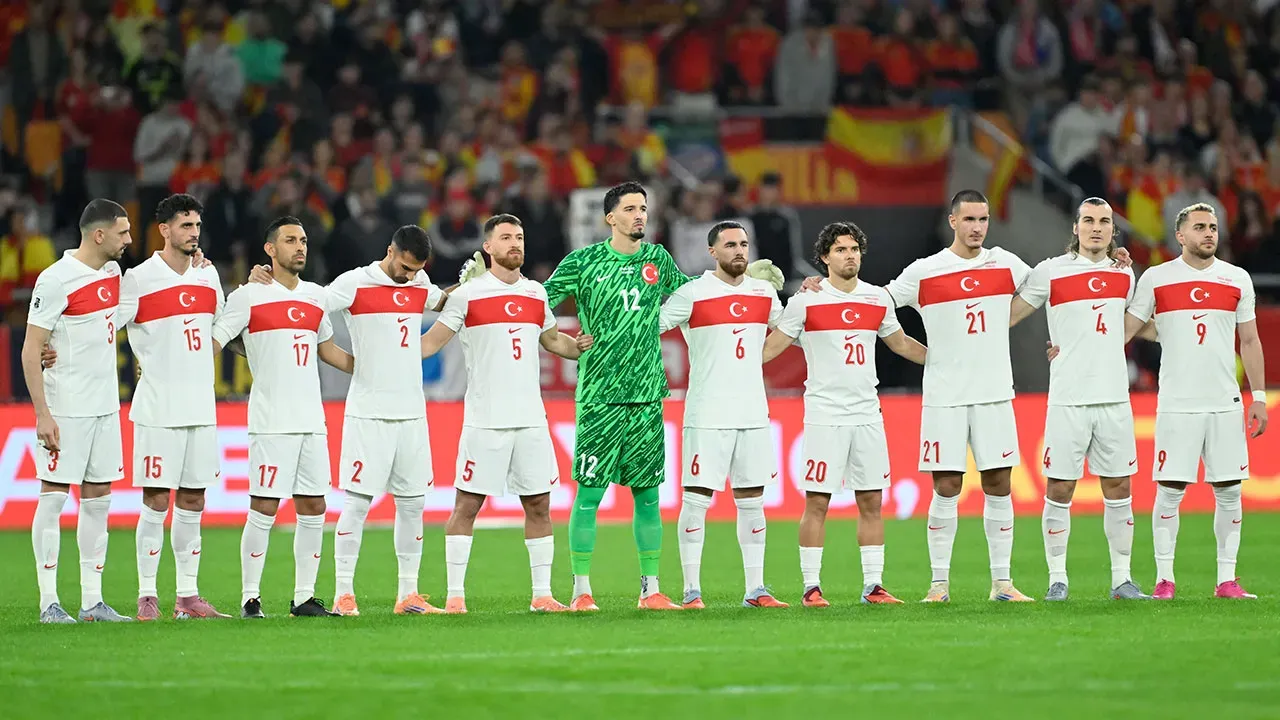
Over time, co-hosting has become more than a logistical or financial strategy in Europe, consolidating at a continental level a model that not only delivers logistical and financial benefits but also strengthens social integration in Europe.
Co-hosting the World Cup has been rare globally. The 2002 World Cup, shared by South Korea and Japan, was an “unprecedented decision.” However, the collaboration was not spontaneous; rather, it was a strategy to secure the hosting rights, as both countries had competing bids and could only overcome Mexico's candidacy by joining forces.
Even during the tournament, tensions persisted: the official "Korea/Japan" order sparked diplomatic disputes, while the match schedule and the final in Yokohama reflected complex negotiations among both governments and FIFA.
Thus, unlike European tournaments, the co-organisation of Korea-Japan 2002 was the product of a deliberate negotiation process and was sensitive to issues of national prestige.
From these experiences, two distinct approaches to co-hosting a mega-sporting event emerge.
The European model—evident since Euro 2000—combines economic and logistical interests with a narrative of integration and close ties among neighbouring countries. In contrast, the Korea-Japan 2002 case was driven primarily by pragmatic logic, with co-hosting geared towards securing national benefits and enhancing each country's international visibility.
In this context, the 2026 World Cup seems to occupy a middle ground between these two models.
On the one hand, the tournament incorporates a much more developed narrative of regional unity than that of Korea-Japan 2002, visible even in the name “United” and the idea of a joint bid among three North American countries. However, this symbolic dimension coexists with clearly defined national interests.




Strategic interests
For the United States, the strategic interests behind co-hosting the 2026 World Cup combine sporting and commercial objectives that trace back to the 1994 World Cup.
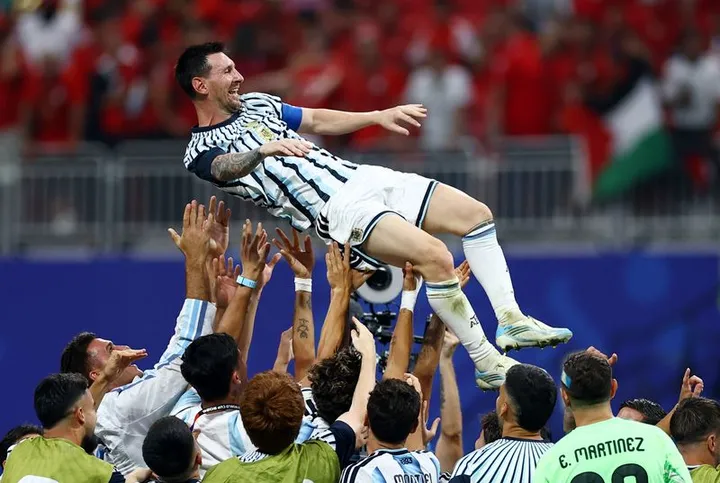
That tournament set a record for attendance at the finals — with more than 3.5 million spectators watching the 52 matches — and served as the catalyst for the creation of Major League Soccer (MLS) in 1996, which today boasts 30 teams and world-class stars such as Lionel Messi.
Much of this strategic push has been based on public-private partnerships. This was reflected in US President Donald Trump's post when FIFA officially announced the 2026 World Cup host country: “Thank you for all the praise for bringing the World Cup to the USA, Mexico, and Canada. I worked hard on this, along with a great team of talented people.
We never failed, and it will be a great World Cup! Special thanks to Bob Kraft for his excellent advice.”
Indeed, Bob Kraft, owner of the New England Patriots, and other businessmen actively participated in the bid, contributing experience in sports marketing, broadcasting rights and the management of major events, with the clear aim of consolidating the United States as one of the most profitable markets in world football and of consolidating the MLS as a league.
In Canada, the focus is on promoting soccer at the national level and strengthening its professionalisation. For James Johnson, commissioner of the Canadian Premier League (CPL), the 2026 World Cup represents “an opportunity to bring soccer into the mainstream in Canada, increase commercial revenue, and put the Canadian Premier League at the center of the country's sporting agenda.”
However, Canadian expectations extend beyond sports. British Columbia's Minister of Tourism, Arts, Culture and Sport, Anne Kang, stated in March 2026 that "leveraging the global exposure of the World Cup will open the door to increased tourism, job creation, and strengthen our role as Canada's gateway to the Asia-Pacific region."
Thus, co-hosting the tournament also appears as a platform to bolster the country's economic and tourism profile on the international stage.
In the case of Mexico, the 2026 World Cup takes on a unique historical dimension: it will be the first country to host a men's World Cup for the third time, after 1970 and 1986. This reinforces its place in the global annals of football.
Mexico 70 is marked by Brazil's third consecutive title, led by Pelé, while Mexico '86 immortalised Diego Maradona's performance and Argentina's victory.
In both cases, the country witnessed the triumphs of two players considered among the greatest footballers of all time.
This historical legacy now combines with a contemporary approach to social impact. For Mayor Claudia Sheinbaum, the goal is “to leverage the World Cup to make football a tool for peace, sport, physical education, and community building.”
Accordingly, her administration has launched the “Social World Cup Mexico 2026” strategy, which includes more than 5,000 cultural, sporting, and community activities across the country.
The aim is to extend the celebration beyond the stadiums, promoting inclusion, community cohesion, and social well-being.
The turning point of the 2026 World Cup
Thus, in a hybrid format that combines elements of shared European tournaments with the experience of Korea-Japan 2002, the three hosts have managed to bring together distinct yet complementary interests: the United States seeks to consolidate football as a mass industry and strengthen MLS; Canada aims to expand football's economic, tourist, and cultural presence; and Mexico reinforces its historical weight and social dimension within the global memory of the sport.
Taken together, the United World Cup 2026 positions North America as one of the leading football regions of the 21st century.
Beyond the logistical and organisational challenges, the tournament demonstrates how coordination between several countries can transform it into a simultaneous platform for tourism, business, and international exposure.
The 2026 World Cup will not only be remembered for its record-breaking figures but also for the potential it holds to mark a turning point in how international mega-sporting events are organised, promoted, and capitalised upon.