Türkiye has signed a cooperation protocol with the Zero Waste Foundation, marking a new step in the country's efforts to embed sustainability across its transportation sector.
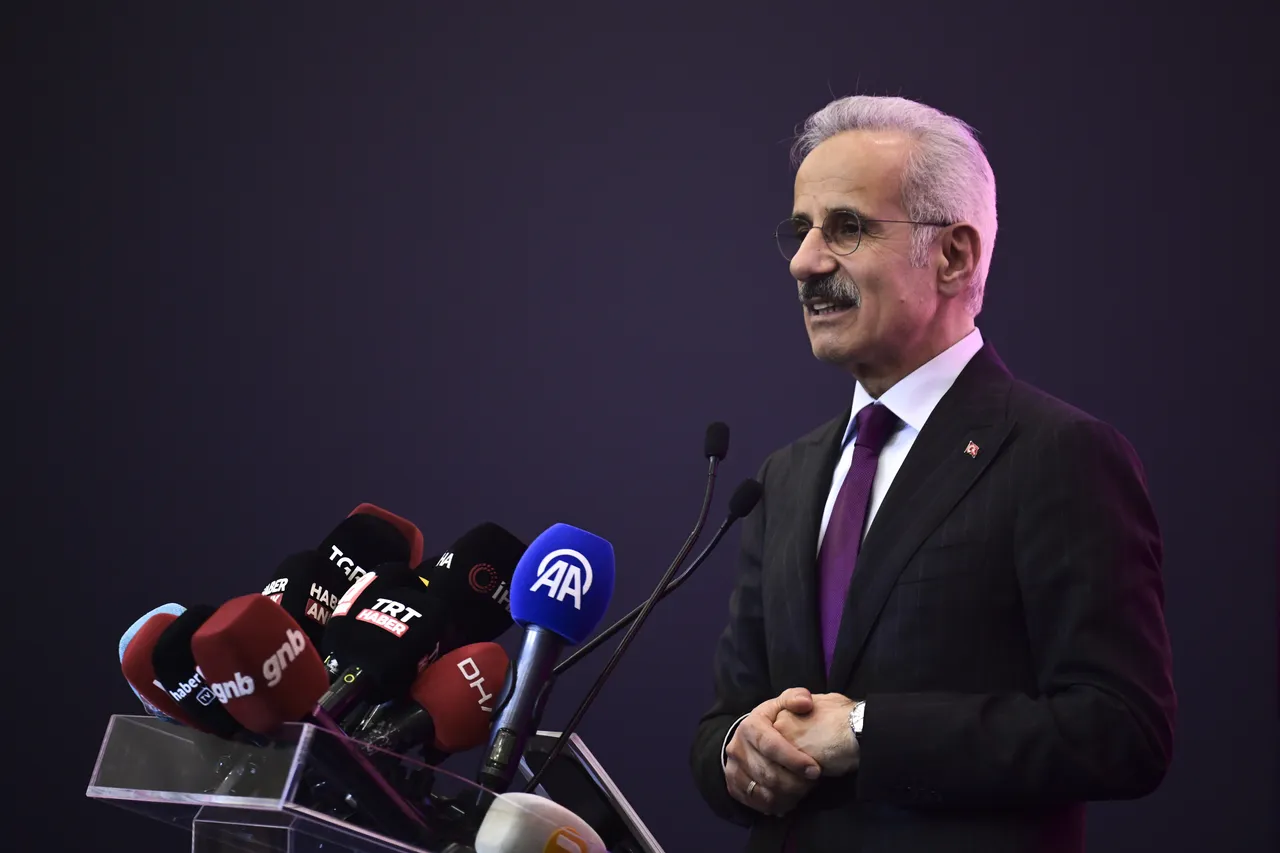
Speaking at the signing ceremony held at the Ministry in Ankara on Wednesday, Transport Minister Abdulkadir Uraloglu announced that the agreement would raise waste management standards across transportation projects to the highest level.
"We will increase the use of recycled materials in construction and maintenance processes, make zero waste practices standard at our ports, airports and stations, and spread awareness of sustainable transportation to our passengers, employees and all stakeholders," he said.
Uraloglu highlighted the scale of the challenge, noting that the transportation sector accounts for roughly 21 percent of greenhouse gas emissions globally, the third largest contributor, and 17.6 percent domestically, making it Türkiye's second largest emitting sector.
"These figures clearly demonstrate that the transportation sector has a critical role to play in the fight against climate change," he said.
The Minister pointed to a series of initiatives already under way, including Türkiye's Net Zero Emissions Road Map for Transportation, financed under EU financial cooperation, and the "Every Ticket, A Sapling" green campaign.
He noted that the Ministry was the first in Türkiye to calculate its own institutional carbon footprint. Through uninterrupted traffic flow improvements alone, the Ministry says it has removed 6.55 million tonnes of carbon from the atmosphere, equivalent to what approximately one million mature trees absorb in a year.
Other environmental milestones cited by Uraloglu included the recovery of around two million tonnes of asphalt annually, the deployment of ecological bridges and cycling paths, and the expansion of rail freight from 5 percent to 22 percent of total freight transport. He added that Istanbul’s Marmaray rail project has prevented 62 million tonnes of carbon emissions since its opening in 2013.


On aviation, Uraloglu noted that the country now ranks second globally, behind only the United States, in the number of airports holding carbon-free certification under the Airport Carbon Accreditation Program, with 52 certified airports. The Ministry also uses 145 domestically produced Togg electric vehicles for airside "Follow Me" escort services at airports.
The cooperation protocol, he explained, is designed to promote zero waste principles across the transport and infrastructure sectors, improve resource efficiency, prevent waste generation, adopt circular economy models, and encourage green infrastructure practices.
Zero Waste Foundation President Samed Agırbas also spoke at the ceremony, announcing that Türkiye will host two major international events this year.
The first, the Zero Waste Forum, is scheduled for June 5–7 and is expected to draw representatives from more than 150 countries, over 100 ministers, and upwards of 5,000 participants, with backing from organisations including the World Bank, the United Nations, and leading universities such as Harvard and Cambridge.
Türkiye is also set to host COP31 later this year.
Agırbas praised Türkiye’s transportation and infrastructure investments, saying visitors from around the world have expressed admiration for the country's development.
He added that the newly signed protocol would further strengthen zero waste efforts within the transport and infrastructure sector under Minister Uraloglu's leadership.