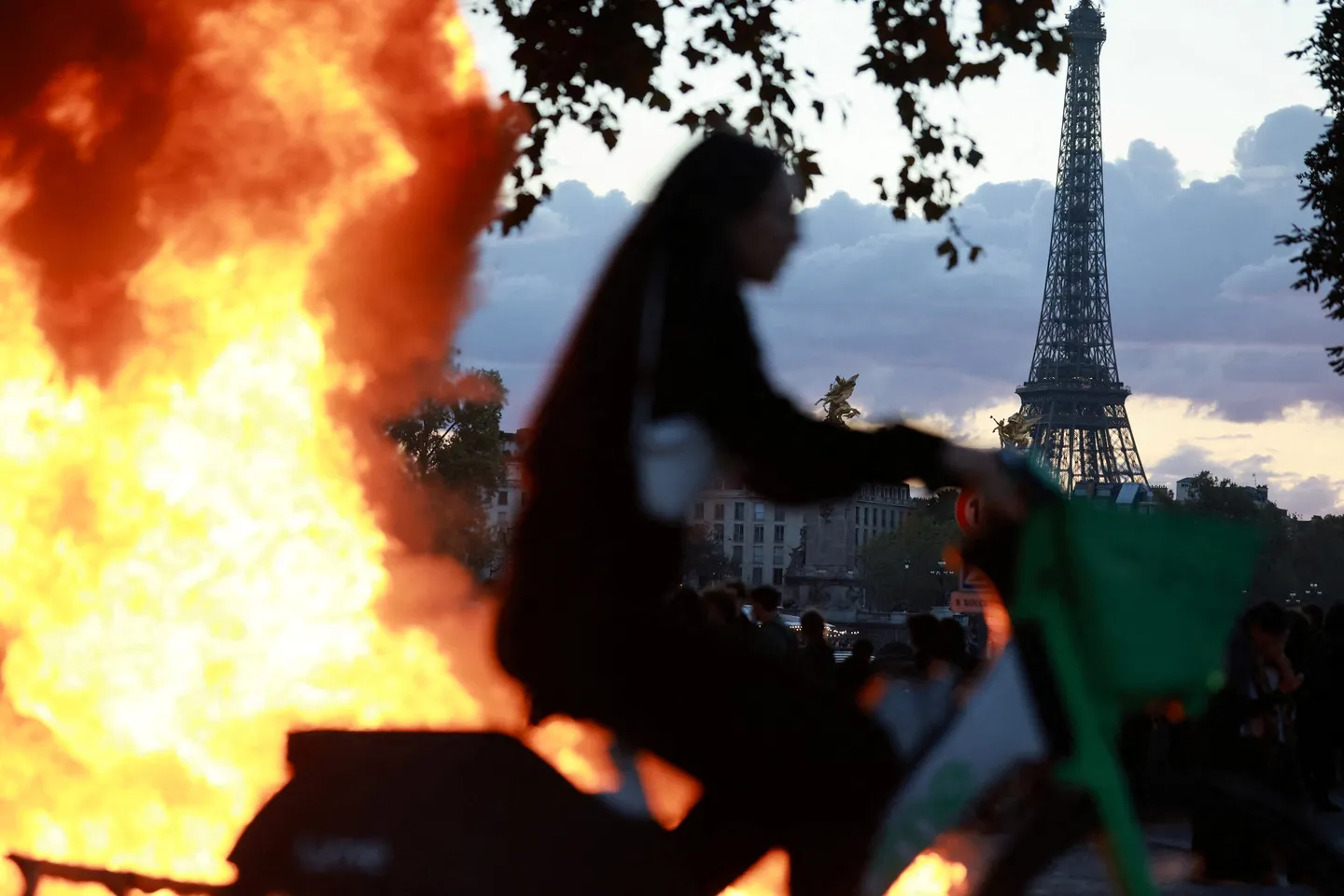
Overnight curfews imposed in France following violent protests will not deter the Yellow Vests movement from returning to the streets on Saturday, a lawyer representing the movement said.
"This will have no impact on the movement, since demonstrations take place in the morning or afternoon," David Libeskind said in a written statement to Anadolu.
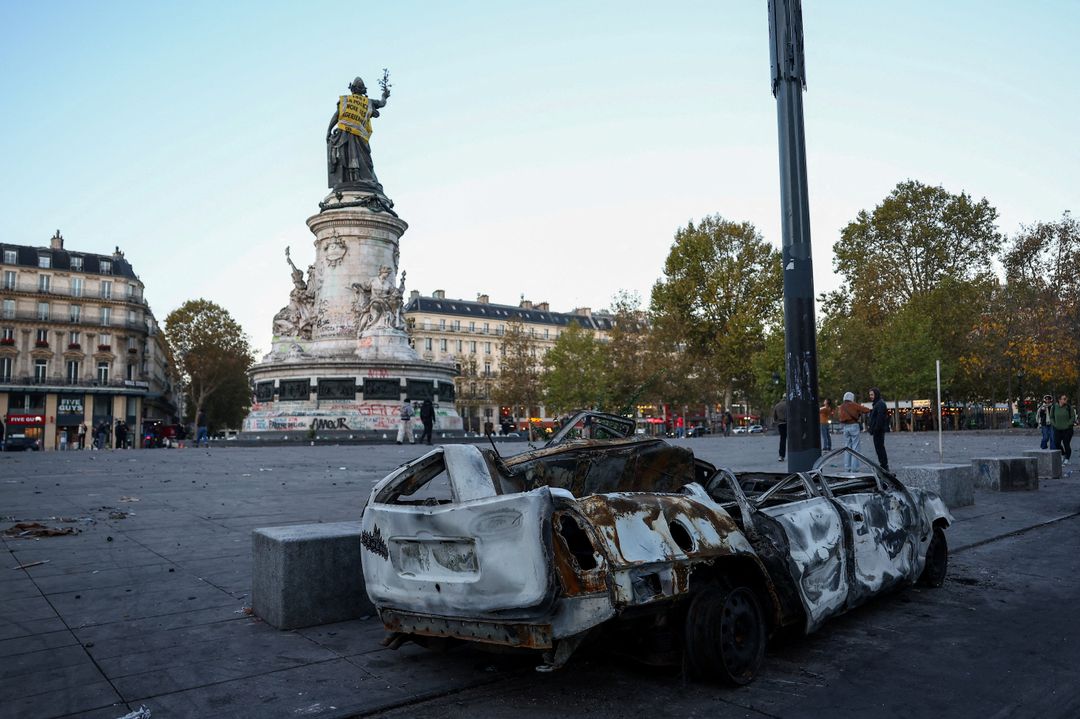
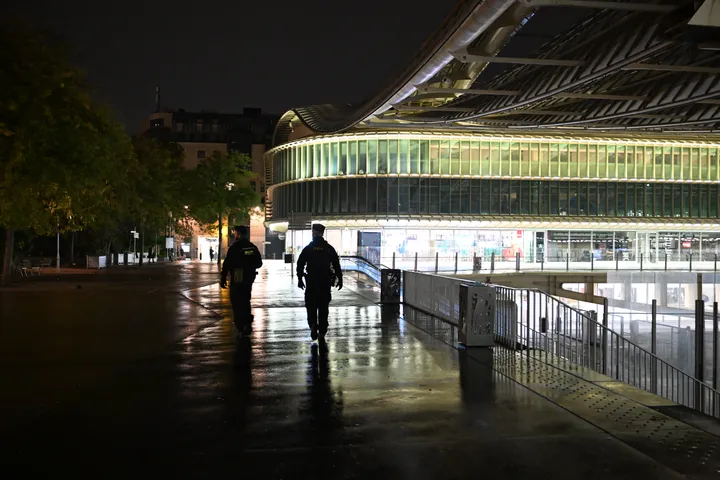
The restrictions took effect on Monday night in Paris, barring people from streets around Place de la Republique and Les Halles between 10 pm and 6 am local time.
In parts of central Lyon, the curfew begins an hour earlier.
Nice imposed restrictions on minors in city-centre streets from 9 pm to 6 am, while unaccompanied minors in parts of Gironde face a 10 pm to 7 am curfew through October 26.
Libeskind said curfews generally targeted minors, although restrictions in Paris and Lyon also apply to adults.
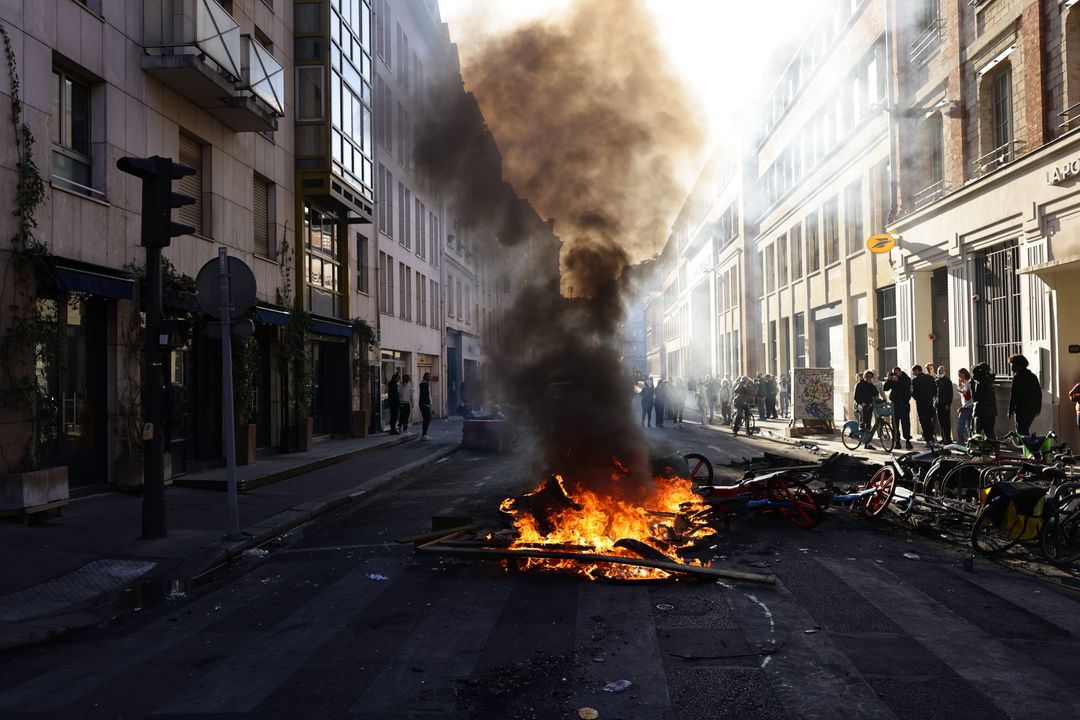
Protesters prepare for 'Act II'
Organisers have called for another nationwide mobilisation on Saturday, October 24, describing it as "Act II" of the protest movement.
An interactive map published by organisers lists 212 planned mobilisations, including 167 demonstrations, 19 roundabout gatherings, six actions at gas stations and one at an oil depot.
"We expect people to turn out in large numbers and organise numerous blockades of supermarkets, oil depots and other sites," Libeskind said.
"We demand a freeze on petrol, gas and basic necessities prices," he added.
In an October 18 statement, the Yellow Vests coordination said anger over rising fuel, food and rent prices had united protesters demanding improvements in education, wages and social benefits.
The group called on President Emmanuel Macron to receive a delegation of students, workers, farmers and other protesters at the Elysee Palace.
It also urged supporters to maintain blockades and establish local assemblies, aiming to extend a planned November 5 national strike into a sustained campaign.
Student organisations have called for demonstrations on Thursday and Saturday, with the National High School Student Coordination supporting continued blockades.
"The protesters are calling for Emmanuel Macron's resignation," Libeskind said.
"We propose ending the Fifth Republic and hope for a direct democracy with frequent use of referendums," he added.

France’s Fifth Republic, established in 1958, grants the president broad powers while requiring the government to remain accountable to parliament.
Protests spread from schools to streets
The protests began in mid-September when students at a high school in Creteil, outside Paris, demonstrated against deteriorating buildings, overcrowded classrooms and teacher shortages.
Blockades spread to other schools, drawing support from teachers and university students.
A 15-year-old in Lens lost a hand after being hit by a stun grenade, while a 16-year-old in Tours suffered a serious eye injury during clashes with police.
Anger over police tactics brought former Yellow Vest protesters back onto the streets in solidarity with students.
Meanwhile, Yellow Vest activists organised an October 17 protest against rising prices and stagnant wages, joined by unions demanding higher pay, pensions and improved public services.
The demonstrations drew about 550,000 people nationwide, according to authorities, while organisers claimed 800,000 participated.
Although many marched peacefully, violence erupted in several cities.
Fire destroyed Limoges' 19th-century city hall and damaged Lyon's tourist office, while supermarkets and luxury stores were looted.
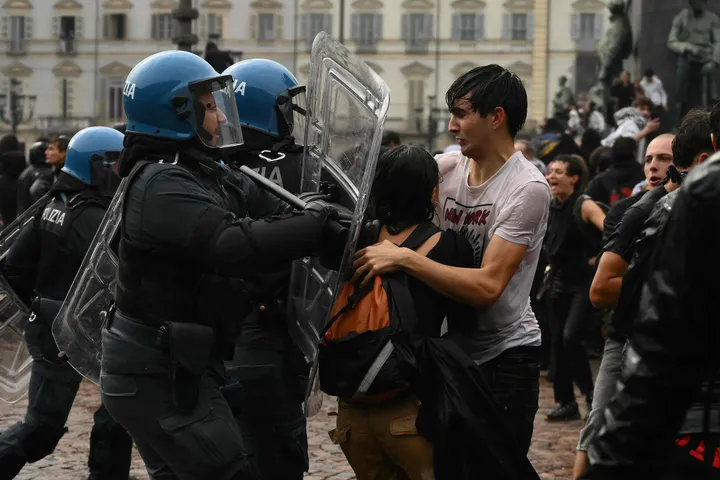
Police used tear gas and water cannons during clashes.
One demonstrator died following a reported cardiac arrest near the Paris march. Prosecutors opened an investigation to establish the cause of death.
The Interior Ministry reported 997 injured police officers and gendarmes, including seven seriously wounded.
Justice Minister Gerald Darmanin said authorities detained 2,513 people and imprisoned 67 following the unrest.
Libeskind accused authorities of emphasising vandalism to "conceal their inability to address the problems facing the French people."
"Violence and vandalism alone will not be enough to weaken the movement, given how determined the protesters are," he said.