Washington, DC — It has now been exactly two months since the Trump administration formally notified the US Congress that American forces were carrying out strikes on Iran.
Under the 1973 War Powers Act, Day 60 is the line. The moment a president must either stop military action or seek congressional approval to continue it.
The Trump administration appears ready to test how far that law can bend.
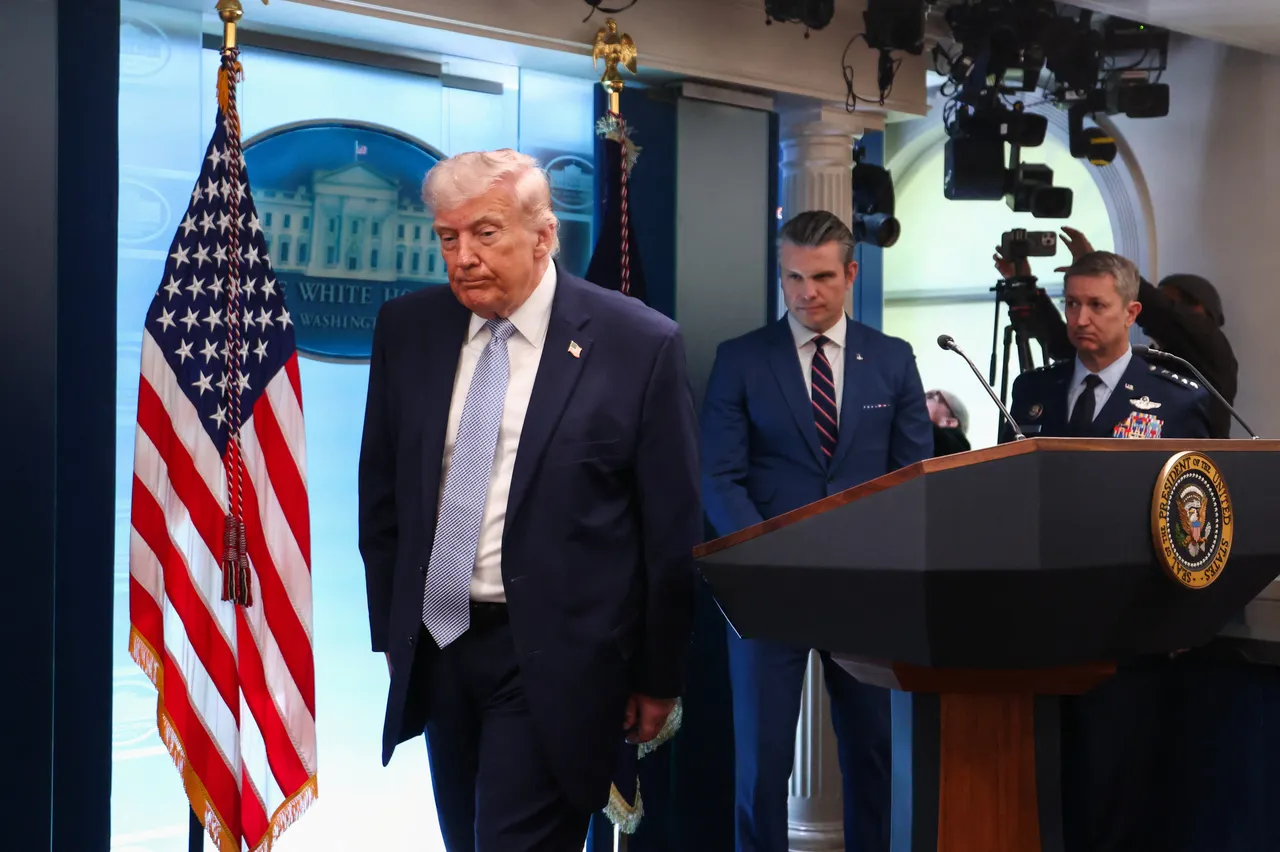
Inside a tense Senate armed services committee hearing, US Defence Secretary Pete Hegseth brushed aside the looming deadline, insisting the ceasefire reached with Iran more than three weeks ago “means the 60-day clock pauses, or stops”.
The White House has been making the same argument for days.
“For war powers resolution purposes, the hostilities that began on Saturday, February 28, have terminated,” a senior Trump administration official told the media earlier this week.
But on Capitol Hill, Democrats say the administration is attempting to rewrite the law in real time.
Friday marks a pivotal point in America’s shadow war with Iran. Faced with a constitutional pressure point, the Trump administration now faces a legal deadline to either end US involvement or seek congressional authorisation to continue.
Yet even as lawmakers prepare to leave Washington for a week-long recess, there is still no clear indication of what the White House intends to do either.
Why War Powers matters
The War Powers Resolution was created after Vietnam, designed to stop presidents from pulling the US into open-ended conflicts without congressional approval.
The law requires Congress to sign off on military hostilities lasting beyond 60 days.
On Thursday, Senate Republicans once again blocked an effort to rein in the war.
The resolution, introduced by Democratic Senator Adam Schiff, would have restricted further military action unless Congress explicitly authorised it. It failed largely along party lines.
It was the sixth such vote since the Iran conflict began. Yet cracks are beginning to show.
Two Republican senators, Susan Collins and Rand Paul, broke ranks to support the resolution. One Democrat, John Fetterman, voted against it.
Collins later posted a blunt warning on X.
“The constitution gives Congress an essential role in decisions of war and peace, and the War Powers Act establishes a clear 60-day deadline for Congress to either authorize or end US involvement in foreign hostilities. That deadline is not a suggestion; it is a requirement.”
The line lands heavily because Washington has heard this argument before.
Presidents from both parties have stretched the War Powers Act to its limits for decades, often arguing that airstrikes, missile campaigns or limited operations do not qualify as full-scale “hostilities”.
With a fragile truce declared by the US on April 8 and later extended, legal and political battles are intensifying in Washington over whether the temporary pause in fighting halts the statutory countdown toward May 1.
History shows that US presidents have consistently found ways to circumvent the law, creating a complex legal landscape as the current deadline approaches.






War timeline breakdown
The legislation operates on a strict timeline. The act requires the president to consult with Congress before deploying troops into hostilities.
If the US military enters a hostile environment without a formal declaration of war, it mandates that the president submit a detailed report to congressional leaders within 48 hours.
The Trump administration complied with the 48-hour reporting requirement on March 2, officially starting the countdown that culminates on May 1.
Submitting this report triggers Section 5, known as the 60-day clock. According to the law, the president must withdraw US forces within 60 calendar days unless Congress passes specific authorisation, declares war, or extends the deadline.
The president can request an additional 30-day extension by certifying in writing that an unavoidable military necessity requires more time for a safe withdrawal.
The current administration maintains that it has fully complied with constitutional and statutory obligations.
US Secretary of State Marco Rubio contacted the congressional "Gang of Eight"—a select group of senior lawmakers who receive classified intelligence—shortly before the strikes commenced. Seven of the eight members were reached, and the group later received a formal White House briefing.
White House Principal Deputy Press Secretary Anna Kelly said that the administration has maintained clear communication with lawmakers.
Kelly said that officials provided more than 30 bipartisan briefings to keep Congress updated, adding: "The president’s preference is always diplomacy, and Iran wants to make a deal."
If the deadline is ignored
The administration will join a long line of presidencies that have successfully bypassed the War Powers Resolution using a sophisticated toolkit of legal manoeuvres.
Historically, presidents assert that their Article II constitutional powers as commander-in-chief supersede any statutory limits imposed by Congress.
The Trump administration previously utilised this argument following the 2020 drone strike against Iranian General Qasem Soleimani, defining the action as a “defensive” measure against imminent threats that did not require legislative approval.
In the current war, the State Department has also offered legal justifications for remaining in the theater. A legal adviser asserted that the US is operating in “collective self-defense” of Israel, as well as exercising its “own inherent right of self-defense.”
Another common method involves redefining the nature of the conflict. Because the 1973 law does not explicitly define the term "hostilities," the executive branch frequently argues that limited or supportive operations do not trigger the 60-day clock.
During the 2011 military offensive in Libya, former US President Barack Obama claimed the law did not apply because US forces did not sustain fighting or "active exchanges of fire with hostile forces"
Presidents have also used international alliances to shield military actions from congressional deadlines.
In 1999, former US President Bill Clinton continued a bombing campaign in Kosovo well past the 60-day limit by framing the operation as a fulfillment of NATO treaty obligations rather than a unilateral US war.
Modern administrations also frequently rely on the 2001 Authorisation for Use of Military Force, passed after the Sept. 11 attacks.
Presidents from both major US political parties have stretched the 2001 authorisation to cover various “anti-terrorism operations” globally, arguing that it fulfills the specific statutory authorisation required by the 1973 War Powers Act.
With May 1 now here and no permanent peace deal in place, the Iran conflict is edging into a clash between the White House and Congress over who holds the final authority on war.