One year since the brief but intense 2025 India-Pakistan war, the guns have fallen silent, but the region remains locked in a fragile deadlock.
Reciprocal airspace closures continue, diplomatic channels are nearly shut, and the Indus Waters Treaty, a 1960 agreement regulating river water sharing, hangs in abeyance, raising fears of new flashpoints in an already volatile nuclear rivalry.
But analysts from both sides say the brief war has significantly strengthened Pakistan’s defence partnership with China and enhanced Islamabad’s international profile, while exposing the limitations of India’s isolation strategy.
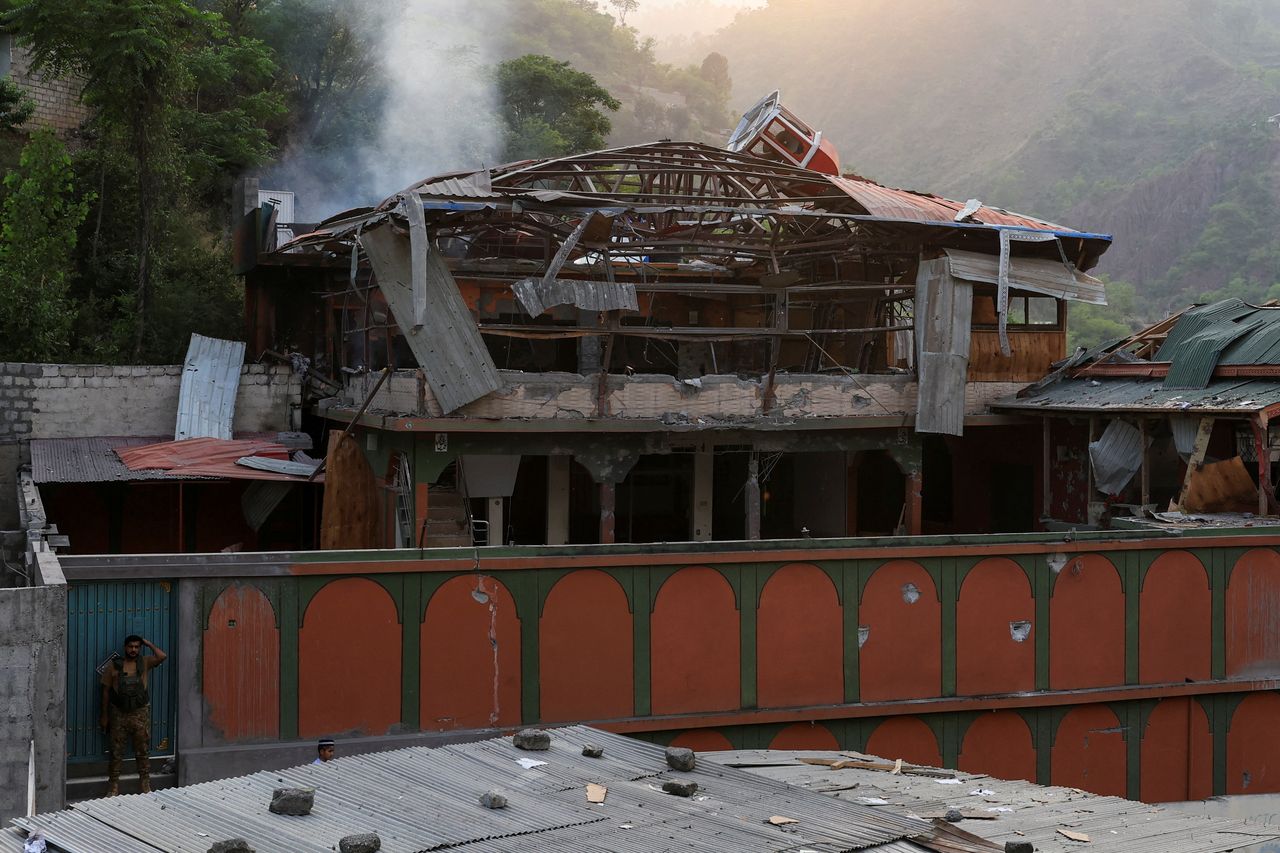
Relations between the arch rivals plummeted last year after an April 22 attack in Pahalgam in Indian-administered Kashmir killed 26 men, mostly Hindu tourists, leading to the worst conflict between the neighbours in decades.
India blamed Pakistan for backing the attack, a charge Islamabad denied, triggering tit-for-tat diplomatic measures and a sharp military escalation.
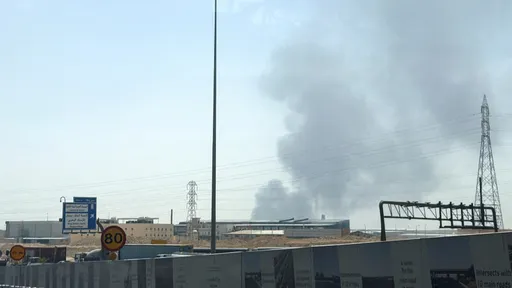
On May 7, India launched "Operation Sindoor", targeting sites inside Pakistan and Pakistan-administered Kashmir. Islamabad responded with Operation Bunyanun Marsoos, or Iron Wall, targeting military sites in India-administered Kashmir as well as inside mainland India.
After four days of aerial attacks, Trump announced a truce between the two countries on May 10.
More than 70 people had been killed on both sides.
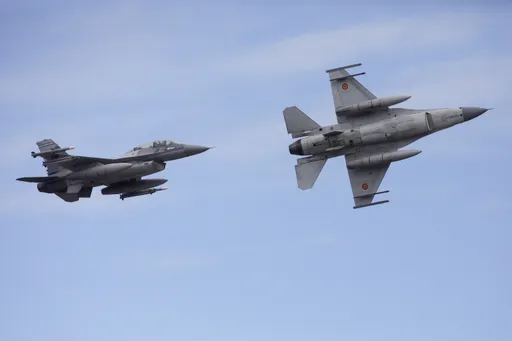
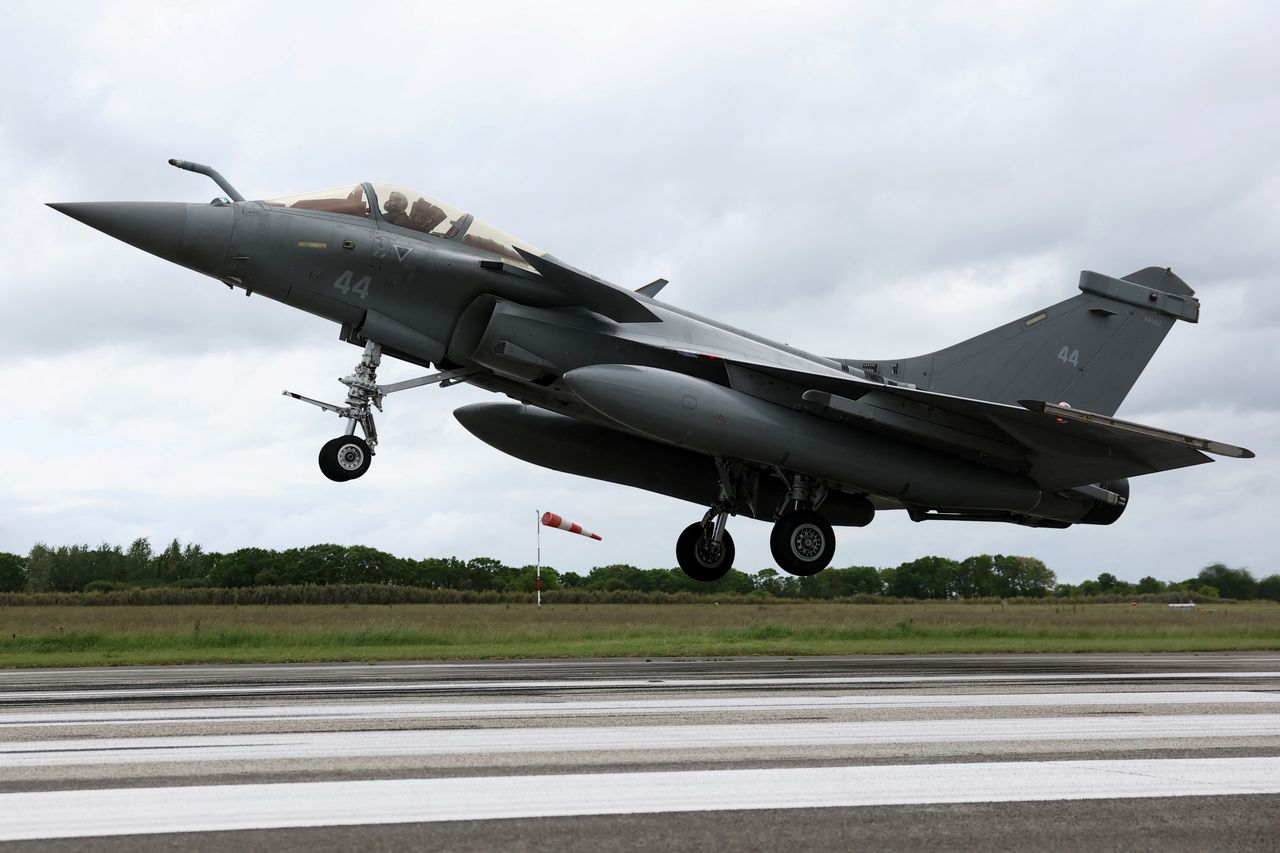
Pakistan claims it shot down four French-made Rafale jets, one Mirage 2000 jet, one Su-30 jet, one MiG-29 jet, and a Heron unmanned aerial vehicle belonging to Indian forces during the clashes.
India has acknowledged losses but did not specify a number. However, it claimed to have damaged Pakistani jets which Islamabad denies.
Pakistan credited its Chinese-built J-10 fighter jet and jointly produced JF-17 Thunder aircraft with playing a key role in the aerial engagements
The conflict marked a rare real-world test of modern Chinese military hardware, drawing attention from several developing countries seeking cost-effective alternatives to Western systems. As a result, Chinese firms manufacturing fighter jets saw their sales rise.
According to analysts, Pakistan emerged with a strategic advantage from the confrontation.
“Pakistan’s defence cooperation with China has significantly improved due to the 2025 conflict,” Dr Khurram Abbas, the director of the India Study Centre at the Institute of Strategic Studies Islamabad (ISSI) told TRT World.
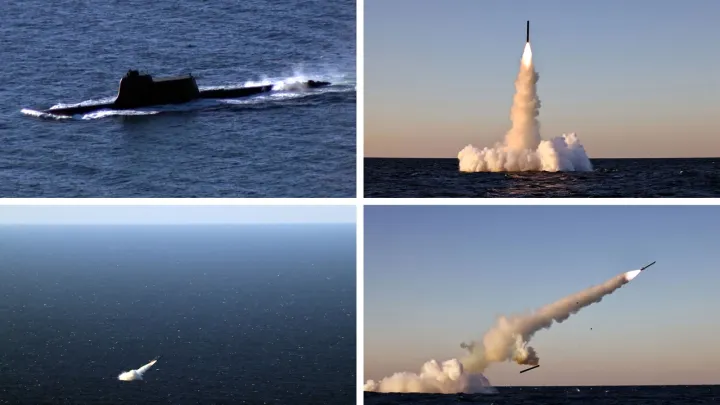
“Pakistan believes that the Chinese technological superiority helped in operational combat against India. This is why Pakistan is currently focusing on deepening defence ties in air force and naval domains by acquiring Hangor-class submarines and possible deals for 5th generation fighter jets.”
Yasir Hussain, an associate director research at a Pakistani think tank Center for International Strategic Studies (CISS), echoed this sentiment.
“Chinese-origin weapon systems’ excellent combat performance during the May 2025 crisis has further solidified Pakistan’s defence cooperation with China,” he told TRT World.
However, Swaran Singh, a professor at the School of International Studies at New Delhi-based Jawaharlal Nehru University pointed out to TRT World that the conflict has also pushed India to diversify its strategic options. He noted that India has displayed restraint while “exploring alternatives to excessive dependence on the United States.”
“In the years ahead, Pakistan will likely purchase more advanced weapon systems to counter Indian military adventurism in future,” Hussain added. This includes potential acquisitions of J-35 stealth fighters, KJ-500 aircraft, and HQ-19 systems.
Bilal Zubair, Director Research at the Islamabad-based CISS added that this relationship dates back to the 1980s, noting Pakistan’s shift away from American hardware while pursuing greater self-reliance.
Frozen relations
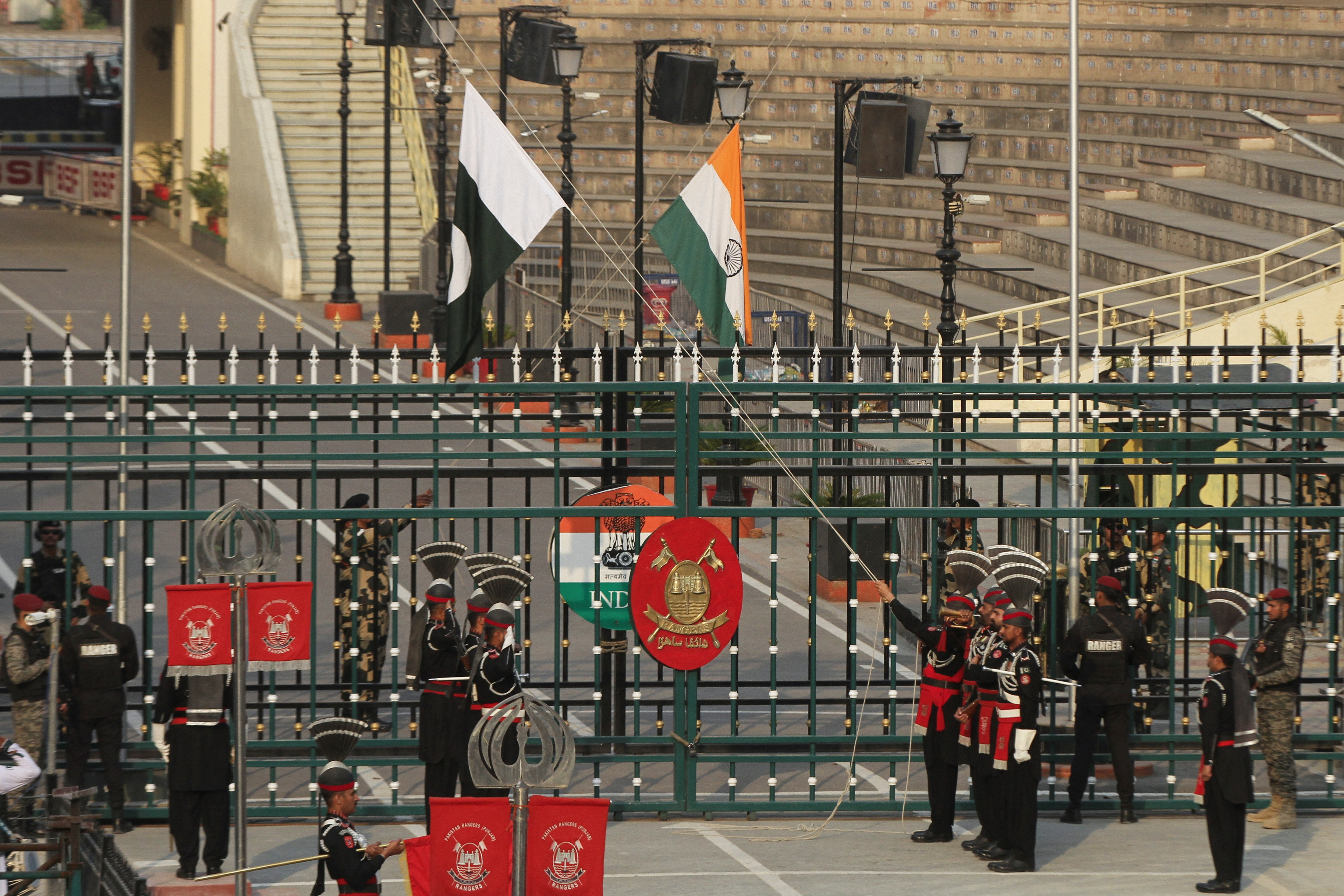
Relations between the South Asian neighbours stand at a dangerous low.
Trade is suspended, diplomatic ties downgraded and both countries’ airspace remains closed to flights from the other, inflicting heavy costs on Indian airlines.
Singh told TRT World that around 800 weekly Indian airline flights are impacted and this has triggered cost escalations.
Some airlines had to even suspend some of their operations.
“Pakistan tried to maintain a calibrated non-kinetic response… After one year, Islamabad is determined that it will not offer any unilateral concession to New Delhi because unilateral concessions in the past have been viewed as ‘weakness’ by Delhi,” Dr Abbas noted.
He added that Pakistan is ready for reciprocal rollback of April 2025 decisions and eventual back-channel diplomacy.
Hussain was blunt: “India has shut the door for diplomacy. It has suspended [the] decades-old Indus-Water Treaty and continues to refuse to engage with Pakistan at bilateral level”.
“Under Modi government’s ultra-hawkish policies, diplomacy taking a front-seat remains a distant dream,” he said.
Zubair was equally firm: “Pakistan-India diplomatic impasse would continue in the foreseeable future due to India’s reluctance to talk on all bilateral disputes including the disputed Jammu and Kashmir issue. Any meaningful talks must be based on composite dialogue rather than a selective agenda proposed by India.”



He added that a new consensus now exists in Pakistan.
“Pakistan’s efforts to engage with India for dialogue has been counterproductive. Pakistan would not ask for talks with India unless India requests. Further Pakistan would not bulge to any military or diplomatic pressure.”
Singh described the current state as one of “institutionalised hostility” and warned that if the stalemate continues, long-term risks include “entrenched conflict normalisation, a Chinese-driven regional arms race, and progressive erosion of third-party leverages.”
Nuclear, conventional and water flashpoints
Pakistan’s nuclear posture remains anchored in “credible minimum deterrence,” while it has diversified its conventional capabilities.
Hussain argued that the Pakistan Air Force’s performance has reinforced conventional deterrence as a complement to its nuclear shield. He said there's no space for conventional war between nuclear states as prospects for escalation to the nuclear level is always there.
The suspension of the Indus Waters Treaty stands out as a particularly volatile issue.
India has linked its restoration to Pakistan “credibly and irreversibly” ending its alleged support for terrorism. With roughly 80 percent of Pakistan’s food production and 27 percent of its electricity dependent on these waters, the pressure is existential. Pakistan’s army chief has already warned of missile strikes against any new dams India builds.
Diplomatic scorecard: Pakistan gains, India struggles
Analysts note the conflict has paradoxically strengthened Pakistan’s international standing.
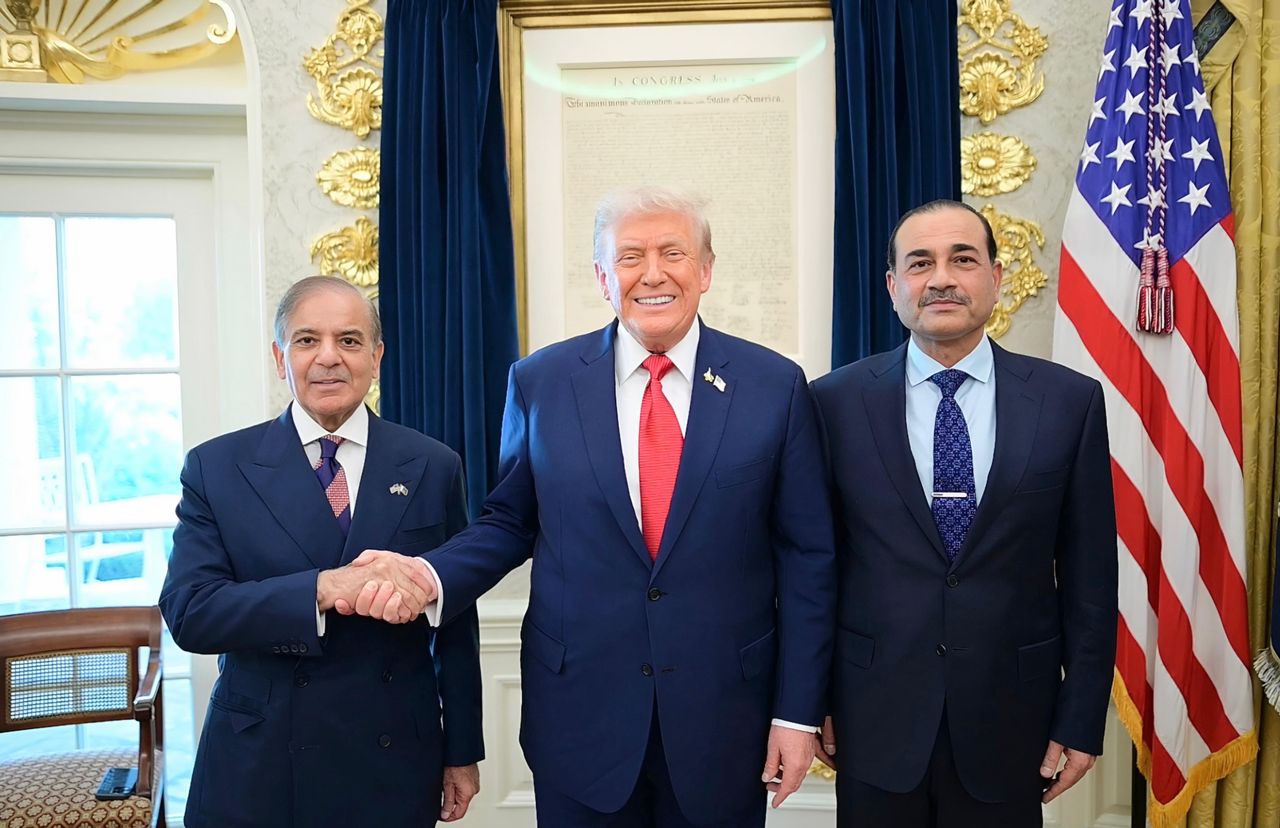
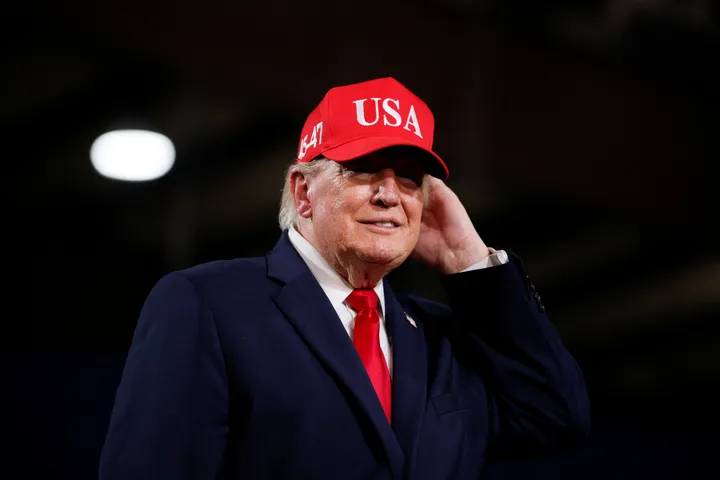
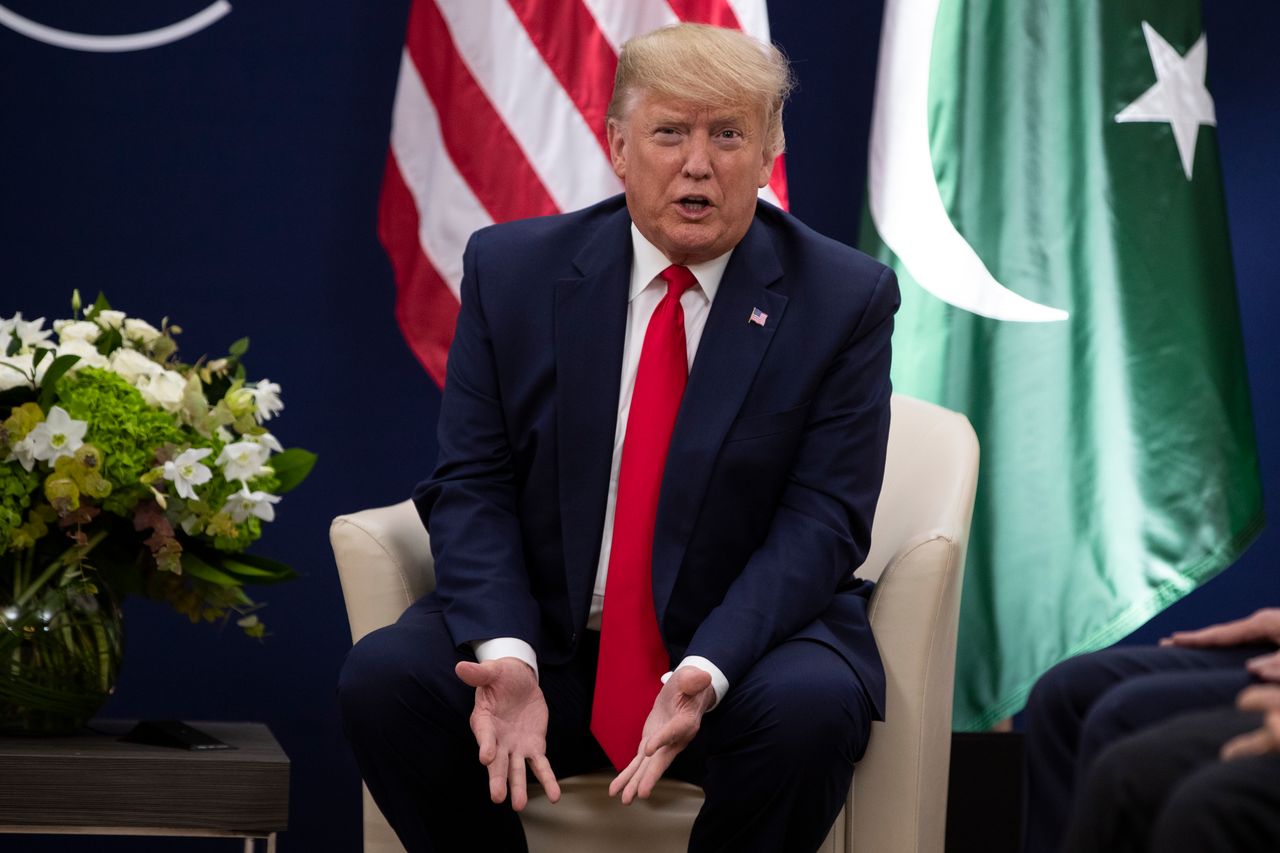
Singh noted Pakistan’s “creative courting” of United States President Donald Trump, including crediting the US president as “saviour of South Asia” and nominating him for the Nobel Peace Prize, generated significant goodwill in Washington.
Hussain added that Pakistan’s “defensive performance, successful deterrence against India, and subsequent diplomatic engagement… have enhanced Pakistan’s image as a responsible nuclear power and a strategically relevant player.”
Dr Abbas believed the conflict improved Pakistan’s global standing. “The growing international partnerships with Middle Powers and access to the White House has helped Pakistan to raise the Jammu and Kashmir dispute effectively.”
Some Indian analysts, meanwhile, have been sharply critical of Operation Sindhoor.
“One year on, diplomatically Pakistan seems to be in a much stronger place where India seems to be in a weaker place,” Indian political analyst Sushant Singh told The Wire, an independent digital news platform.
“What should really worry Indians is Pakistan at this point is in a very sweet spot — within the United States, with China, with the Saudis.”
“The Indian political leadership and strategic leadership did not clearly think through the consequences of their action. They were more focused on what they could sell domestically.”
He observed that “Pakistan’s stock in Washington seems to be high — higher than it’s ever been even than Musharraf’s time since after 9/11.”
China’s growing shadow
While Beijing maintained “studied neutrality” during the fighting, its defence ties with Pakistan have deepened.
Singh warned of a “Chinese-driven regional arms race,” citing interest from Bangladesh and record China-India trade exceeding $155 billion even as Beijing backs Islamabad militarily.
India’s Operation Sindoor has further accelerated Chinese defence exports in the region, including interest in J-35 stealth fighters and other systems, Singh highlighted, pointing to a broader shift towards Chinese arms dependency.
“Pakistan considers China as a factor of stability in South Asia. Pakistan wants Beijing as a replacement of India in various South Asian security architecture,” Dr Abbas noted. He cited new trilateral strategic dialogues such as China-Pakistan-Bangladesh and Afghanistan-Pakistan-China as evidence of Beijing’s growing influence, accelerated by India’s decision to keep SAARC paralysed.
Zubair concluded that China has always supported cordial relations between the two countries but recognised Pakistan’s right to defend its territory and sovereignty against “Indian unlawful aggression.”
While in some areas, both sides have shown remarkable pragmatism including following the nuclear risk reduction measures, adherence to the deadline of prisoner exchange lists, and ceasefire at the Line of Control, Dr Abbas said a “major incident could trigger another wave of armed hostilities due to lack of contact between the two sides.”
On Thursday, a year since the launch of “Operation Sindoor”, Indian Prime Minister Narendra Modi said, "We remain as steadfast as ever in our resolve to defeat terrorism and destroy its enabling ecosystem."
Pakistan, on the other hand, said it would defend itself strongly against any future attack.
"We reaffirm that any threat to our homeland will be met with national unity, unshakeable resolve, and strength through all means available," a foreign ministry statement said.
Analysts on both sides see little prospect of near-term normalisation. Pakistan insists any dialogue must address all disputes, including Kashmir. India maintains its hard line on terrorism.
As the anniversary passes, the ceasefire holds, but the region is one spark away from renewed crisis.