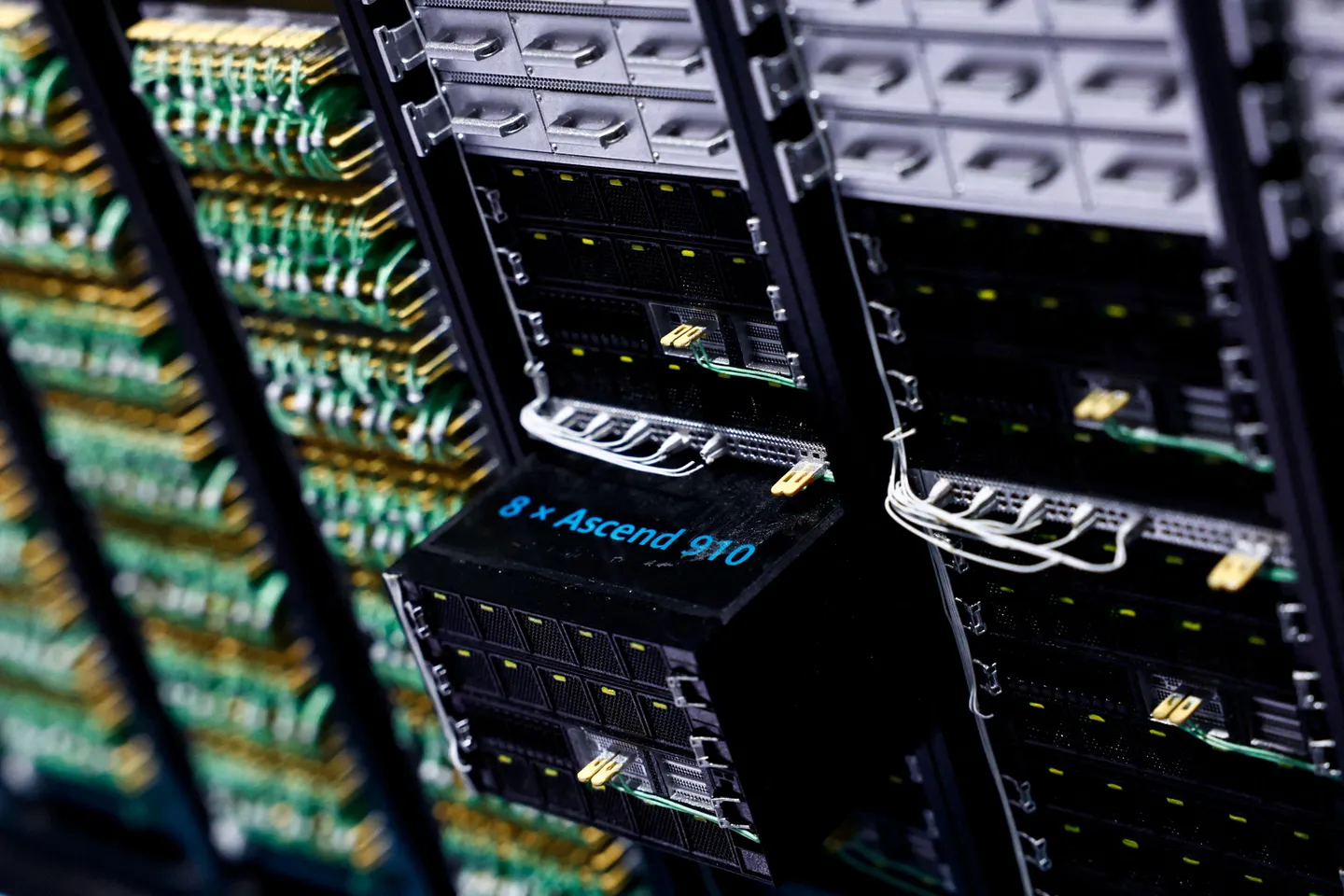
Developing countries accounted for around 40 percent of new foreign direct investment (FDI) in data centres worldwide, while a handful of large companies in a few high-income countries hold a massive share of the computing infrastructure for the development of artificial intelligence (AI), according to the World Bank.
The recent AI report showed that local data centre investment in large middle-income countries could help adapt AI models to local needs, while governments could facilitate foreign firms' investment in increasing computing capacity.
The World Bank argued that smaller economies could secure private investment by developing common rules or reducing costs by jointly financing local data centres, as in the case of the African Union’s efforts.
Meanwhile, developing advanced AI systems requires massive investments in semiconductors, data centres, large data sets and skilled human resources, with the largest US-based AI firms expected to spend more than $750 billion on infrastructure this year, higher than the annual gross domestic product (GDP) of many developing countries.
Total spending by leading AI firms in the US is expected to reach as high as $775 billion by 2026, with the firms operating large-scale cloud infrastructure to train and deploy state-of-the-art AI models.
Developing countries lead in global exports of AI hardware, with half of the exports used in deploying AI systems coming from countries such as China, Mexico, Malaysia, Vietnam and Thailand.
The report also showed potential risks, such as energy costs, as the high electricity consumption of AI data centres could put pressure on energy prices.
The World Bank also suggested that government tax advantages and various incentives to foster AI investment can support growth, while a concentration of investment in this area could lead to rising asset prices and increased volatility in investment cycles.

Developing countries lead in infrastructure, hardware








Gokhan Varan, vice president of the Turkish AI policy association AIPA, told Anadolu that global AI competition has evolved beyond algorithms to involve computing capacity, energy access and data sovereignty.
“The key aspect of developing data centre infrastructure is its benefits to local companies in accessing computing capacity, as well as its support for local AI startups, and its broader impact on creating a tech ecosystem generating economic value within the country,” he said.
He noted that the World Bank data showed developing countries are becoming global players in the AI hardware and infrastructure supply chain.
Varan stated that Türkiye has the potential to capture a larger share of global data centre investments thanks to its geographical location, vast digital markets, telecommunications infrastructure and emerging tech ecosystem.
He mentioned that Ankara has a key AI action plan to boost data centre capacity to at least one gigawatt by 2030 and to mobilise $10 billion in private AI, cloud and digital infrastructure investments.
He noted that cheap land and incentives are not enough to capture global investments.
“Competitively priced and uninterrupted energy flows, renewable energy capacity, strong fibre-optic connections, cybersecurity, predictable regulations, and a qualified workforce are needed in tandem to seize these opportunities,” he said.
“Türkiye should aim not only to host data centres but also to transform computing capacity into local AI production, research and development (R&D), and high-value-added exports,” he added.