 Yevgeniya Mikhailidi
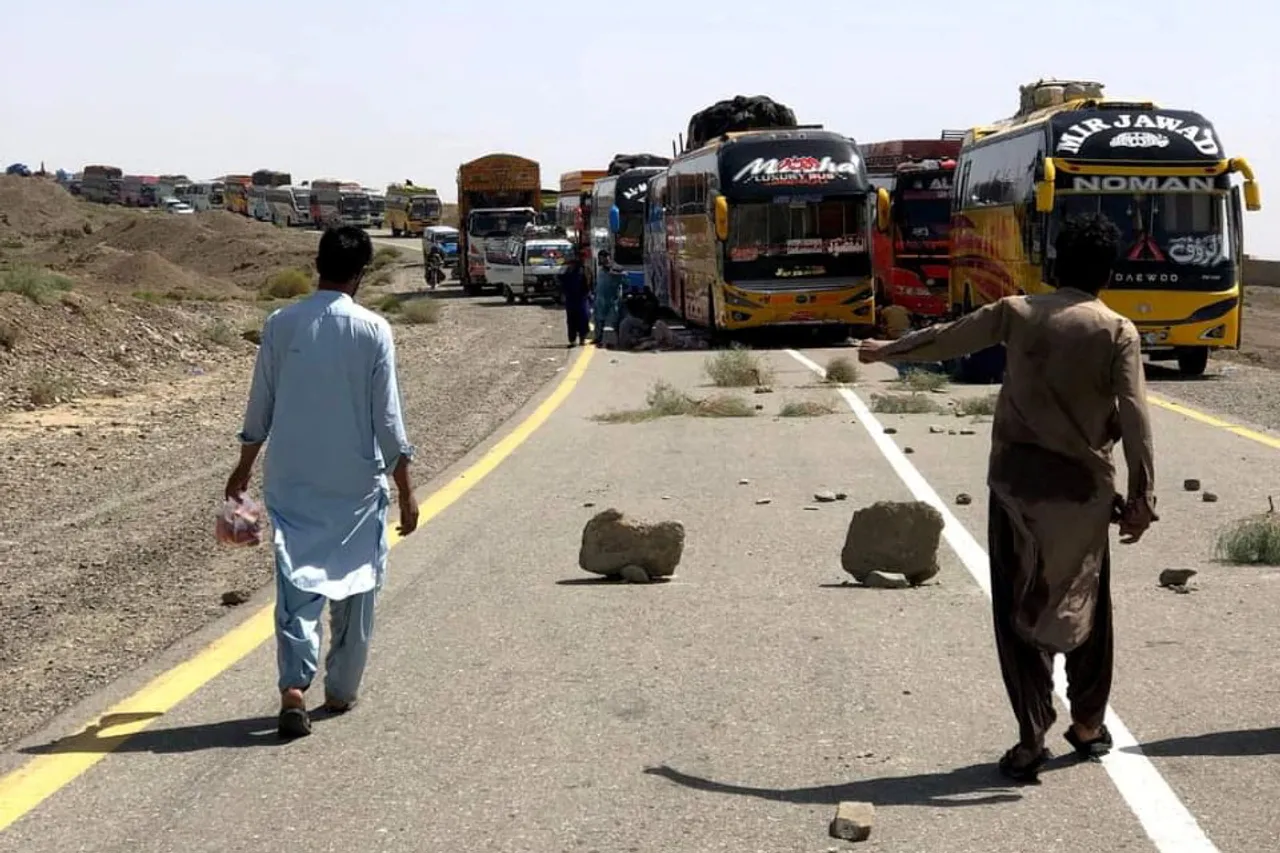
Just outside Quetta, many cargo trucks sit idle.
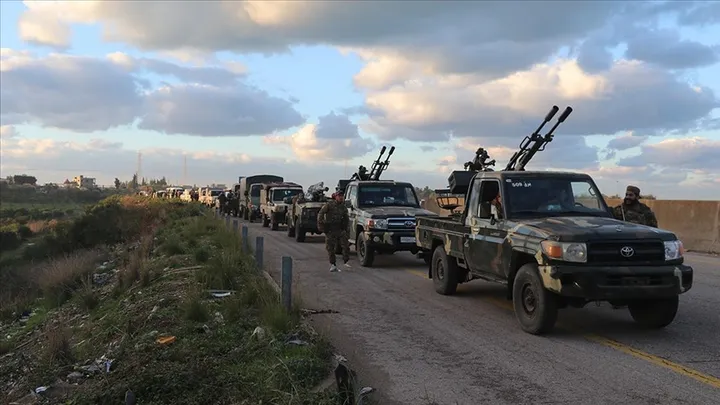
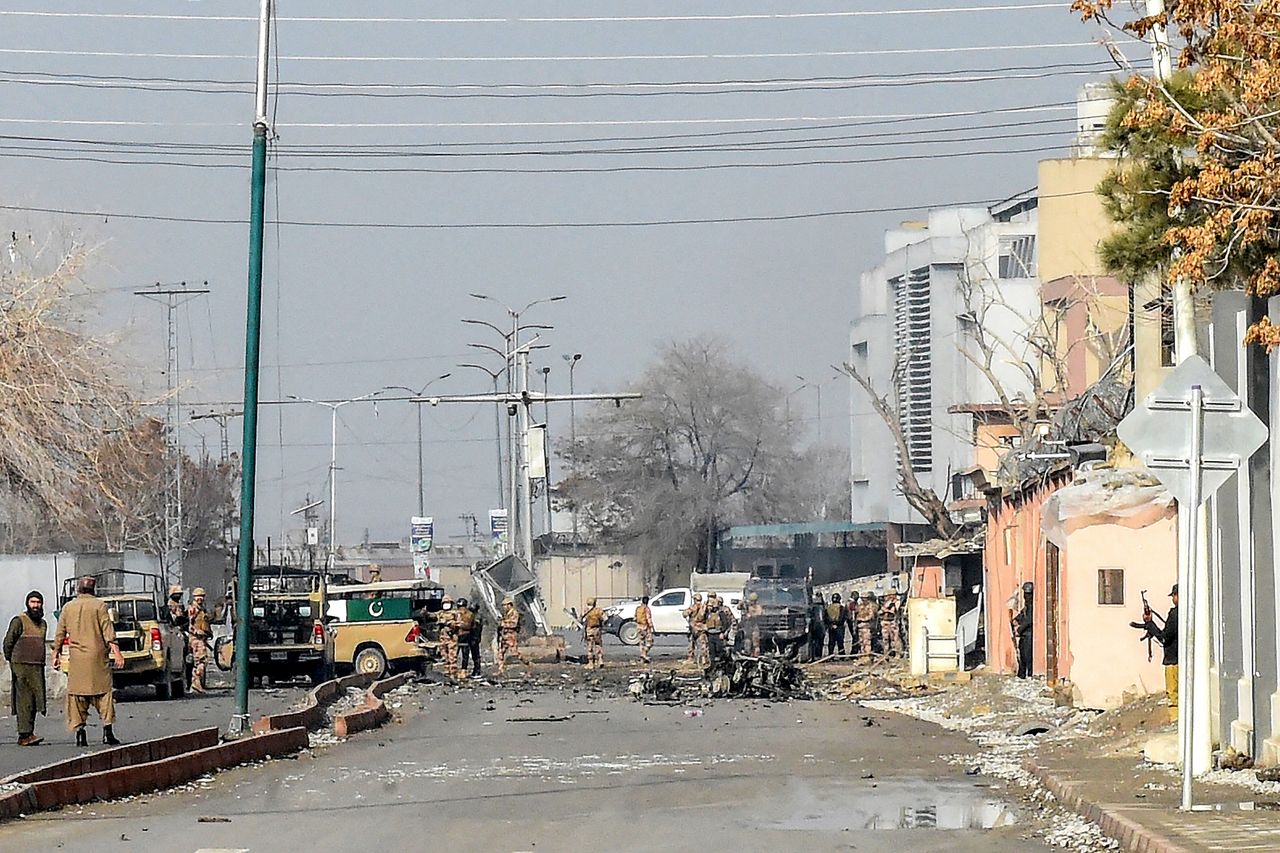
The highways that cut through Pakistan’s southwestern Balochistan province, once envisioned as thriving economic arteries, have become risky as drivers are unwilling to get on the road due to growing terrorist violence by the proscribed Balochistan Liberation Army (BLA).
The BLA’s escalating terror campaign against security forces and civilians has turned a potentially strategic trade corridor into a risk-prone zone, imperilling the connective infrastructure meant to underpin economic integration and usher in prosperity.
In a world already alert to the fragility of chokepoints such as the Strait of Hormuz, the disruption of Balochistan’s roads, railways and economic corridors deserves attention far beyond Pakistan.
Security sources warn that the BLA’s objective is economic strangulation. Calling the BLA “separatists” downplays the reality that the group today fits the textbook definition of a terrorist organisation.
Regularly targeting supply vehicles, trains and essential transport grids, the BLA is attempting to hold transit lines and thus the livelihood hostage, and drawing accusations that it serves the agendas of forces intent on sabotaging regional connectivity.
In the process, it is also undermining its own façade of deprivation and Baloch empowerment.
The United States formalised this distinction with an official terror designation in August 2025, followed by Australia in May 2026 and the UK in July 2026, even as several other European countries continue to equivocate.
The question is no longer whether the BLA is a local terrorist group but whether its operational behaviour increasingly resembles that of internationally designated terrorist groups, such as Al Qaeda and Daesh, where the objective extends beyond territorial control to disrupting commerce and daily life.
Such attacks on civilians and critical infrastructure have historically helped shape international counterterrorism frameworks, including the sanctions regime established under United Nations Security Council Resolution 1267.

Terrorism by any other name
Balochistan is Pakistan’s largest province but also the country’s least populated, home to the ethnic Baloch community. The BLA claims to be fighting for the Baloch people but has slowly degenerated into a terrorist outfit that targets unarmed civilians.
Pakistan accuses India of backing the group, a charge New Delhi denies.
Security officials, however, say the outfit's terrorist nature is undeniable.
“When trains are attacked, highways are repeatedly targeted, freight vehicles are stopped, and critical infrastructure is put under pressure, it is clear that the aim is not just to confront the state,” says Aetzaz Ahmed Goraya, the deputy inspector general at the counter terrorism department in Balochistan.
“The aim is to make people think twice about moving goods, investing money, or doing business in the area…Over time, that kind of disruption can do real damage to a region's economic future,” he tells TRT World.
The BLA’s sabotage is significant because of where this violence is taking place – Balochistan acts as a primary gateway to the Arabian Sea through the deep-water Gwadar Port.
The province serves as an indispensable land bridge connecting the commercial networks of South Asia, Central Asia, the Middle East and Western China.
It is therefore impossible to dismiss the terror campaign waged along these trade routes as a local problem. The volatility in Balochistan carries immediate cross-border consequences, with the risk of snowballing into a severe regional crisis.
Crucial infrastructure projects have slowed, hampering development. When road construction, rail maintenance, and port expansions are repeatedly targeted, they inevitably increase the risks faced by the very people needed to build them.
According to the Armed Conflict Location & Event Data Project (ACLED), the March 2025 hijacking of the Jaffar Express followed at least 18 prior attacks on trains and railway infrastructure, forcing Pakistan Railways to repeatedly suspend its services in Balochistan.
The Global Terrorism Index 2026 reports that Balochistan accounted for nearly three-quarters of Pakistan's 1,045 terror incidents last year, the country's deadliest year since 2013, owing to cross-border facilitation of terrorism.

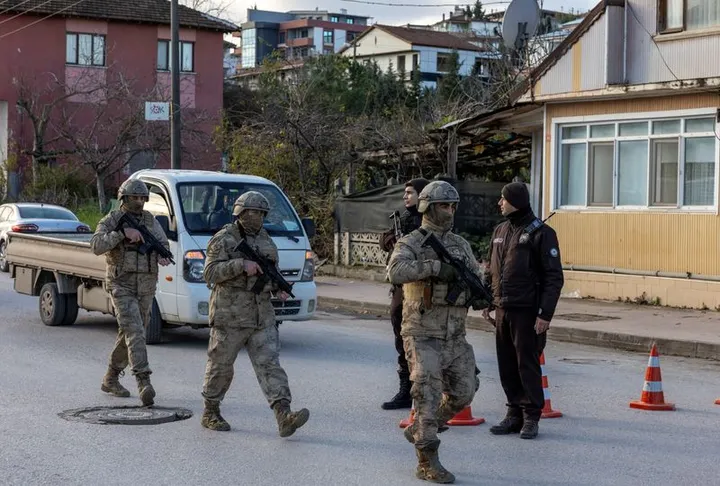


More broadly, Pakistan recorded 1,139 terrorism-related deaths in 2025, the highest toll in more than a decade.
While the Tehreek-e-Taliban Pakistan (TTP) remains the country's deadliest terrorist organisation, responsible for more than two-thirds of all attacks since 2007, the BLA has emerged as the principal driver of insecurity across Balochistan.
Yet truck drivers still take to the highways, engineers continue to work on infrastructure projects, and businesses remain determined to operate despite the dangers.
Nevertheless, the cumulative effect of violence has made international investors, engineering contractors, logistics companies and development agencies wary of expanding their presence in the region.
“Despite the resilience of our truck drivers, traders and local communities who continue to keep commerce moving under extremely challenging circumstances, the deliberate targeting of transport corridors and economic activity threatens the livelihoods of ordinary Baloch citizens more than anyone else,” says Mir Sarfraz Bugti, the chief minister of Balochistan, the highest-ranking elected official of the province.
The economic costs
While BLA claims to fight for the rights of the Baloch, ordinary citizens are the ones bearing the cost of this violence. As governance projects stall, local communities are left without governance, jobs, public services and economic opportunities.
At the centre of this logjam sits the China-Pakistan Economic Corridor (CPEC), a $62 billion mega-project originally envisioned to weave regional economies together but now notionally targeted by the BLA and other terrorist groups.
Attacks on transport routes, energy installations and Chinese-linked projects have driven up security costs across the province.
Bugti adds that “every attack increases security and transportation costs, disrupts supply chains, and impacts investor confidence at a time when Balochistan needs greater economic opportunity, connectivity and development.
Ensuring safe passage for people and goods is not merely a security imperative; it is essential for the province’s long-term prosperity and stability.”
The real stakes become clear when considering vulnerability in international trade. The corridor through Balochistan to Gwadar Port cuts the journey from Chinese manufacturing hubs to European markets from 45 days to 10, a commercial advantage that makes the province's stability inseparable from the interests of industries far beyond the region.
The dynamics are not unlike the anxieties surrounding the Strait of Hormuz: capitals are fully aware of how quickly a localised threat at a critical chokepoint can disrupt global consumer prices and derail investment plans.
As East Asia, Central Asia and the Gulf work toward greater economic integration, secure highway and rail links are proving just as important as safe shipping lanes.
By choking off these overland networks, the violence raises costs and uncertainty for manufacturers, energy importers and critical mineral buyers whose supply chains reach Western markets.
Scott Kelly, Founder of GrayZone Advisory and International Affairs, argues the BLA has crossed into terrorism territory.
"The BLA appears to be moving toward a model designed not only to fight Pakistani security forces, but to make Balochistan harder to govern, harder to invest in, and harder to integrate economically," he tells TRT World.
"That makes the challenge both a counterterrorism problem and a governance problem."
Regarding international designations, Kelly warns that they are necessary but insufficient, arguing that counterterrorism tools cannot substitute for a political strategy that addresses Baloch representation, governance, and accountability.
From Pakistani truck drivers to European supply chain managers, the costs of this instability are broadly shared.
Ordinary Baloch residents are denied long-overdue infrastructure and jobs, neighbouring economies lose access to reliable corridors, and consumers everywhere absorb the compounding costs of delayed trade.