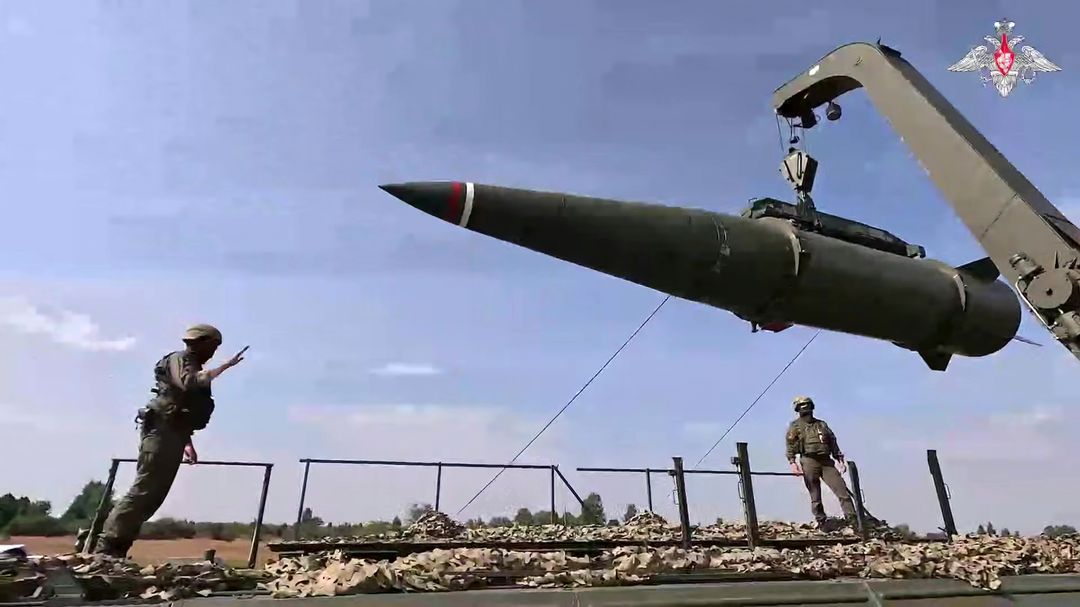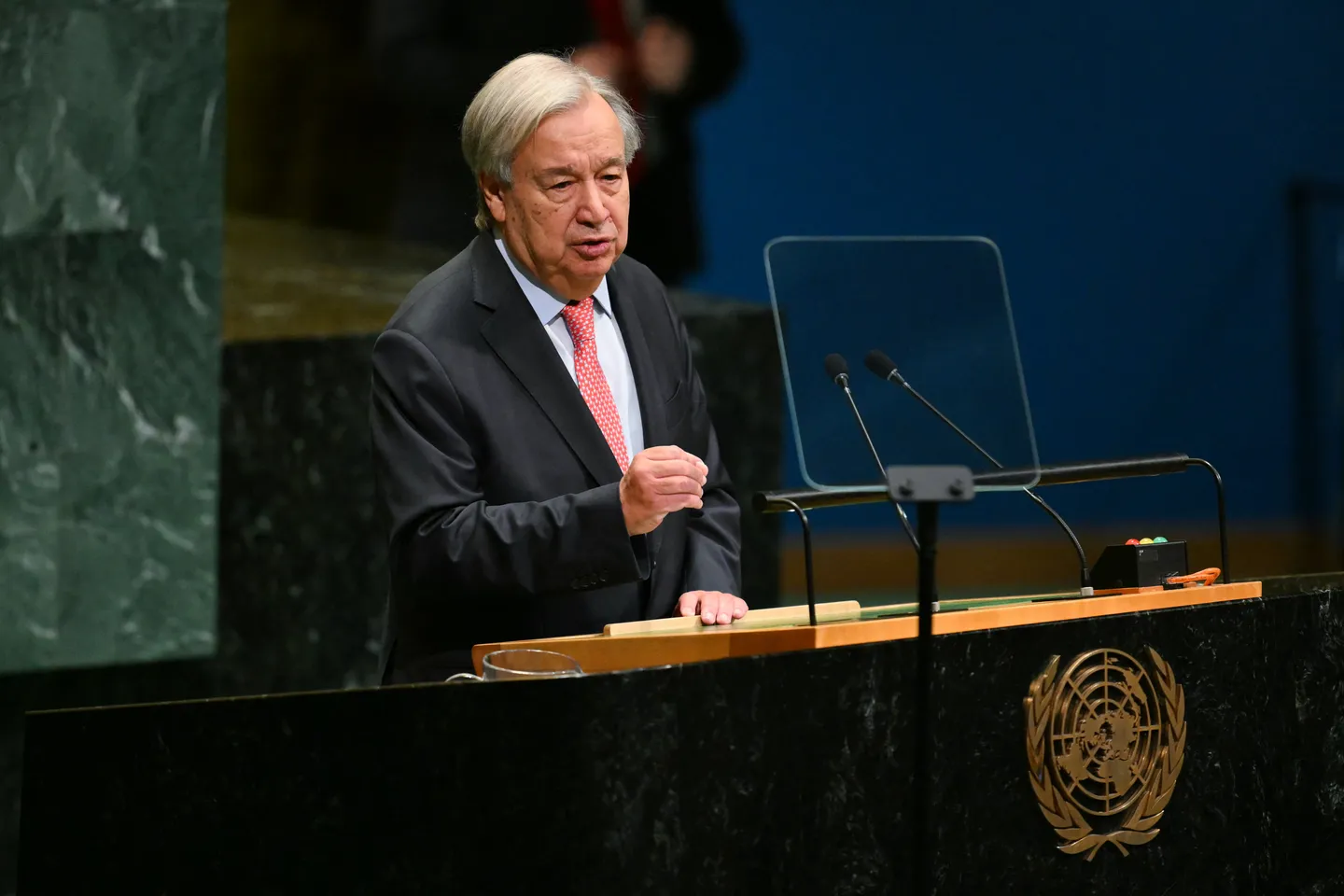
UN Secretary-General Antonio Guterres has called on the US and Russia to negotiate a successor framework to the New START Treaty, warning that growing nuclear arsenals and weakening safeguards are increasing risks to global security.
"The United States and the Russian Federation must negotiate a successor framework to New START," Guterres said at a UN General Assembly plenary meeting marking the International Day for the Total Elimination of Nuclear Weapons on Tuesday.
The New START Treaty expired earlier this year, leaving, for the first time in more than half a century, no binding limits on strategic nuclear arsenals, according to Guterres.
“This undermines not only the security of those who possess nuclear weapons, but the entire international community," he said.
The New Strategic Arms Reduction Treaty (New START) was signed on April 8 2010, in Prague by the United States and Russia and entered into force on February 5 2011. It replaced the 1991 START I treaty, which expired in December 2009, and superseded the 2002 Strategic Offensive Reductions Treaty (SORT), which terminated when New START entered into force, according to the US-based Arms Control Association.
Guterres warned that nuclear arsenals are being expanded and modernised while technological advances are increasing the risks of mistakes and miscalculations.
"Nuclear arsenals are being expanded and modernised. The rattling of nuclear sabres is growing louder. Advances in technology are increasing the odds of mistake and miscalculation," he said.
He also pointed to the failure to reach a substantive consensus of the 11th Review Conference of the Treaty on the Non-Proliferation of Nuclear Weapons and the UN Disarmament Commission's inability to produce substantive recommendations during its latest three-year cycle.
"These are not simply diplomatic disappointments — they are warning signs. And the lights are flashing red," Guterres said.
He said nuclear disarmament is "a binding legal obligation" under the Non-Proliferation Treaty and urged all nuclear-weapon states to reduce the role of nuclear weapons in their security policies through confidence-building measures that ensure transparency.



Nuclear stockpile expected to grow
UN General Assembly President Khalilur Rahman said the global inventory stood at more than 12,000 nuclear warheads as of January 2026.
He said between 2,100 and 2,200 warheads are kept in a state of high operational alert on ballistic missiles capable of being launched at very short notice.
"For the first time since the end of the Cold War, the global stockpile is expected to grow again, as new and more modern warheads enter arsenals faster than retired ones are dismantled," Rahman said.
He said global military expenditure reached nearly $3 trillion in 2025, marking the 11th consecutive annual increase.
"As long as nuclear weapons exist, the danger of their use by design, by accident, or by miscalculation, will remain," Rahman said.
He described the Treaty on the Non-Proliferation of Nuclear Weapons as "the cornerstone" of global efforts to prevent the spread of nuclear weapons and advance nuclear disarmament.