For Dalia Hammad Kayed, the morning of October 7, 2023 began like any other. She woke before dawn to pray at her family home in Gaza.
“When I finished (praying), we started hearing the sound of rockets everywhere. It was a shock for everyone,” the Palestinian photographer and embroiderer tells TRT Espanol.
Three years later, that morning still shapes her life. Dalia was 21 at the time, studying digital media and living in Gaza with her father, Palestinian journalist Kayed Hammad, her mother and three brothers.
She could not have imagined that the next 500 days would be marked by genocide, displacement and loss, including the death of her 24-year-old brother Omar Hammad, who was killed by Israel.
Nor could she have imagined that she would eventually have to begin an entirely different life, far from Gaza, in Spain.
On October 7, after hearing the explosions, the Palestinian family turned on the news to follow the events.
“Shortly after, we began to hear that the Palestinian resistance had entered the occupied territories,” she recalls.
“For a few moments, I felt we were going to liberate Palestine and would soon return to the land taken from us,” she says.
But that was not what followed.
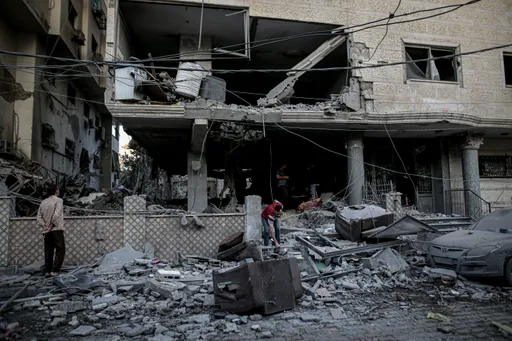
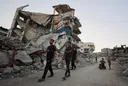
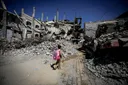
The day marked the beginning of one of the darkest periods in humanity, with Israeli attacks, siege and the deprivation of basic necessities.
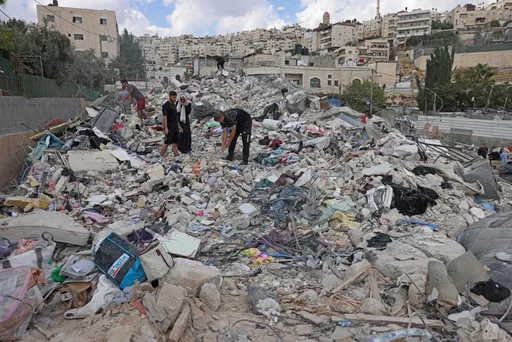
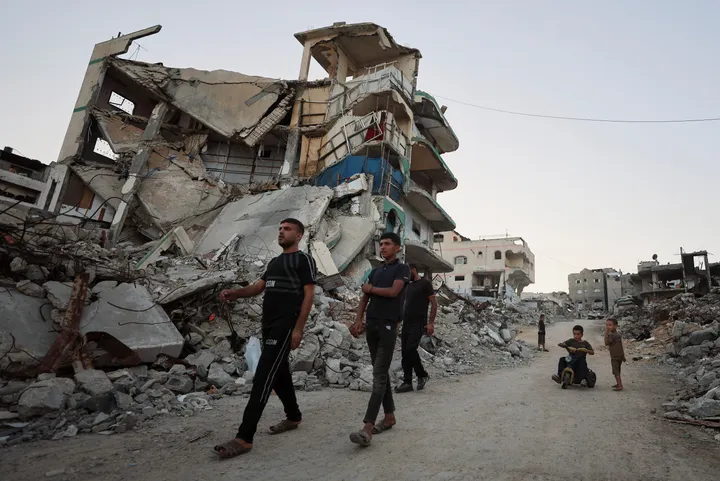
From the 12th floor of the building where the family lived, they could see what Dalia describes as “the whole” enclave, with “bombings here and there, and people being killed every minute” by Israeli attacks.
Displacement, forced starvation
At first, Dalia thought it would be like “previous wars”, lasting only a few weeks.
Then they received an order to evacuate their area. The family spent three days at her aunt’s house before receiving another order and having to move again.
The pattern repeated itself, taking them from one evacuation to another and from one relative’s home to another, in what Dalia describes as “one of the most difficult experiences of my life”.
To prepare for emergencies, they kept small backpacks by the door containing water, flashlights and food.
“If there was an emergency, everyone would grab their backpack and leave,” she recalls.
“Many times we left our personal belongings behind because we knew we would have to walk long distances and couldn’t carry everything on our backs.”
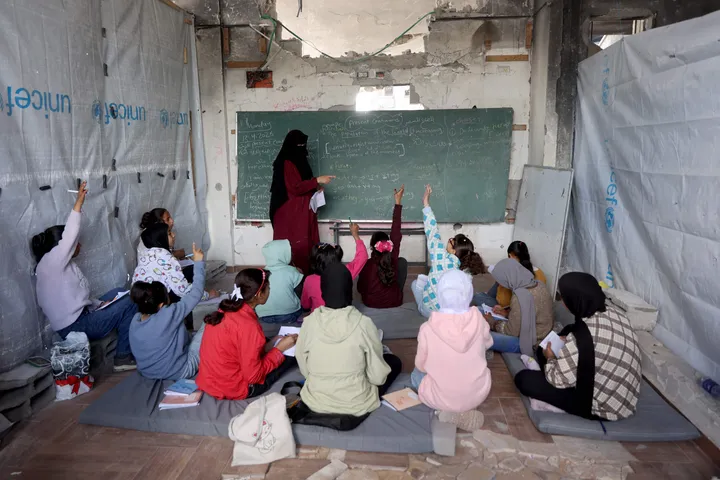
For Dalia, who was raised in a family with strong cultural roots, displacement also meant losing the routines of everyday life—school, university, work—and her favourite foods, including qidra, a spiced rice dish with meat and whole garlic cloves, slowly cooked in a clay pot.
As the siege tightened, access to food became increasingly difficult, while Israeli forces separated northern Gaza, where the family lived, from the south.
The Kayed family refused to flee, even as what Dalia describes as “a severe famine” took hold.
“I’ll never forget that we ate rice for almost three months. Rice, water, and a little bit of spice, just to give it some flavour,” she recalls of the food they had stored.
“We ate it simply to stay alive, and we thanked God for having it,” she adds, acknowledging that her family was among the more fortunate because they had something to eat at night, which also helped them fall asleep.
Alongside the hunger came the loss of loved ones, including her brother Omar.
In May 2024, Omar went to collect medicine for a friend receiving treatment at Al-Awda Hospital in northern Gaza. When he reached the entrance of the hospital, the area was bombed. He and several others were killed.
Dalia says the friend he had gone to help later died as well because of the shortage of medicines.
Safeguarding memory
Amid the grief, Dalia returned to something that allowed her to preserve memories: photography.
She began with “family photos” and then started photographing “everyone and all the circumstances we were experiencing”.
During this period, Spanish journalist Mikel Ayestaran, a friend of her father, remained in contact with the family and regularly checked whether they had been able to find food.
“We kept telling him that everything was fine and not to worry, but he wanted us to prove it to him with a photo of our meal of the day. My father asked me to photograph the plate every day and send it to Mikel,” Dalia recounts.
Ayestaran asked for permission to post the photographs on Instagram, and the family agreed. Each image was accompanied by a short account of what they were experiencing.
The response came quickly. People in Spain began asking about the family and offering help. Little by little, Dalia began to understand the value of those photographs.
“That photo, accompanied by a few words, showed the world what our people were experiencing and carried our voice and our news through the image of a plate,” she says.
From those photographs came another idea. Ayestaran proposed preserving the story of the meals in a physical book.
The idea developed into a collaboration involving Ayestaran, Dalia’s family and Spanish magazine 5W, eventually becoming the “Gaza Menu” project.
“The book brings together photographs, recipes, and our family’s memories during the war. It also shows another side of our life in Gaza: not just the hunger, but also our family life and our attachment to life,” she says.

In 2025, a crowdfunding campaign raised 119,830 euros from 2,553 contributions, far exceeding its 35,000-euro target and allowing more copies of the book to be printed and distributed than originally planned.
Embroidering among the bombs
Photography was not the only way Dalia found to cope with what was happening around her. She also returned to another practice she had learned as a child: embroidery.
When she was young, an aunt living in Libya visited Gaza, and Dalia learned to work with a needle and thread alongside one of her cousins. She still remembers making a small coin purse embroidered with a rose.
Years later, amid the hardships of life under siege in Gaza, she found a needle and thread and returned to that childhood passion.
“Every time I started embroidering, I forgot about what was happening around me and could concentrate solely on the embroidery. I began to dedicate most of my time to it. It helped distract me from the bombings and the death that surrounded us, and reduced the psychological pressure,” she recalls.
“I felt happy every time I finished an embroidered piece and could wear it or give it to someone in my family.”
Despite everything they had endured, the family had never seriously considered leaving Gaza.
That changed when Ayestaran suggested that Dalia’s father and several well-known journalists sign a petition to the Spanish Ministry of Foreign Affairs requesting their evacuation from Gaza.
Dalia says the family did not expect a “concrete result”. Then they received “a call informing us that our names had been accepted and that we would soon be leaving Gaza for Spain”.
The news meant leaving behind the place where she had spent her entire life, from childhood into adulthood. For Dalia, “it was much harder than I could have imagined”.
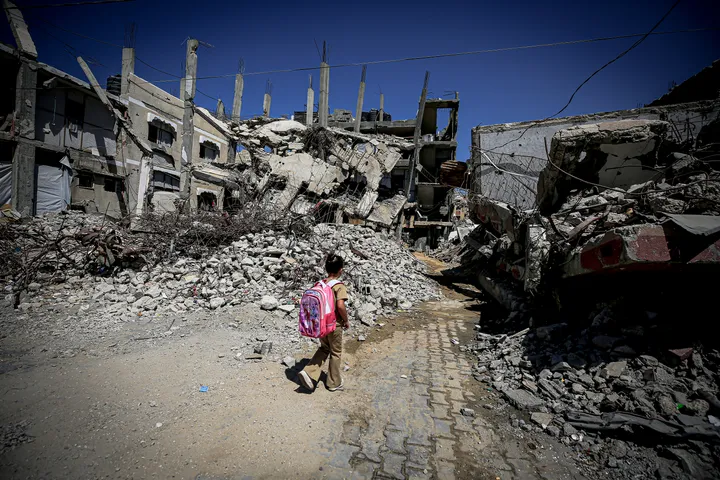
Seeing the destruction of her homeland as she left made the departure even more painful.
“The roads had practically disappeared and there was rubble everywhere. It took us a very long time because the bus was completely controlled by the Israeli forces: they decided when it could move forward, when it had to stop, and when it was not allowed to continue,” she recounts.
But the most painful part was saying goodbye to those who remained in Gaza.
For Dalia, the uprooting and the farewells were “the most difficult moment” and a weight she does not believe will ever go.
“We left our families and loved ones behind. We carried with us a deep sense of guilt and regret, as if we were doing something wrong to survive. We left them in the midst of death and hell while we managed to get out. We left parts of ourselves behind and kept going because we had no other choice,” she says.
A new life in Spain
Dalia arrived in Spain with her family on June 28, 2025. Their first stop was an uncle's home in a small town in Málaga, southern Spain.
But her thoughts remained with the relatives they had left behind in Gaza.
“I felt guilty because I had survived while they were still there, and I was constantly afraid of receiving devastating news about them,” she says.
“It was also a shock to go from months of fleeing death to suddenly being in a normal, safe place. I had to face a new language and culture, and at the same time, I felt like I was starting all over again.”
As Dalia adjusted to her new life, “Gaza Menu” began opening new doors for her.
In 2025, the project won the Ortega y Gasset Journalism Award for Best Multimedia Coverage, featuring photographs of Dalia’s family and their daily life in Gaza. It also received the Zampa Photojournalism Award.
Dalia began taking part in events where she could tell Gaza's story herself. On February 19, 2026, she presented the book at the Finestres bookstore in Barcelona alongside her father, Ayestaran and photographer Anna Surinyach.
“I never imagined that one day I would be standing in front of such a large audience, presenting our book and speaking to people face to face, after our stories had been confined to phone screens during the war,” she says.
“I felt nervous, but I also felt a great responsibility: to be the voice of my family and the people of Gaza.”
The experience also allowed her to witness what she describes as “the enormous solidarity” in Spain towards the Palestinian people.
“That made me feel that we were not alone,” she says.
Dalia has also intensified her Spanish studies, helping her communicate her work to new audiences.
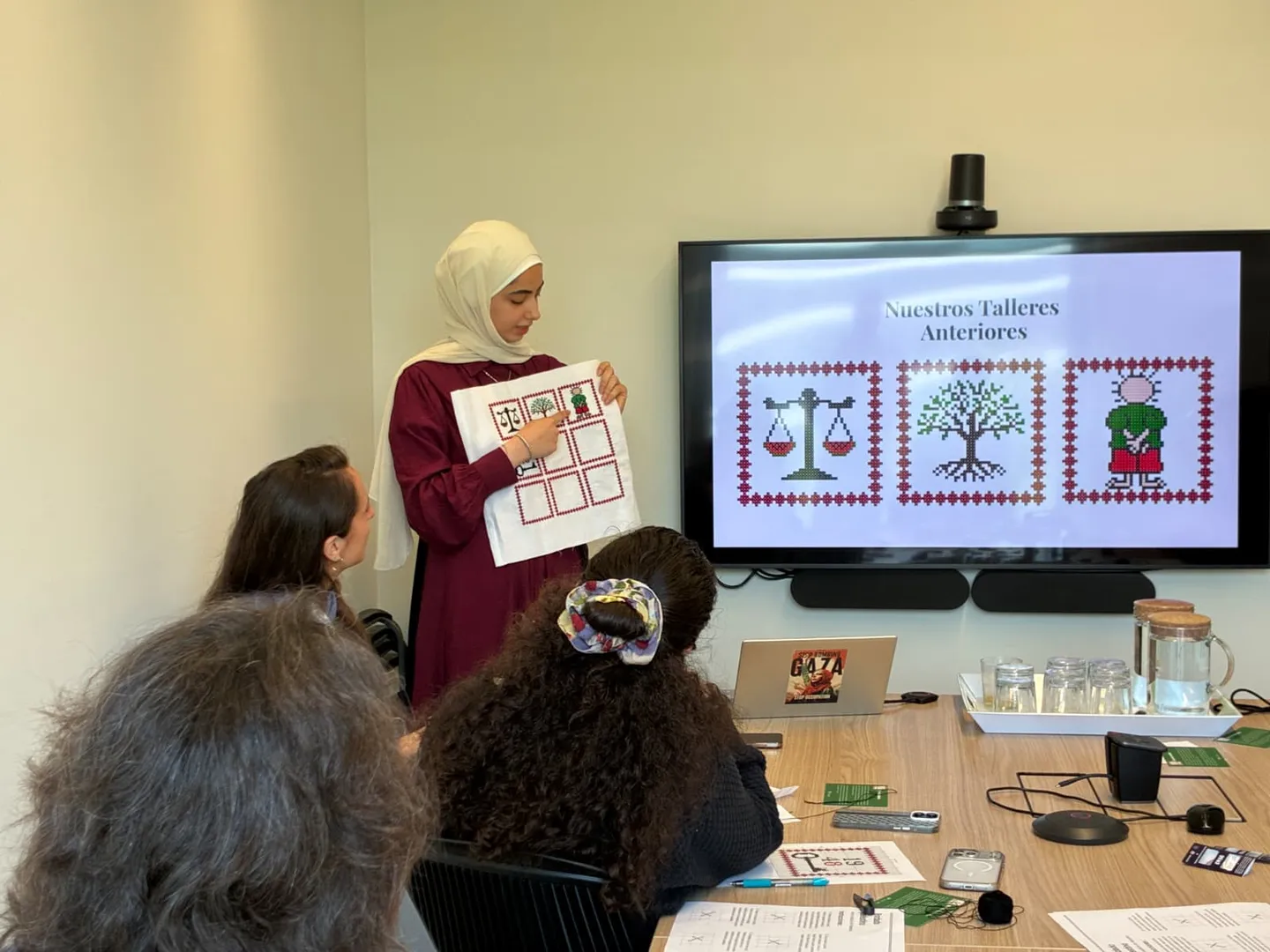
In her workshops, including one with the Ferrer Foundation in Barcelona, she explains the origins and history of Palestinian embroidery.
Art as resistance
“This traditional art is not simply a hobby or just any craft. It is an essential part of Palestinian identity and an inherited history that has faced attempts to erase, silence, and appropriate it. Through these threads, I seek to preserve our heritage.”
Dalia´s embroidery incorporates symbols including Palestinian birds, olive trees and wildflowers, each carrying its own meaning.
“Some represent the richness and beauty of our land and its nature, while others express meanings of resilience, firmness, and resistance. Still others document details of the lives of our ancestors and the tools they used in their daily lives.”
Today, from Segovia, Spain, Dalia continues that mission: sharing the richness of Palestinian culture and preserving part of its history through embroidery.
“I don’t just teach a craft,” she says. “With this art, I’m placing in their hands a living document that speaks of our history and tells the world that we are a people with deep roots. A civilization that continues to live on and cannot be erased.”
This article was first published on TRT Espanol.