 Emmett Imani
The United States recently signed a nuclear energy cooperation agreement with Saudi Arabia, described by the US Department of Energy as “historic”.
Energy Secretary Chris Wright and Saudi Arabian Energy Minister Prince Abdulaziz bin Salman signed the Section 123 agreement under the Atomic Energy Act, supplemented by a bilateral safeguards agreement.
Such agreements typically pave the way for American reactors, American nuclear fuel, and American oversight.
However, the agreement has sparked a heated debate because it allegedly allows Saudi Arabia to independently enrich uranium on its own soil, according to several American media outlets.
One cannot help but feel a sense of deja vu following the signing of the agreement and the subsequent chatter.
After all, this is the same scenario the region has seen before, only now it has been presented with a different context and background.
Iran and the N word
For nearly two decades, the entire architecture built around Tehran's nuclear programme viewed Iran as an isolated problem to be solved. But this was never the case.
Israel has had an undeclared nuclear arsenal for decades—a fact acknowledged by virtually all serious nonproliferation experts, even as Tel Aviv itself continues to adhere to a policy of deliberate ambiguity.
Gulf states have their own security concerns that arose long before the current standoff with Iran and will remain after it.
The attempt to view Iran's enrichment programme as a standalone violation inevitably led to the very asymmetry we see today.
A security architecture built around a single country's agenda, ignoring the rest of the chessboard, could never be sustainable. It was merely a temporary construct, waiting for someone to test its strength.
Restricting one country while arming another isn't a nonproliferation policy. It's a policy of selectivity.
It is this part of the Saudi deal that has drawn the most harsh criticism – and deservedly so.
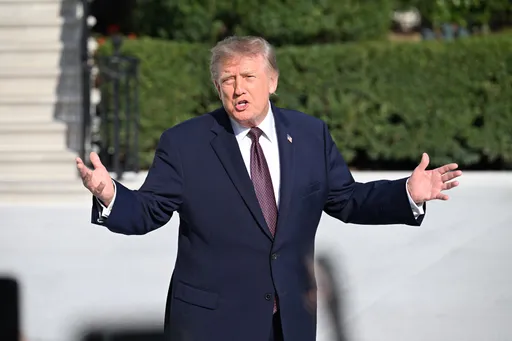
Last week, US President Donald Trump wrote in Truth Social that "there will be no enrichment of materials," insisting that Saudi Arabia would only receive “civilian unenriched nuclear facilities”.
However, the US Department of Energy's official statement on the agreement does not address the issue of uranium enrichment at all.
Meanwhile, numerous publications citing Congressional documents and arms control experts indicate that the agreement does leave this possibility open.
Senator Ed Markey has already introduced the 'No Nuclear Weapons for Saudi Arabia Act', which requires Riyadh to formally abandon uranium enrichment and spent fuel reprocessing before the deal takes effect.
Nonproliferation researcher Kelsey Davenport articulated the key issue with utmost clarity: nuclear cooperation can strengthen the nonproliferation regime.
But it can also quietly undermine it. It all depends entirely on the details, which Washington is not yet prepared to make public.
This is a classic double standard: one state imposes sanctions against another for a decade, even launching attacks against it, over its uranium enrichment programme.
And then the same authorities discuss similar enrichment opportunities for another state in the same region — it's no longer a matter of principle, but of preference.
All the neighbours notice. And everyone remembers it.
What now, what next for Tehran?
For years, the international debate has centred on the question: “Will Iran get a nuclear bomb?"
This formulation of the question was based on the assumption that only Iran's own ambitions mattered.
However, the emergence of Saudi Arabia's own uranium enrichment programme – even if it is officially described as purely civilian – completely changes the question that Tehran is asking itself today.
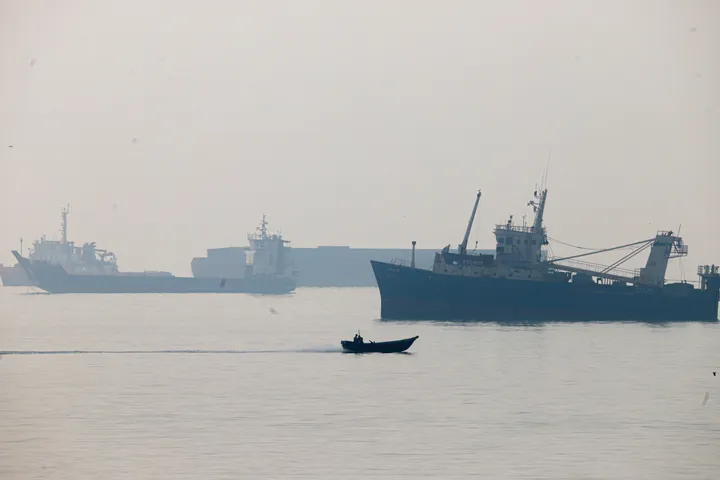




The question now is no longer whether Iran should be subject to restrictions, but why Tehran should be required to comply with restrictions that its rival in the Gulf of Basra is not required to comply with.
This isn't a hypothetical change of heart. Riyadh has already signed a mutual defence treaty with nuclear-armed Pakistan. This agreement was concluded last year after Israel's strike on Qatar seriously alarmed the Gulf states.
After this, even Pakistan's Defence Minister stated that Islamabad's nuclear capabilities would be "made available" to Saudi Arabia if necessary. These words were interpreted throughout the region exactly as they were intended.
Crown Prince Mohammed bin Salman has repeatedly stated that Saudi Arabia will develop its own nuclear weapons if Iran ever crosses the nuclear threshold.
Combine the US-backed path to domestic uranium enrichment with an existing defence alliance with a nuclear power, and the Saudi programme no longer appears as a distant, hypothetical prospect for Iran.
It faces a regional rival that simultaneously has two possible paths to acquiring nuclear potential, while Iran itself continues to live under the strictest restrictions.
Iranian hardliners won't even have to invent a reason to complain. Washington itself presents this argument to them.
A new nuclear balance
Once Saudi Arabia has a credible technical pathway, the UAE will not sit still either.
Abu Dhabi’s own 2009 nuclear agreement with Washington, the so-called gold standard deal, explicitly gave up enrichment and reprocessing rights in exchange for reactor technology.
Israeli analysts have already noted that if Saudi Arabia secures better terms, the UAE has grounds to demand a renegotiation of its own.
That is how proliferation actually spreads in practice. Not through a single dramatic decision, but through a chain of neighbouring states each demanding equal terms to the last one who got a better deal.
Iran adjusts its own posture in response. The Gulf states adjust to Iran.
Türkiye, sitting at the crossroads of all of it with its own long-standing civilian nuclear strategy and its own security concerns about a region filling up with fuel cycle capability, cannot treat this as background noise.
We are witnessing a real recalibration of the regional balance of power. This is being accomplished not through an agreed-upon international mechanism, but through individual bilateral deals. This is what makes the situation particularly dangerous.
This is precisely where the Turkish approach was once tested — and withstood it far better than is commonly remembered.
In May 2010, Türkiye and Brazil did something no one else in the international system dared to do at the time.
Working directly with Tehran, then Turkish prime minister now President Recep Tayyip Erdogan and Brazilian President Luiz Inacio Lula da Silva drew up what is known as the Tehran Declaration.
Under the deal, Iran agreed to transfer 1,200 kilograms of its low-enriched uranium to Türkiye in exchange for nuclear fuel for a research reactor producing medical isotopes.
The agreement was based on a simple principle, which the P5 nations never fully accepted.
Iran, like any party to the Nuclear Non-Proliferation Treaty, has the right to peaceful nuclear technology. Trust can be built through verifiable exchanges, not solely through sanctions and ultimatums.
Washington and its partners deemed the deal insufficient and, within days, secured the adoption of a new sanctions resolution.
However, the logic of Türkiye's approach was sound at the time — and it appears even more relevant today.
Regional nuclear crises become more, not less, dangerous when they are managed through unilateral pressure and unequal deals, interpreted differently by different capitals depending on their own interests.
They become more resilient when the entire region is integrated into a unified system that can be verified by all and considered fair by all. Fifteen years ago, Türkiye made this argument in relation to Iran.
Today, it is worth repeating it — this time to Washington and Riyadh – before this deal completely rewrites the rules of the game for all other observers.
(This article was first published on TRT Russian)