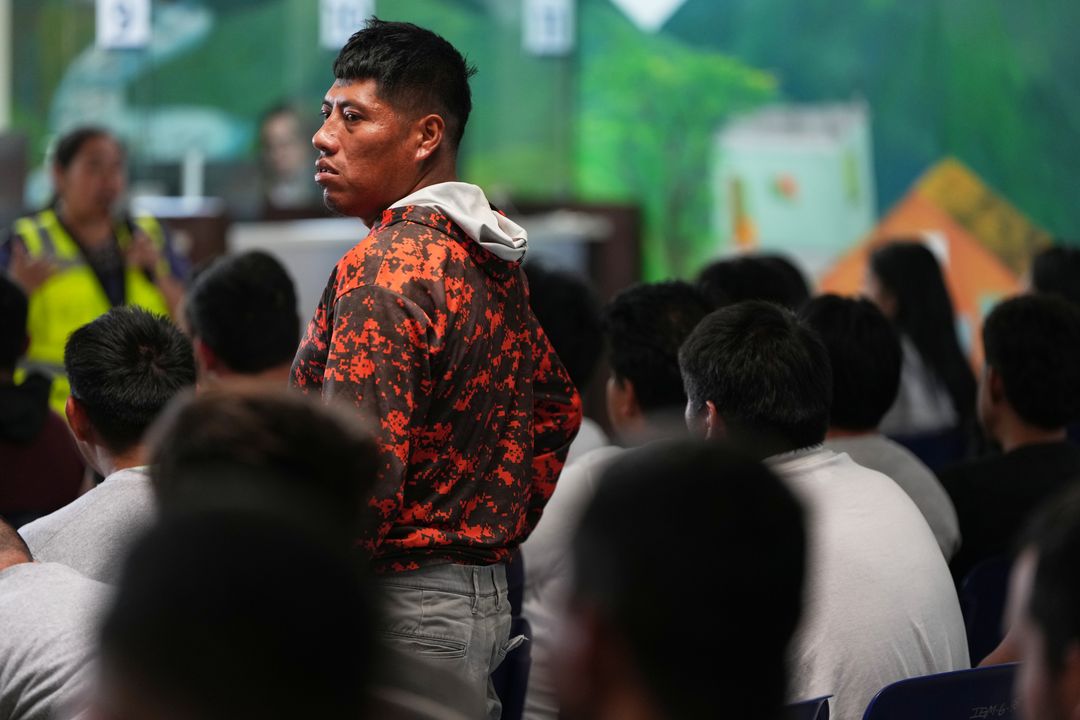
The US policy of deporting migrants to third-party African countries is against international law and exploits suffering to deter immigration, Human Rights Watch said in a report on Thursday.
After President Donald Trump's return to the White House in January 2025, his administration signed accords with countries in Latin America, Africa and the Pacific to accept foreigners who could not legally be expelled to their own countries.
Since then, the United States has deported more than 500 people to African countries that were not their own, according to data from the US Immigration and Customs Enforcement (ICE) cited by HRW.
An investigation published in September by the Forbidden Stories consortium estimates that 25,000 people have been expelled worldwide under the programme.
The policy "violates international human rights law and is designed to instrumentalise human suffering as a deterrent to migration", HRW said.
The rights group cited an unnamed US official as having told a Senate hearing that "with countries like Palau or Eswatini, the point is that the Administration can threaten people that they will literally be dropped in the middle of nowhere. The point is to scare people."








HRW said it interviewed 24 third-country nationals transferred from the United States to six countries in Africa: Cameroon, the Central African Republic, the Democratic Republic of Congo, Equatorial Guinea, Eswatini and South Sudan.
They described being chained during flights that could last up to 18 hours, without knowing their destination.
Many of the "opaque" deals remain secret, HRW said.
An AFP investigation in early 2026 highlighted pressure exerted by Washington on African countries, such as threats of tariffs, the suspension of visa issuance or aid cuts, to compel them to accept deportees.
Burundi, one of the world's poorest countries, announced early this month that it had agreed to accept US deportees, becoming the 15th African nation to conclude such a deal.